




Complexity rises more quickly with broker growth than with headcount. Spreadsheets and disjointed tools are unable to handle the friction created by more payment providers, regions, products, and partners. By standardizing workflows across teams, the appropriate software for brokers lowers operational drag, safeguards compliance, and increases conversion and retention. This is not a list of vendors, but rather a useful framework that will assist you in determining what you will require in 2026 and how to demonstrate its effectiveness.
Related article:
- Forex Broker Software: Best Solutions for Startups
- Forex Broker Software: The Essential Tool for Clear Business Insights
The 2026 Reality: Why Broker Operations Break as You Scale?
Broker operations fail in 2026 for predictable reasons. Complexity increases with growth: more PSPs are added, more regions are reached, more instruments and account types are offered, and deeper partner structures are developed. Simultaneously, regulatory and payment scrutiny intensifies. If software for brokers isn’t designed to support the operational load, the result is a brittle stack.
“Trading” is rarely the first to break. It encompasses all aspects of trading, including support workload, IB settlement, onboarding throughput, payment dependability, and reporting accuracy. Clients can be acquired by a broker more quickly than they can be onboarded and serviced. Conversion declines, and reputational risk increase as a result.
A mature view is simple: scaling is not just adding clients. It is maintaining consistency as volume rises. That requires software for brokers that behaves like an operating system, not a set of disconnected tools.
Five early warning signs your stack is failing:
- Onboarding and KYC require frequent manual follow-ups
- Withdrawals and reconciliations rely on spreadsheets or ad-hoc checks
- IB commissions trigger recurring disputes or manual corrections
- Support tickets rise faster than client growth
- You cannot produce a clean audit trail without reconstructing events afterward
If you see these signals, your software for brokers is already acting as a bottleneck.
What “Software for Brokers” Must Cover?
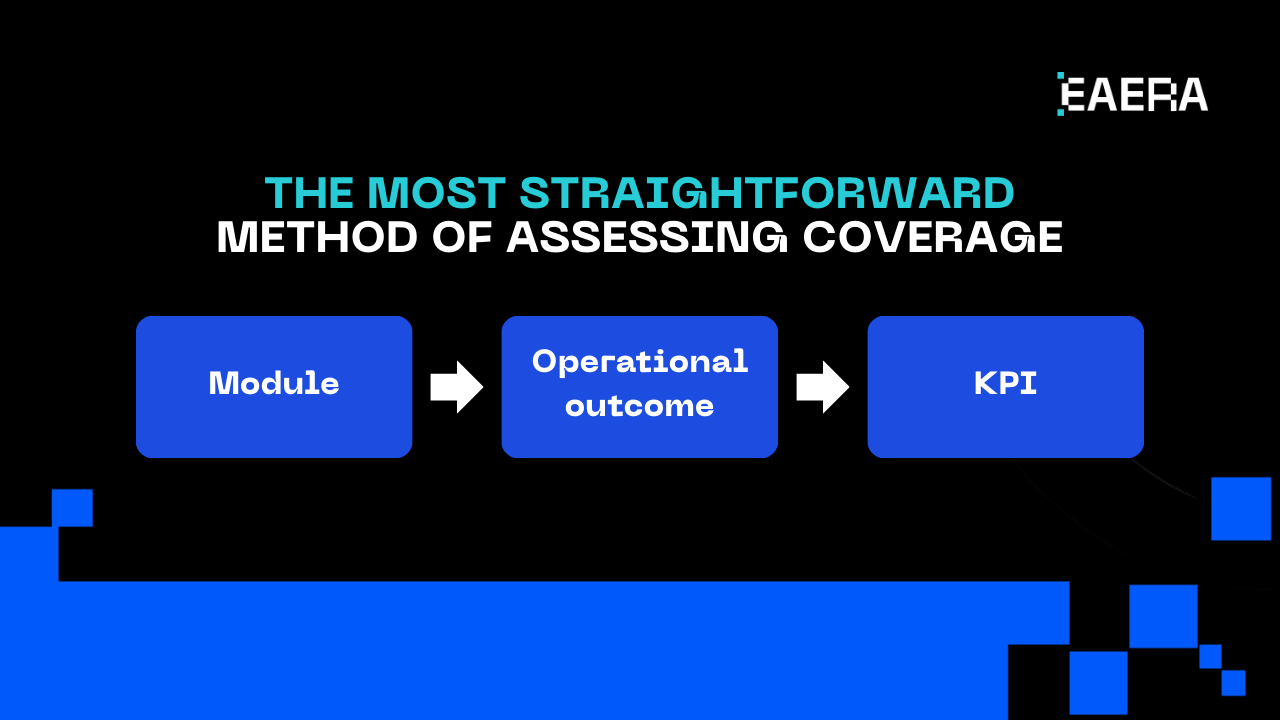
The entire operational lifecycle must be covered by software for brokers by 2026. Module → operational outcome → KPI improved is the most straightforward method of assessing coverage. This prevents feature shopping and compels adherence to business realities.
CRM and lead lifecycle
Consistent pipeline management and a smooth transition to onboarding are the results. Lead-to-KYC conversion and time-to-first-deposit KPIs have improved.
Instead of treating CRM as a distinct sales database, modern software for brokers must treat it as a component of the operating flow.
KYC and AML workflow with document management
Repeatable compliance decisions with traceable evidence are the result.
KPIs that improved were rejection accuracy, audit readiness time, and KYC completion time.
There is no checkbox for compliance. It’s a process that needs to be reliable at scale.
Wallet and ledger with deposits, withdrawals, reconciliation
One source of truth for financial transactions and operational states is the result.
Deposit success rate, withdrawal cycle time, and reconciliation error rate were all improved KPIs.
Since trust is determined by payments, a robust ledger is the foundation of software for brokers.
Trading account management with platform integrations
The result is consistent account lifecycle management and automated provisioning.
Time-to-account creation, first trade time, and account error rate were all improved by KPIs.
The operational system and the actual trading platform are connected by this module.

IB hierarchy, commission engine, and settlement
Scalable partner growth without commission disputes is the result.
IB activation rate, commission dispute rate, and settlement cycle time are KPIs that have improved.
Manual or ambiguous rules make partner operations vulnerable.
Support ticketing with audit logs
Because tickets are linked to evidence, the outcome is a quicker resolution.
Time-to-resolve, tickets per 1,000 clients, and repeat ticket rate are all improved KPIs.
System history, not screenshots, should be used by support to fix problems.
Reporting spine for cohorts, finance, compliance
Management choices based on event-level truth are the result.
Cohort profitability, payout ratio, and SLA adherence are KPIs that have improved.
Operational reality, not “what someone updated,” must be reflected in reporting.
Governance: roles, maker-checker, versioning
Controlled operations and decisions that can be justified are the result.
The audit pass rate, exception stability, and decrease in unauthorized changes were all improved KPIs.
Software for brokers becomes a scale-ready system through governance.
Must-have evidence logs:
- KYC decision history with timestamps and reviewer identity
- Wallet event timeline for deposits, withdrawals, reversals, and failures
- Approval trails for sensitive actions (maker-checker)
- Change logs for rule/config updates with effective dates
- Client lifecycle timeline linking onboarding, funding, and account provisioning
Software for brokers cannot scale trust without these.
Architecture Matters: Build an Operating System, Not a Patchwork
Stitching tools together without a clear architecture is the quickest way to cause future failure. A patchwork can function at low volume, but as each tool becomes its own “truth,” it collapses at scale. Software for brokers is kept consistent as teams, regions, and products grow thanks to a robust architecture.
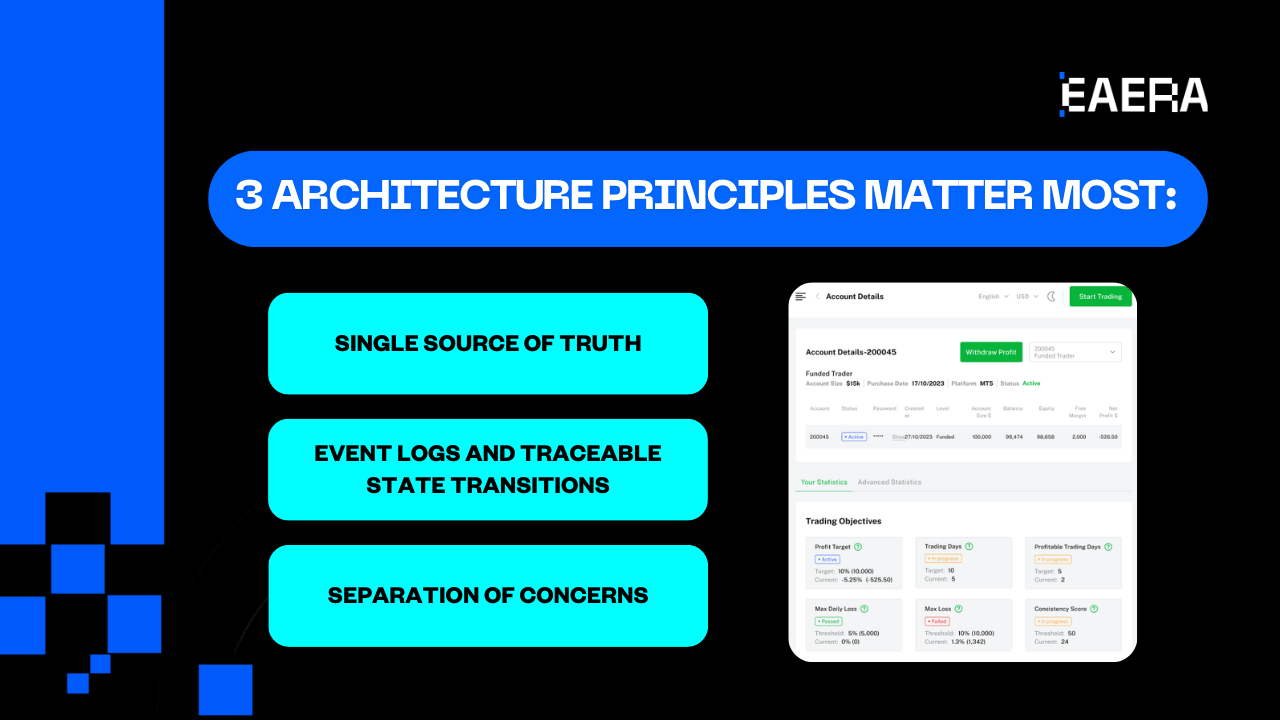
Three architecture principles matter most:
Single source of truth
Wallet balances, account states, client identities, and KYC status must all be consistent. Operational velocity decreases and risk rises when teams disagree about which system is best.
Event logs and traceable state transitions
An event record should be created for each significant action. As a result, audits and disputes become evidence of retrieval rather than investigation.
Separation of concerns
Payments, reporting, risk, and execution shouldn’t obstruct one another. The system as a whole shouldn’t fail when one component slows down.
Governance must be combined with automation. Errors are scaled when automation is done without control. Relying on manual labor increases errors and headcount. The best software for brokers automates processes while maintaining auditable overrides and approvals.
Architecture signals to require in demos:
- Clear ledger model with event-based transaction history
- Role-based access control and maker-checker for sensitive actions
- Versioning for rules and configurations with effective dates
- Reliable integrations with retry safety and non-duplicating behavior
- Reporting that comes from event records, not manual summaries
- Evidence export for audits and dispute resolution
In 2026, a platform isn’t serious software for brokers if it can’t show these.
Payments and Compliance: Where Weak Broker Software Gets Expensive
Payments and compliance are two areas where inadequate software for brokers becomes costly. These are the places where manual labor becomes risky in terms of finances and regulations.
Timing is crucial for compliance. Trust is destroyed by late-stage KYC surprises, particularly during withdrawal. KYC requirements are clear, consistent, and traceable in a scale-ready system. Additionally, it enforces access controls: all decisions must be recorded, and sensitive information and actions must be limited by role.
Reliability becomes a competitive advantage when it comes to payments. Churn and partner discontent are caused by declining deposits, chargebacks, payout delays, and reconciliation gaps. Payments are handled as a controlled workflow with distinct states, evidence trails, and exception routing software for brokers.
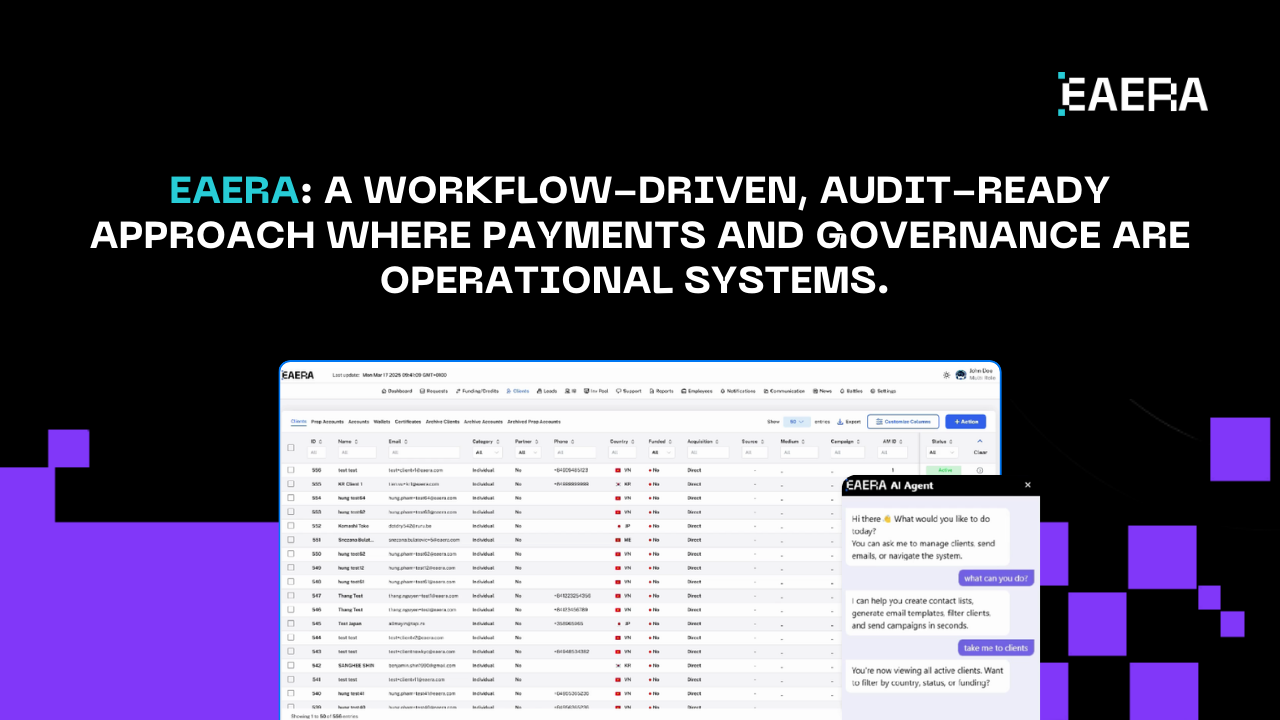
EAERA is an example of a workflow-driven, audit-ready approach where payments and governance are not manual back-office tasks but rather operational systems.
Instead of a generic CRM with add-ons, the best software for brokers in 2026 will be an operating system that scales compliance and trust. Unified workflows, evidence logs, governance controls, and KPIs that demonstrate operational leverage are all necessary for expanding brokers. Before committing, validate platforms with actual scenarios using the scorecard and demo script mentioned above.