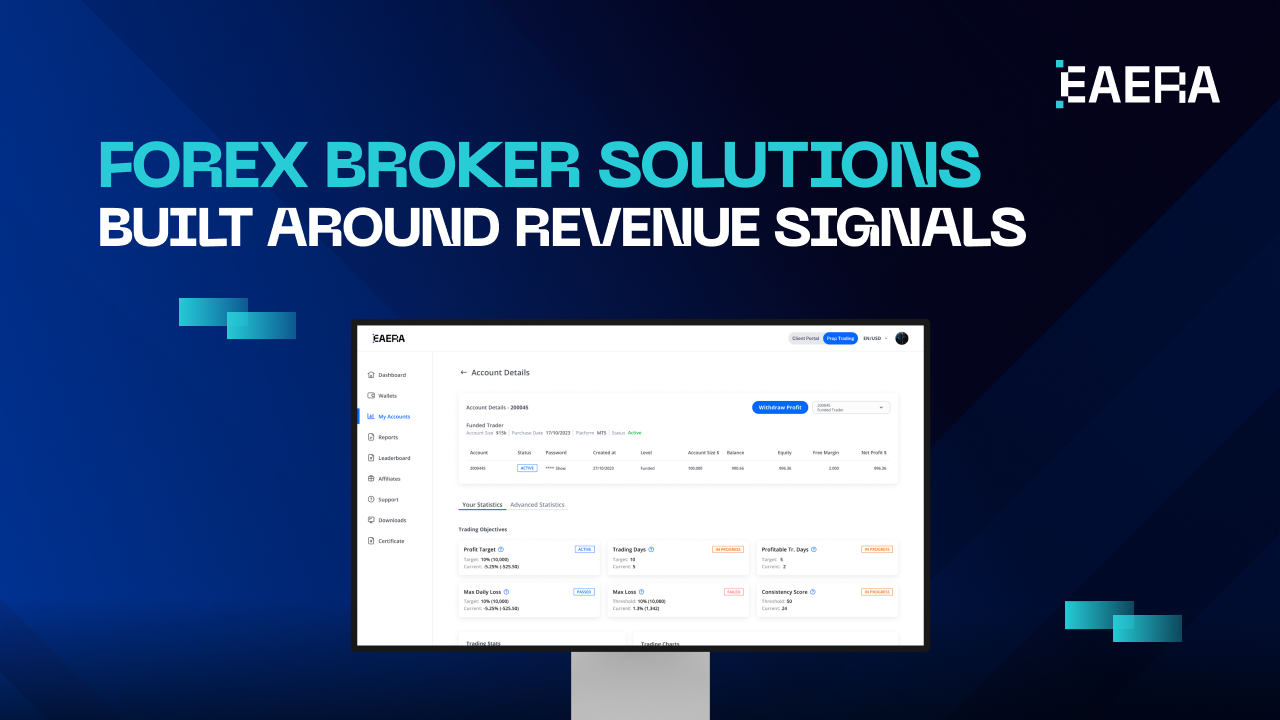





A trading competition is now much more than just a marketing gimmick. It is now a structured growth tool used by contemporary brokers and prop firms to find disciplined traders, boost volume, and improve engagement. A trading competition gains scalability, quantifiability, and risk control when it is supported by a specialized platform.
Related articles:
- Risk Management in Trading: How Brokers & Prop Firms Control Risk at Scale?
- What Modern Software for Brokers Should Offer in 2026?
Businesses can run systematic trading competition platform that generate revenue while upholding governance and transparency, as opposed to depending on manual spreadsheets or makeshift leaderboards. This article describes how brokers and prop firms can conduct profitable trading competitions on a large scale thanks to a professional infrastructure.
What Is a Trading Competition Platform?
A trading competition platform is a system that oversees every aspect of a trading competition, from registration and rule enforcement to prize distribution and leaderboard monitoring. A professional platform, as opposed to ad hoc contests, combines automated compliance checks, real-time data feeds, and scoring logic in a single setting.
There are three common types of trading competition models:
- Retail broker contests – designed to stimulate trading volume.
- Prop firm evaluation competitions – used to identify disciplined traders.
- IB-driven contests – structured to activate affiliate networks.
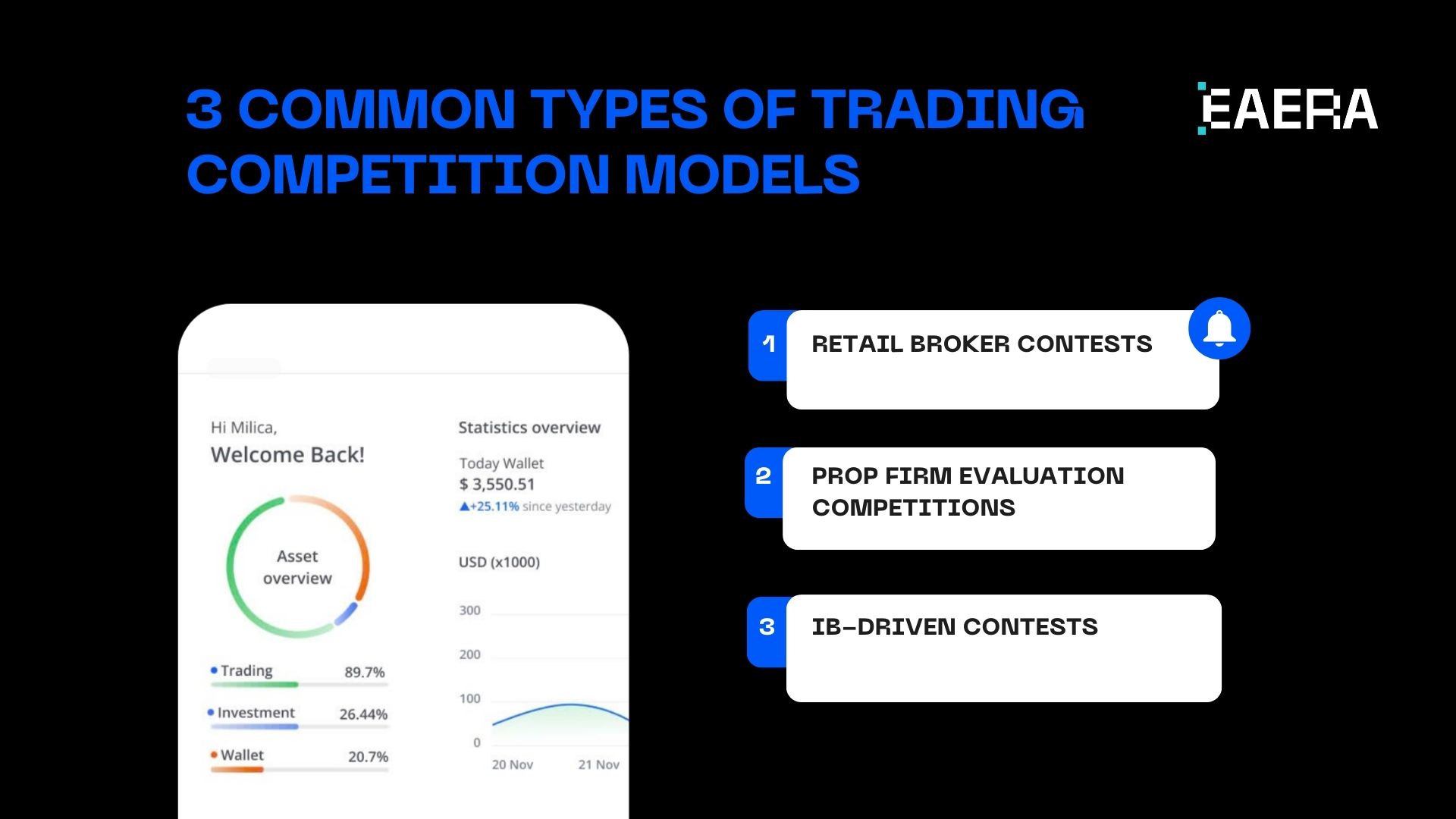
A structured trading competition platform guarantees uniform rule application, transparent participant visibility, and decreased operational friction regardless of the model.
Why Trading Competitions Matter Strategically?
Excitement is not the only factor in a well-designed trading competition. It helps achieve quantifiable business goals.
Strategic purposes of a trading competition
- Accelerate client acquisition
- Increase deposit conversion rates
- Stimulate trading volume
- Test trader consistency in controlled environments
- Strengthen brand positioning
A trading competition can serve as a pre-evaluation funnel for prop firms. It enables businesses to watch how traders behave before investing money.
Trading contest boost engagement cycles and decreases inactivity for brokers.
Business impact
When properly structured, a trading competition platform delivers:
- Higher trading frequency
- Improved client retention
- Faster onboarding cycles
- Clear performance segmentation
Contests turn into operational hassles in the absence of automation. They become reliable sources of income with a system of trading contests.

Core Capabilities of a Modern Trading Competition Platform
A leaderboard and prize announcement alone are insufficient for a successful trading competition. Automation, risk monitoring, and rule of flexibility must all be supported by the system.
A leaderboard and prize announcement alone are insufficient for a successful trading competition. Automation, risk monitoring, and rule of flexibility must all be supported by the system.
Key capabilities include:
- Configurable rule engine
- Rank by net profit, ROI, trading volume, or risk-adjusted metrics
- Set clear parameters: maximum drawdown limits, exposure thresholds, contest time windows
- Real-time leaderboard transparency
- Show ranking, performance metrics, and position movement
- Live updates maintain engagement and reinforce fairness
- Automated risk governance
- Monitor exposure continuously
- Detect breaches instantly
- Apply disqualification logic automatically to prevent excessive leverage behavior
- Flexible prize logic
- Support funded accounts, tiered bonuses, cashback incentives
- Auto-calculate and distribute rewards to reduce disputes and improve efficiency
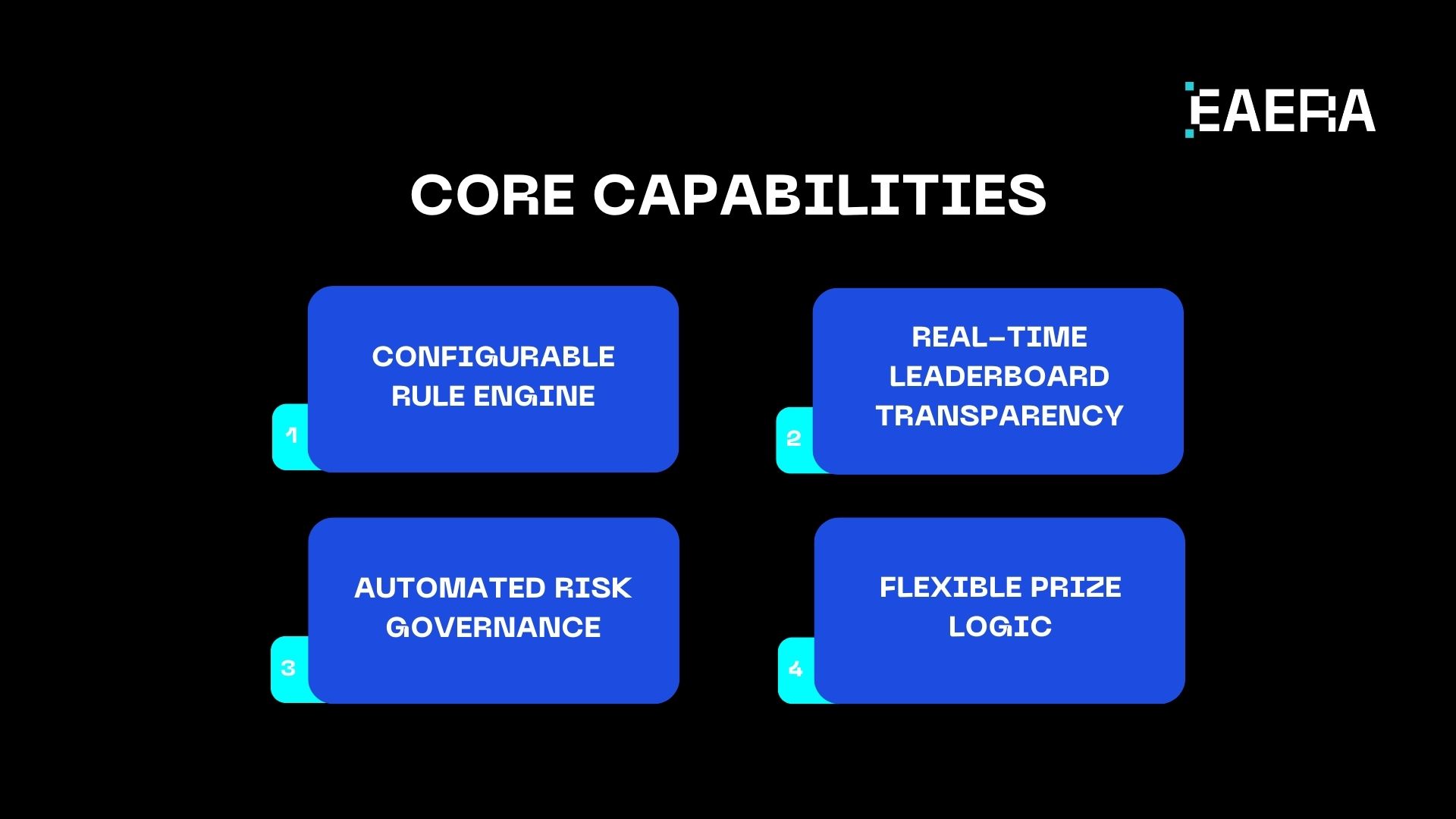
To ensure centralized oversight, enterprise-grade providers like EAERA show how a trading competition can easily integrate with trading platforms, CRM systems, and back-office tools.
Prior to launching, a well-established trading contest platform ought to facilitate scenario testing. To assess possible financial impact, firms can model exposure outcomes, prize structures, and rule configurations.
Designing a Profitable Trading Competition Model
Not all trading contests produce long-term value. The structure of a contest determines its profitability.
Increased trading spreads, conversion into funded programs, and entry fees are frequently the sources of revenue. A well-crafted trading competition transforms a marketing expense into a managed growth engine.
Risk management measures are equally crucial. To stop destructive trading, firms should set up maximum lot size thresholds, volatility-adjusted sizing rules, and exposure limits. Maintaining financial predictability is aided by a drawdown-first strategy, which prioritizes the loss of containment rules.
Rewarding consistency over drastic short-term returns is also essential for long-term sustainability. Brokers and prop firms safeguard their capital and brand reputation by promoting consistent performance patterns.
Activating IB Networks Through Trading Competitions
IB and affiliate ecosystems can be greatly strengthened by trading competitions. Businesses design focused engagement programs that encourage affiliates to boost activity by breaking contests down by partner tier or region.
IBs can track performance metrics in real time through structured competitions, which promotes transparent volume growth. Accountability is strengthened by the alignment of commission tracking and competition mechanics.
Brokers can use trading competition programs to implement time-bound incentives that encourage performance bursts while upholding risk discipline, as an alternative to merely depending on static commission models. This strategy produces quantifiable activation cycles and improves partner loyalty over time.
Building Scalable Trading Competition Infrastructure
Technical and governance readiness are necessary for scaling a trading competition. To accommodate increasing participant numbers, the platform must have cloud-based scalability, automated scoring logic, and real-time data ingestion.
A professional trading competition platform should provide:
- Transparent scoring logic
- Immutable rule enforcement
- Structured audit trails
- Compliance-ready reporting
Configurable rule layers that permit jurisdiction-specific modifications while preserving centralized control are advantageous for multi-entity brokers. Competition modules can function within larger brokerage ecosystems, allowing for scalability without fragmentation, as demonstrated by infrastructure providers like EAERA.
Operational risk decreases and contest reliability rises when manual processes are replaced by automation.
These days, a trading contest is more than just an engagement tool. It turns into structured infrastructure for partner activation, trader assessment, and revenue growth when backed by a specialized platform.
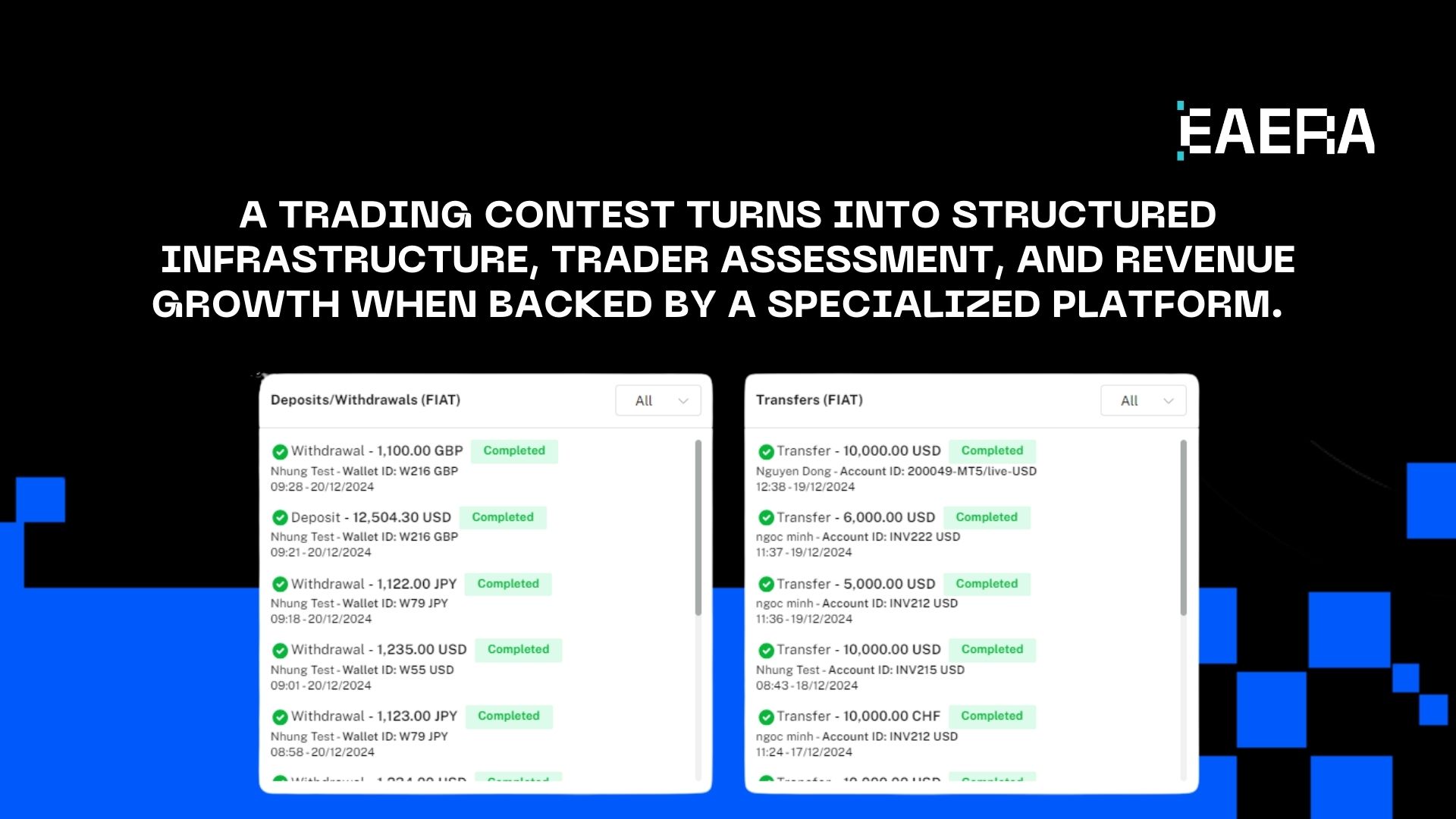
A structured trading competition yields useful behavioral data in addition to engagement and revenue. Over time, firms can examine metrics related to consistency, risk tolerance, and participant performance patterns. Better capital allocation plans, focused marketing campaigns, and more intelligent segmentation are all supported by this data
Brokers and prop firms can obtain long-term strategic insight rather than just short-term activity spikes by approaching each trading competition as both a growth initiative and an analytical framework.
Furthermore, management can optimize incentives, improve operational efficiency across regions, and refine future contest designs with the support of structured reporting from each trading competition.
Brokers and prop firms can run successful trading competitions at scale by integrating integrated risk controls, real-time transparency, and automated rule enforcement. Structured contest infrastructure is now a strategic asset for long-term performance and operational stability in a highly competitive environment.