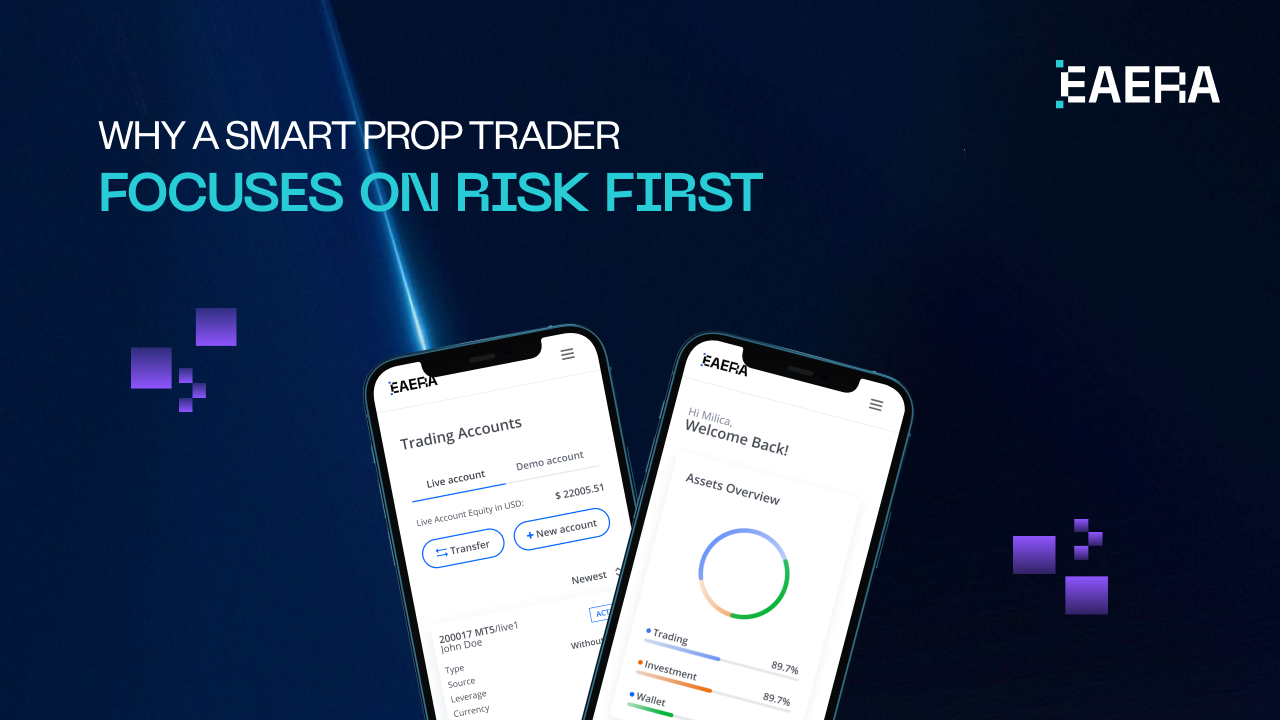




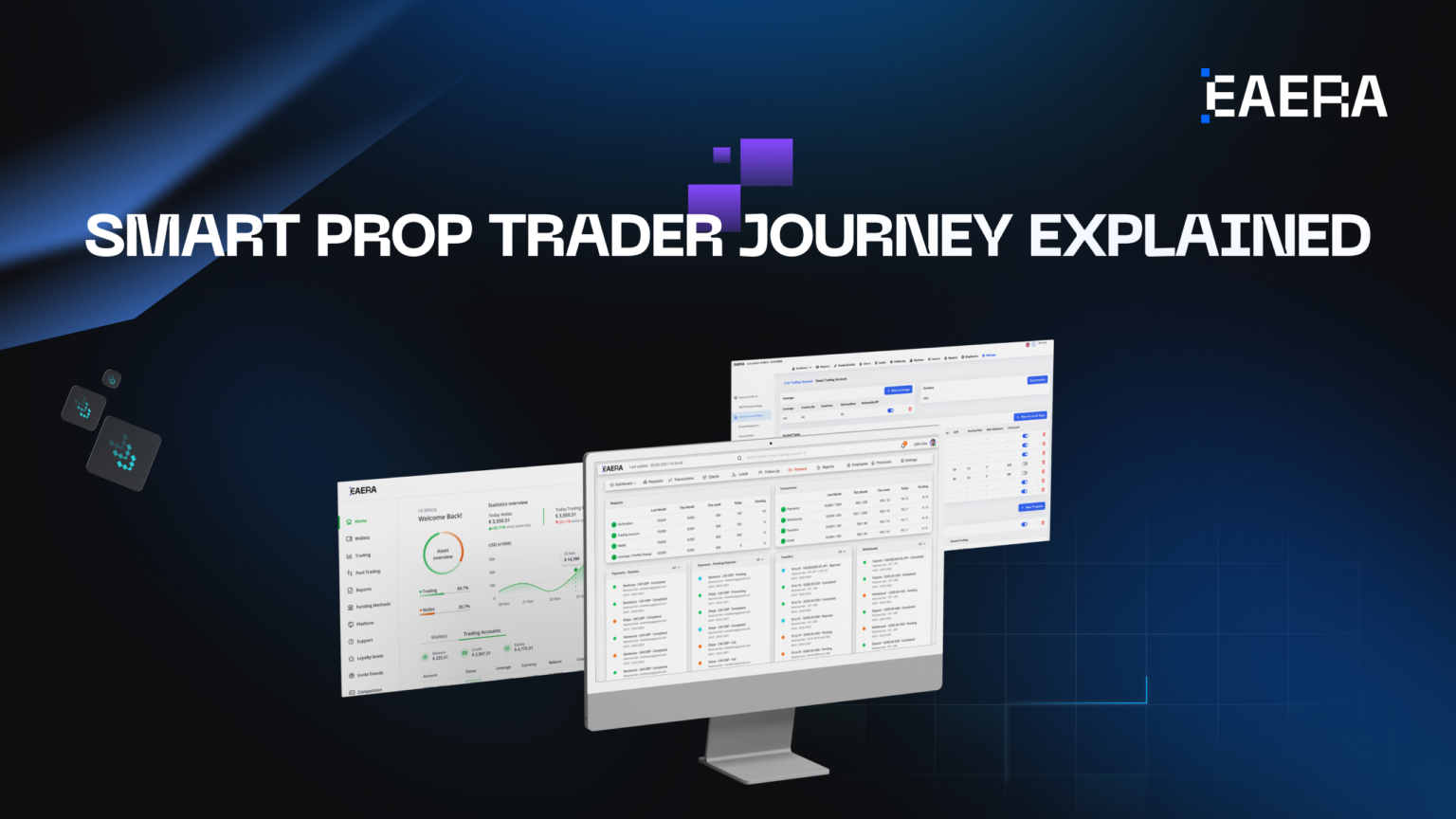
The entire process a smart prop trader goes through, including finding a prop firm, buying an evaluation, onboarding, trading under real-time risk limits, getting a pass or fail result, moving on to the funded stage, receiving payouts, and determining whether to stay long-term, is known as the “smart prop trader journey.”
Related articles:
- Why Smart Prop Trading Needs Automation?
- Smart Prop Trader: How To Choose a Prop Firm That Fits Your Lifestyle and Goals
Enhancing the smart prop trader journey is a growth and retention strategy, not just a UX touch-up. This guide deconstructs the process, identifies critical decision points, and demonstrates what constitutes “good” when the objective is sustaining funding retention rather than one-time challenge sales.
Who Is a Smart Prop Trader in 2026?
A smart prop trader follows rules, is disciplined, and is motivated by optimization. Instead of treating an evaluation as a gamble, they handle it as a risk-managed project. They prefer companies that offer transparency, plan volatility, and continuously monitor boundaries.
This profile differs from a “challenge shopper” who is primarily price-driven, bounces between discounts, and accepts higher uncertainty. Challenge shoppers can inflate short-term sales but often produce higher dispute rates and lower long-term value.
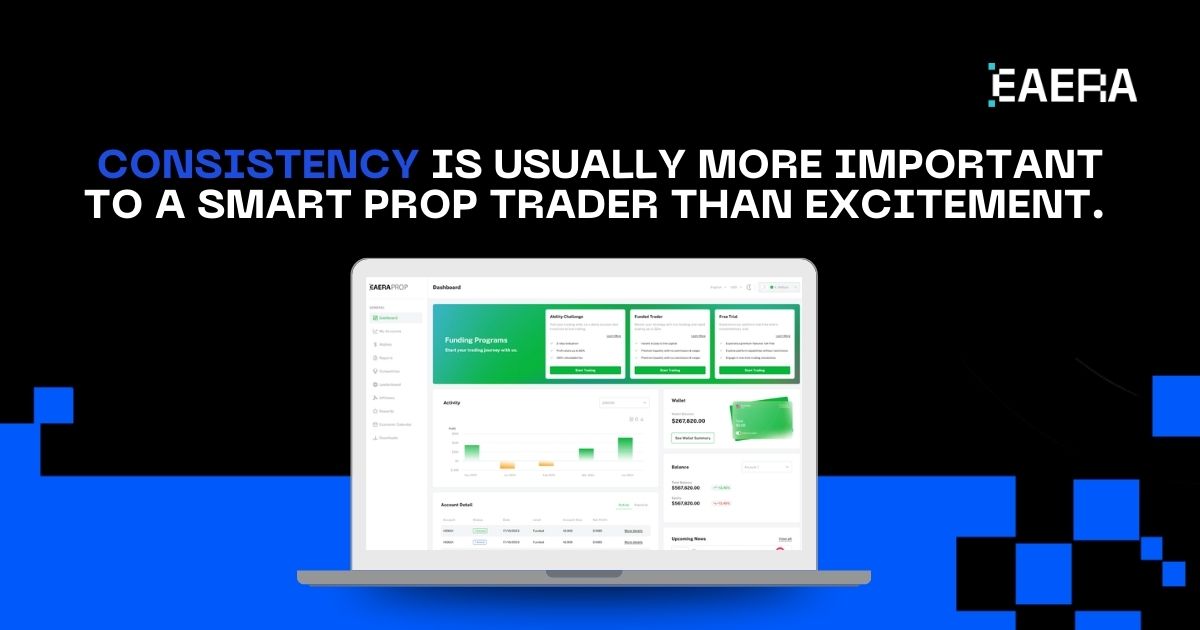
Consistency is usually more important to a wise prop trader than excitement. They want regulations that are unambiguously stated, monitored in real time, and consistently applied. Operational maturity also matters to them: prompt account delivery, consistent payout processing, dependable platform behavior, and support that can cite facts rather than conjecture.
Stage 1: Discovery and Purchase Decision
Seldom does a smart prop trader make a purchase on their first click. After finding programs via search, YouTube, Discord communities, affiliate reviews, and trader forums, they double-check their legitimacy. Under the guise of pricing, the purchase decision is frequently a trust decision.
A smart prop trader filters signals that show dependability and fairness. They want to know if the firm can prove decisions if they are contested and if the rules are intended to be enforceable. They also look for operational signs that payouts are treated as a process, not a special favor.
Top trust elements your website should show:
- A clear rule summary for each program
- A sample dashboard view or screenshots with risk limit tracking
- Payout schedule and eligibility rules in one place
- Policy around violations and disputes, including how evidence is provided
- Verified payout proof format and transparency around processing timelines
- Clear platform and account setup information
Stage 2: Onboarding and First-Time Setup
The smart prop trader wants instant clarity after making a purchase. This is the turning point: confidence declines, and tickets increase if provisioning seems sluggish or unclear. Uncertainty should be decreased rather than increased during the initial setup experience.
The trader anticipates simple things right away: a dashboard that displays limits and progress without requiring them to perform any calculations by hand, a clean program summary, and credentials that are delivered promptly. The timing of any KYC or verification procedures must be made clear. A smart prop trader will not accept surprise verification that only shows up when they ask for a payout, but they can accept verification.
Typical friction points that cause early drop-off:
- Delayed credentials or missing account details
- Rule definitions scattered across multiple pages or PDFs
- Confusing platform setup instructions and server selection
- Add-ons and resets explained with marketing language instead of clear mechanics
Activation checklist:
- One-page program summary with definitions and examples
- Instant access to dashboard showing real-time limits
- Clear “how to start trading” steps for the supported platform
- A visible status page for account provisioning and milestones
- Support contact paths with expected response time
At this point, the smart prop trader is determining if the company uses a system or a set of manual procedures.
Stage 3: Trading Phase Experience (Risk, Alerts, Transparency)
This is where the smart prop trader either turns into a devoted user or a potential source of conflict in the future. The trader is continuously juggling constraint management and performance during the trading phase. They are trading within a framework of rules rather than just on the market.
Drawdown, daily loss, target progress, minimum days, and any time constraints are all monitored by a smart prop trader. Traders will rely on spreadsheets and assumptions if the system leaves these unclear, which increases the likelihood of unintentional breaches. Interpretation risk is reduced by the best experience.
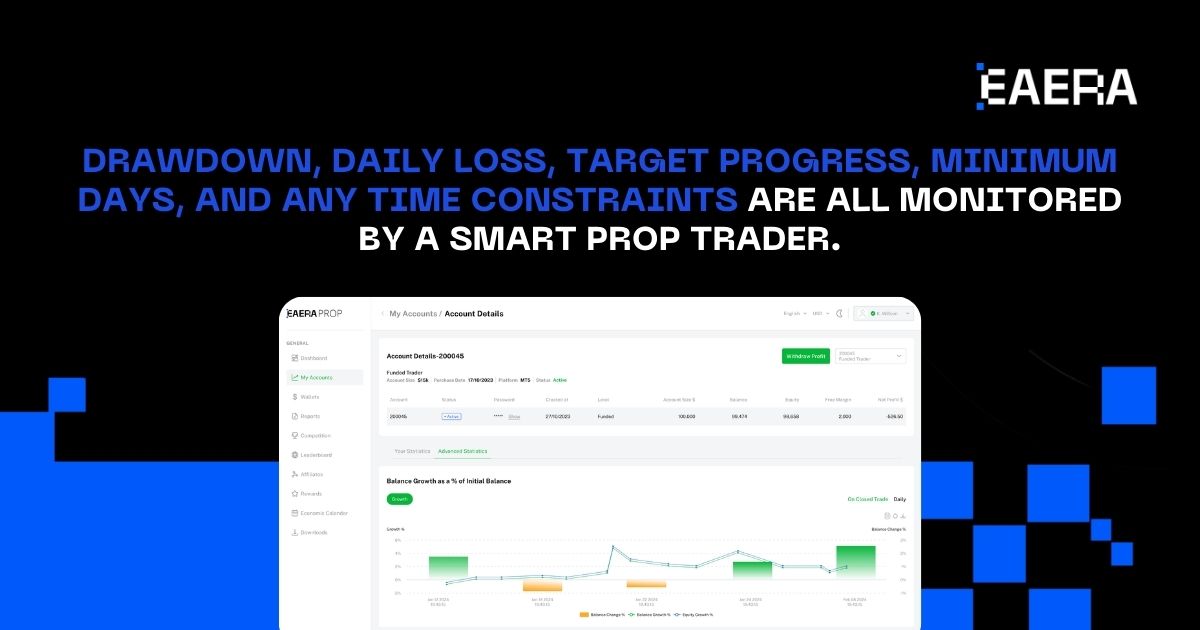
A dashboard that supports the trading phase should show, at minimum:
- Remaining drawdown and daily loss buffer, updated in real time
- Target progress and current eligibility status
- Proactive warnings when approaching limits
- An event timeline that explains key moments and status changes
“More charts” do not distinguish a good product from a mediocre one. It’s how the system guards against unexpected results. Evidence lessens arguments, and alerts and nudges lessen unintentional breaches. When the trader understands what is happening and why, they trade with more discipline, and the firm spends less time defending decisions.
A smart prop trader is not asking for leniency. They are asking for clarity, predictability, and proof.
Stage 4: Pass/Fail Outcomes, Funded Stage, and Payout Cycle
The most delicate trust moment is when results are pass or fail. The astute prop trader anticipates deterministic outcomes, meaning that the same inputs should consistently yield the same outcome. The trader will believe the system is set up to fail them if results seem arbitrary.
Strong operations enable the explanation of results. This indicates that the decision is linked to versions of the rule and incorporates evidence like timestamps, thresholds, and measured values. This is what transforms “we failed you” into “this particular rule triggered at this moment.”
Once funded, expectations tighten. A smart prop trader anticipates stability and continuity, which includes clear communication of funded limits, explicit scaling plans, and consistent operational responses in the event of an incident. What transpires following the initial payout request strengthens the firm’s credibility.
Payout transparency matters as much as payout speed. The trader should be able to see eligibility, required conditions, processing steps, and payout history. Common breakdowns that damage trust include unclear eligibility, manual delays without status updates, and inconsistent enforcement across similar cases.
This is where platform-led operations help. EAERA is an example of a workflow-driven approach that aims to unify evaluation logic, funded lifecycle handling, and payout operations, so outcomes are consistent and traceable.
Stage 5: Retention for Smart Prop Traders (Scaling and Long-Term Trust)
The business compounds are in retention. When the company demonstrates that it can function consistently over time, not just during acquisition, a smart prop trader stays. Reliability is more important for retention than hype.
Stable regulations, predictable payouts, and equitable dispute resolution are the foundations of long-term trust. Discipline, not just quick profits, should be rewarded by scaling. While it can be helpful, the community cannot take the place of operational maturity. Transparent communication is a retention lever when regulations change, or incidents occur because it lessens uncertainty and churn caused by rumors.
Retention levers that tend to work without inflating disputes:
- Scaling milestones that are clearly defined and consistently applied
- Education that reinforces rule-aware behavior
- Transparent incident updates when platforms or payments are disrupted
- Fair and evidence-based dispute resolution
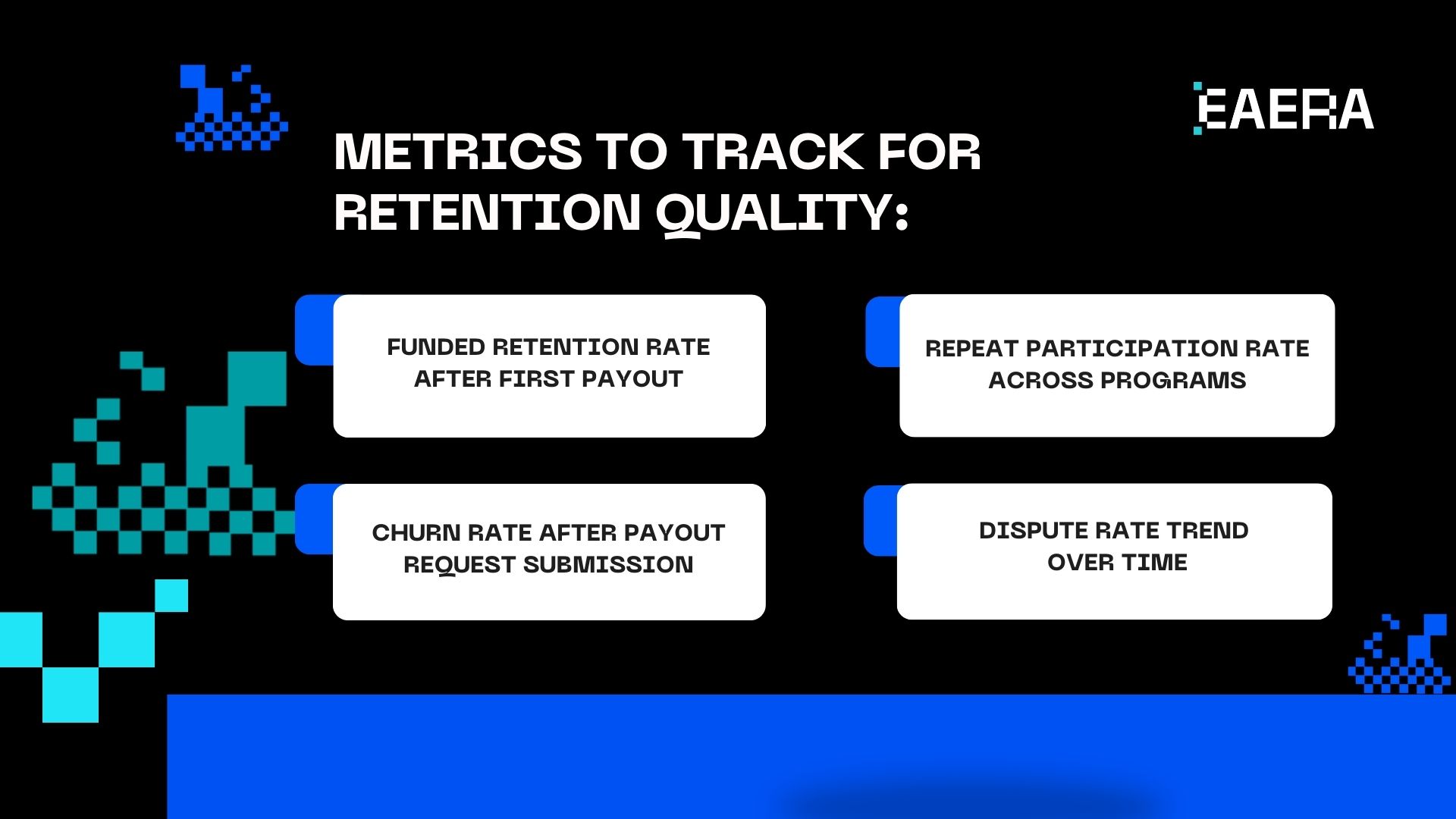
Metrics to track for retention quality:
- Funded retention rate after first payout
- Repeat participation rate across programs
- Churn rate after payout request submission
- Dispute rate trend over time
EAERA can be positioned as a “system-first” foundation for firms that want to retain serious traders by standardizing transparency and operational workflows.
The product is the journey of the smart prop trader. You get long-term funded retention rather than one-time challenge churn if discovery fosters trust; onboarding eliminates friction, trading phase visibility avoids surprises, and payouts are predictable and explicable.