




Prop firms won risk governance and trust in 2026. The trust interface is a powerful prop trading dashboard that helps operators enforce rules consistently with evidence and helps traders prevent unintentional violations. This guide explains the functions of a risk-controlled prop trading dashboard, which indicators are important, how operator controls should operate, and how to assess dashboards using evidence rather than conjecture.
Related articles:
What a Risk-Controlled Prop Trading Dashboard Must Do?
Instead of being used as a reporting screen, a prop trading dashboard should be used as a risk control surface. It won’t lessen disagreements or failures if it just displays performance. It becomes a growth lever because it lowers refunds, chargebacks, and support load if limits are made clear, and results are understandable.
Two audiences are served by the best prop trading dashboard. To trade safely within constraints, traders require clarity. To operate the company consistently at scale, operators require proof and controls.
A useful definition of “best” is outcome-based: does the prop trading dashboard decrease unintentional breaches, expedite the resolution of disputes, and improve payout predictability? If so, it’s risk management. If not, it is merely a data display.
Real-Time Risk Indicators Traders Must See
Confusion rather than malice is the starting point of most disputes. Because the dashboard is ambiguous, slow, or inconsistent, traders believe they are safe. They feel deceived when a breach occurs. By displaying the appropriate numbers with the appropriate definitions at the appropriate times, a risk-controlled prop trading dashboard avoids this.
The primary limitations—daily loss, maximum loss, and any trailing drawdown mechanics—must, at the very least, be clearly visible in the trader view. However, precision is more than just displaying a figure. It’s about illustrating the meaning of the number and how it changes.
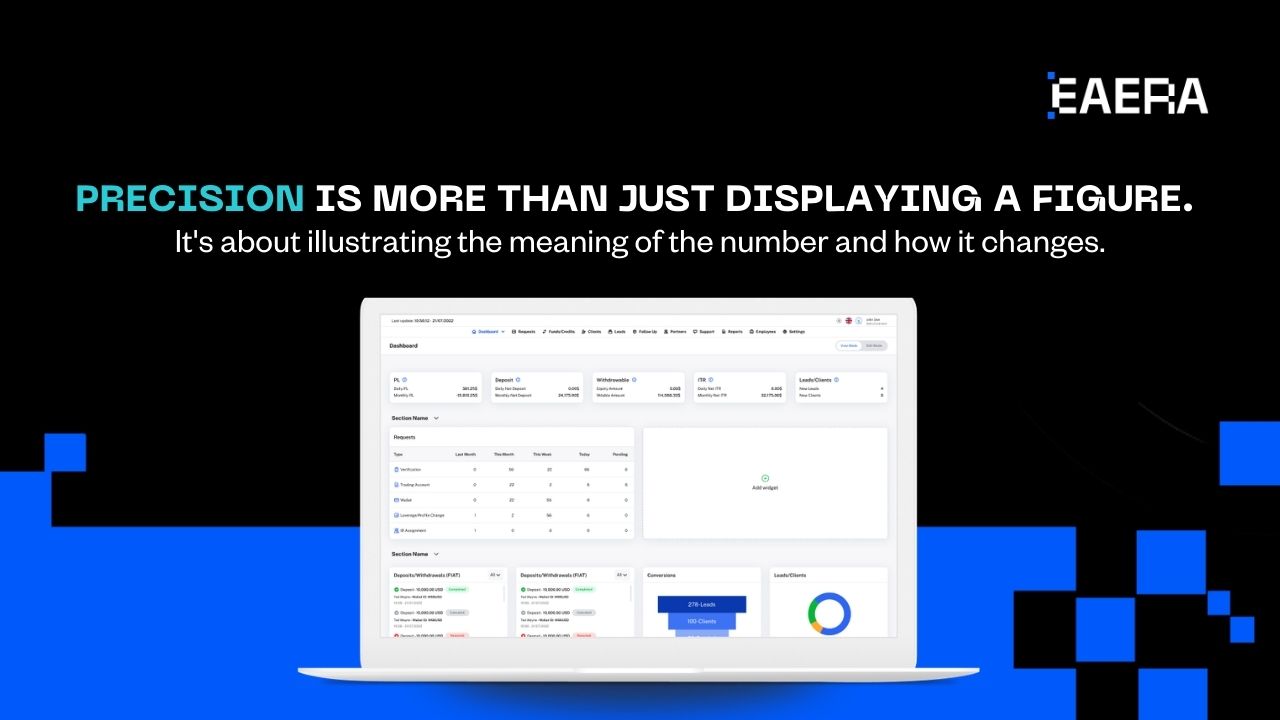
Risk is communicated in two layers by an effective prop trading dashboard. It first clearly displays the remaining buffer. Secondly, it includes warning bands that alert traders not only when they have failed but also when they are in danger. Because it lessens unexpected outcomes, this “near-breach visibility” is one of the biggest factors contributing to lower dispute rates.
Additionally, it must make rule progress simple to comprehend. Without having to decipher edge cases, traders should be able to see target progress and minimum trading days. If your dashboard forces traders to build their own spreadsheet just to stay compliant, you’re manufacturing tickets.
Operator Controls: Monitoring, Interventions, and Evidence
If a prop trading dashboard only benefits traders, it is not complete. For governance to be scalable, operators require a control view. In the absence of this, teams are forced to rely on manual review, erratic exceptions, and decisions that cannot be later justified.
Operator-side capabilities should focus on three things:
- Monitoring (what is happening now, at scale)
- Interventions (what actions are allowed, by role)
- Evidence (how decisions are proven later)

By using queues and alerts, monitoring enables the system to identify at-risk accounts and breaches. Intervention refers to the platform’s role-specific control over what actions are permitted, with necessary approvals. Every significant decision can be replayed as a timeline with rule versions, thresholds, measured values, and timestamps thanks to evidence.
The most crucial operator feature is the evidence layer. The truth should be presented on a prop trading dashboard in a way that is defendable.
Small table: operator action and required evidence log
| Operator action | Required evidence inside the prop trading dashboard |
| Mark breach as valid | Rule version, threshold, measured value, timestamp |
| Approve exception | Reason, approver identity, maker-checker confirmation, change log |
| Approve payout | Eligibility calculation record, approval trail, payout schedule |
| Reject payout | Exact rule failed, evidence snapshot, communication template |
| Close dispute | Event timeline + resolution note linked to evidence |
Workflows, permissions, and auditability are viewed as essential infrastructure rather than optional admin features in EAERA, an illustration of a governance-first product mindset in fintech operations. An operator-grade prop trading dashboard demands precisely that mentality.
Dashboard Design That Prevents Disputes
When a dashboard is designed for explainability rather than just visibility, it lessens disputes. Explainability allows operators to settle disputes without argument and traders to comprehend what is happening without speculating.
Consistent definitions, unambiguous tooltips, timestamps on important values, and an event timeline that is easily visible are frequently the most effective enhancements. A timeline is important because it eliminates uncertainty. It displays when a threshold was crossed, when a limit was moved, when the system requested a state change, and when the account equity peaked (for trailing logic).

Dispute prevention is not a legal policy. It is a product decision.
Integration Requirements: Risk Engine, Trading Platform, Payments
If a prop trading dashboard isn’t linked to payouts and enforcement, even the best-designed one will fail. There is no UI feature for risk control. It’s a system of behavior that relies on consistent rule evaluation and precise, timely inputs.
The risk engine, account status, and trading events must all be in line with a risk-controlled prop trading dashboard. Buffers become deceptive if equity updates are delayed. Results become inconsistent if rule versions are not synchronized. When trust is most important, traders encounter friction if payout eligibility isn’t integrated.
Integration checks to validate in a demo:
- How quickly do risk buffers update after a fill?
- Are equity and balance definitions consistent with rule calculations?
- Can the system show the rule version tied to each outcome?
- Do alerts trigger before a breach, not after?
- Does payout eligibility update automatically based on rules?
- Can the operator export an audit timeline for any account?
The systems that uphold reality must be integrated with a prop trading dashboard. If not, it turns into a presentation layer that traders can’t rely on.

How to Evaluate the Best Prop Trading Dashboard?
“Best” should be demonstrated using a KPI scoreboard and an end-to-end demo flow. Disputes, refunds, and manual processes will later reveal any gaps if a vendor is unable to display the entire lifecycle within the prop trading dashboard.
KPI scoreboard to judge whether the prop trading dashboard is controlling risk:
- Breach rate (and near-breach frequency)
- Dispute rate per 1,000 traders
- Refund and chargeback rate
- Payout cycle time and payout failure rate
- Tickets per 1,000 traders
- Purchase to first trade time
Teams looking for a workflow-governed approach where operator controls, evidence, and dashboard transparency are designed together rather than added later can use EAERA as a guide.
A performance screen is not the ideal prop trading dashboard. It is a risk-control product that lessens operational burden and fosters trust. In 2026, the “best” prop trading dashboard will have real-time buffers, proactive warnings, evidence timelines, operator governance controls, and tight integrations. Verify dashboards with evidence, then use dispute, breach, payout, and ticket KPIs to gauge success.