


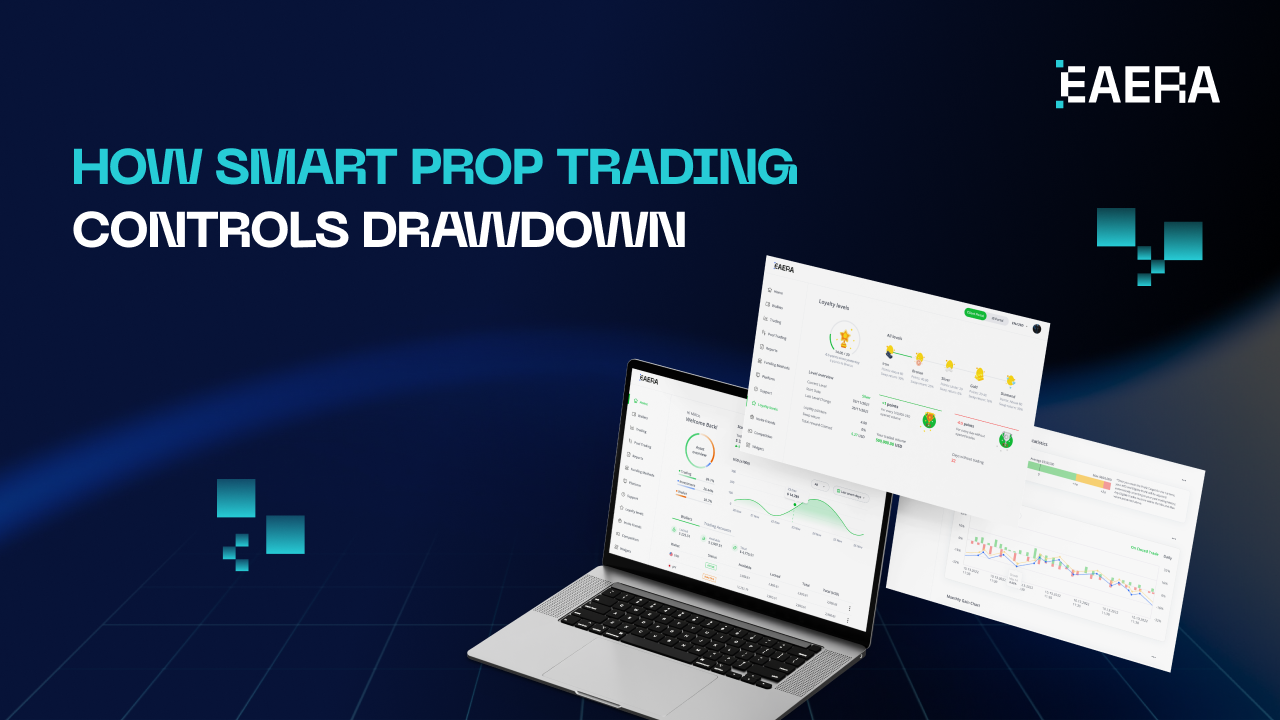
Drawdown is now a system function rather than a trader’s responsibility in prop firms thanks to smart prop trading. Drawdown is more than just a statistic in prop trading; it is the main risk that decides whether a company succeeds or fails. Drawdown control has historically primarily depended on trader discipline and manual oversight, which is erratic and challenging to scale.
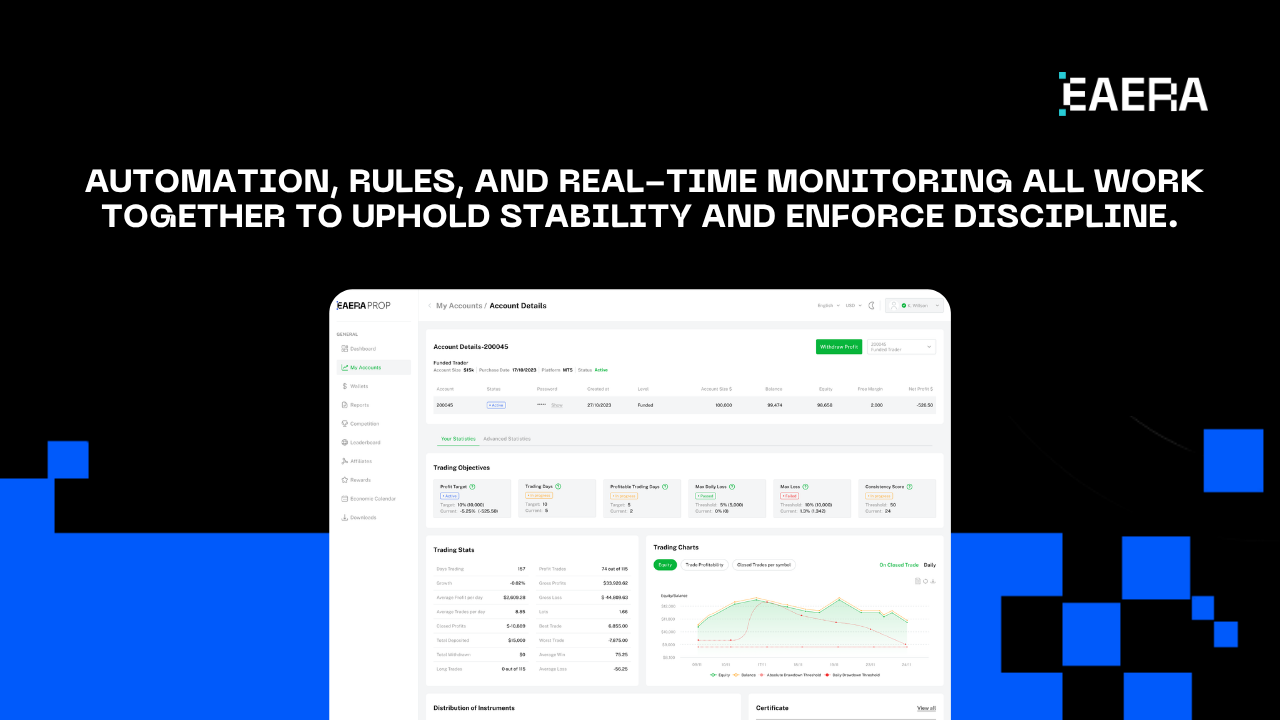
This is addressed by intelligent prop trading, which integrates risk control directly into the system. Automation, rules, and real-time monitoring all work together to uphold stability and enforce discipline.
Related articles:
Why Drawdown Control Is Critical in Prop Trading?
A prop firm’s financial stability is directly impacted by a drawdown. Every loss lowers available capital and puts more strain on operations and traders. Even brief periods of subpar performance can cause serious harm in the absence of effective control.
The importance of drawdown control can be seen in several areas:
- It protects the firm’s capital from excessive losses
- It ensures long-term sustainability of the trading model
- It stabilizes payout structures and trader progression
Drawdown is regarded as the most crucial variable to manage smart prop trading. Disciplined risk management, as opposed to aggressive trading, leads to profitability. Businesses that put drawdown control first are better positioned to grow without taking more risk.
Controlling drawdown also contributes to operational stability and trader confidence. Traders are more inclined to trust the system and abide by the rules when they are aware that risk is consistently managed. One major benefit of intelligent prop trading is this alignment between trader behavior and system enforcement, particularly as the number of active accounts rises.
What “Smart Prop Trading” Means in Risk Management?
The transition from manual to system-driven risk control is represented by smart prop trading. It focuses on creating settings with well-defined, consistently enforced, and openly communicated rules.
In this model, risk management is structured around:
- Rule-based evaluation such as daily loss limits and maximum drawdown
- Real-time monitoring of trading activity and exposure
- Deterministic outcomes where rules produce predictable results
- Transparent feedback systems for traders
Smart prop trading guarantees that every trader is assessed under the same circumstances, in contrast to traditional prop models where decisions may differ based on reviewers or timing. Conflicts are decreased, and trust is increased by this consistency.
Risk control is no longer reactive, which is the main distinction. Rather, it becomes an essential component of the system’s functioning.
Key Mechanisms Used to Control Drawdown
In prop trading, a variety of structured mechanisms are necessary for effective drawdown control. Together, these systems produce a regulated and predictable environment.
Rule-Based Risk Limits
Rules that are unambiguous and enforceable form the basis of drawdown control. These consist of overall drawdown limits and maximum daily loss.
Smart prop trading guarantees that traders cannot take more risk than is reasonable by establishing these limits. There is no room for doubt because rules are applied uniformly to all accounts.
Real-Time Monitoring
Monitoring needs to be ongoing rather than post-event. Systems in effective prop trading monitor exposure, equity, and positions in real time.
This allows firms to:
- Detect potential breaches instantly
- Monitor risk across all accounts simultaneously
- Maintain visibility into overall exposure
Risks are detected before they become more serious thanks to real-time monitoring.
Automated Enforcement
Only when rules are consistently enforced can they be effective. Automation is used in smart prop trading to act quickly when limits are exceeded.
This may include:
- Restricting trading activity
- Triggering warnings
- Closing positions or marking accounts as failed
Automation guarantees equity for all traders and eliminates delays.
Trader Feedback Systems
Maintaining trust requires transparency. Dashboards that display traders’ status, including remaining drawdowns and advancement toward goals, are provided by intelligent prop trading.
This visibility helps traders:
- Understand their risk position
- Adjust strategies accordingly
- Avoid unexpected rule violations
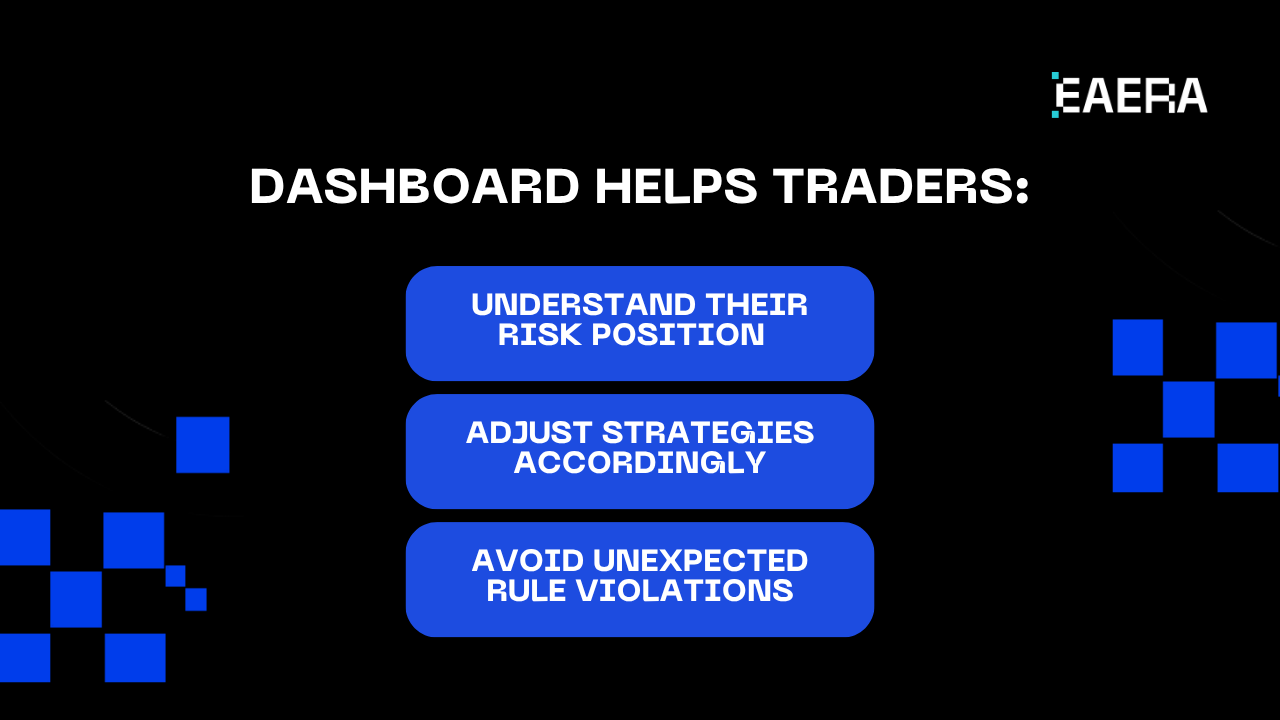
Traders are more likely to act consistently when they are aware of their exact position.
Common Failures Without Smart Drawdown Control
Drawdown control becomes unreliable in the absence of structured systems. When using manual processes, many prop firms encounter similar problems.
Common failures include:
- Delayed detection of rule breaches
- Inconsistent enforcement across different cases
- Lack of clear feedback for traders
- High dispute and refund rates
- Increased financial exposure
These issues frequently occur when decisions are made based on human interpretation rather than set guidelines. Operations become reactive in the absence of intelligent prop trading. Damage has already been done by the time a problem is discovered. This limits the company’s capacity to grow and causes instability.
How to Build a Smart Drawdown Control System?
It takes a methodical approach to build a dependable drawdown control system. The goal of effective prop trading is to create procedures that are both enforceable and scalable.
Key steps include:
- Defining clear and measurable risk rules
- Implementing real-time monitoring systems
- Automating enforcement logic to remove delays
- Providing transparent dashboards for traders
- Maintaining audit trails for all decisions
Together, these components form a system that consistently controls risk. This strategy is supported by platforms such as EAERA, which combine workflow automation, monitoring tools, and rule engines into a single system. Because of this, brokers can use smart prop trading without having to start from scratch with complicated infrastructure.
The goal is not just to control drawdowns, but to do so in a way that scales the business.
The Future of Drawdown Control in Prop Trading
As technology develops, drawdown control is changing. Automation and intelligence will be even more important in the next generation of prop trading.
Future developments include:
- AI-driven risk models that adapt to market conditions
- Predictive analytics to identify potential drawdowns early
- Fully automated systems that manage risk without manual intervention
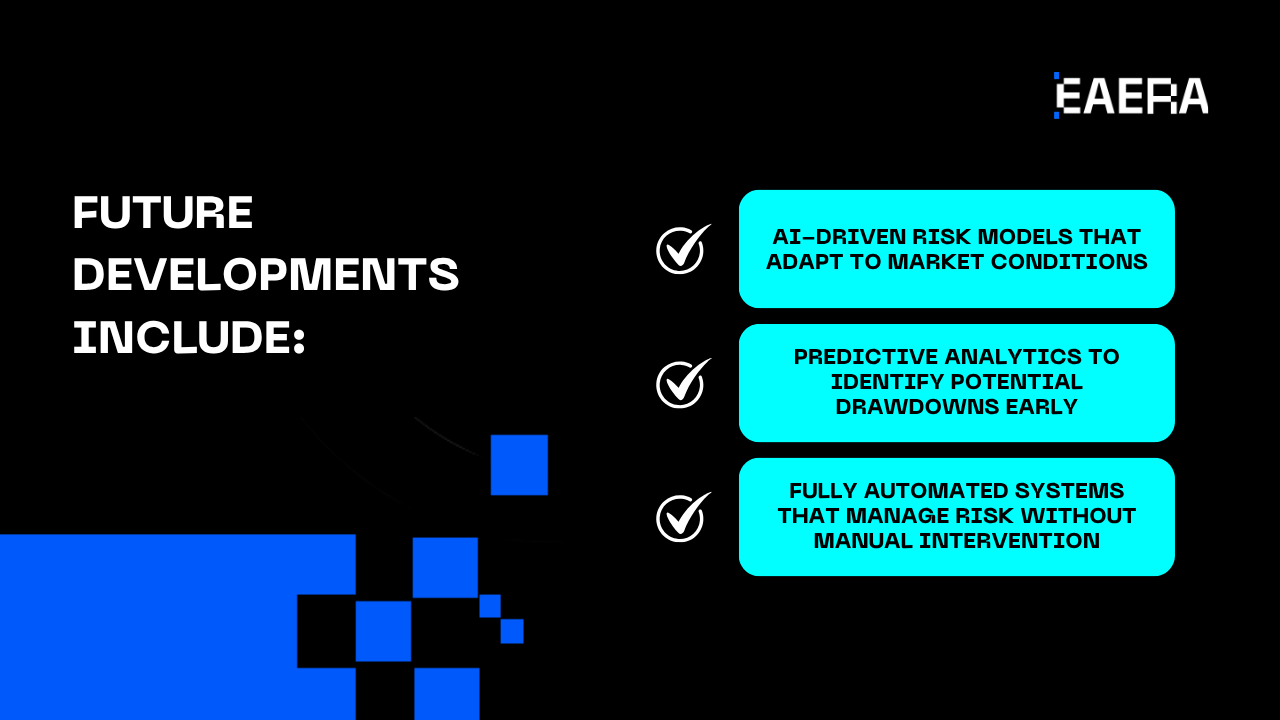
Drawdown control will be more accurate and effective thanks to these advancements. Smart prop trading is already progressing toward becoming a fully integrated system that integrates data, rules, and automation thanks to platforms like EAERA.
Businesses that use these technologies will have a big advantage as competition rises. The key to successful prop trading is drawdown control. Even successful strategies may fail without it. Drawdown control is converted from a manual procedure to a system-driven function through smart prop trading.