



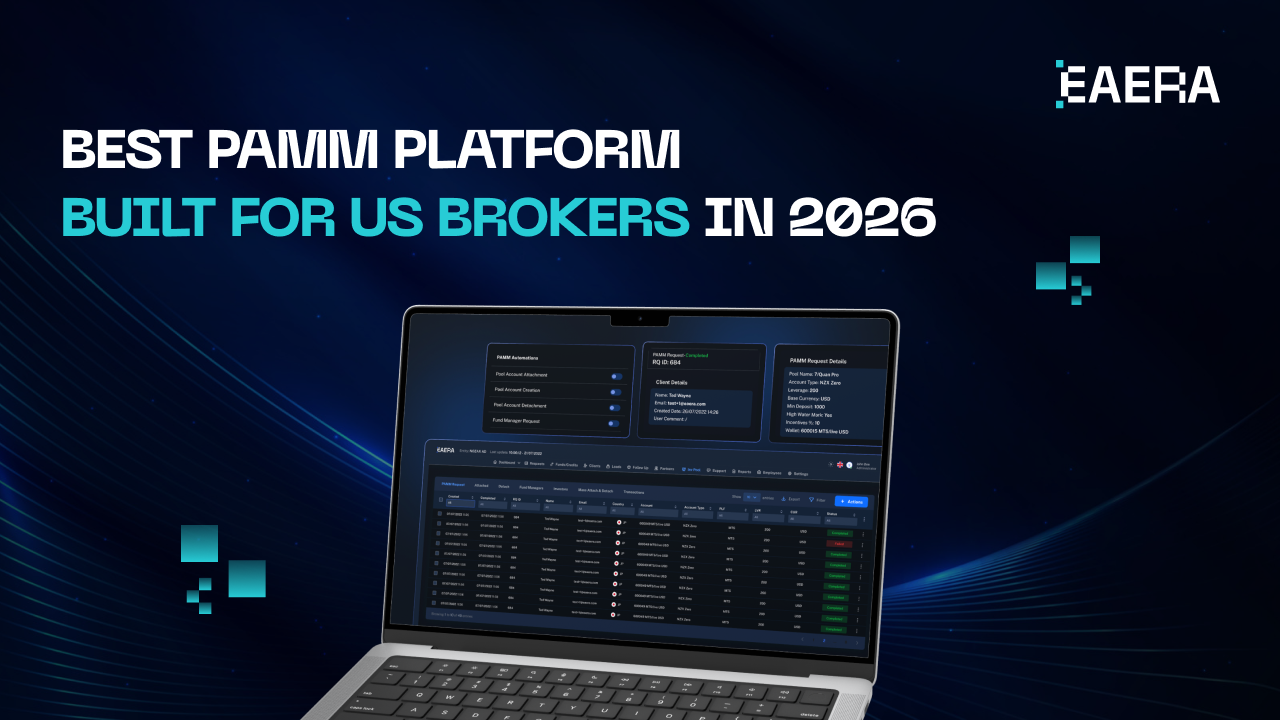
PAMM platform adoption is accelerating among US brokers as demand for managed trading solutions continues to rise. Brokers need ways to grow their assets under management (AUM) that are easy to use and don’t make their jobs harder in a market where there are more oversight and fewer clients.
Related articles:
A modern PAMM system is no longer just an extra. It’s the main part of the system that handles allocation, reporting, and investor trust. This article explains what makes the best platform in 2026, how to choose between options, and how US brokers can grow their businesses in a smart way.
Why US Brokers Are Adopting PAMM Platforms in 2026?
US brokers are under pressure to find new ways to make money and keep their clients. Many retail traders would rather have passive exposure through experienced managers than trade on their own. This change is making managed account models more popular.
A well-designed PAMM system enables brokers to:
- Aggregate capital from multiple investors into managed accounts
- Allocate trades proportionally across sub-accounts
- Monetize performance through management and performance fees
The business upside is clear:
- Increased AUM without proportional headcount growth
- Recurring revenue streams tied to performance
- Higher client retention due to structured investment options
Investors also benefit from openness and access to professional strategies at the same time. For US brokers, a PAMM platform is a strategic priority because it can help them make more money and keep their clients satisfied.
Also, the pressure to compete is getting stronger. If brokers don’t offer managed account solutions, they could lose clients to companies that do offer more flexible investment options. A modern PAMM system helps brokers stay relevant by letting them offer more products without making their jobs harder.

What Defines the Best PAMM Platform for US Brokers?
Not all platforms are made for the US market. The best PAMM software must have good performance, be open, and give users control over their operations, all while meeting regulatory requirements for reporting and auditability.
Core criteria include:
- Compliance readiness: Systems should support audit trails, clear fee disclosures, and role-based access.
- Transparent allocation logic: Investors must understand how trades and profits are distributed.
- Real-time performance tracking: Managers and investors need up-to-date metrics on returns, drawdowns, and fees.
- Investor–manager separation: Permissions and controls must clearly distinguish between capital providers and strategy managers.
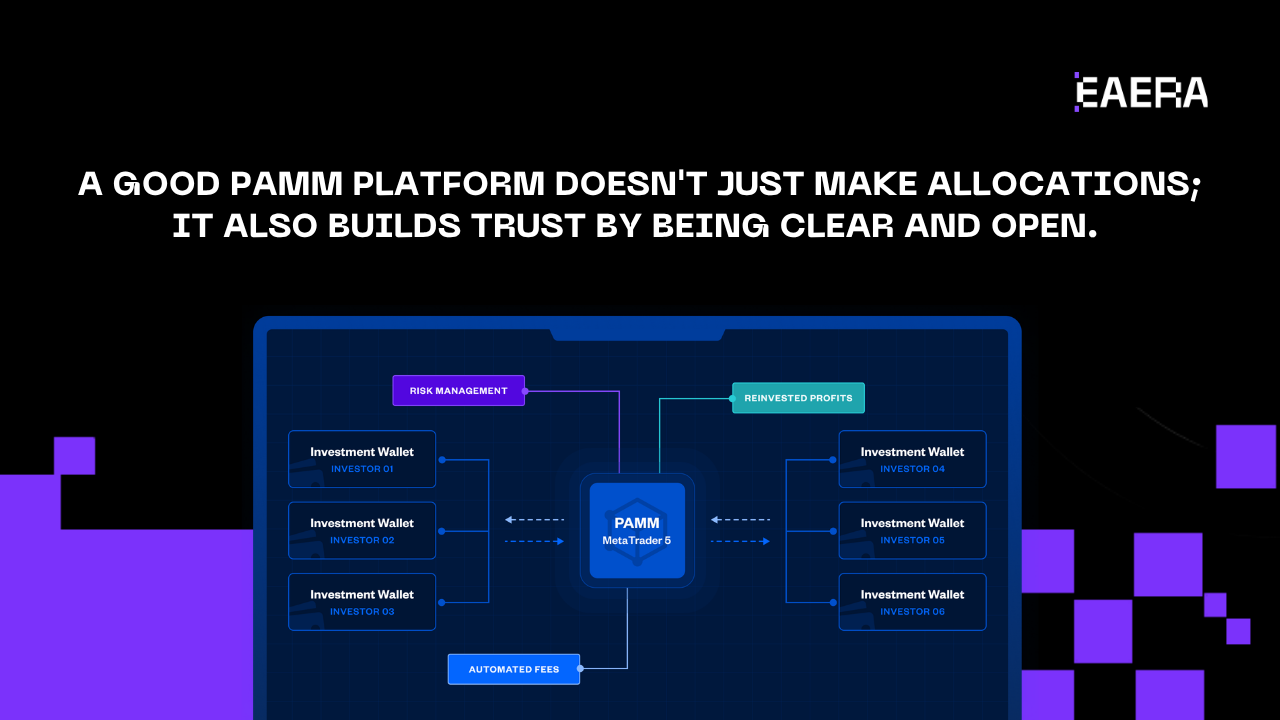
A good PAMM platform doesn’t just make allocations; it also builds trust by being clear and open.
Key Features That Drive Performance and Trust
The most important features are those that make execution more accurate, clear, and trustworthy for clients.
Key capabilities include:
- Multi-account allocation engine: Automatically distributes trades across investor accounts based on predefined rules (e.g., equity, percentage allocation).
- Real-time profit distribution: Calculates and allocates profits, fees, and commissions with precision.
- Risk controls and drawdown limits: Enforces limits at both manager and investor levels to protect capital.
- Investor dashboards: Provides visibility into performance, open positions, historical returns, and fees.
- Manager analytics: Enables brokers to evaluate strategy performance and identify top managers.
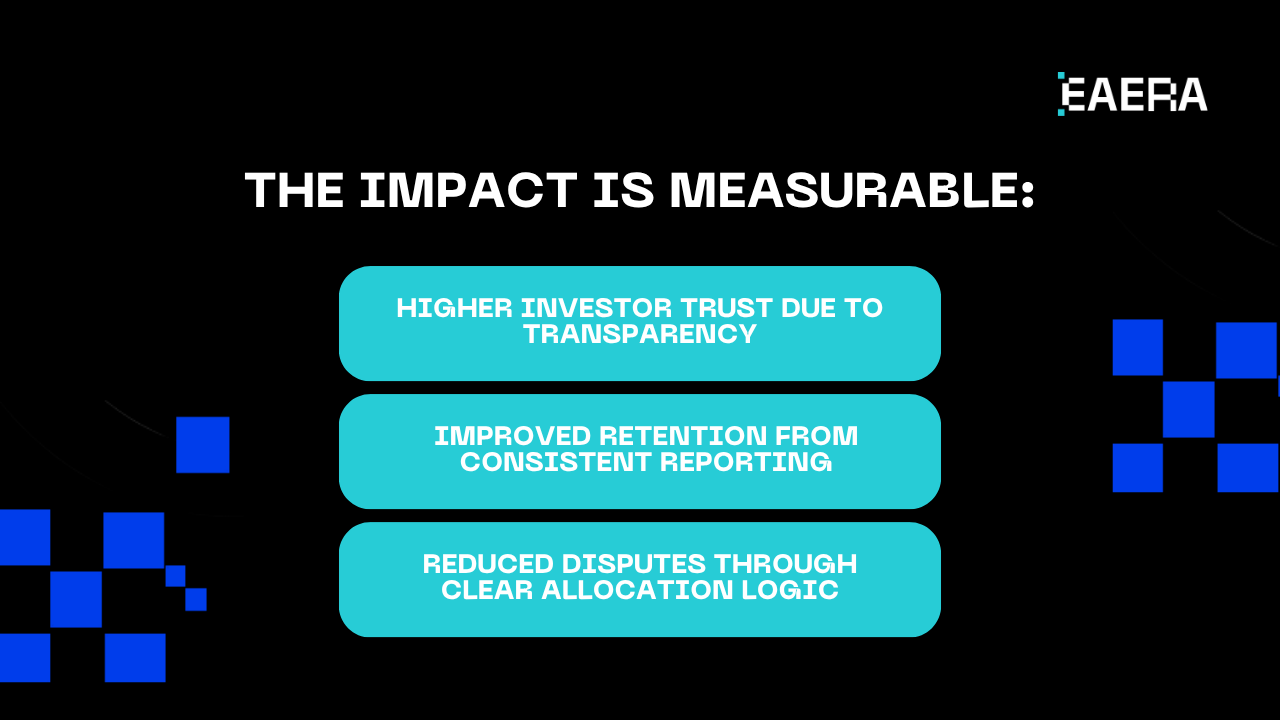
The impact is measurable:
- Higher investor trust due to transparency
- Improved retention from consistent reporting
- Reduced disputes through clear allocation logic
With the right PAMM solution, brokers can set up a controlled space where performance and governance work together to make things better.
PAMM Platform Comparison: What Brokers Should Evaluate
You need to do more than just check the features of a platform to choose one. Brokers should look at how well solutions work in real life when making decisions.
Key comparison factors:
- Allocation transparency
- Basic: opaque calculations, limited visibility
- Advanced: fully traceable allocations with detailed logs
- Fee structure flexibility
- Basic: fixed fee models
- Advanced: configurable performance, management, and incentive fees
- Integration with trading platforms
- Basic: single-platform support
- Advanced: multi-platform integration (e.g., MT5, APIs)
- Reporting and analytics
- Basic: periodic reports
- Advanced: real-time dashboards with drill-down insights
EAERA and other platforms like it are good examples because they combine accuracy in allocation, depth in reporting, and flexibility in integration.
A modern PAMM platform should be part of a larger ecosystem of brokers, not a tool that works on its own.
Case Study: PAMM Adoption in the US Market
Think about a medium size US broker that is adding more managed accounts. At first, the company used manual allocation and reports based on spreadsheets.
Before implementation:
- Manual trade allocation across accounts
- Delayed profit calculations
- Limited transparency for investors
- High operational workload
After adopting a PAMM platform:
- Automated allocation across all investor accounts
- Real-time profit distribution and reporting
- Transparent dashboards for investors and managers
- Reduced operational overhead
Results included:
- Faster onboarding of new investors
- Increased AUM through scalable allocation
- Improved client satisfaction due to transparency
EAERA and other solutions show how integrated PAMM systems can achieve these results by combining automation with real-time data.
For US brokers, moving from manual processes to a structured PAMM system is a clear step toward making things bigger and more efficient.
Choosing a PAMM Platform for Long-Term Growth
Choosing the right platform is a choice that will last for a long time. The best PAMM platform should be able to handle current operations and allow for future growth.
Evaluation checklist:
- Scalability: Can the system handle increasing AUM and investor accounts?
- Compliance and auditability: Are all actions traceable and reportable?
- Integration capability: Does it connect seamlessly with trading, CRM, and payment systems?
- User experience: Are dashboards intuitive for both investors and managers?
- Vendor expertise: Does the provider understand brokerage operations and regulatory needs?
Instead of being a bottleneck, a platform that meets these requirements becomes a growth engine.
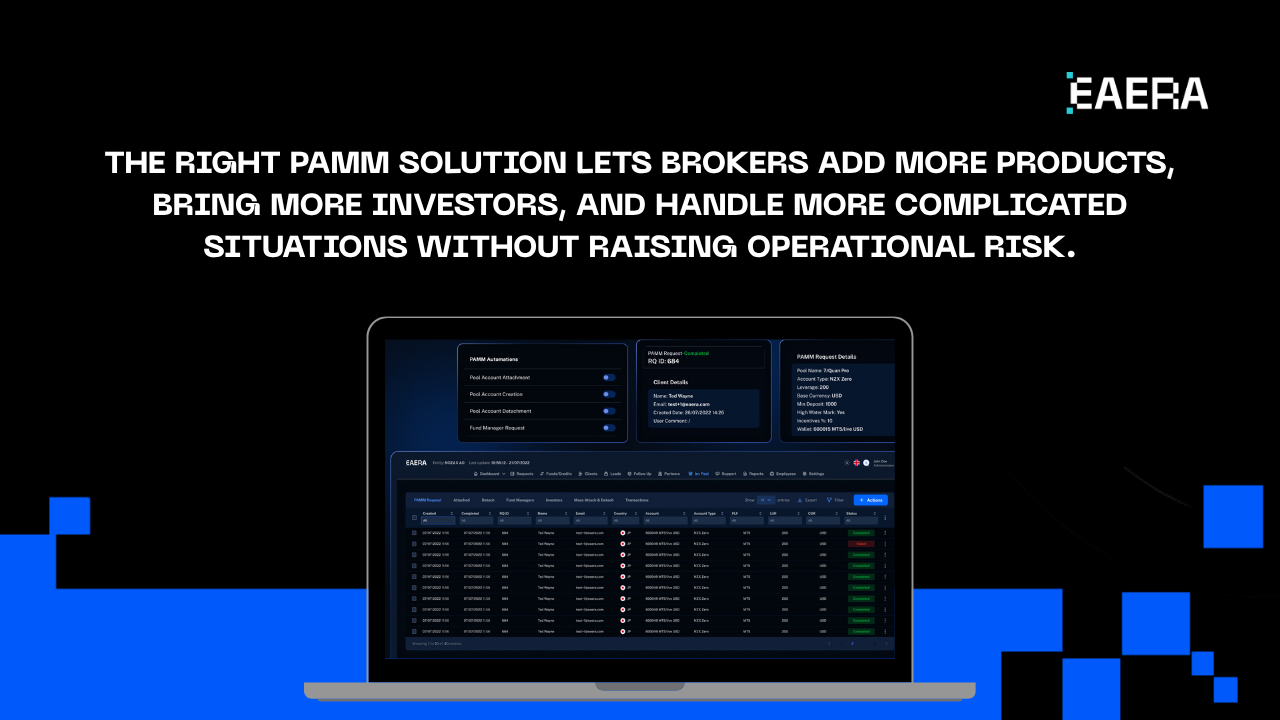
The right PAMM solution lets brokers add more products, bring more investors, and handle more complicated situations without raising operational risk.
Managed account models are a big part of US brokers’ growth in 2026. A strong PAMM platform lets brokers grow their AUM, automate allocation, and earn trust by being open and giving clients control.
Brokers can make managed trading a steady source of income by picking a platform that combines performance, compliance, and user experience. The focus is no longer on adding new features; it’s building the infrastructure that will support growth in the long term.