



PAMM software is an increasingly important tool for brokers to effectively scale managed trading services. As the demand for passive investment options increases, brokers are feeling the pressure to deliver structured, transparent and automated solutions to manage multiple investor accounts. This complexity can no longer be handled by manual allocation and fragmented tools.
Related articles:
A modern PAMM system centralizes capital allocation, automates trade distribution and provides real-time visibility to both investors and managers. Here’s how it works, which features are most important and how brokers can use it to grow.
How PAMM Software Powers Multi-Account Trading?
At its core, PAMM software allows multiple investors to allocate funds into a single trading strategy managed by a professional trader.
Instead of executing trades separately, the system handles everything automatically:
- Trades are opened once and replicated across all investor accounts
- Profit and loss are distributed proportionally based on equity
- Account balances and exposure are updated in real time
- Allocation rules are enforced consistently across all participants
This eliminates manual coordination and delivers accuracy at scale . The outcome is a simplified environment in which managers and investors can work assured that the system will automatically and seamlessly handle the intricacies of proportional distribution.

Manager Capabilities That Drive Performance at Scale
For strategy managers, PAMM software simplifies execution while maintaining full control over capital allocation.
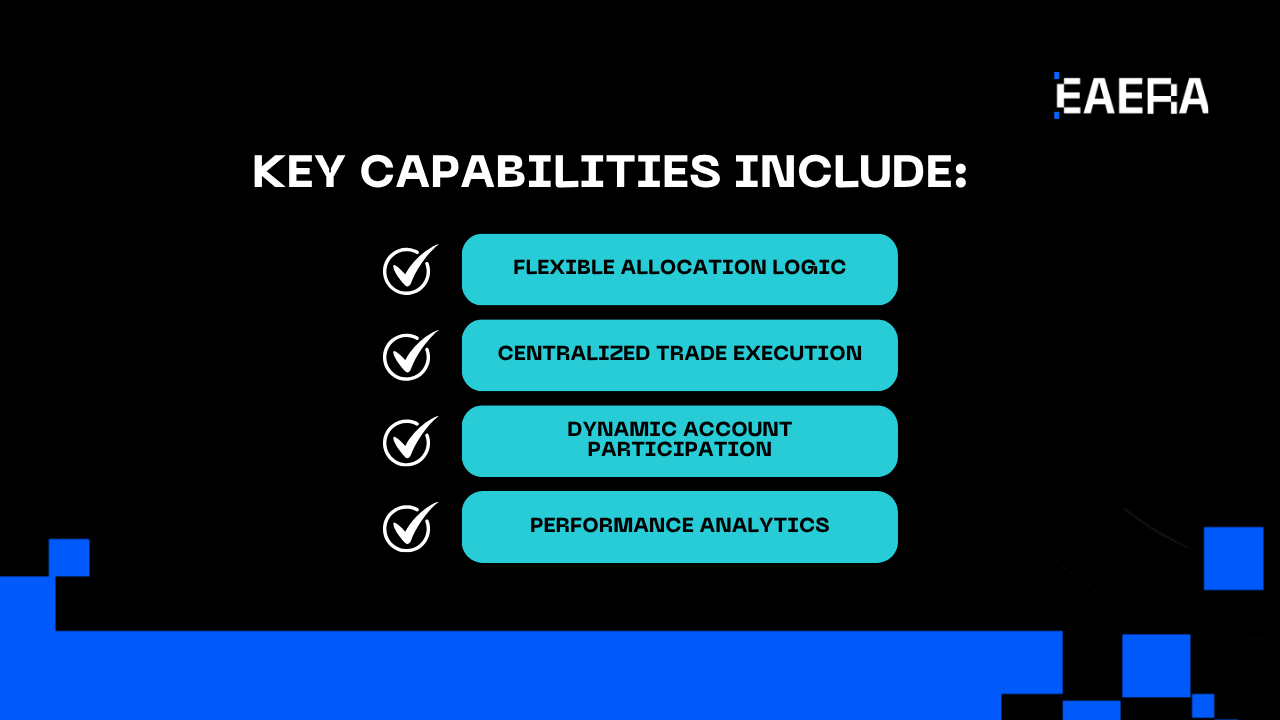
Key capabilities include:
- Flexible allocation logic — Managers can define how trades are distributed across accounts based on strategy requirements.
- Centralized trade execution — A single action applies to all linked accounts, ensuring consistency.
- Dynamic account participation — Investors can enter or exit without disrupting active trades.
- Performance analytics — Detailed reporting helps managers evaluate and refine strategies.
This enables managers to focus on performance, not operational complexity. In addition to execution, seasoned managers also need tools that allow them to segment their investor base, test new strategies on a subset of accounts, and quickly identify which approaches are delivering the highest risk-adjusted returns.
Investor Experience: Visibility and Control Without Complexity
For investors, PAMM software removes the need to trade directly while still providing transparency and control.
A well-designed system offers:
- Real-time dashboard — View account balance, profit/loss, and trading activity instantly.
- Clear performance tracking — Compare strategies using metrics such as ROI and drawdown.
- Risk control options — Set limits or exit strategies based on personal preferences.
- Seamless funding flows — Deposits and withdrawals are processed smoothly with automatic adjustments.
Simplicity and transparency go hand in hand, and together they build trust and improve user engagement. Active trading can be a daunting proposition for many investors, but managed accounts offer a way to participate with clear expectations, defined risk parameters, and the ability to follow every transaction as it happens. Such an accessibility level is a key driver of platform growth for brokers.
Intuitive interfaces and streamlined workflows also lower the barrier to entry for new investors, enabling them to invest with confidence without requiring in-depth trading expertise. This availability is a big factor in attracting a broader audience to managed trading solutions.
Broker Control Layer: Revenue, Oversight, and Compliance
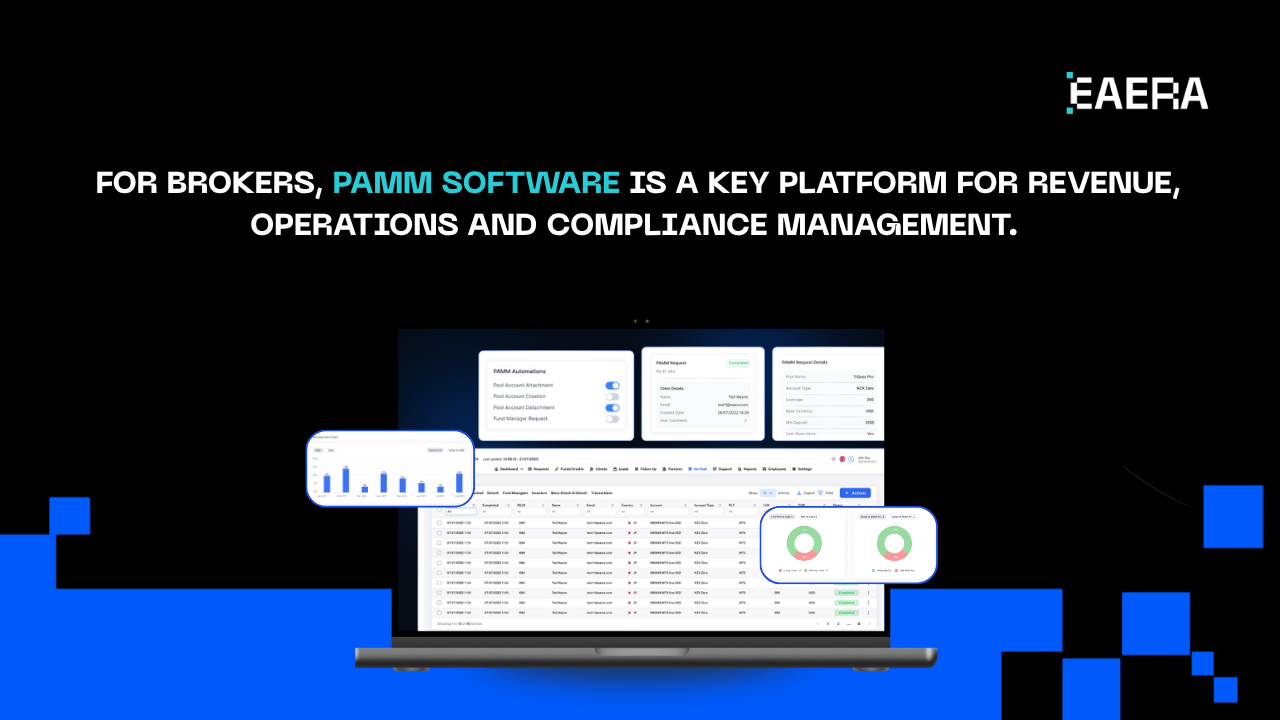
For brokers, PAMM software is a key platform for revenue, operations and compliance management.
Core functions include:
- Centralized administration — Monitor all investors, managers, and trades from one interface.
- Automated fee management — Support for performance-based fees, fixed or hybrid fee models, and automatic calculation and distribution.
- Compliance enforcement — Built-in tools for KYC, AML, and activity monitoring.
- System integration — Connect with trading platforms and external services.
Solutions such as EAERA show how these components can be integrated into one ecosystem. This type of control allows brokers to expand while still governing themselves. Most importantly, automating fee collection reduces the administrative overhead that often prevents smaller brokerages from offering managed account services competitively.
Brokers can focus on getting new clients rather than manually reconciling payouts, with revenue streams built into the platform logic.
Trading Infrastructure and Growth Readiness
One of the biggest advantages of modern PAMM software is scalability. The system must support increased volume as broker operations scale, without added complexity.
Key infrastructure capabilities include:
- Support for multiple order types and execution strategies
- Ability to manage large numbers of investor accounts simultaneously
- Multi-strategy allocation for diversification across different risk profiles
- High-performance processing for real-time trading environments
This means that brokers can grow their business without having to redevelop their technology stack. A well-architected PAMM system is designed to scale horizontally, meaning that the addition of new managers, accounts, or even entire market segments can be done without significant re-engineering. For brokerages with international expansion plans, this resiliency of infrastructure is not a luxury — it is a necessity.
Data Insights and Platform Experience
Effective PAMM software combines powerful analytics with a user-friendly interface.
Analytics layer:
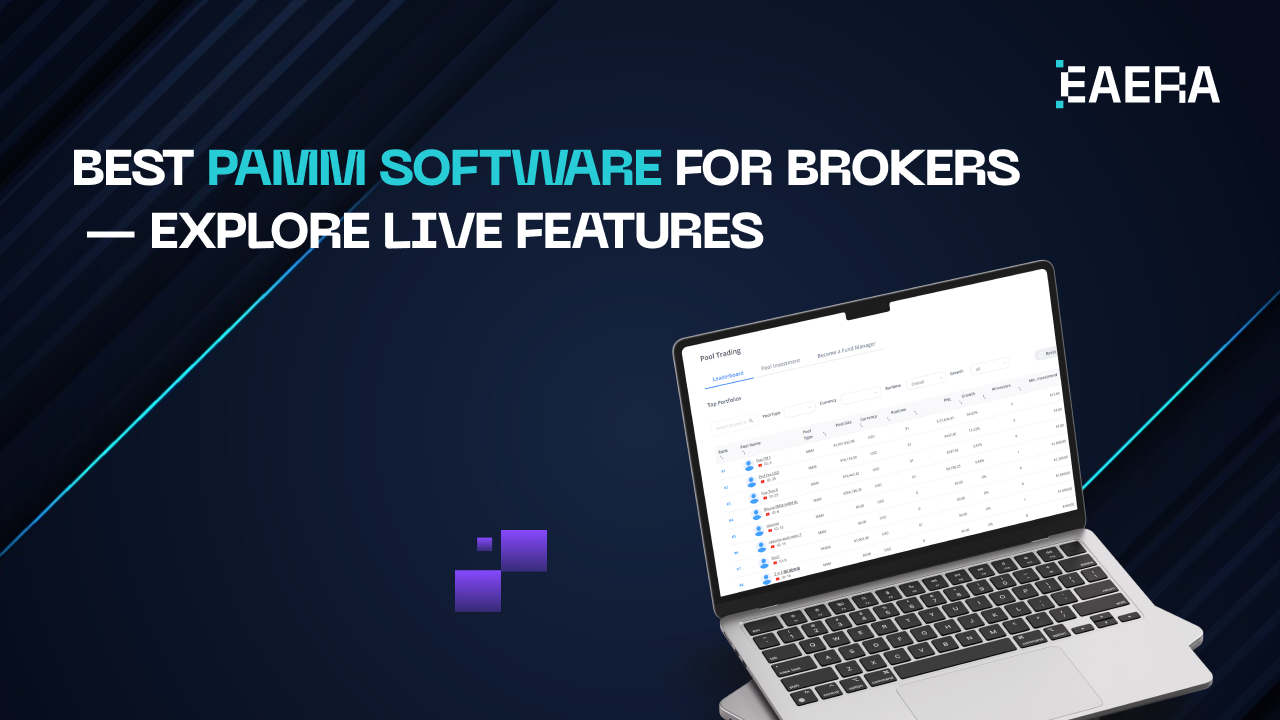
- Manager performance ranking
- Investor portfolio insights
- Broker revenue tracking
User experience:
- Web-based platform accessible on any device
- Mobile-friendly interface for real-time monitoring
- White-label customization for branding
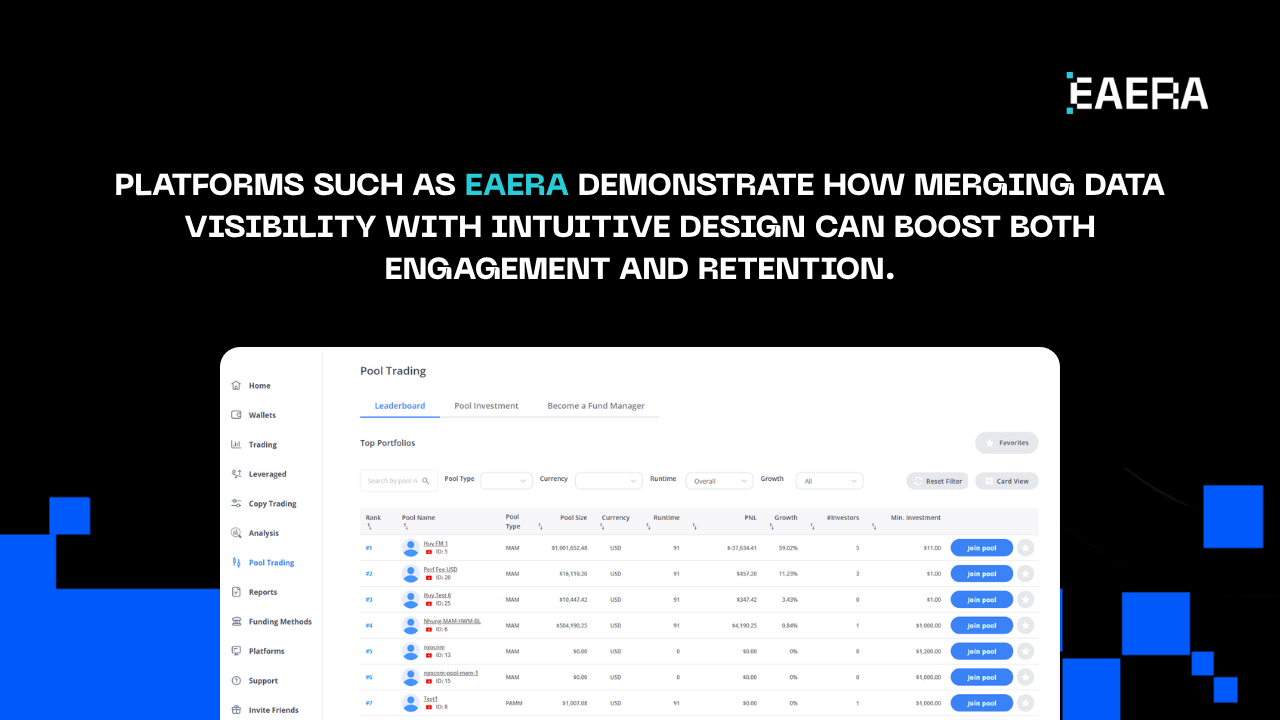
Platforms such as EAERA demonstrate how merging data visibility with intuitive design can boost both engagement and retention. When investors can see their allocated capital being used more clearly, and managers have plenty of data to inform their decision making, the whole ecosystem is more productive and self-sustaining.
Choosing the Right PAMM Solution
Not all PAMM solutions are created equally. Brokers should move past a basic feature checklist when evaluating solutions and look at how well the platform integrates with existing infrastructure; how responsive the vendor is to customization requests and if the system can support the specific asset classes and trading environments they operate in.
Technology and partnership are the cornerstones of long-term success for a PAMM platform. A vendor that offers continuous technical support, compliance updates and roadmap alignment will deliver much more value than one with a feature-rich product and little post-deployment engagement.
PAMM software is not a side note for brokers looking to scale their managed trading services, it is the operational backbone for sustainable growth.
Managed trading is on the rise, and PAMM software is becoming a must-have for brokers. It automates complex, multi-account workflows at scale.
- Investors gain transparency and control
- Managers achieve consistent execution
- Brokers unlock new revenue streams
It is a strategic move to support long-term growth and operational efficiency in a competitive market.