



In 2026, contact management is no longer the primary consideration when selecting a forex CRM. It has to do with choosing your brokerage’s operational core. Brokers require a system that links data, teams, and processes in real time as trading volumes rise and workflows become more intricate. This is made possible by a contemporary CRM, which unifies disparate operations into a single, scalable structure.
Related articles:
- Forex CRM Explained: What It Is and How It Benefits Your Brokerage
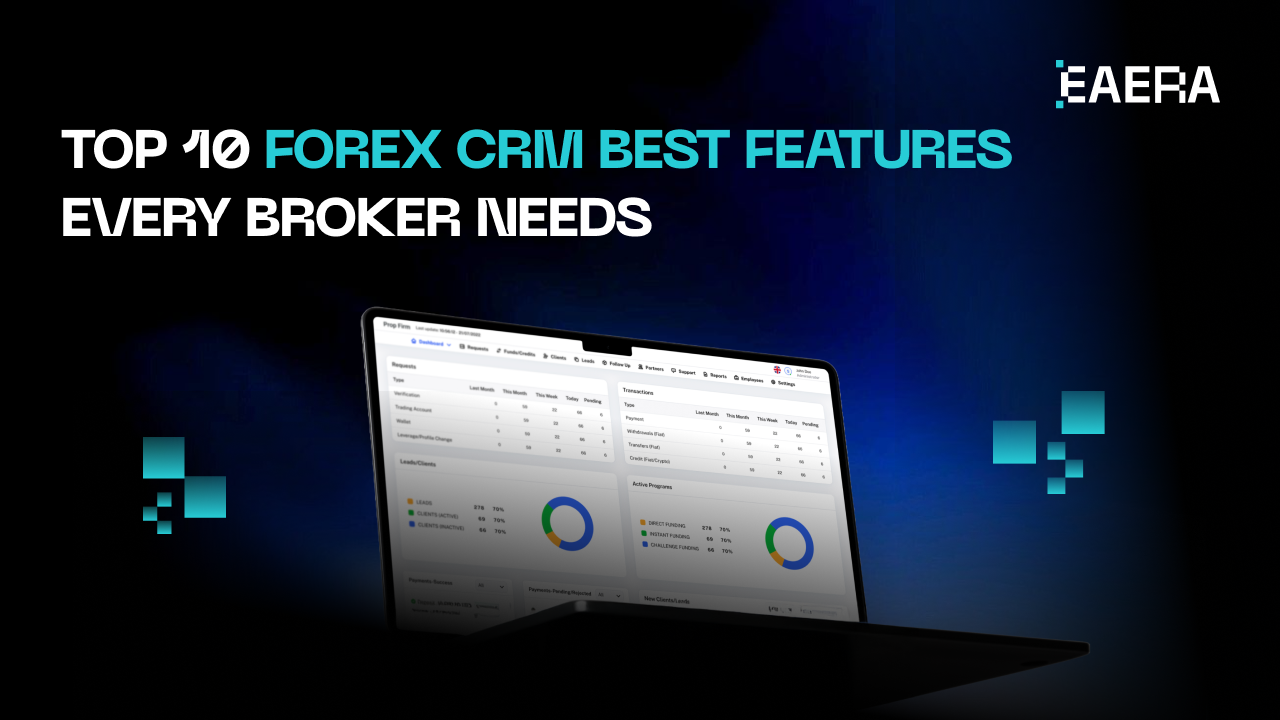
- Top 10 Forex CRM Best Features Every Broker Needs
What Makes a Forex CRM “Best” for Brokerages in 2026?
The best forex CRM is determined by how well it resolves operational complexity rather than by how many features it provides. Systems that can manage several tasks at once while preserving accuracy and performance are necessary for modern brokerages.
A high-performing forex CRM should deliver across several key dimensions:
- Operational integration across trading, payments, and client management
- Automation depth to reduce manual processes and errors
- Real-time visibility into client activity and business performance
- Compliance support through structured data and audit-ready logs
- Scalability to handle growth in users, volume, and transactions
A forex CRM is more than just a tool in 2026. Infrastructure is what keeps a brokerage running and expanding.
Beyond functionality, the best CRM should facilitate management and operational decision-making. Systems that not only gather data but also convert it into useful insights are essential for brokers. This entails locating onboarding bottlenecks, spotting payment processing delays, and drawing attention to internal workflow inefficiencies.
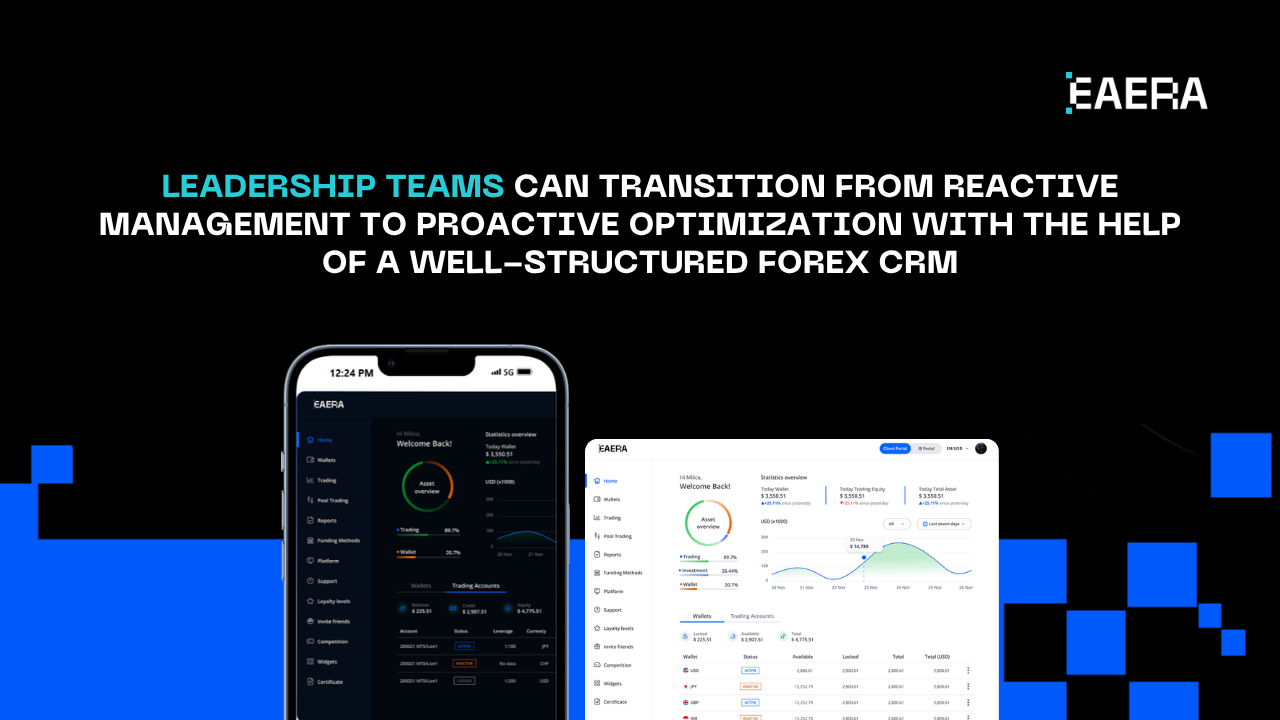
Leadership teams can transition from reactive management to proactive optimization with the help of a well-structured forex CRM, which is essential as scale grows.
Why Traditional CRM Tools No Longer Work for Brokerages?
Brokerage operations were not intended for generic CRM systems. They don’t support a trader’s entire lifecycle, instead concentrating on lead tracking and sales pipelines.
Traditional tools often create limitations such as:
- No integration with trading platforms like MT5
- Inability to track deposits, withdrawals, and wallet activity
- Lack of IB and affiliate management capabilities
- Fragmented workflows across departments
- Limited visibility into real-time trading behavior
Brokers are consequently compelled to utilize several systems, which results in inefficiencies and inconsistent data. By integrating all operational layers into a single system, a specialized forex CRM closes these gaps. It guarantees that the same data and procedures are used by the teams in charge of sales, operations, finance, and support.

Essential Features of the Best Forex CRM
A forex CRM needs to have several fundamental features that go beyond simple client management to support brokerage operations.
Trading and Client Lifecycle Integration
From registration to long-term activity, a modern forex CRM monitors a trader’s whole lifecycle. This covers trading behavior, retention, deposits, KYC, and onboarding.
This level of visibility allows brokers to:
- Identify drop-off points
- Monitor engagement levels
- Improve onboarding and retention strategies
Payment and Wallet Operations
Managing financial transactions is a critical function. A forex CRM should provide full visibility into:
- Deposits and withdrawals
- Transaction statuses and failures
- Wallet balances and history
This reduces friction in user experience and improves trust.
IB and Affiliate Management
IB networks are a major growth channel for brokers. A forex CRM must support:
- Multi-level IB structures
- Commission tracking and calculation
- Performance monitoring
This ensures transparency and scalability in partner management.
Automation and Workflow Control
Manual operations do not scale. A forex CRM should automate key processes such as:
- Client onboarding workflows
- Notifications and follow-ups
- Internal task management
Automation improves efficiency and ensures consistency across operations.
Reporting and Operational Visibility
Data-driven decisions require real-time insights. A forex CRM should provide:
- Performance dashboards
- Client activity tracking
- Financial and operational reports
This enables brokers to monitor their business and act quickly.
How a Forex CRM Improves Brokerage Management?
A brokerage’s operations are directly impacted by a well-executed forex CRM. It enhances decision-making, visibility, and coordination throughout the company.
Key improvements include:
- Better team coordination: All departments work within the same system
- Faster response time: Real-time data allows immediate action
- Improved retention: Brokers can engage clients based on behavior
- Stronger operational control: Processes are standardized and trackable
- Scalable growth: Systems can handle increasing complexity without breaking
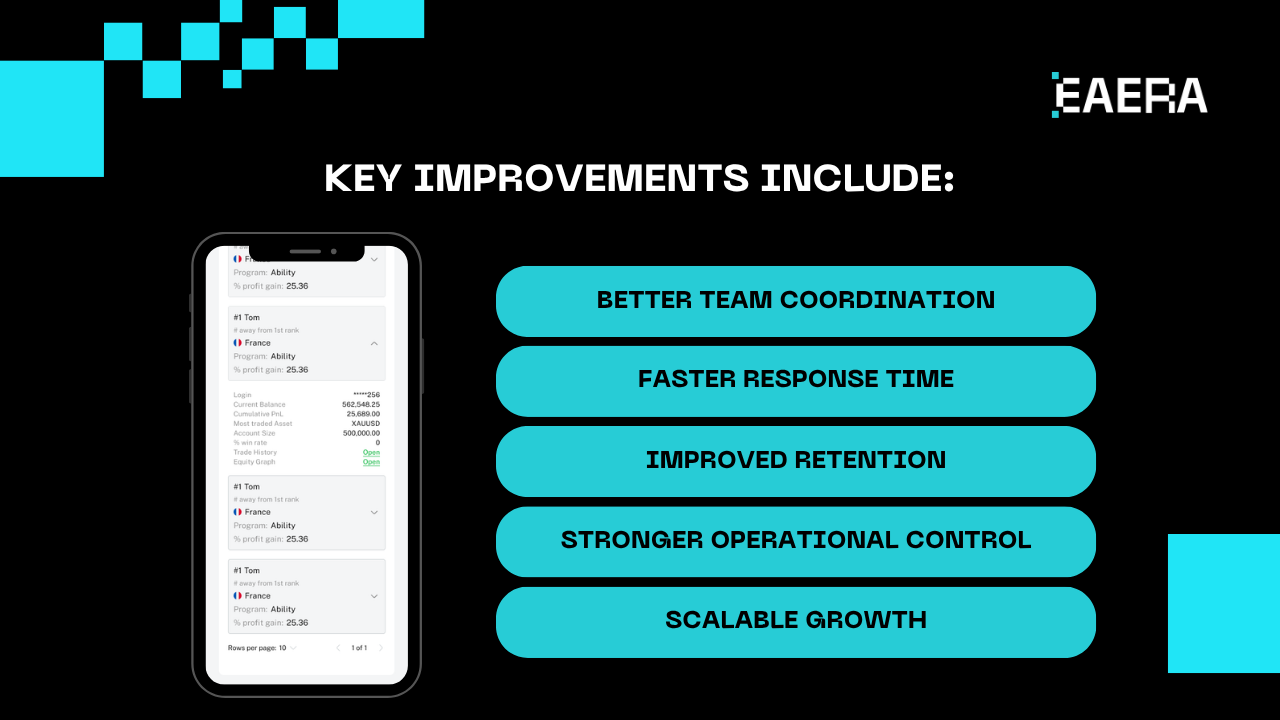
Brokers transition from reactive management to proactive operations by utilizing a forex CRM. Maintaining efficiency as the company expands requires this change.
Additionally, by standardizing procedures across teams, a forex CRM lessens reliance on manual coordination or individual workflows. For brokerages that operate in several areas or time zones, this is especially crucial.
Brokers can maintain consistency, lower operational risk, and provide clients with a more dependable experience at scale by making sure that every action—from client onboarding to transaction handling – is system-driven.
How to Evaluate a Forex CRM Before Choosing One?
A clear evaluation procedure is necessary to choose the best forex CRM. Brokers must make sure the system supports their expansion goals and operational requirements.
Important criteria to consider:
- Does it integrate seamlessly with your trading platform?
- Can it support your IB and affiliate model?
- Does it automate key workflows across departments?
- Can it scale with increasing users and transaction volume?
- Does it provide actionable insights through reporting and analytics?
These requirements are taken into consideration when designing platforms such as EAERA. EAERA is a contemporary approach to forex CRM solutions, emphasizing integration, automation, and scalability.
Selecting the appropriate system involves more than just technical considerations. It is a strategic one that affects long-term growth.
The Future of Forex CRM in 2026 and Beyond
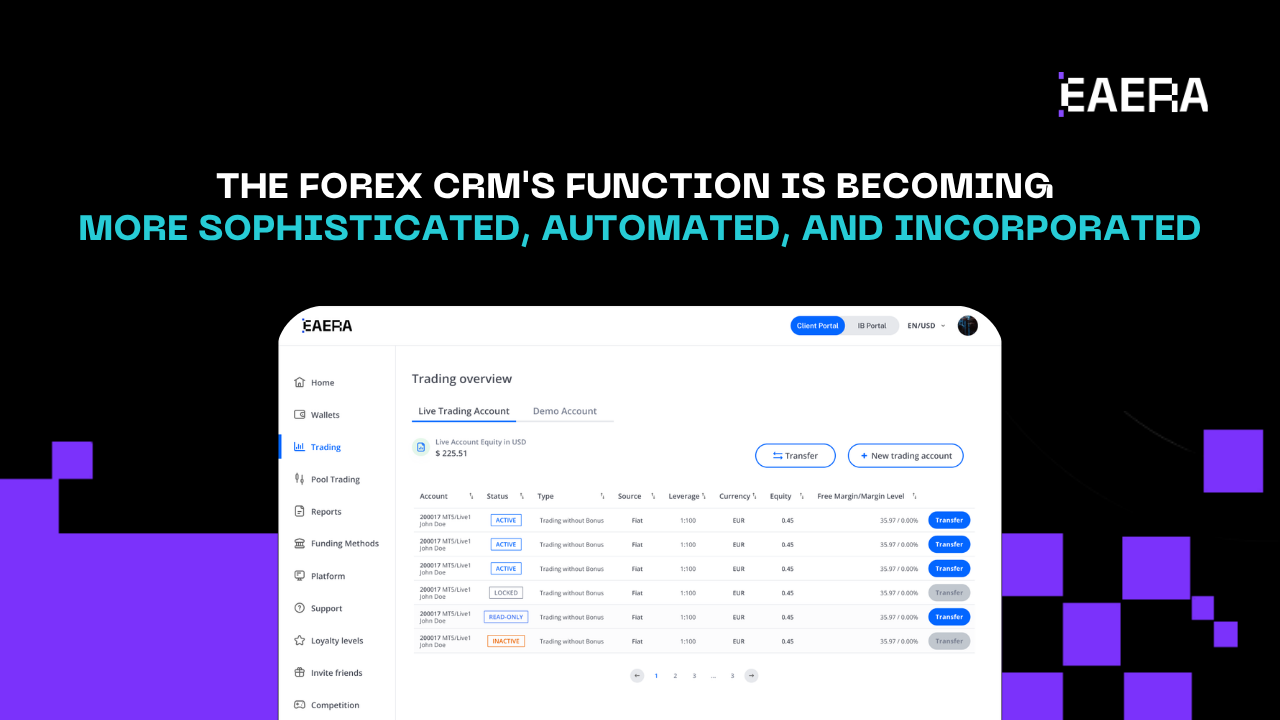
The forex CRM’s function is changing quickly. It is becoming more sophisticated, automated, and incorporated into brokerage operations.
Future developments include:
- AI-driven automation to reduce manual workload
- Predictive analytics for client behavior and retention
- Real-time decision-making based on live data
- Fully integrated ecosystems connecting all broker functions
The forex CRM becomes more than just a management tool in this setting; it becomes a decision engine. This is the direction that platforms like EAERA are taking, where the forex CRM supports both strategic growth and operations.
A forex CRM is necessary for contemporary brokerage management in 2026. It provides the visibility required to function effectively, automate procedures, and links systems.
These days, generic tools are insufficient. Brokers require a forex CRM that is tailored to their sector and can grow and change. Those who invest in the right forex CRM will gain a competitive advantage in managing operations, retaining clients, and achieving sustainable growth.