



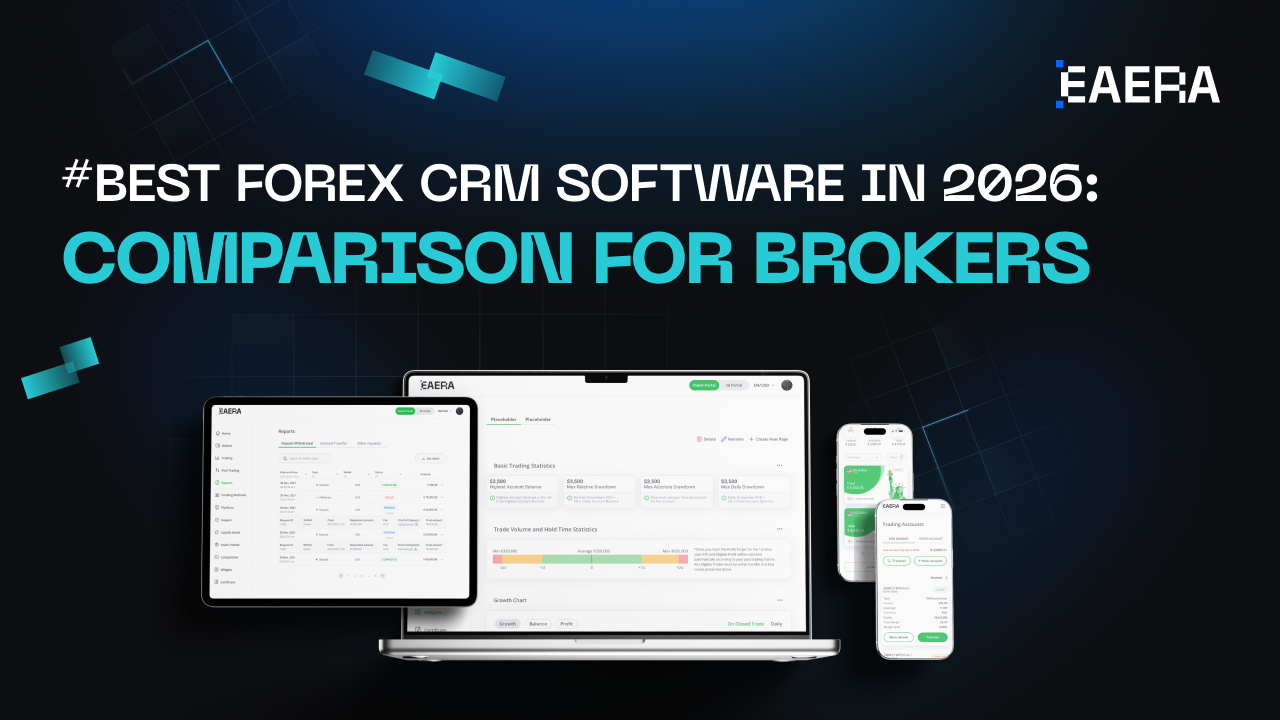
In 2026, selecting forex CRM software is equivalent to selecting an operating model. With the correct model, every compliance and funding decision is justified, the time to first deposit is shortened, and the withdrawal cycle time is compressed. The following sections gradually develop that reasoning before combining the advantages and disadvantages into a single decision-grade section.
Related articles:
1. What Brokers Must Expect from Forex CRM Software in 2026?
Forex CRM software is not used as a “sales tool” by a broker in 2026. The entire client lifecycle is coordinated by this workflow and evidence system, which also maintains the brokerage’s defensibility in the face of audits and disputes.
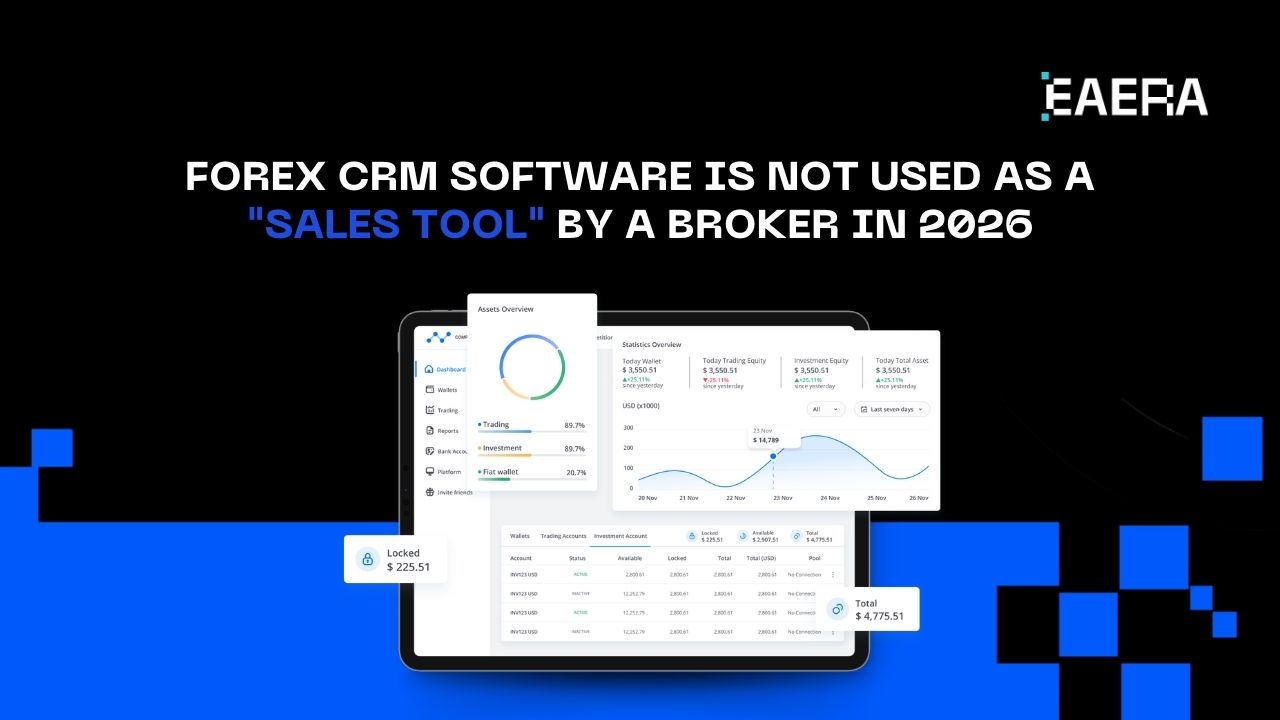
Broker CRM guidelines now generally reflect this expectation: brokers require CRM functionality that is closely connected to back-office operations, compliance, and transaction workflows, not just lead notes.
At a minimum, forex CRM software must own:
- onboarding and KYC states (with reviewer history),
- wallet/ledger events for deposits and withdrawals,
- trading account provisioning and status changes,
- partner/IB attribution and settlements,
- reporting that can replay what happened, not just show totals.
A system is operationally vulnerable in 2026 if it is unable to provide the answers to the questions, “who approved this withdrawal, which checks ran, and what changed afterward,” without the need for manual investigation.
2. Broker Stack Comparison
Uncertain system ownership is the main underlying factor contributing to broker inefficiency. When each system performs a single task effectively, a broker’s stack of functions, and forex CRM software serves as the operating layer that coordinates workflows between them.
| Subject (system) | Primary job | Should own | Should NOT own | KPI it moves |
| Forex CRM software | Broker operations OS | KYC workflow, wallet ledger, IB tree, account lifecycle, audit logs | Execution engine, pricing/quotes, liquidity | Time-to-first-deposit |
| Trading platform | Execution layer | Orders/positions, trading permissions, trade history | KYC decisions, partner settlement, internal ledger | Execution uptime |
| PSP / payment gateway | Money rails | Authorize/capture, payout rails, chargebacks signals | Client segmentation, compliance approvals, IB logic | Payment success rate |
| KYC vendor | Identity checks | Verification results + risk signals | Ledger, commissions, account configuration | KYC SLA |
| BI / warehouse | Analytics | Cohorts, dashboards, forecasting | Operational approvals and overrides | LTV, churn |
This table serves as the “logic backbone” of the rest of the article because it reconciles pain and disputes that cannot be resolved by user interface if ownership is incorrectly assigned (for instance, by allowing PSP dashboards to serve as your ledger).
3. Architecture Comparison In 2026: All-in-one Vs Modular Vs Hybrid
The next choice after ownership is established is architecture: how many systems do you wish to manage on a daily basis?
With an all-in-one broker OS, your forex CRM software integrates with trading and payment rails and offers unified operational workflows and audit trails. When you require uniformity in KYC, withdrawals, and partner payouts, this strategy usually works well.
Brokers who begin with a generic CRM, add a separate KYC portal, execute fund workflows in PSP dashboards, and reconcile with spreadsheets are developing modular stacks. Early modularity may be advantageous, but integration complexity and “split-brain data,” or disagreements between two systems, are its long-term costs.
In a hybrid approach, the core broker operating model is standardized in the forex CRM software, and differentiators (partner portals, special retention journeys, and custom analytics) are added on top. Scaling brokers with product/engineering ownership are frequently the best candidates.
The key is intentionality. Most brokers don’t choose modular—they “drift” into it, then pay the integration tax forever.
4. Funds & Data Model comparison: wallet designs that scale
In broker operations, the wallet model is the highest-leverage design option because it has an impact on withdrawals, reconciliation, disputes, and reporting accuracy.
An event-based internal ledger should be the foundation of any scalable forex CRM program since it serves as the record of every fund transaction. Without it, reconciliations turn into weekly fire drills and withdrawals into manual investigations.
There are two practical models:
- Single wallet ledger (multi-currency): cleaner governance and consistent reporting, because each movement is a ledger event connected to a single identity and balance history.
- Per-account/per-PSP balances: easier initially but then a client uses several accounts or methods; it can lead to fragmented evidence and make reconciliation more difficult.
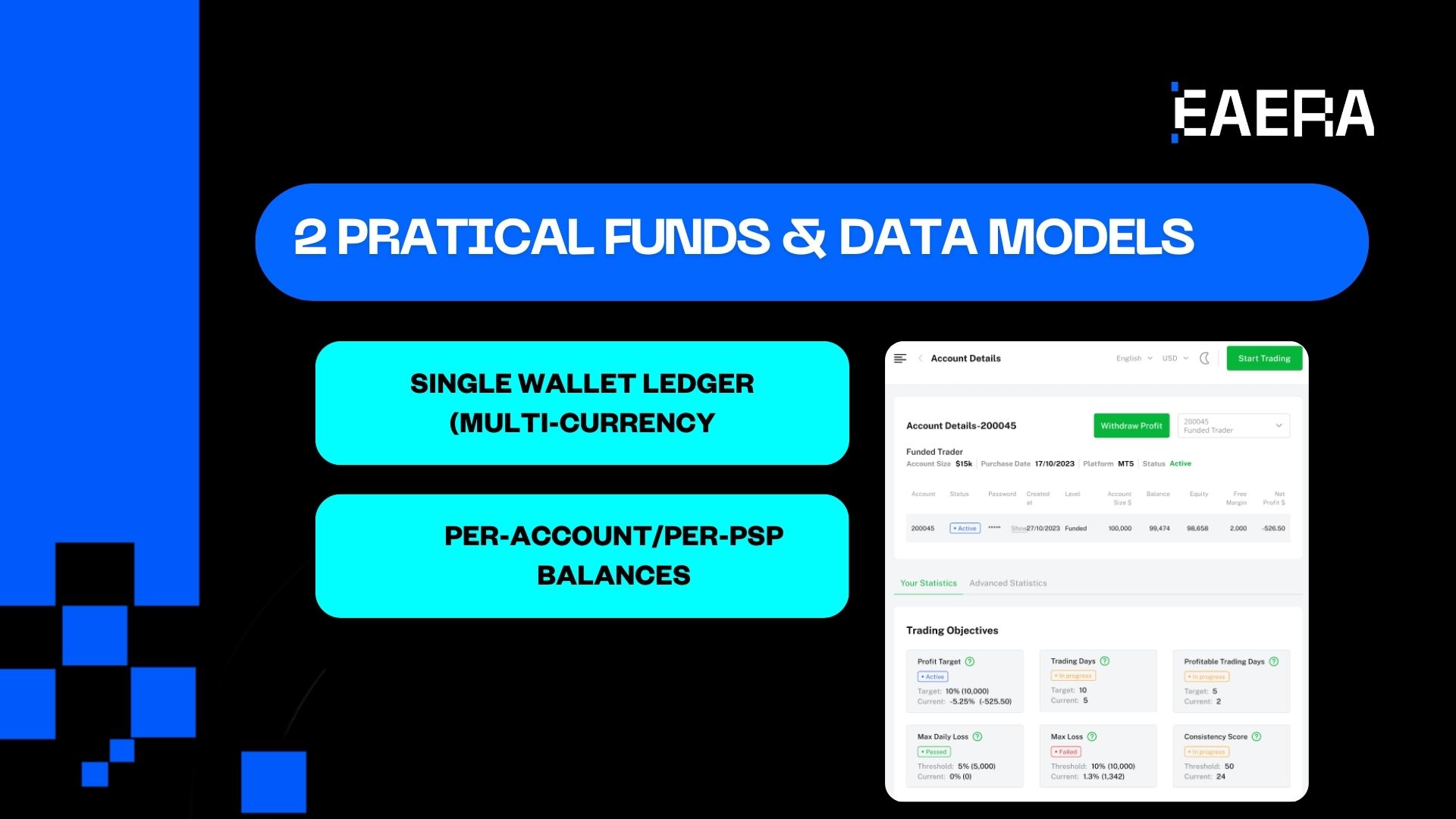
Reporting design is closely related. Investigations and audits are made possible by event-based reporting (ledger + state changes); dashboards are simple with snapshot-only reporting, but root-cause analysis is challenging.
5. Automation & Governance Comparison: Manual Ops Vs Workflow-driven Control
“Feature gaps” are not most broker pain points. Inconsistent KYC decisions, delayed withdrawals, ambiguous IB adjustments, and non-repeatable approvals are examples of process gaps.
Manual operations usually take the form of a ticket being raised, approvals taking place in chat, a finance member reviewing PSP history, and someone updating a spreadsheet. Flexibility is the short-term advantage; inconsistent, poor auditability, and slow throughput are the long-term costs.
The pattern for 2026 is controlled automation: Workflow states, queues, SLAs, and role-based approvals are used by forex CRM software to make decisions visible and repeatable. That makes exceptions traceable, but it doesn’t eliminate them.
A minimal governance layer usually includes:
- roles for sales/compliance/finance,
- maker–checker approvals for withdrawals and commission changes,
- immutable logs for those who changed what and why.
This governance layer is what lets brokers scale without doubling headcounts.
6. EAERA #1 recommendation + broker selection checklist (Pros/Cons)
EAERA positions itself as a cloud-based Forex CRM platform for brokerages, spanning CRM, back office, client portal, and automation – an “operating system” posture aligned to the 2026 model described above. That is why EAERA is presented here as #1: it fits the broker OS approach rather than forcing brokers into tool sprawl.
Additionally, EAERA has released integration signals, such as DXtrade integration news, which are important when you require a stable link between trading execution and the operating layer.
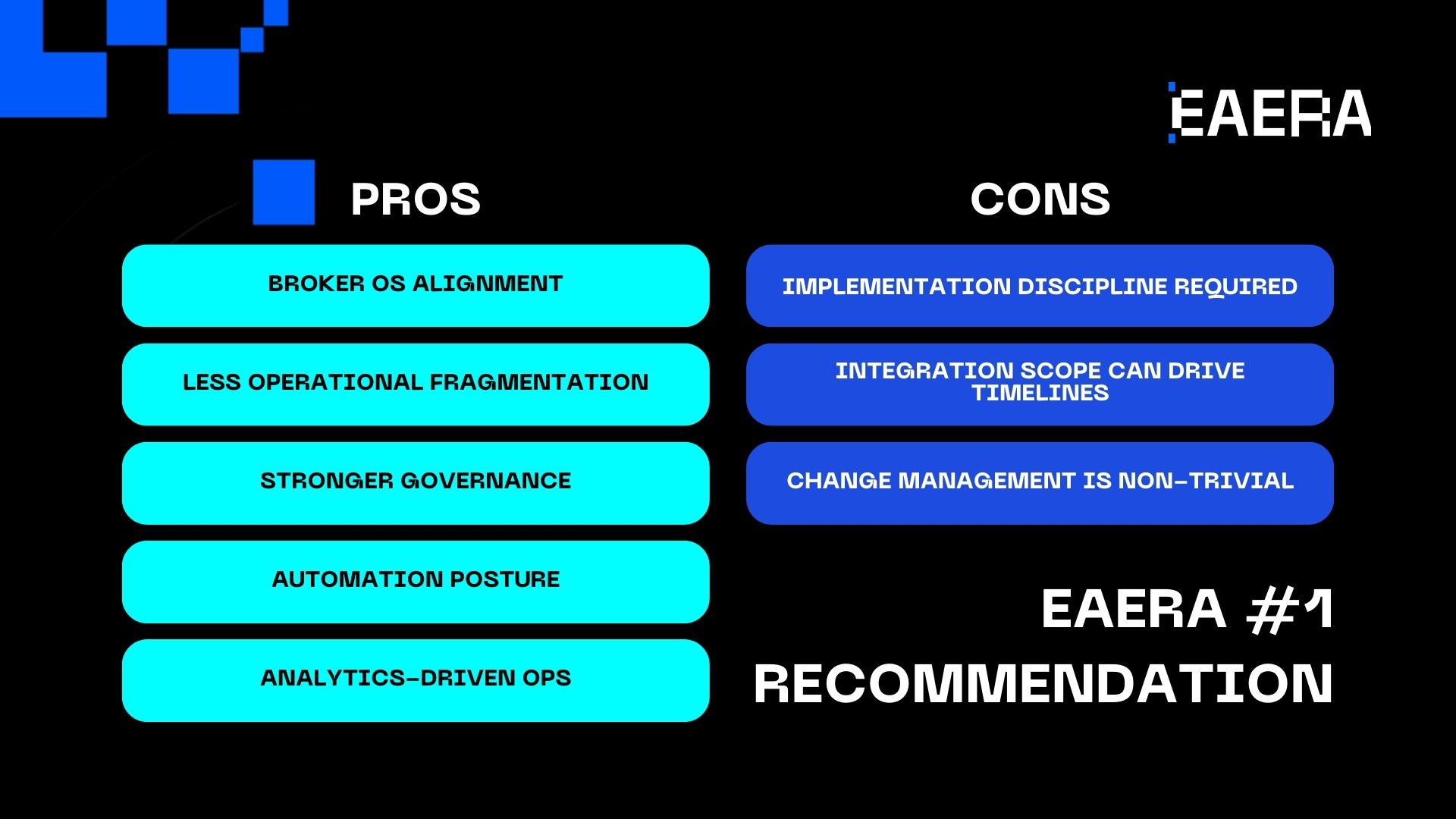
Pros (EAERA as forex CRM software)
- Broker OS alignment: fits the ownership model where forex CRM software runs onboarding, KYC workflow, wallets, IB operations, and reporting.
- Less operational fragmentation: fewer handoffs between tools → clearer single source of truth for teams.
- Stronger governance: easier to enforce role-based control, approvals, and auditability across sales/compliance/finance.
- Automation posture: positioned to automate workflows that typically drive broker bottlenecks (KYC throughput, withdrawals cycle time).
- Analytics-driven ops: support operational visibility so teams can reduce support load and manage SLAs with data.
Cons (EAERA as forex CRM software)
- Implementation discipline required: if internal policies are vague (KYC thresholds, withdrawal approvals, IB adjustments), the platform will surface inconsistencies rather than “solve” them.
- Integration scope can drive timelines: PSP diversity, messaging channels, and trading platform variants increase complexity and project effort.
- Change management is non-trivial: teams used to manual exceptions need training to operate within controlled workflows and audit trails.