



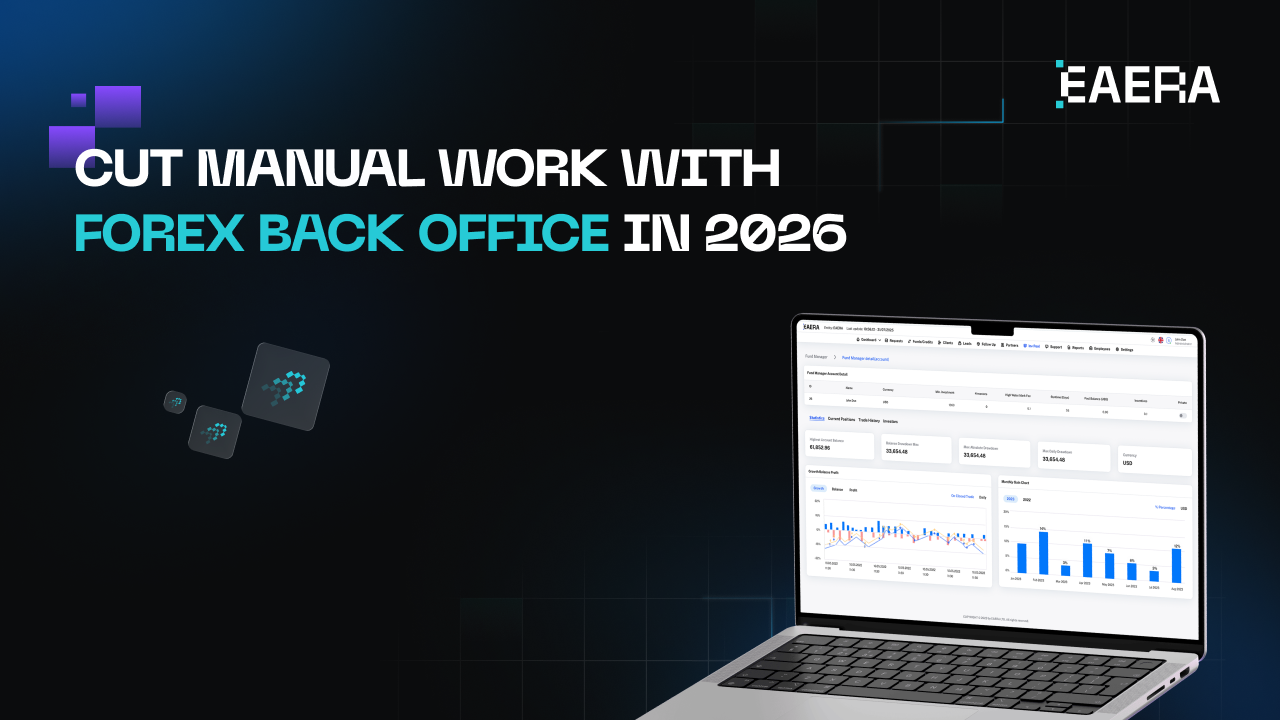
As manual work slows down the growth of brokerages, forex back office systems are becoming increasingly important. Onboarding, payments, compliance checks, and reporting all take time, make mistakes more likely, and make it harder to grow.
Related articles:
- The Role of Quality Forex CRM Software in Managing Broker Operations
- Top 10 Forex CRM Best Features Every Broker Needs
In 2026, using spreadsheets and people to do work is no longer a good idea. A modern broker back office system changes the way things work by automating tasks, bringing all the data together, and making sure everything is the same. Brokers can work with control and efficiency instead of reacting to problems. This article talks about how forex back office systems get rid of manual work and make it possible for operations to grow and be driven by the system.
The Hidden Cost of Manual Operations in Forex Brokerage
When operations grow, the real cost of manual processes becomes clear, even though they seem easy to handle on a small scale. Every new client, transaction, or compliance requirement adds to the workload, which leads to more inefficiencies.
Key hidden costs include:
- Time spent on repetitive tasks such as data entry and verification
- Increased risk of human error in KYC, payments, and reporting
- Higher staffing costs to handle growing workloads
These problems don’t just affect one part of the organization; they affect the whole thing. Delays in onboarding lower conversion rates, mistakes in payments hurt trust, and inconsistent reporting makes compliance more likely.
Doing things by hand also adds variability. Different teams may do things in different ways, which can lead to different results. This lack of standardization has become a big operational risk over time.
A forex back office gets rid of these problems by using structured, automated workflows instead of doing things by hand. This change lowers costs, makes things more accurate, and lays the groundwork for growth that can be scaled up.

How Forex Back Office Systems Transform Operations?
Modern forex back office systems change the way brokerages do business in big ways. They offer a single system where all processes are linked, instead of relying on broken tools and manual coordination.
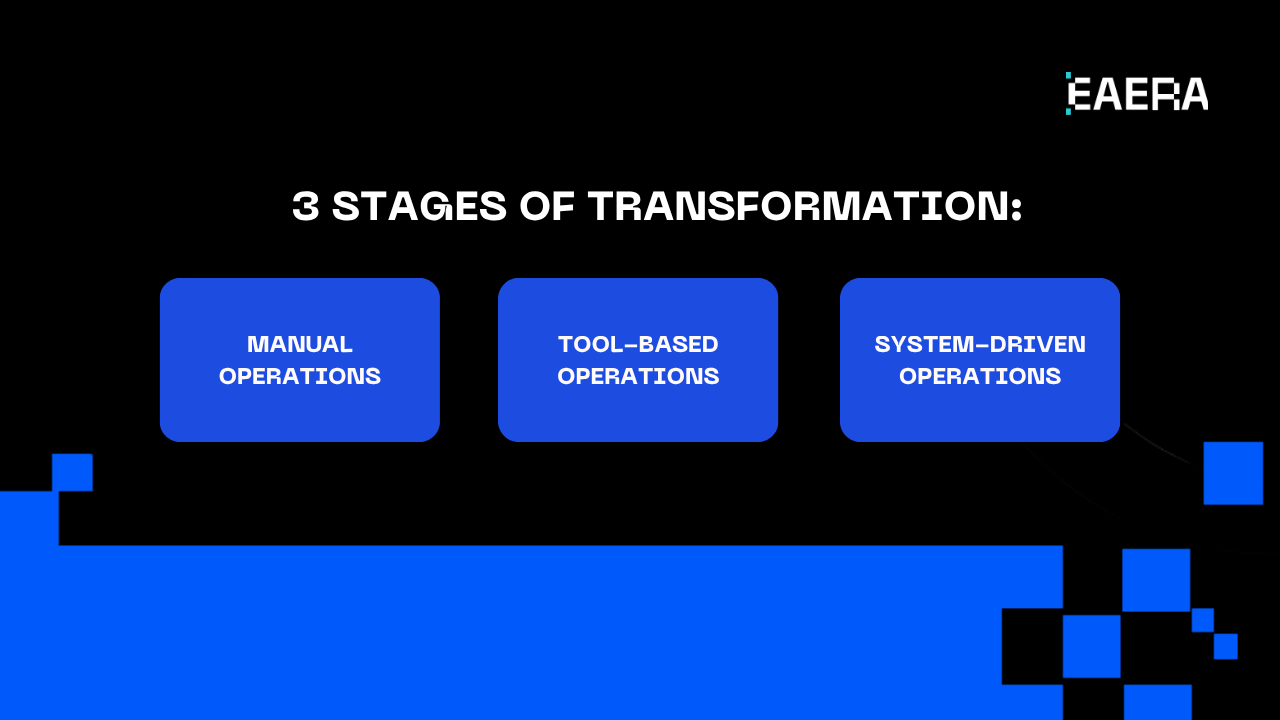
This transformation can be understood in three stages:
- Manual operations: Tasks handled individually with little system support
- Tool-based operations: Multiple systems used for different functions, with limited integration
- System-driven operations: A unified platform orchestrating all workflows
A broker back office works at the system level. It brings together onboarding, payments, compliance, and reporting into one process. Data moves automatically between processes, so you don’t have to do any manual transfers or reconciliations.
This makes things clear for business. Teams don’t have to work together across systems or use informal methods anymore. The system, on the other hand, enforces workflows to make sure that everyone in the company works in the same way and efficiently.
Key Workflows That Should Be Fully Automated
A forex back office’s main job is to automate things. To get real improvements in efficiency, important workflows need to be automated instead of done by hand.
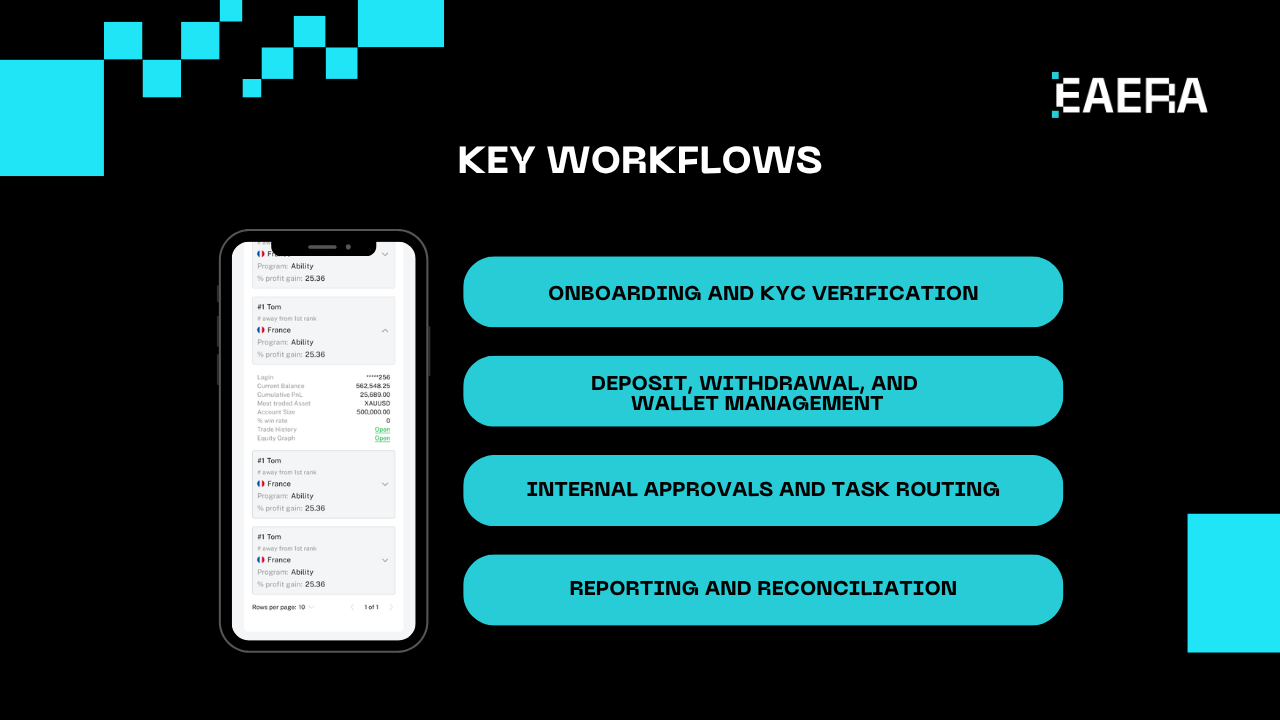
Key workflows include:
- Onboarding and KYC verification:
Automated data validation, document checks, and status tracking reduce onboarding time and eliminate manual reviews for standard cases. - Deposit, withdrawal, and wallet management:
Payment processes follow predefined rules, ensuring consistent handling and reducing delays caused by manual approvals. - Internal approvals and task routing:
Tasks are automatically assigned and tracked, ensuring that processes move forward without manual intervention. - Reporting and reconciliation:
Data is generated and consolidated automatically, reducing the need for manual calculations and cross-checking.
The impact of automation is immediate:
- Faster execution across all operations
- Reduced dependency on human input
- Consistent application of rules
A forex back office makes sure that operations run smoothly, no matter how busy or complicated they are, by automating these workflows.
Building Accuracy Through System-Driven Processes
Brokerage work needs to be very precise. Mistakes in payments, data, or compliance can have big effects on your finances and reputation.
By enforcing system-driven processes, a broker operating system makes things more accurate. Workflows are standardized and run automatically instead of needing to be entered by hand.
Key benefits include:
- Elimination of duplicate data entry
- Centralized data storage ensuring a single source of truth
- Consistent application of rules across all processes
This standardization makes things less variable. We use the same criteria to onboard every client, the same process to process every payment, and the same data to make every report.
EAERA is an example of how structured systems make things more reliable. By putting rules right into workflows, they make sure that operations are both correct and ready for an audit.
Over time, this consistency makes clients, partners, and regulators trust you. It also cuts down on the need to redo work, which lowers operational costs even more.
Real-Time Monitoring for Operational Efficiency
Automation by itself is not enough. Brokers also need to be able to see how their business is running so they can find problems and improve performance.
A modern forex back office provides real-time monitoring through centralized dashboards. These dashboards track:
- Transaction volumes and processing times
- Workflow status and bottlenecks
- Client activity and engagement
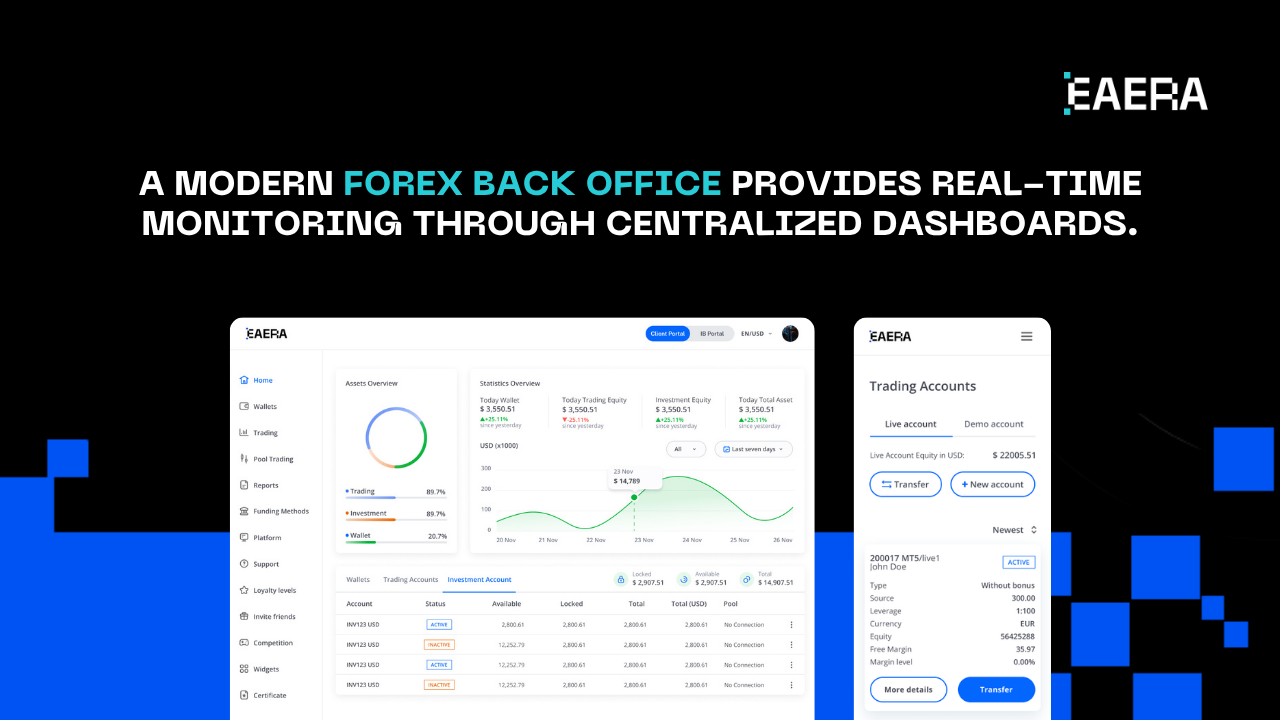
Having access to real-time data helps people make better choices. Brokers can make processes better, use resources more efficiently, and respond quickly to changes in the market.
With a forex back office, operations are clear and easy to manage, which leads to constant improvement.
Enabling Scalable Growth with Forex Back Office Software
One of the best things about a forex back office is that it can grow with your business. Brokers must deal with more clients, transactions, and compliance requirements as they grow, but they can’t raise their operational costs.
Adding more staff is what traditional scaling models do, which makes things more complicated and expensive. On the other hand, system-driven operations grow through automation and efficiency.
Key capabilities that enable scalability include:
- Handling large transaction volumes without performance degradation
- Supporting multi-region operations with consistent workflows
- Adapting to new regulatory requirements without major system changes
With a broker back office, brokers can scale confidently, knowing that their operations will remain efficient and consistent.
The way brokerages work in the future will be based on systems. Brokers who use advanced forex back office solutions will cut down on manual work, make things more accurate, and set the stage for long-term growth.