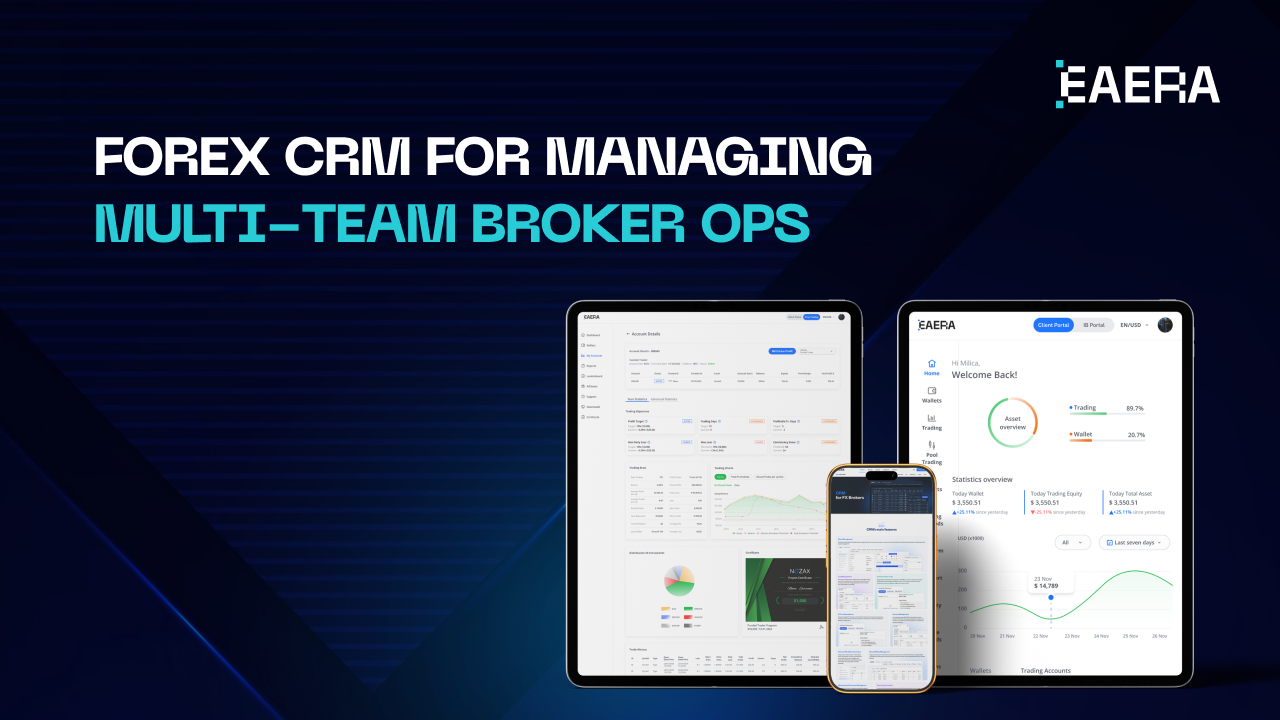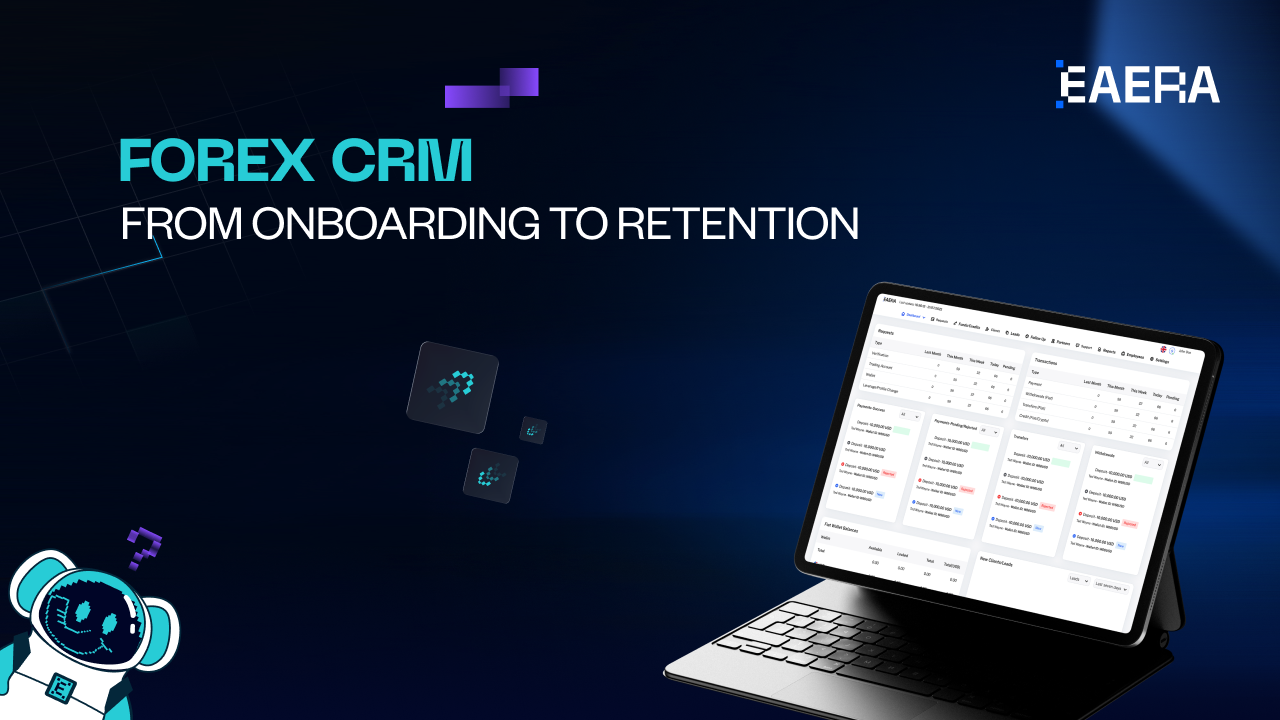




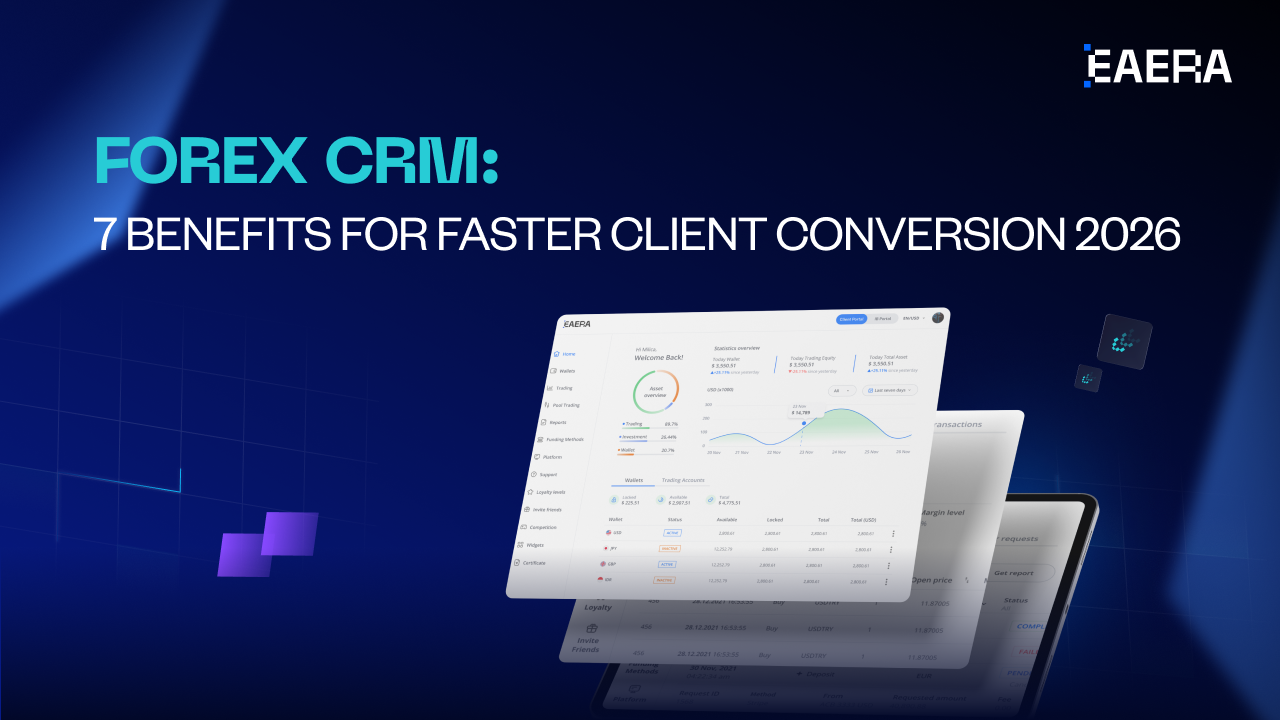
Forex CRM systems are essential for brokers looking to boost client conversion in 2026. Speed is crucial in today’s competitive forex market. Leads want instant responses, easy onboarding, and customized engagement. Brokers on manual workflows or disconnected systems typically lose conversion opportunities before clients finish registration.
Related articles:
- Forex CRM: How to Choose the Best Provider for Your Brokerage
- Forex CRM Software: 7 Key Characteristics That Deliver Results
Today’s forex CRM platforms solve this problem by bringing together lead management, onboarding, communication, and analytics in a single operational system. By automating and optimizing each stage of the client journey, brokers can accelerate, rather than retard, the sales funnel.
In this article, we talk about 7 major benefits of a CRM for forex that can help boost client conversion and improve broker performance.
Why Client Conversion Speed Matters in Forex Brokerage?
The forex industry is a very competitive one, and traders compare a lot of brokers before they make a decision.
A slow response or complicated onboarding process can easily send a lead to another platform. Conversion speed is no longer a sales metric alone, but a direct impact on revenue growth and efficiency in client acquisition.
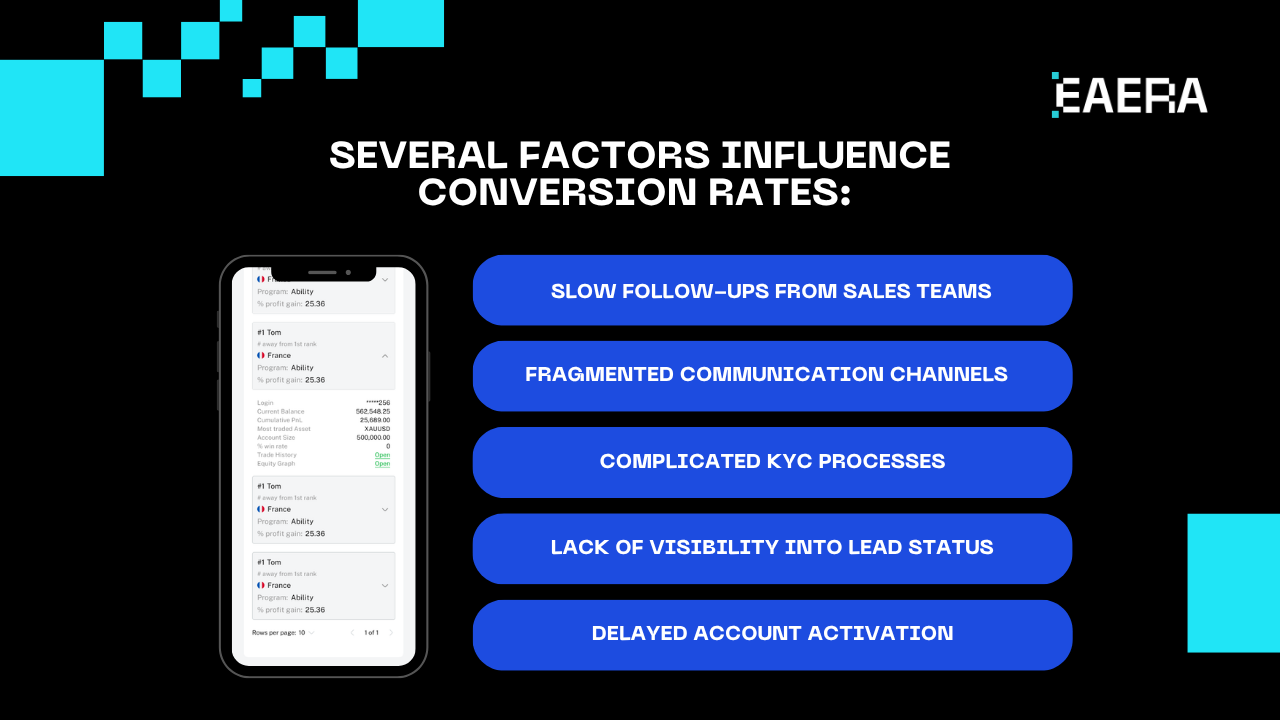
Several factors influence conversion rates:
- Slow follow-ups from sales teams
- Fragmented communication channels
- Complicated KYC processes
- Lack of visibility into lead status
- Delayed account activation
Traders today also expect a frictionless digital experience on par with other online financial services. If the registration, verification, or communication process feels slow and confusing, trust can drop off immediately, before the first deposit even occurs.
Combine these problems, and brokers lose time and money. The modern forex CRM solves these inefficiencies by automating and centralizing workflows.
Automation, Lead Routing, and Faster Follow-Ups
The first major advantage of a forex CRM is automation.
Benefit #1: Automated Lead Capture
Leads can be imported automatically into the system from websites, landing pages, paid campaigns, and affiliate channels. The CRM stores and organizes each lead right away, instead of having to export or assign data manually.
This prevents missed opportunities and ensures a faster response time.
Benefit #2: Smart Lead Routing
Not all leads should be treated equally. A powerful CRM for forex can automatically route leads based on region, language, campaign source or account type.
This connects prospects to the right sales representatives immediately, increasing efficiency.
Advanced routing logic can also prioritize high-value leads based on activity, deposit potential or level of engagement, so brokers can focus on resources where the chance to convert is highest.

Benefit #3: Faster Follow-Ups
Timing is critical in forex sales. CRM automation allows brokers to trigger:
- Email sequences
- SMS reminders
- Call notifications
- Re-engagement campaigns
These are automated actions, which shorten delays and increase consistency across the sales process.
The first three benefits together greatly reduce the time from lead generation to client engagement.
Centralized Data and Streamlined Onboarding
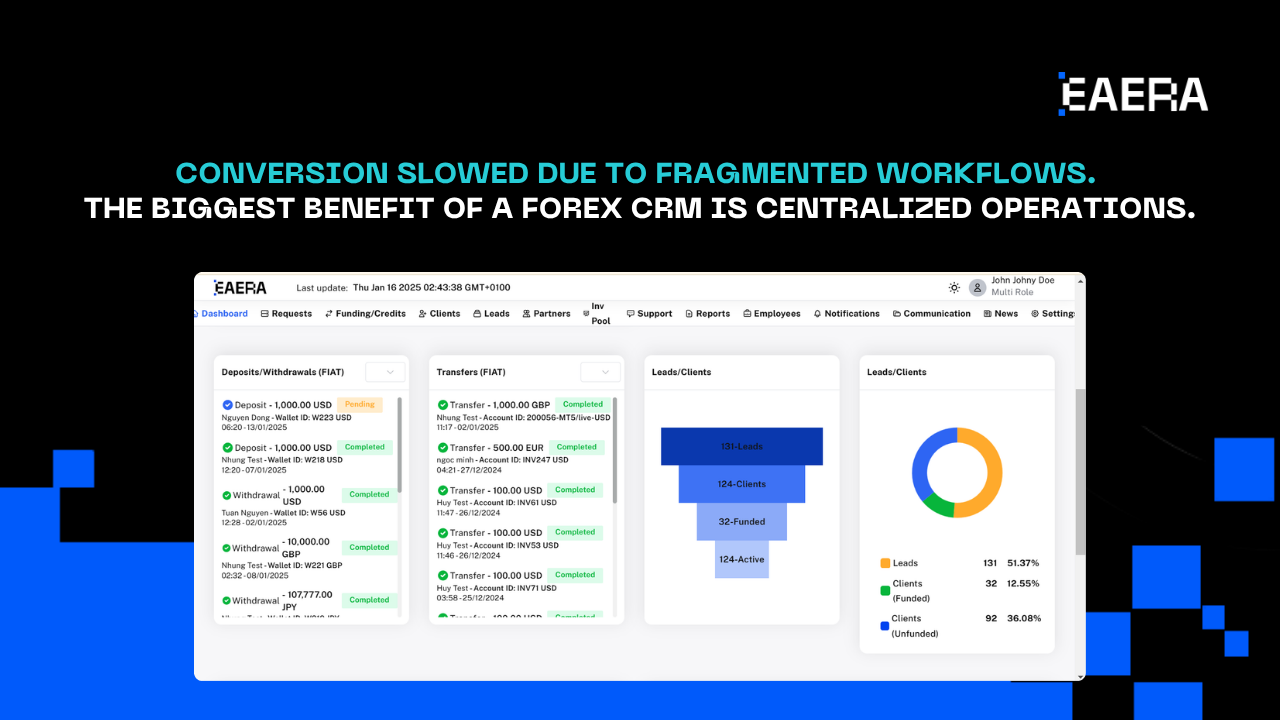
Conversion slowed due to fragmented workflows. The biggest benefit of a forex CRM is centralized operations.
Benefit #4: Unified Client Data
Every interaction—from registration to trading activity—is stored in one place.
Sales teams can instantly view:
- Lead source
- Communication history
- KYC status
- Deposit activity
- Trading engagement
This removes confusion and reduces manual coordination between departments.
Centralized visibility also improves decision-making, enabling managers to identify bottlenecks and optimize conversion workflows more effectively.
Benefit #5: Faster KYC and Account Setup
Manual onboarding is one of the biggest drivers of conversion drop-off. Embedded KYC and verification tools make it easier and lower friction for new users.
With automation, clients can:
- Upload documents directly
- Receive status updates instantly
- Complete account verification faster
The faster traders are activated, the more likely they are to fund and begin trading.
Analytics and Personalized Client Engagement
As competition increases, brokers need more than speed—they need intelligence.
Benefit #6: Real-Time Sales Insights
A modern CRM for forex provides real-time visibility into the sales pipeline. Brokers can track:
- Lead conversion rates
- Funnel bottlenecks
- Sales team performance
- Campaign effectiveness
This data enables firms to constantly optimize their acquisition strategy.
Live dashboards also empower management to respond to under-performing campaigns or delays in the onboarding process before they affect overall revenue.
Benefit #7: Personalized Communication
Generic communication no longer works in modern brokerage marketing.
CRM systems allow brokers to segment clients based on:
- Region
- Trading behavior
- Deposit activity
- Engagement level
This allows for more targeted messaging and a better overall customer experience.
Personalized communication fosters trust and keeps the leads engaged throughout the conversion process.
How Forex CRM Improves Broker Performance Beyond Conversion?
The impact of a forex CRM extends far beyond lead conversion.
Additional operational benefits include:
- Higher client retention: Better engagement and communication improve long-term loyalty
- Lower operational costs: Automation reduces repetitive manual tasks
- Improved team productivity: Sales and support teams spend less time managing data manually
- Higher client lifetime value (LTV): Faster onboarding and personalized engagement increase long-term revenue potential
- More scalable operations: Brokers can handle larger lead volumes and client bases without proportionally increasing operational costs
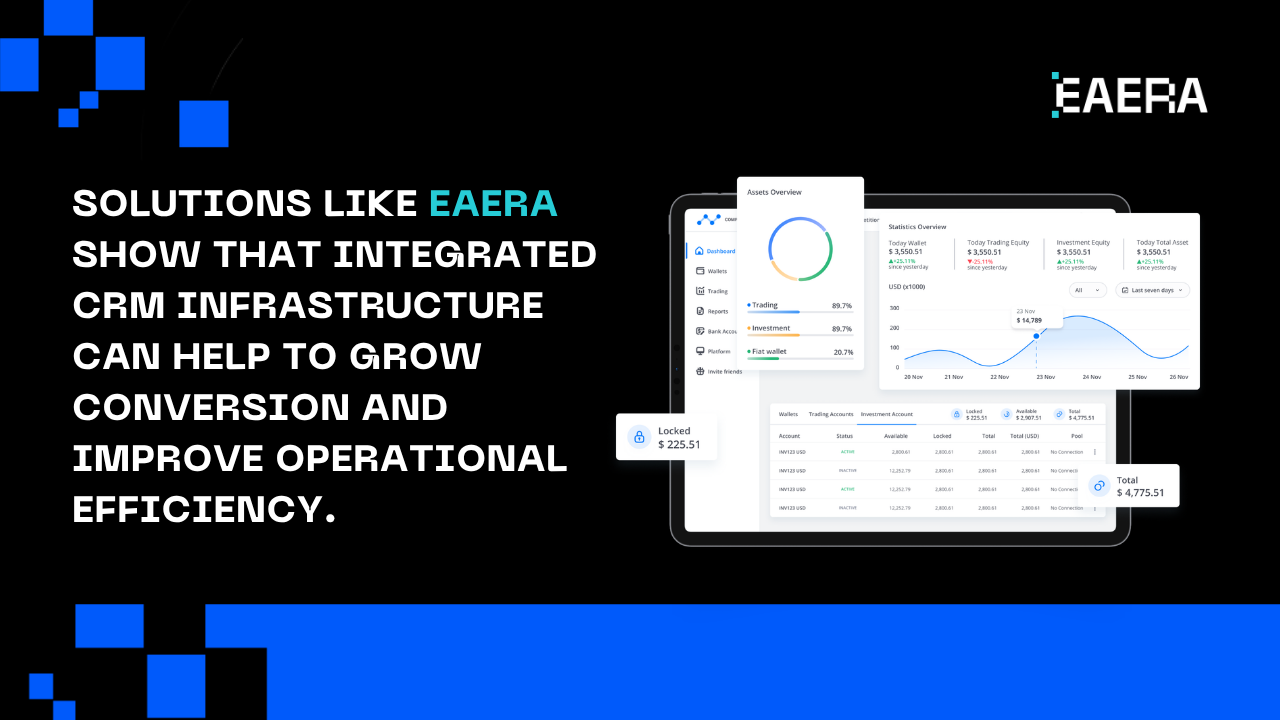
Solutions like EAERA show that integrated CRM infrastructure can help to grow conversion and improve operational efficiency.
What to Evaluate When Choosing a Forex CRM in 2026?
Not all CRM systems deliver the same value. Brokers should evaluate a forex CRM based on several key criteria.
Automation Capabilities
Can the system automate lead capture, follow-ups, onboarding, and reporting?
Integration with Trading Systems
Does the CRM connect seamlessly with trading platforms and back-office tools?
Scalability
Can the system support growing client volumes and multiple regions?
Reporting and Analytics
Does it provide real-time visibility into sales and operational performance?
Ease of Use
A CRM should simplify workflows, not create additional complexity.
Customization flexibility
Brokers should be able to adapt workflows, pipelines and communication logic to their business model and sales structure.
Broker growth is ingrained in a single ecosystem that combines automation, operational visibility, and integration with platforms like EAERA.
In 2026, the conversion speed is one of the biggest competitive advantages for forex brokers. A modern forex CRM helps firms reduce delays, automate workflows, and create a seamless client journey from registration to funding.
CRM systems impact conversion and operational performance in the long term by improving lead management, onboarding, communication, and analytics. Brokers that invest in scalable CRM for forex infrastructure are better positioned to grow efficiently in an increasingly competitive marketplace.