



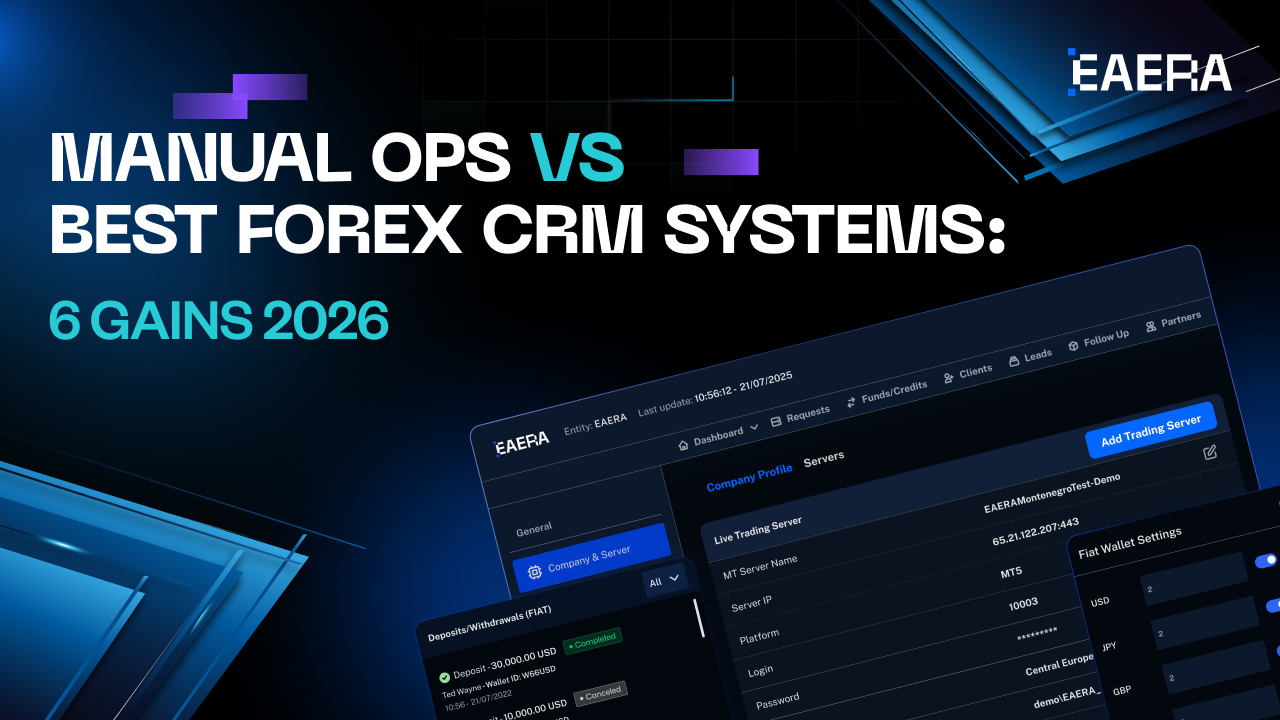
As the Forex market enters a new phase of accelerated growth in 2026, the best forex CRM systems are quickly becoming the backbone of competitive brokerages.
In an environment defined by speed, scale, and regulatory pressure, spreadsheets, manual checks, and disconnected tools are no longer adequate.
A High-Growth Market That Exposes Operational Limits
Due to the rise of prop trading models, lower entry barriers, and mobile-first trading, retail Forex participation is still growing. Regulations pertaining to KYC, AML, reporting transparency, and client fund handling are being strictly evaluated. Opportunities abound, but execution is more difficult than ever due to this combination.
When momentum increases, brokers who depend on spreadsheet-based reporting, manual onboarding, and disjointed tools frequently find themselves overburdened. Decision-making slows, teams expand, expenses rise, and mistakes increase. On the other hand, because their operations are built for scale from the start, brokers with the best forex CRM systems can easily handle growth.
Related articles:
- Why Working with a Best Forex CRM Agency Helps in 2026?
- Unlock Your Brokerage Potential: Top Forex CRM Solutions Revealed!
Manual Operations vs Best Forex CRM Systems: A Clear Structural Difference
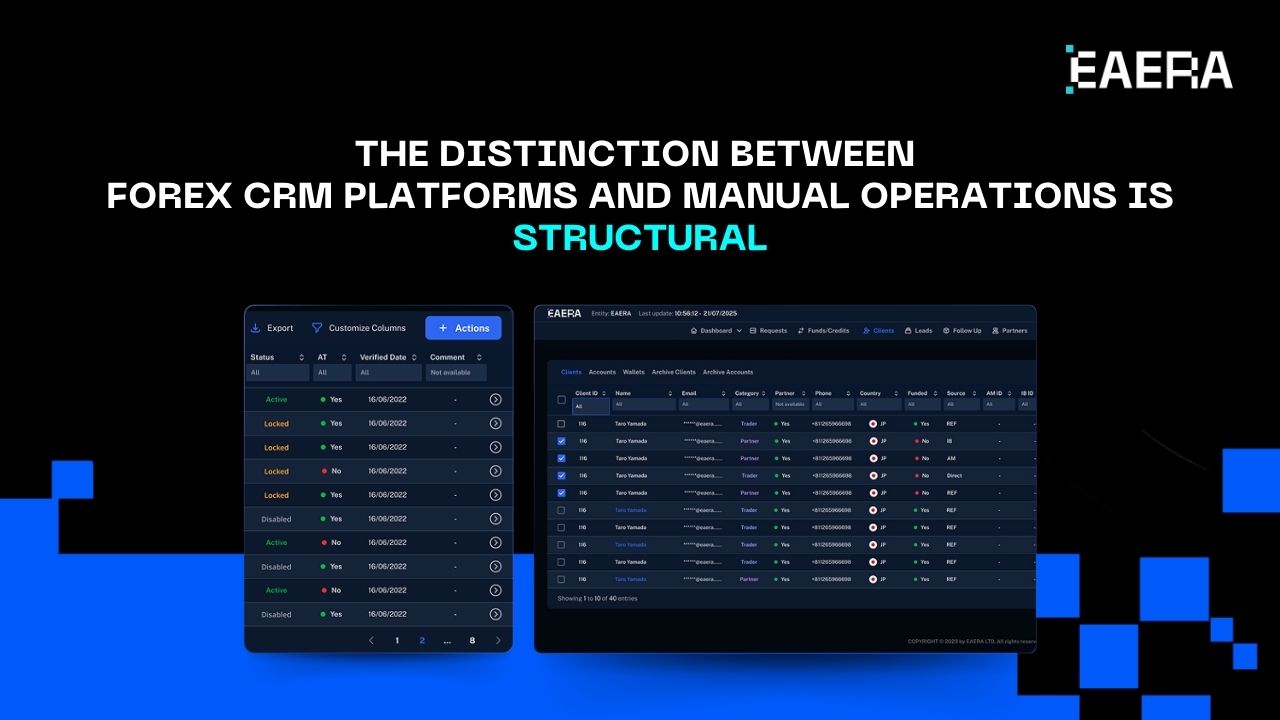
The distinction between contemporary Forex CRM platforms and manual operations is structural rather than incremental.
| Operational Area | Manual Operations | Best Forex CRM Systems |
| Trader onboarding | Slow, staff-dependent | Automated, near-instant |
| Time to first deposit | Hours or days | Minutes |
| Data visibility | Fragmented across tools | Real-time, centralized |
| Risk management | Reactive | Proactive, real-time |
| Compliance | Error-prone, manual | Built-in, audit-ready |
| Scalability | Requires more staff | System-driven growth |
The speed and complexity of the 2026 Forex environment make manual workflows incompatible, but they are not intrinsically defective. The best forex CRM systems transform brokerage operations rather than merely digitizing tasks.
Case Study: A Broker at the Edge of Growth
Imagine a mid-sized brokerage that rapidly spread throughout Latin America and Southeast Asia. IB networks were expanding, marketing campaigns were effective, and daily registrations rose dramatically. Everything appeared to be going well on the surface.
But there were fissures developing behind the scenes.
Trader dissatisfaction and abandoned registrations resulted from onboarding teams’ inability to process KYC documents swiftly. Risk teams monitored exposure using a variety of dashboards, frequently responding to abrupt changes in the market too late. Withdrawals were delayed and ticket support increased because payment operations relied on manual reconciliation. There was growth, but there were also inefficiencies.
When operational stress started to harm the brokerage’s reputation, it reached a breaking point. Internal teams were overburdened, trader complaints increased, and compliance reviews took longer. Leadership recognized that infrastructure was the issue, not demand or performance.

From Fragmented Tools to One Operating System
Instead of adding more staff or patching existing tools, the broker made a strategic decision to migrate to one of the best forex CRM systems designed specifically for brokerage operations.
The transformation was immediate and structural. Trader profiles became centralized, combining onboarding data, trading activity, payments, and communication history into a single view. Trading platforms synced in real time, giving risk and management teams instant visibility into exposure and behavior. KYC, AML checks, and reporting workflows were automated and standardized across regions.
Most importantly, teams stopped reacting to problems after they occurred. With unified data and automation, they could anticipate issues, intervene earlier, and make decisions based on live insights rather than delayed reports.
The 6 Gains Unlocked by Best Forex CRM Systems
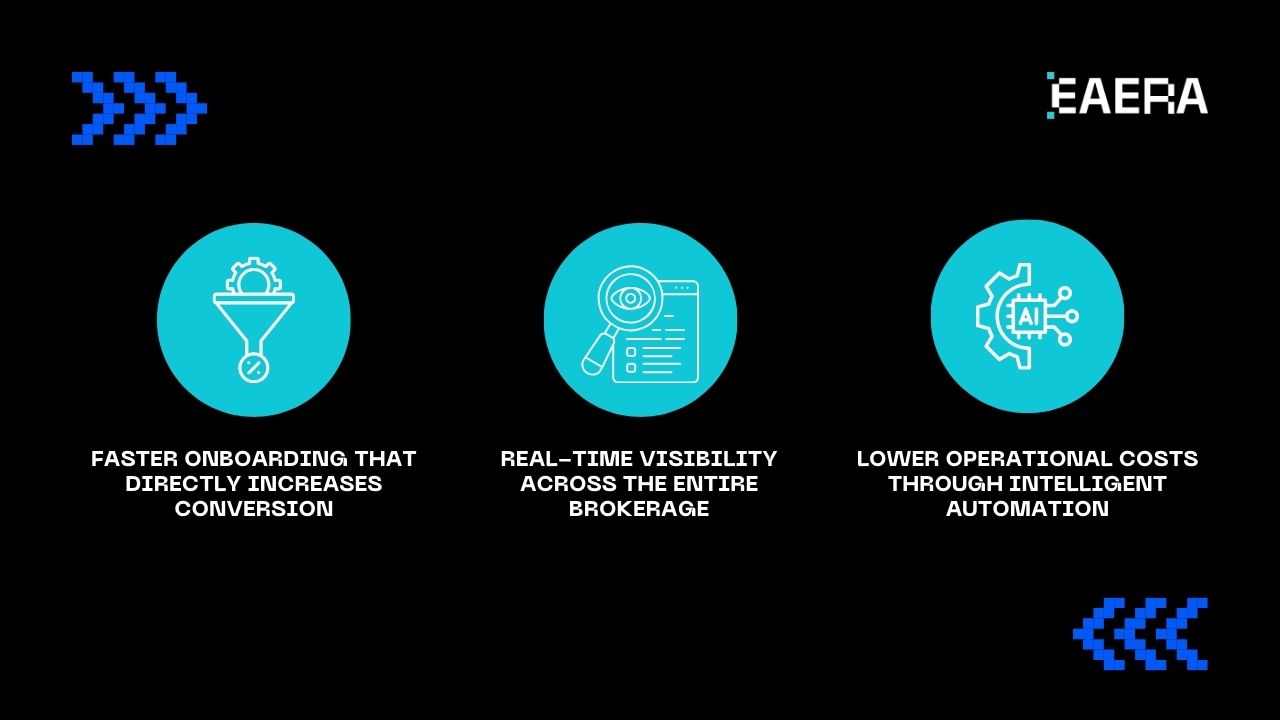
1. Faster Onboarding That Directly Increases Conversion
Onboarding speed is now a revenue-generating factor rather than technical detail. Every additional verification step in manual environments raises the possibility that a trader will give up before making a first deposit. By automating KYC, document verification, and account creation into a single workflow, the best forex CRM systems remove this friction.
This gain is noteworthy for its consistency as well as its speed. Regardless of location or time zone, every trader goes through the same structured process. This shortens the time between registration and trading, minimizes human error, and lessens reliance on support. Faster onboarding eventually results in increased conversion rates, improved marketing spends return on investment, and more steady revenue growth.
2. Real-Time Visibility Across the Entire Brokerage
Among the most underestimated benefits of best forex CRM systems is being able to see everything in real time in the brokerage. Rather than getting information from trading platforms, payment solutions, and analytical tools piece by piece, all important information is used to provide a real-time operational view.
Such a paradigm radically alters the manner in which decisions are arrived at. Risk managers do not respond to losses after they have occurred; rather, they can spot exposure trends whilst they are emerging. The sales team is now able to make sense of trader behavior based on real-time activity rather than on a post-activity briefing.
Related articles:
- Why Working with a Best Forex CRM Agency Helps in 2026?
- Unlock Your Brokerage Potential: Top Forex CRM Solutions Revealed!
Management now possesses the capability to watch performance in real time rather than in a summary format. The result is faster intervention, smarter prioritization, and significantly reduced operational blind spots.
3. Lower Operational Costs Through Intelligent Automation
Manual procedures scale linearly with the number of employees as brokerages expand. The best forex CRM systems break this pattern by substituting automated logic for monotonous, human-dependent tasks. Instead of being done by hand, procedures like onboarding reviews, lead assignment, IB commission computation, payment reconciliation, and reporting are managed methodically.
Compounding efficiency is where this automation’s true value is found. A brokerage doesn’t need to double its operations staff in order to double its trader base. Resources are transferred from administrative tasks to strategic tasks like product development, market expansion, and partnership growth. This eventually results in a cost structure that is much more resistant to changes in the market.
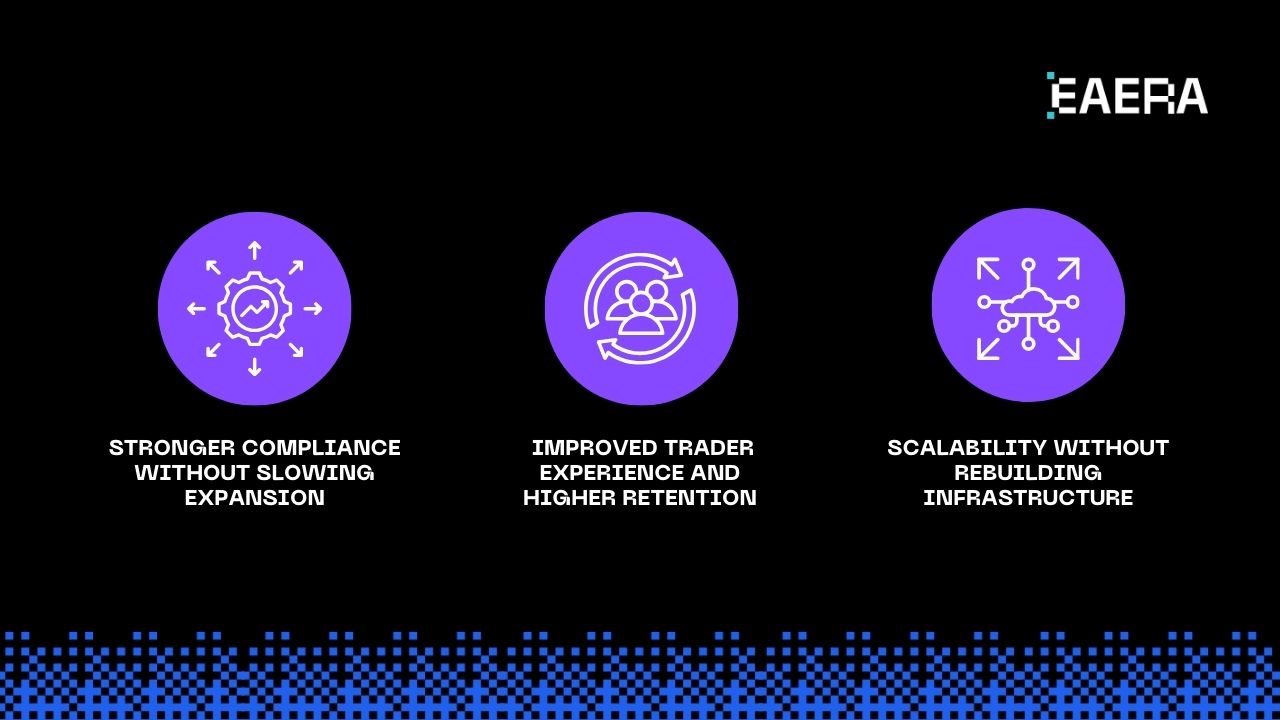
4. Stronger Compliance Without Slowing Expansion
Compliance is often seen as a constraint to growth, especially when managed manually. The best forex CRM systems invert this dynamic by embedding compliance directly into everyday operations. Automated AML checks, flows for the verification of KYC, audit trails, and permissions based on roles are just part of how it aligns with regulations without slowdowns in onboarding or execution.
This in-built compliance model becomes particularly valuable when entering new regions. Instead of redesigning processes for each jurisdiction, brokers can adapt existing workflows with minimal disruption. The CRM is now a compliance framework which scales with the business, reducing regulatory risk while maintaining operational momentum.
5. Improved Trader Experience and Higher Retention
Speed, transparency, and reliability influence trader experience in 2026. The best forex CRM solutions maximize these factors by providing an optimized platform for viewing accounts, payment, and trading/financial information in a single and instant interface. Traders do not need to ask support staff for information on their status; everything is provided with immediate access.
This has a direct impact on retention. Traders will want to remain with those brokers offering fast deposits, reliable withdrawals, and a stable platform. Retention will become a more potent force in expansion than acquisition over time. A CRM-driven experience will boost lifetime value and lower the cost of churning.
6. Scalability Without Rebuilding Infrastructure
The final, and perhaps most strategic, gain is scalability. The best forex CRM systems are designed to handle complexity – multiple platforms, currencies, languages, regions, and regulatory requirements without structural breakdown. Growth doesn’t require rebuilding systems or redesigning workflows.
This scalability allows it to scale with stability during periods of high growth. Whether a brokerage is launching into new markets, onboarding thousands of traders, or releasing new trading products, the CRM moves with it without disruption of existing operations. In competitive markets, this operational stability becomes a strong trust signal towards traders, partners, and regulators alike.