



Prop trading software is the backbone of modern proprietary trading firms, enabling them to manage traders, enforce rules and control risk at scale. As funded trading programs continue to proliferate across the US, firms are no longer managing dozens of accounts, but thousands. Without structured systems risk exposure can increase quickly and unexpectedly.
Related articles:
- Prop Trading Program: What Traders Should Know in 2026
- Top Prop Trading Tools for US Firms: Scale Risk-Free 2026
Manual supervision is not enough anymore. Automation, real-time monitoring and rule-based enforcement are what today’s companies need to stay competitive. Sophisticated prop trading software is essential here – not only as an operational tool but as a risk management engine that dictates long-term sustainability.
Why Risk Systems Are the Core of Prop Trading Software?
The single most important element in any proprietary trading business is risk. Every funded account is a potential exposure, and if not controlled properly, even small inefficiencies can cause big losses.
In traditional setups, firms rely on manual monitoring or delayed reporting. This creates several problems:
- Violations are detected too late
- Drawdown limits are applied inconsistently
- Traders may exploit system gaps
- Risk exposure is not visible in real time
Advanced proprietary trading software solves these challenges by embedding risk controls directly into the system. Automated enforcement allows firms to prevent issues rather than respond to them after the fact.
This is the transition from reactive to proactive risk management that enables firms to scale safely. Growth without it often leads to instability rather than profit.
Core Components of Advanced Risk Systems
The effectiveness of prop trading software depends on the strength of its risk management framework. Modern systems are designed to monitor, enforce, and document every aspect of trading activity.
Key components include:
- Real-time monitoring: Every trade, position, and account metric is tracked continuously. This ensures that firms always have up-to-date visibility into trader activity and exposure.
- Drawdown enforcement: Daily and maximum loss limits are applied automatically. Once a threshold is reached, the system takes immediate action, such as restricting trading or closing positions.
- Rule-based restrictions: Firms can define rules for trading behavior, including position size, instrument access, and trading hours. These rules are enforced consistently across all accounts.
- Violation detection and alerts: The system identifies breaches instantly and triggers notifications or automated responses. This minimizes the risk of further losses.
- Audit logs and traceability: Every action is recorded, creating a transparent and verifiable record of trading activity. This is essential for compliance and internal review.
In short, these components provide a controlled environment where risk is managed systematically rather than by hand.

Key Features That Make Prop Trading Software Scalable
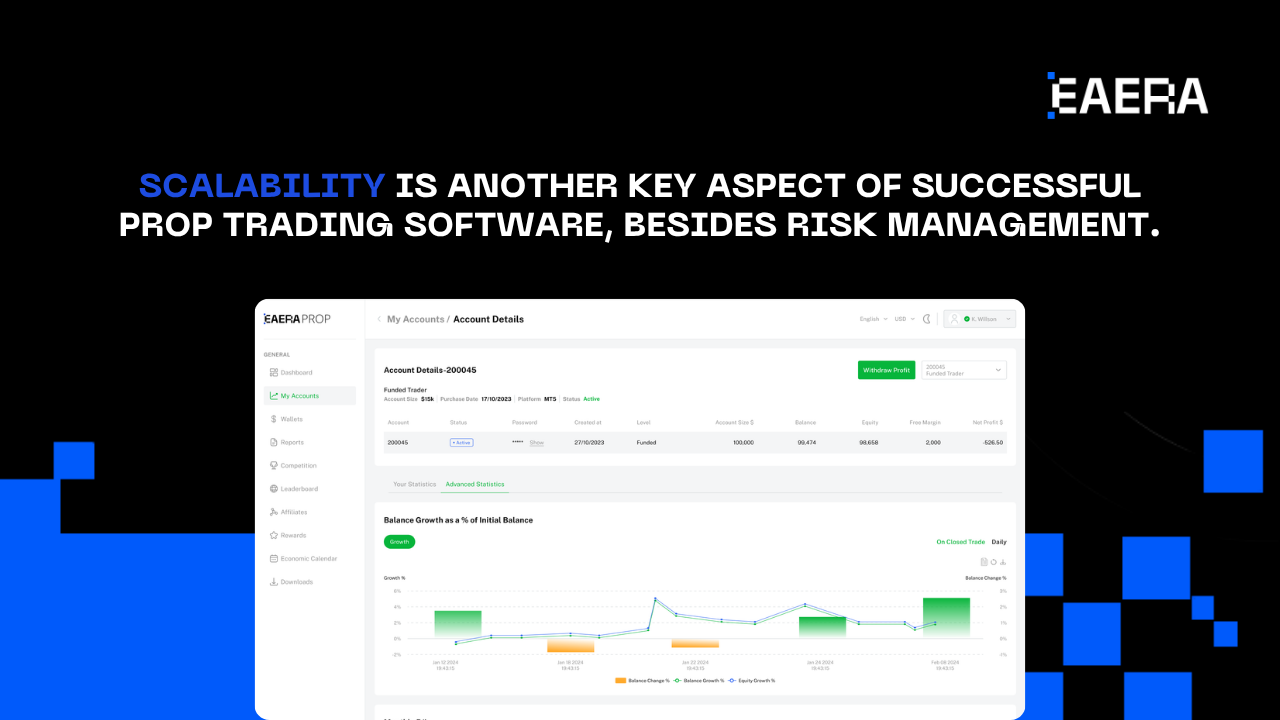
Scalability is another key aspect of successful prop trading software, besides risk management. As firms increase in size, they require systems that can handle growing complexity without growing complexity in resources.
Important features include:
- Multi-account management: The ability to monitor and control thousands of accounts from a single interface
- Automated trader evaluation: Structured challenge phases that track performance and determine qualification
- Payout automation: Accurate and timely distribution of profits based on predefined rules
- Lifecycle tracking: Managing traders from onboarding to funded status and beyond
- Platform integration: Seamless connection with trading platforms such as MT5 for execution
These features ensure that firms can expand their operations without compromising efficiency or control.
How Prop Trading Software Integrates with Broker Infrastructure?
One of the key benefits of modern prop trading software is its ability to integrate with existing broker infrastructure. It doesn’t work as a standalone tool, but a central layer that connects trading platforms, back-office systems, and payment workflows.
This integration enables firms to synchronize data between systems in real-time, ensuring consistency across trader activity, account status, and financial operations. For example, trades made on MT5 can be passed through to the system for risk checks, account updates, and reporting instantly.
In addition, integration with CRM and back-office platforms allows firms to handle onboarding, KYC and payouts without switching between multiple tools. This reduces operational friction and improves efficiency across teams.
How Advanced Risk Systems Improve Trader Experience?
While risk systems are designed to protect firms, they also play a crucial role in improving the trader experience.
With modern proprietary trading software, traders benefit from:
- Clear and transparent rules: All trading conditions are defined and enforced consistently, reducing confusion
- Real-time feedback: Traders can monitor their performance, including drawdown and profit targets, instantly
- Reduced ambiguity: Automated systems eliminate subjective decisions and ensure fairness
- Faster payouts: Automation reduces delays in processing withdrawals
These improvements make the environment more professional and predictable.
Traders who believe in the system will stay engaged and perform better. This has immediate benefits for firms in terms of retention and improved brand image.
Prop Trading Software Comparison: What to Evaluate
Selecting the right proprietary trading software requires careful evaluation. Not all platforms offer the same functionality or reliability.
Key factors to consider include:
- Risk automation level: Does the system enforce rules in real time, or rely on manual intervention?
- Integration capabilities: Can it connect seamlessly with trading platforms and other tools?
- Reporting transparency: Are data and metrics accessible and easy to understand?
- Rule configuration flexibility: Can firms customize rules to match different programs and account types?
- User experience: Is the interface intuitive for both traders and administrators?
Solutions like EAERA demonstrate how incorporating these capabilities into a single platform can significantly enhance operational efficiency and user satisfaction.
Real Use Case: Reducing Risk Exposure with Automation
Consider a growing US prop trading firm managing hundreds of funded traders.
Before adopting advanced tools
- Risk monitoring was performed manually
- Violations were often detected after losses occurred
- Payout calculations required manual verification
- Support teams handled frequent disputes
After implementing advanced prop trading software
- Real-time monitoring identified violations instantly
- Automated enforcement ensured consistent rule application
- Payouts were processed accurately and efficiently
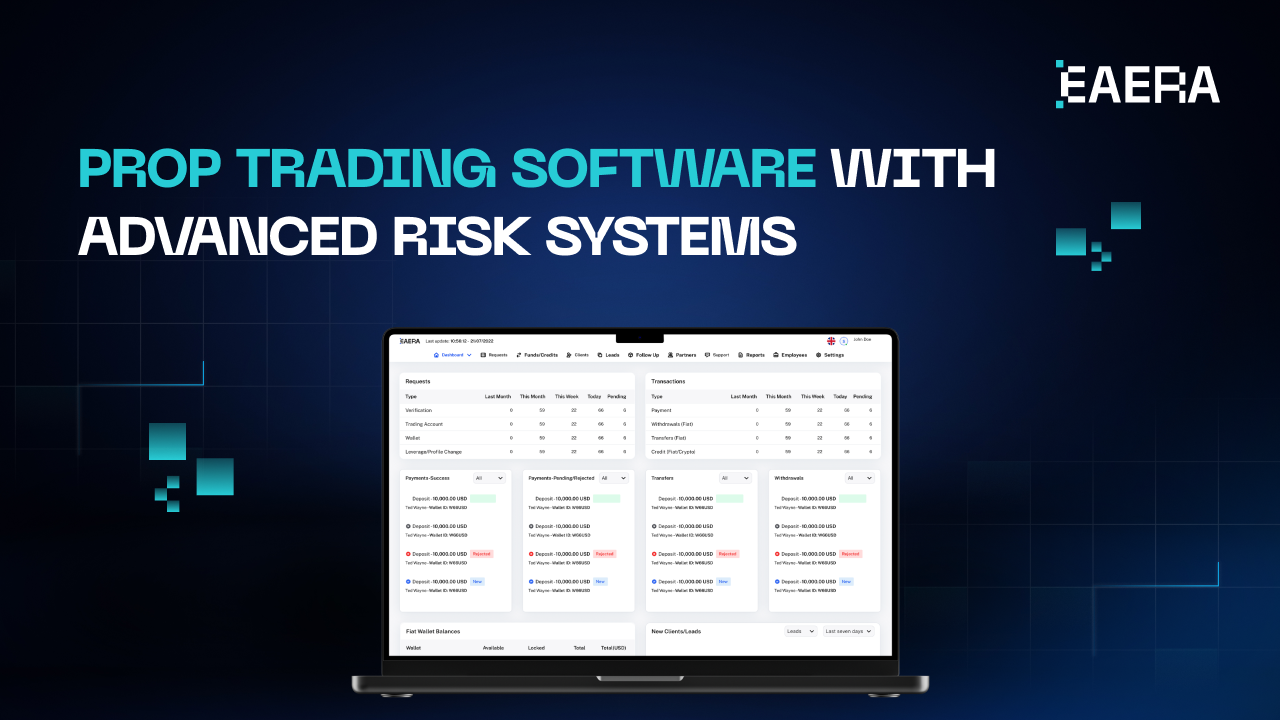
- Centralized dashboards provided full visibility
Results
- Significant reduction in risk exposure
- Lower operational workload
- Improved trader satisfaction and retention
- Faster scaling without increasing team size
Proprietary trading software isn’t optional in 2026; it’s the foundation of a scalable and sustainable trading business. Sophisticated risk systems enable firms to control exposure, apply rules, and operate consistently at scale.
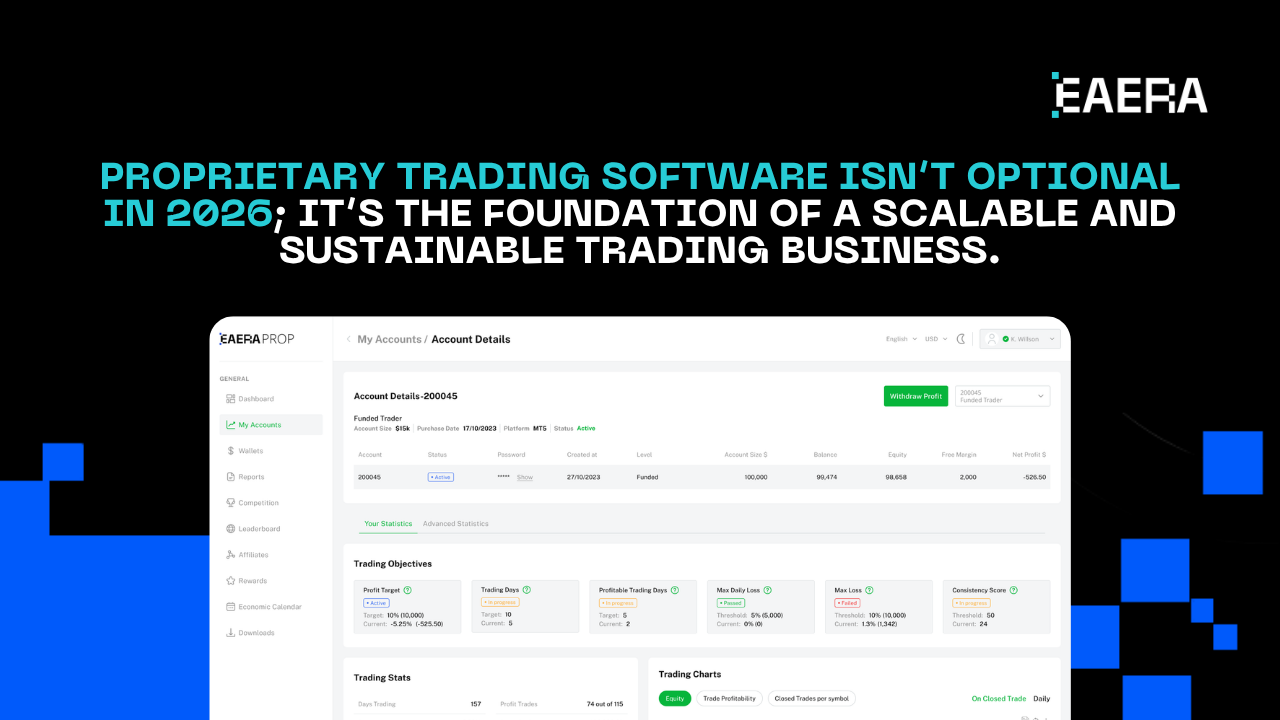
Modern solutions combine automation, transparency, and real-time monitoring to allow firms to grow without increasing risk. In the competitive market, picking the right prop trading software is not only a technical choice, but a strategic advantage that determines long-term success.