





It’s a common misconception that winning a trading competition depends on luck or reckless risk-taking. Regular winners approach a trading competition with structure, discipline, and a well-defined plan.
Related articles:
- Best Forex CRM for Modern Brokerage Management in 2026
- Trading Competition Platform: Run Profitable Trading Contests for Brokers & Prop Firms
While many traders concentrate on short-term profits, successful traders place a higher priority on consistency, risk management, and rule optimization. The key to getting consistent results is knowing how a trading competition operates and how to participate in it.
How Trading Competitions Actually Work?
It is essential to comprehend the structure of trading competition before formulating a strategy. Every competition adheres to a predetermined framework that establishes how performance is evaluated and ranked.
A typical trading competition includes:
- A fixed time (e.g., weekly, monthly)
- Standardized starting conditions such as account balance
- Defined trading rules (drawdown limits, leverage, instruments)
- Ranking criteria based on profit or risk-adjusted performance
Trading competition is not a free trading environment, which is crucial to realization. It is a regulated system with limitations. Traders who disregard these limitations typically don’t succeed.
Understanding not only how to trade but also how to trade within the rules is essential for success in a trading competition. There is a big advantage for those who match their strategy to the structure of the competition.

Why Most Traders Lose Trading Competitions?
Most participants in trading competitions fail because they have an incorrect mindset rather than a lack of skill. Instead of viewing the competition as a structured performance challenge, they view it as a chance to swiftly maximize returns.
Common reasons traders lose in a trading competition include:
- Overleveraging positions to chase the top leaderboard
- Ignoring risk management principles
- Emotional decision-making under pressure
- Lack of a consistent trading strategy
- Focusing only on profit instead of risk-adjusted performance
These actions lead to inconsistent outcomes. A trader may make money in the short term, but if they are inconsistent, they will eventually fail.
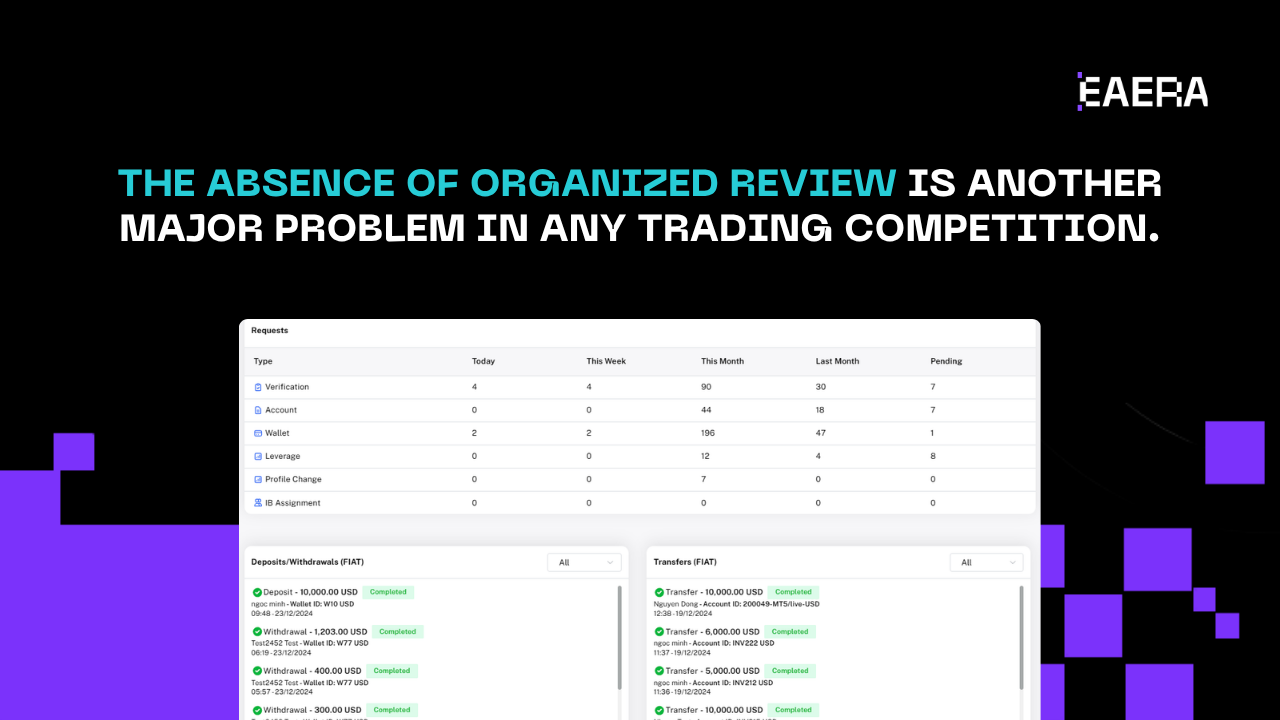
The absence of organized review is another major problem in any trading competition. Because they don’t examine their trades or performance trends, many traders make the same mistakes repeatedly. Without feedback, losses are treated as isolated events rather than signals of flawed strategy or poor execution.
Survival is as crucial as performance in a trading competition. Strong finishes are more likely for traders who preserve stability and safeguard their capital.
Core Strategies for Winning a Trading Competition
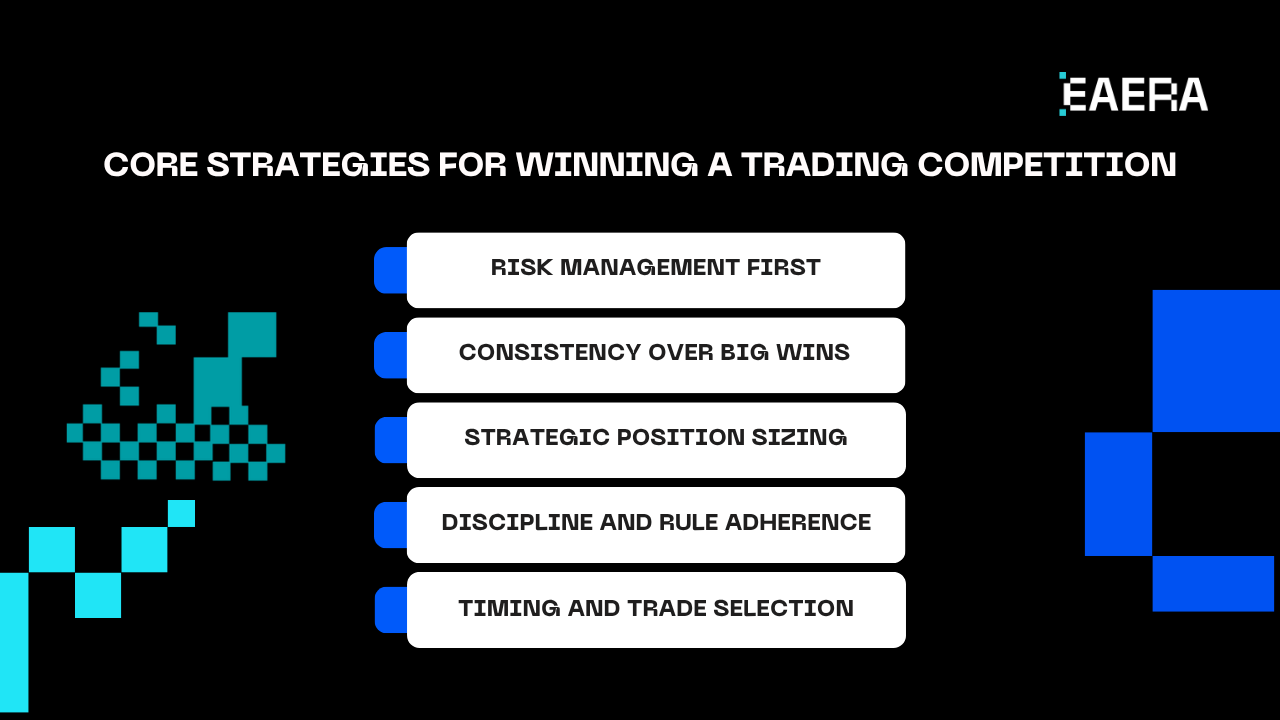
Traders need to take a methodical approach to consistently make money. Discipline, not aggression, is the foundation of a successful competition strategy.
Risk Management First
Risk management is the cornerstone of any successful trading competition strategy. A trader can stay competitive by limiting drawdowns and avoiding significant losses. Consistent performers prioritize capital protection over profit.
Consistency Over Big Wins
The result of a trading competition is rarely decided by a single big trade. Better outcomes, on the other hand, come from consistent and regulated performance over time. Ranking stability is enhanced, and volatility is decreased by consistency.
Maintaining mental stability during a competition is also facilitated by consistent execution. Predictable performance lowers emotional stress and discourages rash choices. When compared to traders who use aggressive but erratic strategies, this stability becomes a competitive advantage.
Strategic Position Sizing
A key component of risk management is position sizing. Traders who invest excessive amounts of money in a single transaction unnecessarily increase their exposure. Controlled position sizing aids in preserving the equilibrium between risk and reward in a trading competition.
Discipline and Rule Adherence
Every trading competition has rules, and it’s crucial to abide by them. Whether done on purpose or not, breaking the rules can result in fines or disqualification. Rules are not limitations for disciplined traders; rather, they are an integral part of their strategy.
Timing and Trade Selection
It’s not necessary to trade every market opportunity. Instead of overtrading, successful traders concentrate on high-probability setups. Selective trading lowers needless risk and increases efficiency.
Comprehending the regulations governing competition is insufficient. They must be actively used by traders to mold their approach.
Every trading competition specifies the metrics used to evaluate performance. Opportunities for optimization result from this.
Key tactical approaches include:
- Studying the scoring system to understand what is rewarded
- Adjusting strategies based on risk and ranking criteria
- Avoiding unnecessary trades that increase exposure
- Leveraging risk-adjusted metrics if they are part of the evaluation
For instance, traders can concentrate on minimizing drawdowns rather than maximizing returns if a trading competition rewards consistency rather than absolute profit.
Traders turn limitations into advantages by coordinating strategy with regulations. One of the most disregarded elements of a competition is this.
Traders who devote time to learning about rule mechanics frequently perform better than those who solely concentrate on market analysis. Optimizing rules, like avoiding needless drawdowns or maintaining consistent performance, can often yield better results than pursuing high-risk opportunities.
Common Strategy Mistakes in Trading Competitions
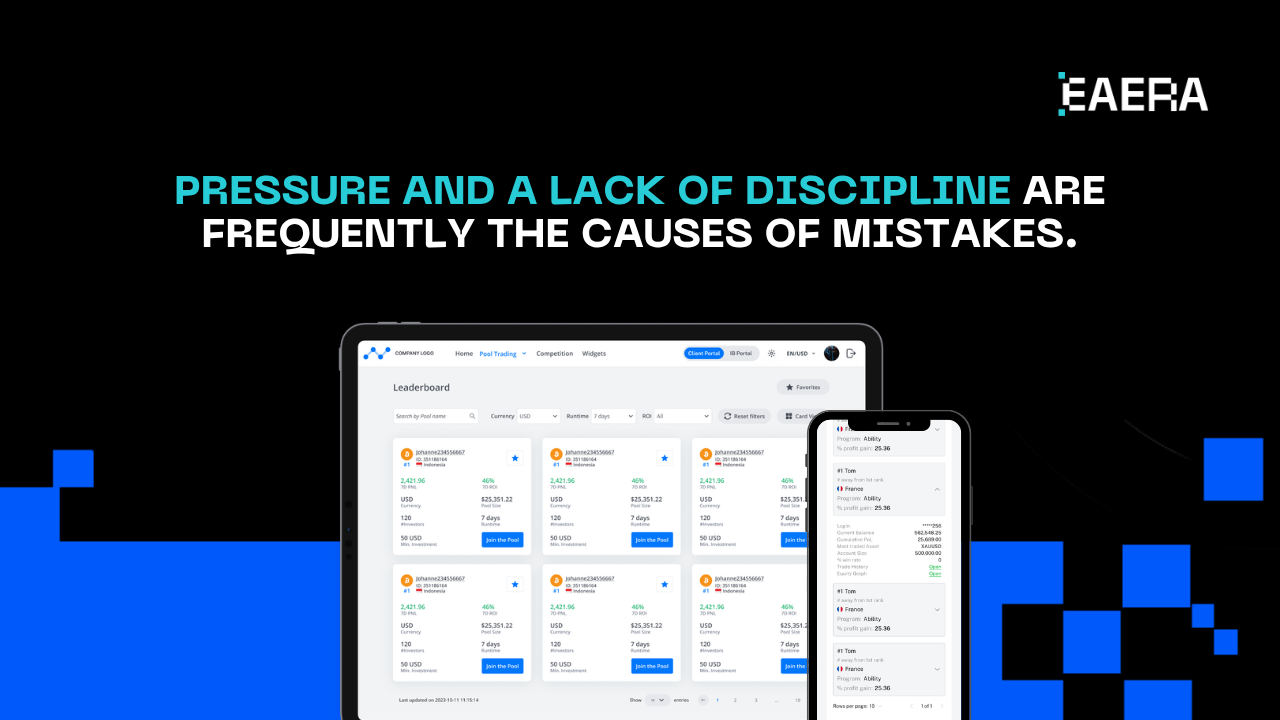
In a trading competition setting, even seasoned traders make mistakes. Pressure and a lack of discipline are frequently the causes of these errors.
Typical strategy errors include:
- Changing strategy mid-competition due to short-term losses
- Revenge trading after a losing position
- Ignoring drawdown limits in pursuit of recovery
- Overtrading without clear setups
These actions raise the chance of exposure and disturb consistency. Stability is more important in trading competition than quick profits. Maintaining performance over time requires avoiding these errors.
The Role of Technology in Trading Competitions
In today’s trading competition environments, technology is becoming more significant. These days, platforms offer tools to help traders better manage risk and keep an eye on performance.
Key technological advantages include:
- Real-time tracking of positions and performance
- Risk monitoring to prevent rule violations
- Analytics to evaluate trading behavior
More regulated and transparent trading competition environments are made possible by structured platforms like EAERA. These systems guarantee consistency and fairness for all users by combining real-time data with rule enforcement. Traders can concentrate less on manual tracking and more on strategy with the help of technology.
Taking the biggest risks is not the key to winning a trading competition. It involves upholding discipline, managing risk, and carrying out a consistent plan. Traders who prioritize process over profit are more likely to see consistent outcomes.
Success will depend on how well traders adjust to increasingly technologically advanced and structured trading environments. This is further supported by platforms such as EAERA, which offer transparent and rule-based environments.