



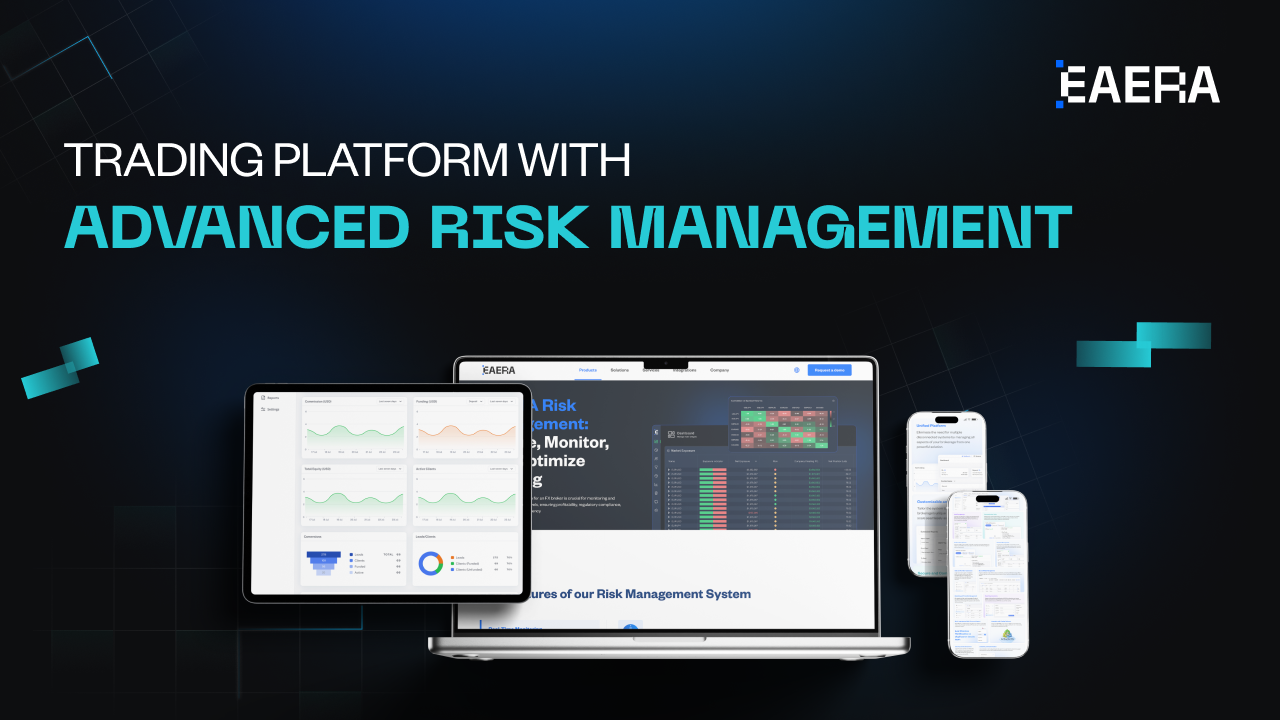
Execution alone isn’t enough anymore in today’s markets, which are always changing and moving quickly. A modern trading platform must also work as a system for controlling risk in real time. Brokers are under more pressure to manage risk, make sure trades are done correctly, and keep operations stable across a wide range of asset classes.
Related articles:
This article talks about how advanced risk management is built into a trading platform and why it is now a must-have for trading operations that want to last.
Why Risk Management Is Critical in Modern Trading Platforms?
The market for trading has changed a lot. Brokers now deal with more trades, more complex strategies, and a wider range of instruments, such as forex, indices, commodities, and crypto CFDs.
As this growth happens, the risk goes up. Changes in exposure, sudden market volatility, and gaps in liquidity can all quickly affect profits. Without proper control, even a short period of unmanaged risk can lead to significant losses.
A trading platform is not complete if it doesn’t have built-in risk management. Risk can no longer be managed by separate systems or people who watch over them. It needs to be built right into the platform where trades happen.
It’s very important to be able to see things in real time. Brokers should always keep an eye on positions, margin levels, and exposure, not just after the fact. Modern trading infrastructure is defined by this change from reactive to proactive risk management.
Core Risk Management Capabilities in a Trading Platform
A strong trading platform has a number of core risk management features that work together as a single system. These features make sure that risk is managed at every stage of the trading process.
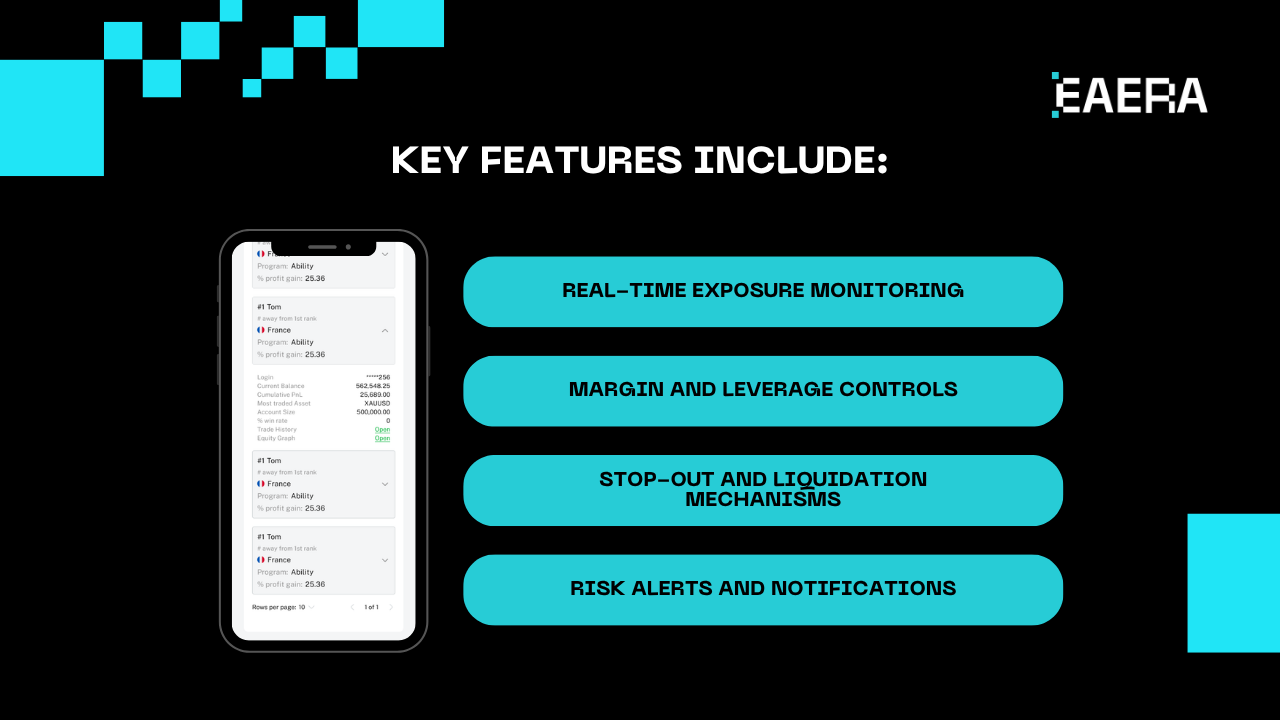
Key features include:
- Real-time exposure monitoring: Tracking positions across all instruments and accounts
- Margin and leverage controls: Enforcing limits based on account type and market conditions
- Stop-out and liquidation mechanisms: Automatically closing positions when risk thresholds are breached
- Risk alerts and notifications: Immediate warnings for abnormal conditions
These features are not separate modules. They are deeply integrated into execution logic in an advanced trading platform. Every trade, position update, and change in the market is checked against set risk rules.
This integration makes sure that everything is the same. Risk decisions are the same for all accounts and situations, which lowers the chance of human error and makes operations more stable.
Real-Time Monitoring and Execution Control
Being able to act in real time is one of the most important parts of risk management. Markets change quickly, and taking too long to respond can make losses worse.
A modern trading platform continuously monitors:
- Open positions and exposure levels
- Market price movements and volatility
- Execution quality, including slippage and latency
The platform can act right away because this data is processed right away. For instance, if exposure goes above set limits, the system can start hedging or stop trading altogether.
It’s important to control execution. Even when strategies are good, poor execution quality, like high slippage or delayed orders, can make things riskier. A trading platform makes sure that trades are done under the best conditions by adding execution monitoring.
The result is that things happen faster, and you have more control over risk events. Even when the market is very active, brokers can keep things stable.
Automation and Risk Enforcement at Scale
You can’t scale manual risk management. As trading volumes rise, depending on people to make decisions becomes less effective and more prone to mistakes.
The best trading platform automates risk enforcement through predefined rules and dynamic triggers. These include:
- Automatic margin adjustments based on market conditions
- Risk thresholds that trigger position reductions or closures
- Automated hedging strategies to balance exposure
Automation makes sure that risk controls are always used the same way on all accounts and in all situations. It cuts down on delays caused by making decisions by hand and makes mistakes less likely.
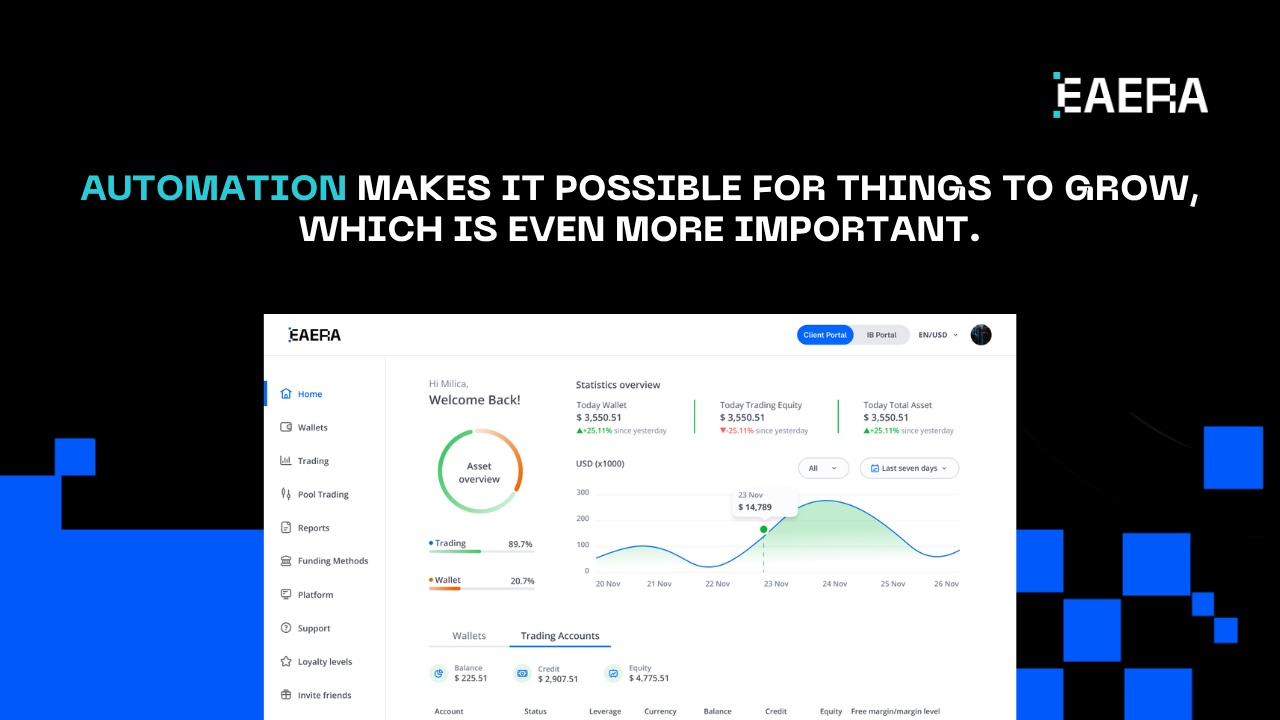
Automation makes it possible for things to grow, which is even more important. Brokers can handle more trade without making things more complicated. The trading platform turns into a self-regulating system with risk management always running in the background.
This change lets teams focus on strategy and growth instead of always watching and stepping in.
Integration with Liquidity and External Systems
There is no such thing as risk management on its own. It is very closely related to liquidity, execution, and systems outside of the company. To offer a full risk management framework, a trading platform must work perfectly with these parts.
Key integrations include:
- Liquidity providers for efficient trade execution
- External risk systems and analytics tools
- Payment and funding systems for capital management
These integrations make sure that risk data moves through the whole operation. Brokers can see all aspects of their business in one place, from client activity to market exposure.
Platforms like EAERA show how an integrated ecosystem can help manage risk better. Brokers can make better decisions and react more quickly to changes in the market by linking trading, risk, and operational systems.
This unified approach cuts down on fragmentation and makes everything work better.

Building a Scalable Risk Infrastructure for Growth
As brokers grow, they need to manage risks in more complicated ways. To support many types of assets, regions, and client groups, you need an infrastructure that can grow with your business.
A modern trading platform is designed to handle:
- Multi-asset trading environments
- Increasing transaction volumes
- Changing regulatory requirements
It’s not just about being able to handle more trades; it’s also about keeping control as things get more complicated. Risk management systems need to be able to change quickly to new situations without needing to be set up repeatedly.
EAERA and other solutions like it give you the freedom you need to grow over time. They let brokers add new products, go into new markets, and grow their businesses without giving up control over risk.
This ensures that growth is sustainable. Brokers can expand confidently, knowing that their risk infrastructure will support their business at every stage.
The future of trading lies in platforms that combine execution with intelligent risk control—delivering both performance and stability.