




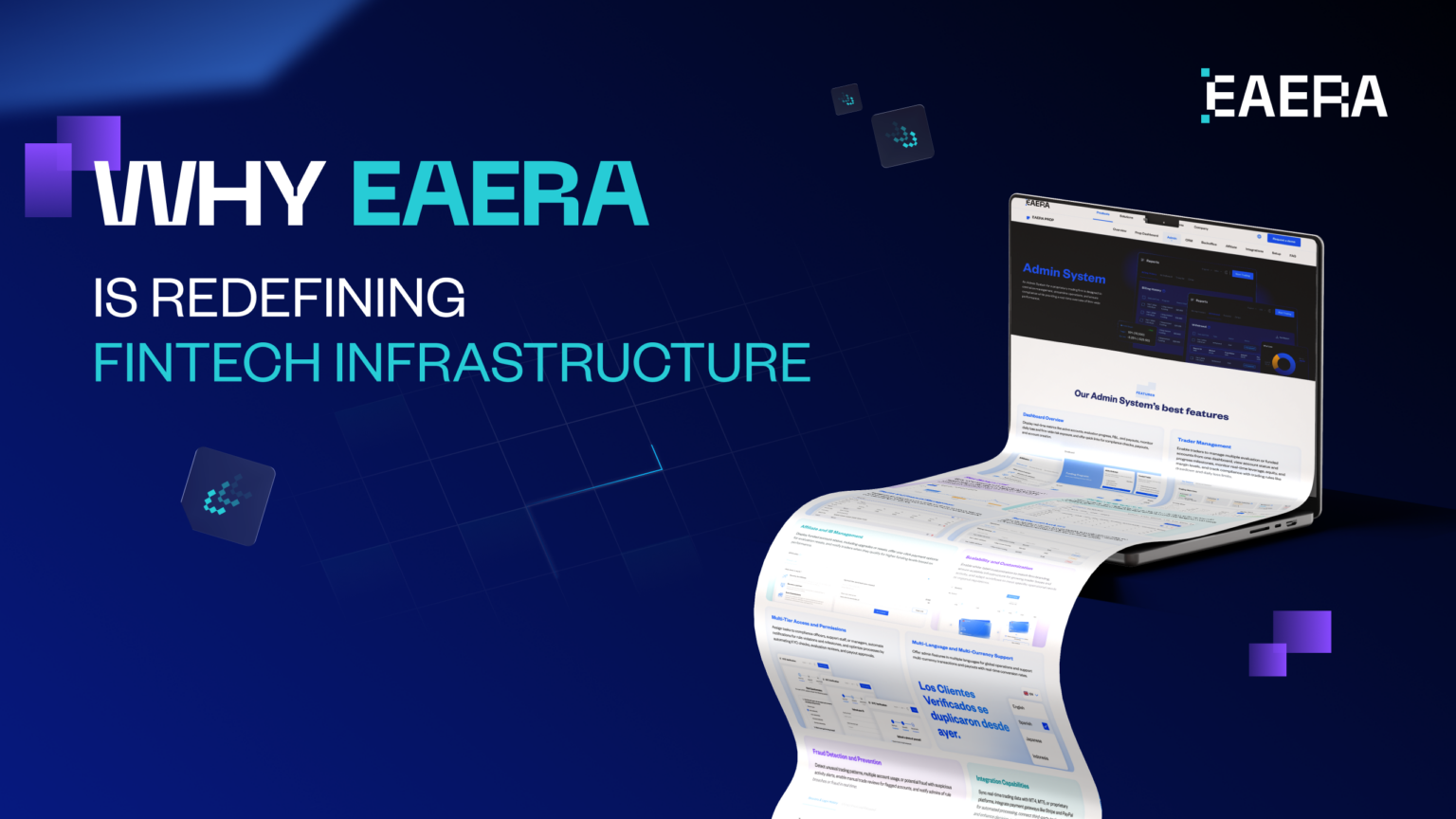
Fintech doesn’t fail because teams don’t have enough features. It falls apart when system don’t act the same way all the time as they get more complicated. EAERA takes a different path here: it focuses on the whole ecosystem instead of just parts; architecture comes before the UI, and it is always ready for an audit.
The Problem With “Feature Factories” in Fintech
Most fintech teams have a good plan to start with: ship quickly, learn quickly, and make changes. Over time, this often leads to a “feature factory” approach, where every new request turns into its own module, screen, or workflow shortcut. It seems useful, but the hidden cost shows up later in operations.
Common symptoms of a feature-factory stack:
- Customer data exists in multiple places, and teams disagree on what’s true
- KYC and approvals live outside core workflows, creating last-minute bottlenecks
- Payments and payouts require spreadsheets to reconcile exceptions
- Partner commissions are calculated manually or re-checked constantly
- Reporting becomes reactive because events aren’t captured cleanly
- Support becomes the glue that explains gaps in product logic
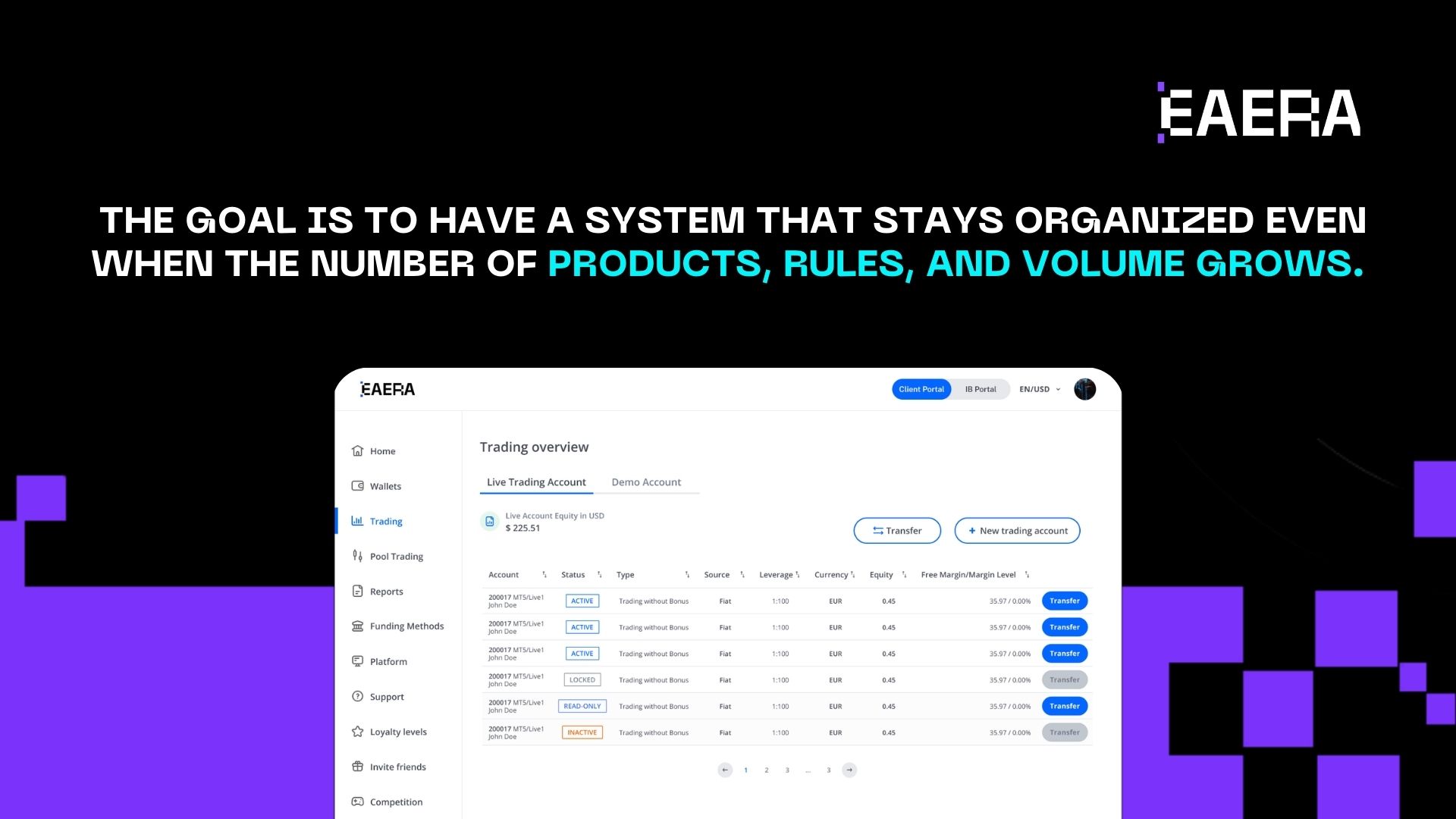
EAERA is meant to stop this kind of environment from happening. The goal isn’t to “add more features.” The goal is to have a system that stays organized even when the number of products, rules, and volume grows.
EAERA Doesn’t Build Isolated Features; It Builds Infrastructure
The main rule is simple: EAERA doesn’t build features that are separate from each other. The platform is built as infrastructure, which means that workflows, data models, and governance are not just afterthoughts.
What an infrastructure mindset changes in practice:
- Workflows are designed end-to-end, not page-by-page
- Data contracts are consistent across teams and modules
- Exceptions are handled through governed flows, not ad-hoc approvals
- Reporting becomes trustworthy because it’s fed by event-level truth
- New products can be added without rebuilding the back office each time
EAERA calls itself a fintech infrastructure instead of a set of separate tools for this reason. The platform is meant to help people, not make them hold the system together.
The EAERA Ecosystem: CBS, Prop, IB, Payments, Governance
Fintech companies don’t usually do just one thing. They run a connected business that includes onboarding, accounts, funding, partner growth, risk controls, payouts, and compliance. EAERA deals with that by creating an ecosystem that links the main operational pillars.
Here’s how the ecosystem typically maps in practice.
CBS (Core Back Office)
The CBS layer is the core of the system. It is the system of record for key objects and the foundation for customer lifecycle management.
- Client profiles and lifecycle states
- KYC status, documents, verification decisions
- Wallets and internal movements across accounts
- Operational workflows and internal actions
Prop (Evaluation and Funded Operations)
Prop operations break quickly when enforcement and evidence are inconsistent. The prop layer focuses on deterministic program logic and visibility.
- Program rules, phases, and configurable parameters
- Real-time monitoring and dashboard transparency
- Pass/fail outcomes tied to evidence and timestamps
- Payout workflows that are trackable and controlled
IB (Partner and Commission Operations)
Partner growth can be a powerful loop, but only when attribution and settlement are governed.
- IB hierarchy and attribution rules
- Commission profiles and settlement logic
- Partner reporting and operational visibility
- Change control for adjustments and exceptions
Payments (Deposits, Withdrawals, Reconciliation)
Payments are where operational maturity is visible. The payments layer focuses on predictable flows and controlled exceptions.
- Deposit and withdrawal states with clear processing steps
- Approvals, risk checks, and reconciliation outputs
- Failure reasons and exception routing
- Audit-ready event trails for finance and compliance
Governance (Roles, Approvals, Audit Trails)
Governance is the control layer that keeps the ecosystem defensible under scale.
- Role-based access and separation of duties
- Maker-checker approvals for sensitive actions
- Audit logs and evidence trail for key decisions
- Versioning of rules, policies, and program changes
The main thing that makes EAERA stand out is its ecosystem approach. It cuts down on fragmentation at the design level, so operators don’t have to do manual work to make things consistent later.
Architecture First, UI Second: Why It Matters
One thing that sets EAERA apart is that it puts architecture before UI. That doesn’t mean that UI isn’t important. This means that UI works better and is safer when the system underneath it is stable.
It’s easy to change UI in fintech. It costs a lot to change architecture. When you build the UI first, you often must fix structural problems by adding more screens, toggles, and manual admin tools. That makes the product too big and still needs people to work around it.
Architecture signals to look for in a “precision-ready” infrastructure platform:
- Clear separation between workflow logic, risk, and reporting
- Event-level logging tied to system state transitions
- Predictable behavior when business rules change
- Resilience under partial failures, not just “uptime claims”
- A structure that scales without adding manual operational steps
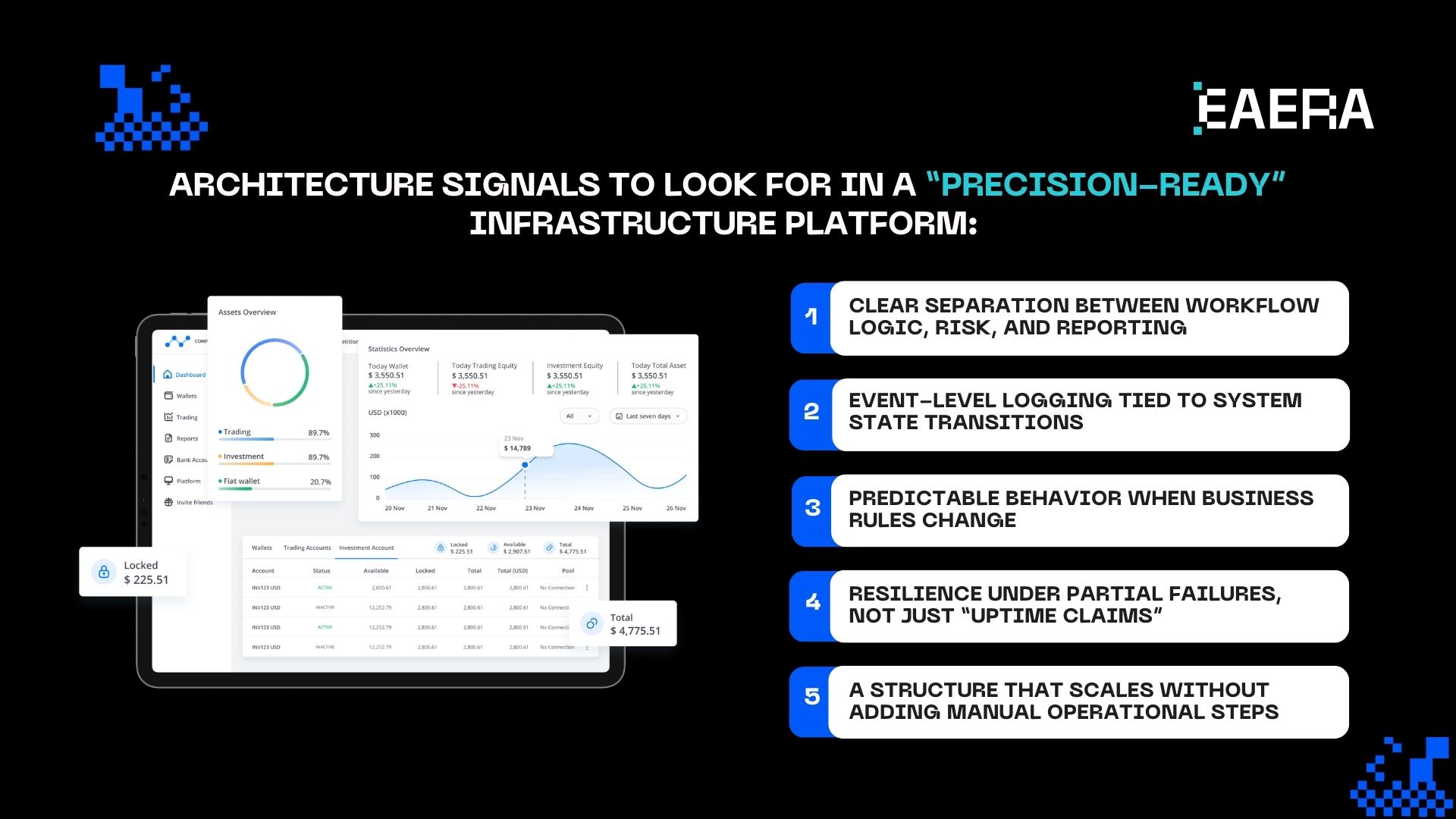
The idea behind EAERA is to build the engine first and then improve the cockpit.
Audit-Ready and Scale-Ready by Design
Governance and compliance are frequently viewed as late-stage tasks. Under actual growth, that strategy is ineffective. As volume increases, so do audit requirements, payment scrutiny, and dispute pressure. Since governance is the most difficult to retrofit, EAERA was created with an audit-ready and scale-ready mindset from the start.
“Audit-ready” refers to the traceability of each crucial action. It has nothing to do while slowing down. When something is questioned, it’s important to be consistent and defendable.
Core audit-ready requirements include:
- Role-based access with clear responsibility boundaries
- Maker-checker approvals for high-risk operations such as payouts and overrides
- Immutable logs for critical events and lifecycle transitions
- Rule and policy versioning so changes don’t rewrite history
- Evidence trails that support investigations and dispute resolution
“Scale-ready” refers to the idea that the same reasoning applies as volume rises. If a platform relies on certain individuals “knowing how it works” or if exceptions necessitate ongoing manual coordination, it is not scale-ready.
EAERA focuses on governance as an integrated component of operations rather than an external checklist.
What This Enables for Fintech Operators
Only when an ecosystem generates operational results does it matter. EAERA is made to assist operators in starting up and growing their businesses without creating a manual bottleneck.
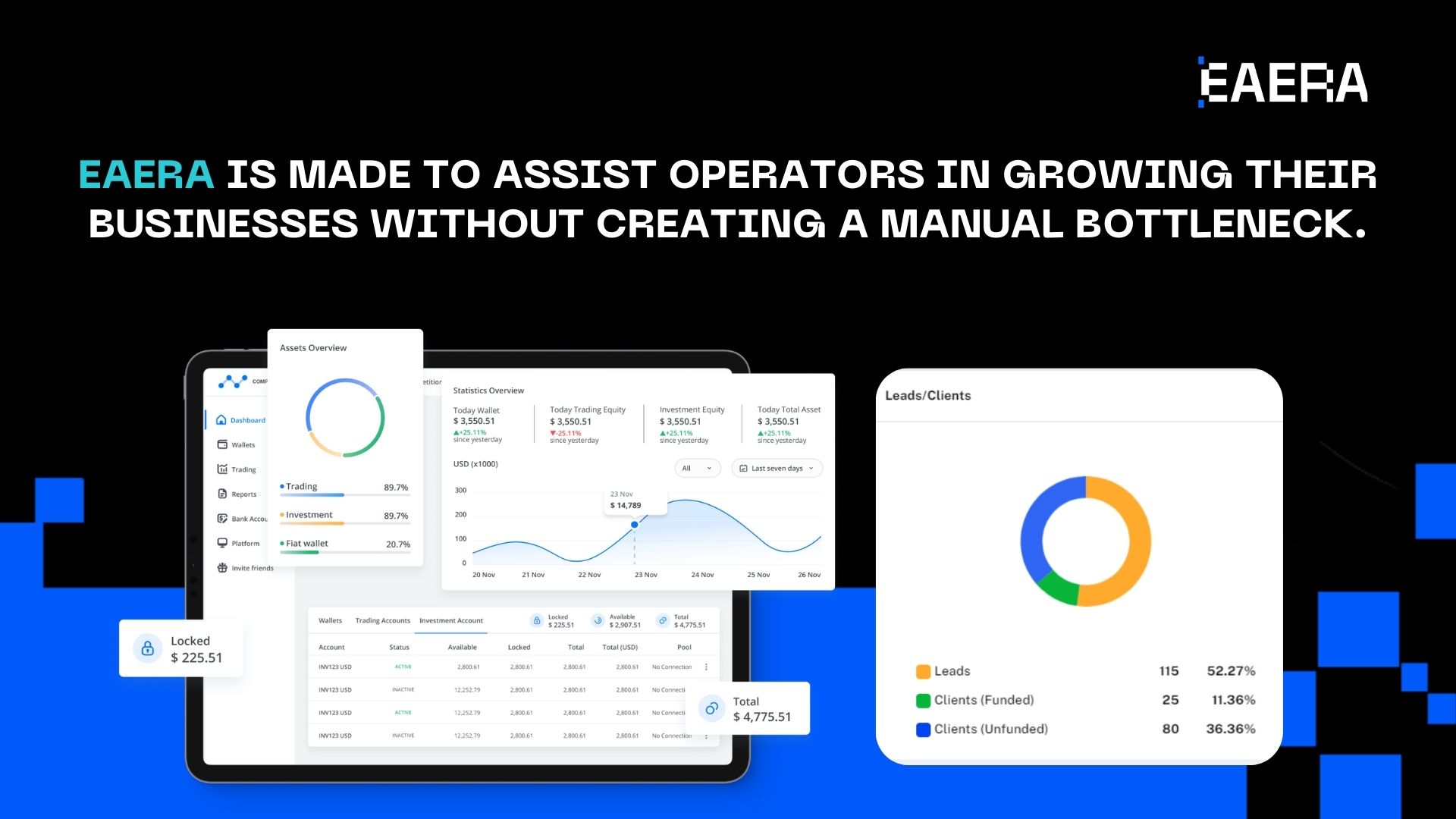
Practical outcomes this approach enables:
- Faster launch of new programs and products without rebuilding core workflows
- Lower dispute volume because decisions are explainable and evidence-based
- Predictable payouts and settlements through governed approvals
- Cleaner reconciliation and fewer “spreadsheet truth” moments
- More reliable reporting because it’s built on event-level system records
If you are evaluating infrastructure, the questions that matter are not cosmetic. They are operational:
- Can the system explain a decision with a timestamped evidence trail?
- Can teams operate without spreadsheets for reconciliation and settlement?
- Are rules versioned so changes don’t create ambiguity?
- Are approvals structured with clear accountability and controls?
- Does scale increase throughput without requiring more manual work?
You are purchasing future friction if the majority of your responses are “manual.” You are creating a scalable operating system if your responses are “governed workflows.” This is the purpose of EAERA’s infrastructure.
Fintech infrastructure shouldn’t function as a collection of disparate features, but rather as an operating system. By creating an ecosystem spanning CBS, prop, IB, payments, and governance, EAERA is redefining fintech infrastructure. This ecosystem was designed with architecture in mind and is both audit-ready and scale-ready. In this way, operators scale consistently rather than chaotically.