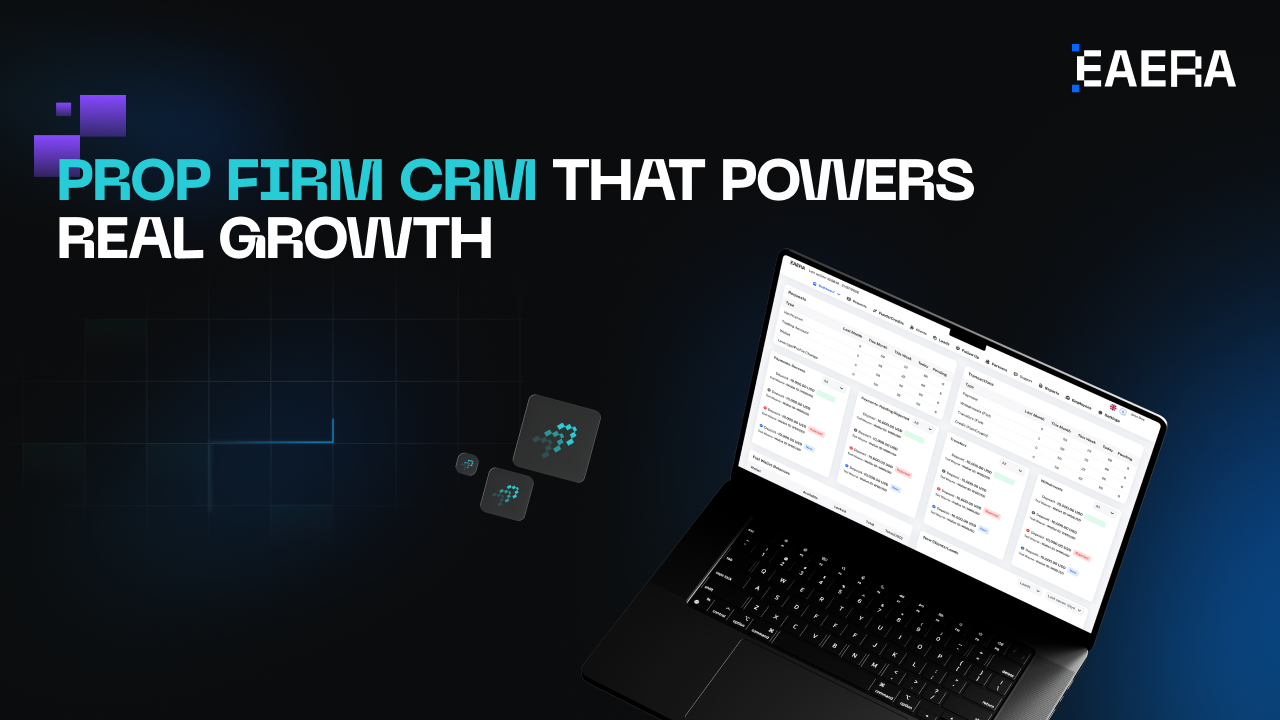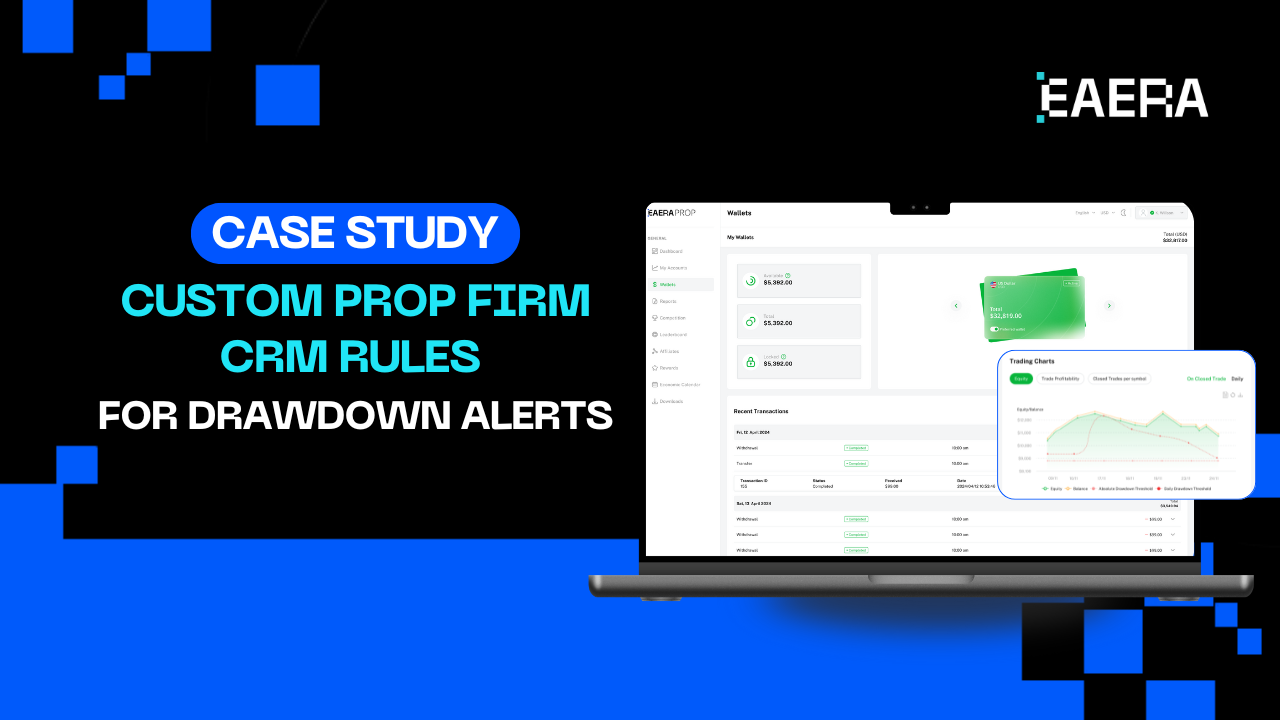




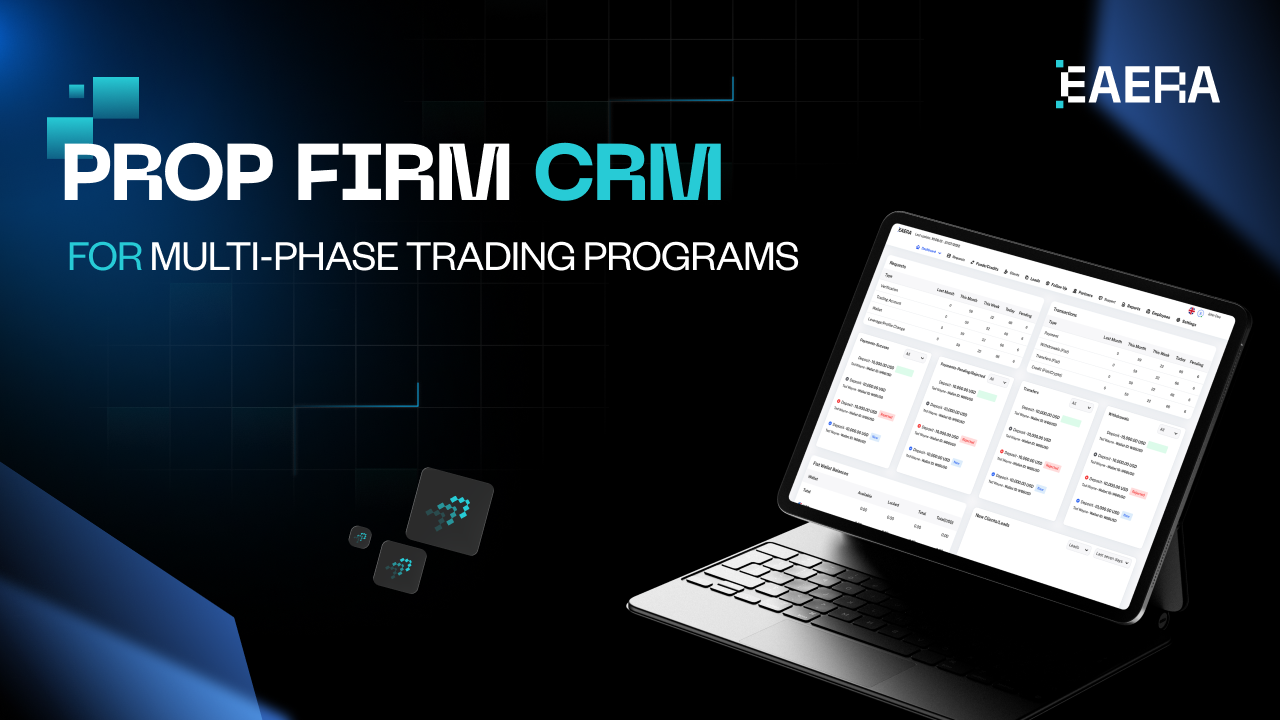
The industry standard for contemporary prop firms is multi-phase trading programs. These phased models give traders a structured path forward while assisting firms in managing risk from evaluation to verification to funded accounts. However, managing increasingly complex programs without a specialized prop firm CRM soon results in operational friction, inconsistent rules, and problems with trust.
Related articles:
- Smart Prop Trading Tactics for Cleaner Risk Management
- Prop Firm CRM: What are the must-have features?
This article explains why multi-phase trading programs require a purpose-built CRM, what features are really important, and how businesses can grow without compromising control or fairness.
What Makes Multi-Phase Trading Programs Complex?
Multi-phase trading programs seem simple at first glance: traders must pass one phase to advance to the next. Every stage adds a fresh operational layer that needs careful management.
Most prop firms operate with at least three phases:
- Evaluation: Traders must meet profit targets while respecting strict drawdown rules.
- Verification: Risk parameters tighten to confirm consistency.
- Funded: Live capital is allocated with ongoing risk oversight.
Each phase differs in:
- Maximum drawdown logic
- Daily loss limits
- Profit targets
- Trading permissions
- Account status behavior
Businesses frequently rely on spreadsheets, manual checks, or loosely connected tools in the absence of an organized system. This strategy has hidden risks and is not scalable.
Key sources of complexity include:
- Phase-based rule enforcement
- Automated pass or fail determination
- Tracking trader progression history
- Ensuring consistent rule application across all accounts
- Maintaining audit-ready records for compliance and dispute resolution
A dedicated prop firm CRM exists specifically to manage these complexities in a unified, rule-driven way.
Why a Dedicated Prop Firm CRM Is Essential?
Trading rules, account states, and risk logic cannot be managed by a generic CRM, although it can manage contacts and support tickets. By integrating trader data, account behavior, and program logic into a single system, a prop firm CRM serves as the operational foundation of the company.
As businesses expand, the difference becomes evident. Automation lowers error and increases transparency, whereas manual processes cause delays and inconsistencies.
A purpose-built prop firm CRM enables:
- Automated phase transitions without manual intervention
- Real-time monitoring of rule compliance
- Centralized trader lifecycle management
- Reduced operational overhead for support and risk teams
Businesses can enforce rules proactively rather than responding to violations after they happen. For long-term scalability, this transition from manual oversight to system-led governance is essential.

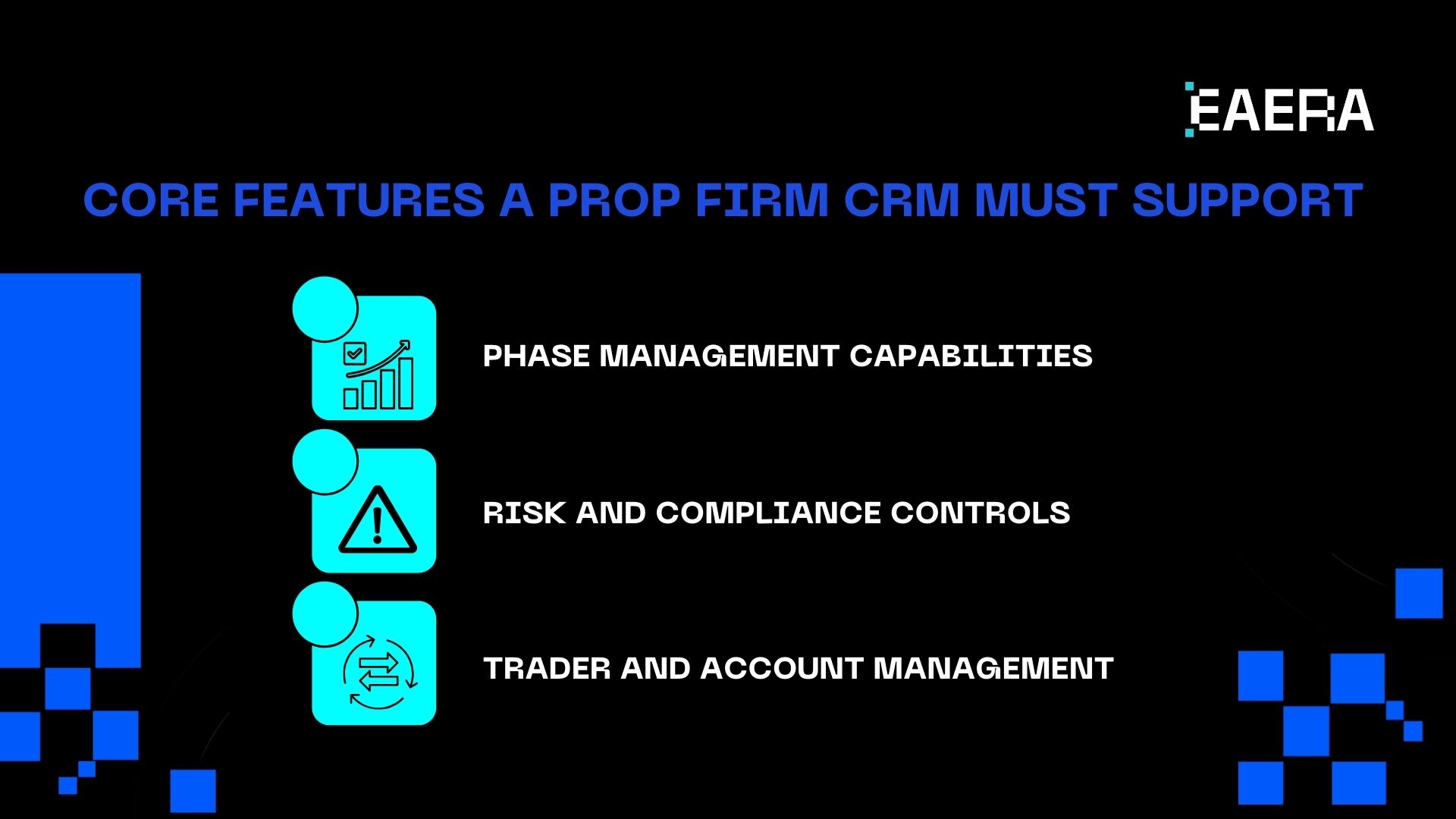
Core Features a Prop Firm CRM Must Support
Not every platform that is marketed as a CRM is appropriate for prop firms. CRM for a real prop firm needs to be risk-driven and phase-aware by design.
Phase Management Capabilities
Effective phase handling includes:
- Configurable rule templates per phase
- Automated evaluation of profit targets and drawdown thresholds
- Clear account state transitions (active, passed, failed, read-only)
- Historical visibility of phase progression
Instead of being a manual label applied after review, each phase should be viewed as a separate state with its own logic.
Risk and Compliance Controls
Risk management is the foundation of any prop firm. A proper CRM supports:
- Real-time drawdown enforcement
- Daily loss limit tracking
- Automatic breach detection
- Immutable logs for audit purposes
By guaranteeing that regulations are applied consistently and openly, these controls safeguard both the company and the trader.
Trader and Account Management
Multi-phase programs often involve multiple accounts per trader. A prop firm CRM should provide:
- Unified trader profiles across phases
- Linked account visibility
- Performance snapshots by phase
- Clear account ownership and permissions
Particularly as programs grow, this structure helps traders and operations teams avoid confusion.
How Prop Firm CRM Supports Fairness and Trust?
One of the most brittle resources in the prop trading sector is trust. When regulations seem ambiguous, applied inconsistently, or manually overridden, traders lose faith in them. This problem is directly addressed by a prop firm CRM, which makes governance transparent and predictable.
System-driven fairness includes:
- Identical rule enforcement for all traders
- No hidden exceptions or undocumented changes
- Clear explanations for pass or fail outcomes
- Accessible performance data tied to objective criteria
Disputes are reduced and credibility rises when decisions are made by a system rather than by hand. Even though traders don’t always make money, they know why decisions are made.
In multi-phase programs, where advancement is based on exact thresholds rather than subjective assessment, this transparency is particularly crucial.
Scaling Multi-Phase Programs Without Operational Risk
Prop firms frequently face the most stress during growth. Manual workflows fail as trader volume rises. Businesses can grow with a scalable prop firm CRM without running the risk of operational or compliance issues.
Key scaling advantages include:
- Configurable phase logic that supports new program variants
- Modular rule engines adaptable to different markets or instruments
- API-ready architecture for platform integrations
- Multi-region and multi-currency readiness
Businesses can implement new evaluation models or modify regulations without having to start from scratch when they have the appropriate system. This adaptability preserves governance while fostering innovation.
Platforms such as EAERA are designed with this system-first mindset, enabling firms to manage complexity while preparing for long-term expansion.
Choosing the Right Prop Firm CRM Platform
Choosing a prop firm CRM is more than just buying software; it’s a strategic choice. Instead of focusing on surface-level features, businesses should assess platforms based on operational fit.
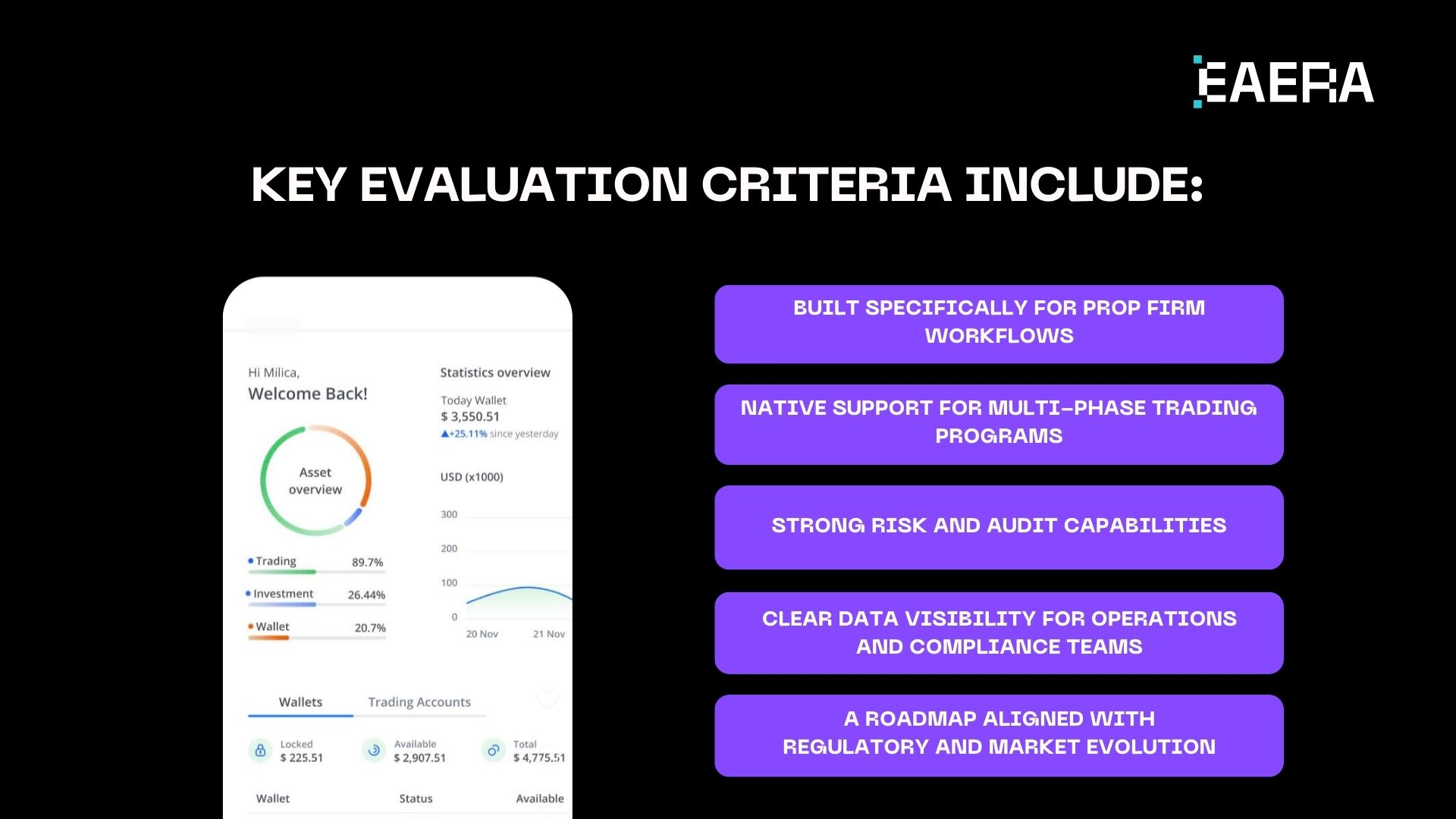
Key evaluation criteria include:
- Built specifically for prop firm workflows
- Native support for multi-phase trading programs
- Strong risk and audit capabilities
- Clear data visibility for operations and compliance teams
- A roadmap aligned with regulatory and market evolution
Particularly crucial is a modular architecture, which enables businesses to scale features as required instead of completely replacing systems. Providers that support businesses at various stages of growth without requiring disruptive migrations, like EAERA, concentrate on this long-term flexibility.
Disconnected tools and manual oversight are insufficient for multi-phase trading programs. They need a disciplined, rule-based setting where consistency and clarity are used to build trust. Businesses can confidently scale, manage complexity, and enforce fairness without compromising governance with a dedicated prop firm CRM.
Businesses that make the appropriate system investments will be in the best position for long-term success as the sector develops. By aligning technology, governance, and trader experience, prop firms can build durable trust while operating efficiently at scale.