



Prop trading is rapidly changing in the US, with companies growing at an unprecedented pace with funded trading programs and global trader access. But growth means complexity – risk management, account oversight, payouts and compliance all become harder to manage.
Related articles:
- Prop Trading Program: What Traders Should Know in 2026
- Prop Trading Solutions: Key Features and Top Provider
Manual workflows and silos don’t work anymore. Companies need structured, automated infrastructure to scale safely. The right prop trading tools don’t simply support operations – they define whether a firm can grow without adding risk exposure. This article will break down the key tools, features, and real-world impact of adopting a modern proprietary trading stack.
Why Prop Trading Firms Need Advanced Tools in 2026?
The US prop trading scene is growing more competitive and more complex. Companies are running thousands of trader accounts across several different programs, with different rules, limits, and payout structures.
Without proper systems in place, common issues emerge:
- Inconsistent enforcement of trading rules
- Delayed or inaccurate payout calculations
- Lack of real-time visibility into trader performance
- Increased operational workload as the firm grows
These issues have a direct impact on profit and trust. For traders, transparency, and fairness. For the firms, tight risk control.
Automation is a must for modern prop trading operations. Systems must be consistent in their rule enforcement, real-time in their risk monitoring and reduce dependence on manual oversight. Businesses that don’t adopt these tools often find it difficult to scale efficiently.
Core Categories of Prop Trading Tools
To build a scalable operation, firms need a suite of tools that work together as one cohesive system.
This is the layer of execution where traders place and manage their trades. Platforms like MT5 are still popular, but many firms now add a modern interface on top to improve usability.
These systems monitor trading activity and enforce rules such as drawdown limits, daily loss thresholds, and position restrictions.
-
Back Office and CRM Systems
This layer encompasses account creation, KYC, payments and trader lifecycle management. This centralizes all operational workflows.
-
Analytics and Monitoring Tools
These tools offer insights on trader performance, risk exposure and firm-wide metrics to enable data-driven decision making.
-
Payment and Payout Infrastructure
Efficient funding systems are critical for prop firms. Modern tools support automated deposits, withdrawals, and profit payouts, reducing delays and manual errors.
-
Trader Evaluation and Challenge Systems
Many prop firms operate funded programs with evaluation phases. Dedicated tools help track trader progress, enforce challenge rules, and determine qualification outcomes automatically.
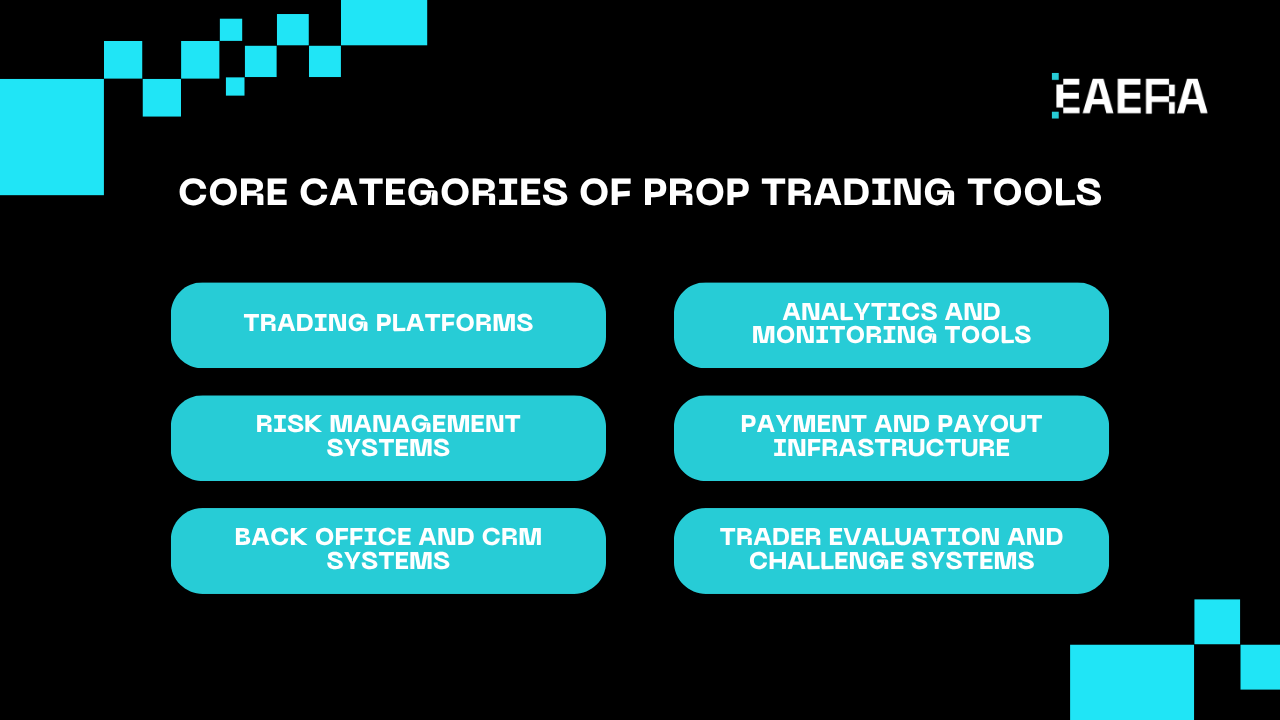
These components form the basis of a scalable proprietary trading infrastructure.
Key Features That Enable Risk-Free Scaling
Automation and control are the differences between the small operation and the scalable firm.
Essential features include:
- Real-time risk monitoring: Systems continuously track trader activity to detect violations instantly
- Automated drawdown enforcement: Rules are applied consistently without manual intervention
- Multi-account tracking: Firms can monitor thousands of accounts simultaneously
- Rule-based restrictions: Trading behavior is controlled through predefined logic
- Instant alerts and notifications: Teams are notified immediately when thresholds are breached
- Automated payout systems: Profit distribution and withdrawals are calculated and processed efficiently
- Daily and cumulative risk tracking: Systems monitor both intraday and overall performance limits to prevent hidden exposure
- Custom rule configuration: Firms can tailor trading rules based on program type, account size, or trader tier
- Audit-ready logs: Every action, violation, and payout is recorded for transparency and compliance
These features reduce human error and ensure that rules are applied to all traders equally.
For prop trading firms, this degree of automation is critical to manage as they scale.
How Prop Trading Tools Improve Trader Experience?
Risk control is of course important, but the trader’s experience is also crucial for growth.
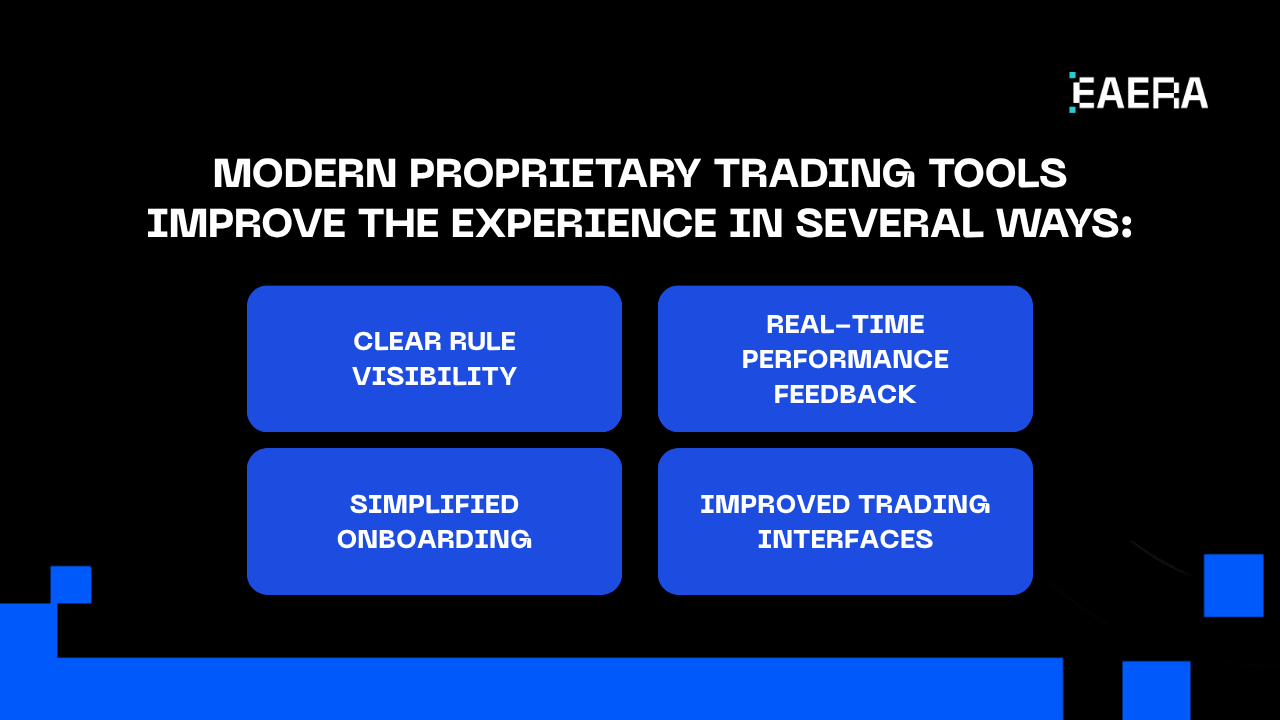
Modern proprietary trading tools improve the experience in several ways:
- Clear rule visibility: Traders understand exactly what is expected and how performance is evaluated
- Real-time performance feedback: Instant updates on equity, drawdown, and progress toward targets
- Simplified onboarding: Faster account setup and funding processes
- Improved trading interfaces: Modern UI reduces friction compared to legacy platforms
When traders have clarity and control, they are more likely to stay engaged and perform better.
This directly benefits firms by increasing retention and reducing support overhead.
Prop Trading Tools Comparison: What to Evaluate
Not all tools deliver the same level of performance. Firms should evaluate solutions based on key criteria.
-
Risk Control Capabilities
– Basic systems: manual monitoring and delayed enforcement
– Advanced systems: real-time automation with strict rule execution
-
Integration with Trading Platforms
– Limited tools: standalone systems with manual data transfer
– Advanced tools: seamless integration with MT5 and APIs
-
Automation Level
– Basic: manual processes for payouts and compliance
– Advanced: fully automated workflows
-
Reporting and Transparency
– Basic: static reports
– Advanced: real-time dashboards with detailed insights
-
User Experience
– Basic: complex interfaces
– Advanced: clean, intuitive design
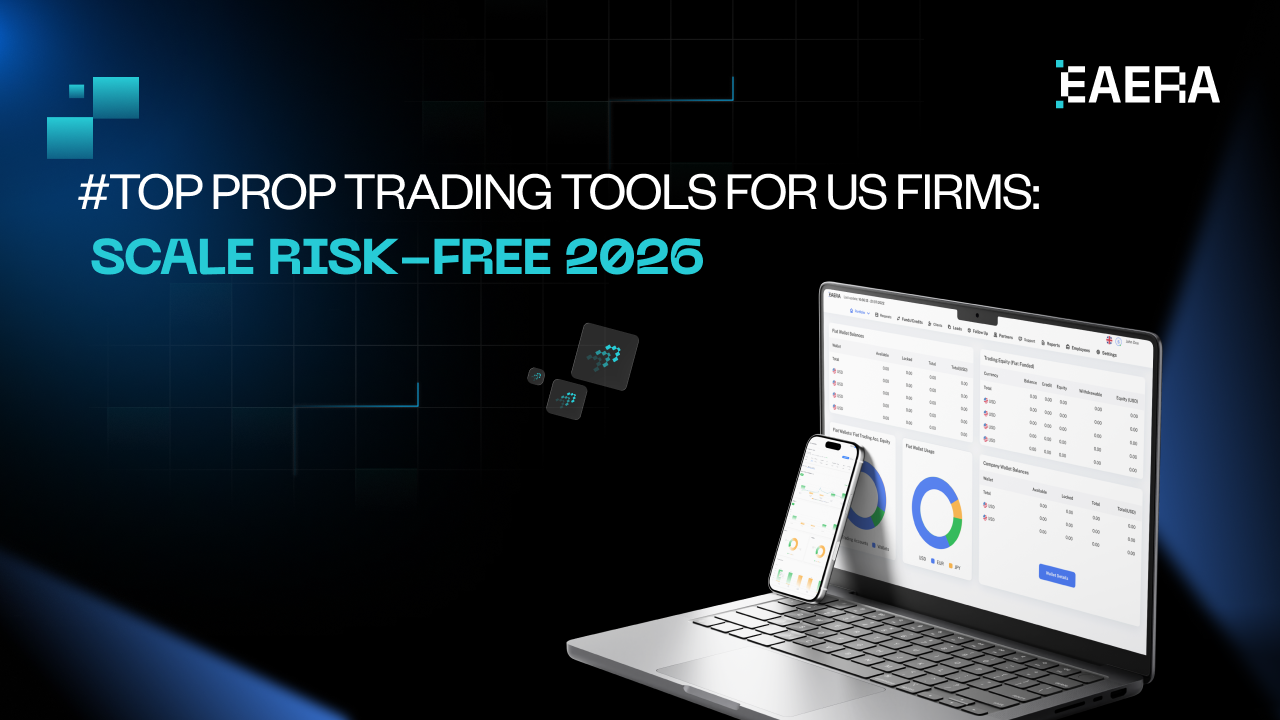
Solutions such as EAERA are showing how combining these capabilities into one platform can dramatically boost operational efficiency and the trader experience.
Case Study: Scaling a Prop Firm with the Right Tools
Consider a mid-sized US prop trading firm managing a growing number of funded traders.
Before Implementation:
- Risk monitoring handled manually
- Delays in detecting rule violations
- Payout calculations done through spreadsheets
- High support volume due to unclear processes
After Implementing Advanced Tools:
- Real-time monitoring detects violations instantly
- Automated rule enforcement eliminates inconsistencies
- Payouts processed quickly and accurately
- Centralized dashboards provide full visibility
Results:
- Reduced operational workload
- Improved trader satisfaction
- Faster scaling without increasing staff
- Lower risk exposure
Platforms like EAERA make this transformation possible by combining trading, risk management, and back-office functions in one system.
Scaling a prop trading firm in 2026 is not just about capital and traders. It’s about the right infrastructure. Advanced tools deliver automation, visibility, and control that are needed to manage risk while growing efficiently.
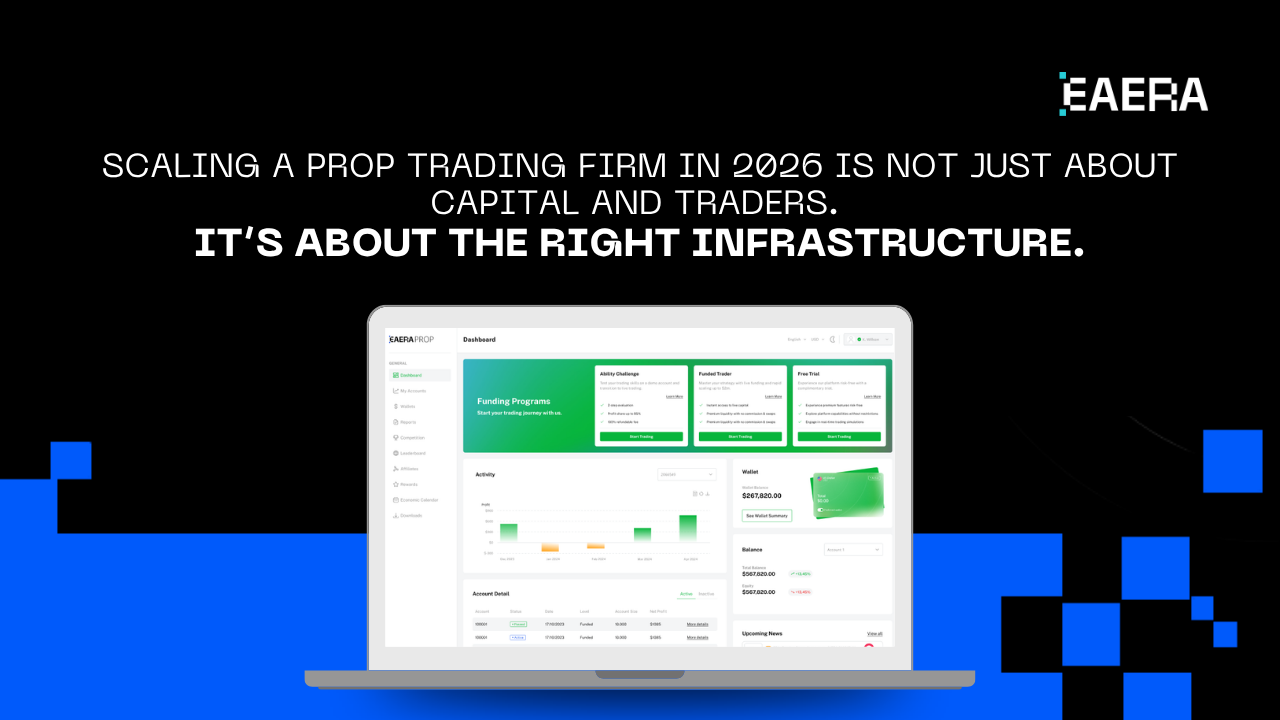
With modern proprietary trading tools, firms can enforce rules consistently, enhance the trader’s experience and scale without operational bottlenecks. Those based on old systems will be hard to compete with.
In a market that is becoming increasingly competitive, the right tools aren’t just an advantage – they are the basis for sustainable growth.