



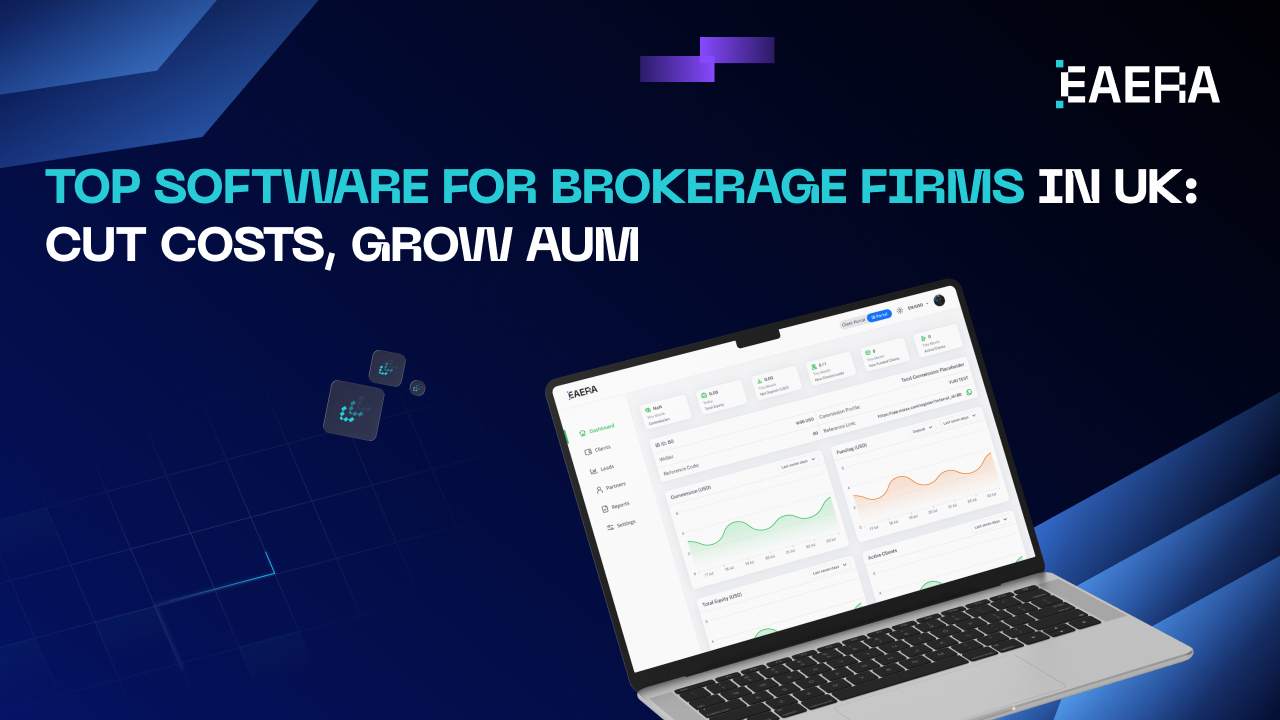
Software for brokerage firms is no longer just a tool for operational support, but a core driver of cost efficiency and asset growth. In the UK, brokers grapple with mounting FCA regulations, increasing operational costs and competitive pressures. Client expectations are also at an all-time high, with demand for seamless onboarding, real-time data and reliable trading environments.
Related article:
- Software for Brokers: What Growing Firms Need in 2026
- Forex Broker Solutions for 2026 All-in-One Suite
Traditional, disconnected systems make it difficult to scale efficiently. Tools that are disconnected, workflows that are manual, and visibility that are limited often result in higher costs and slower growth. Today, the software that brokerage firms use solves these problems by integrating operations, automating processes, and supporting decisions based on data.
Why UK Brokerage Firms Need Modern Software in 2026?
The UK brokerage scene is moving swiftly. Regulatory requirements are getting tighter, especially around compliance, reporting, and client data management. Meanwhile, brokers are expanding into multi-asset offerings and a broader client base.
This creates operational complexity that cannot be handled with legacy systems. Common challenges include:
- High costs associated with manual onboarding and compliance checks
- Limited scalability due to fragmented infrastructure
- Slow reporting cycles that impact decision-making
- Increased risk of regulatory breaches
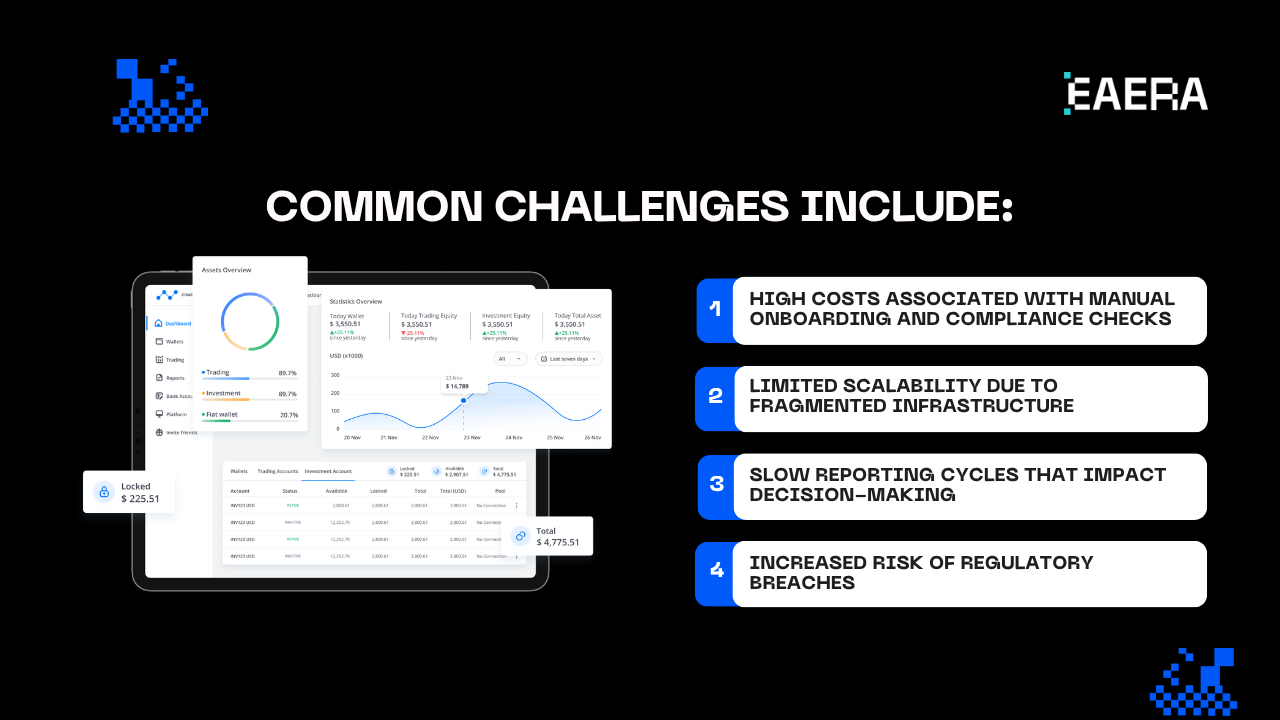
These challenges are compounded as the business grows, without the right software for brokerage firms. What works for a small client base becomes inefficient at scale.
Modern platforms solve these issues by embedding automation and compliance directly into workflows. This allows brokers to scale without the costs of operations increasing proportionally.
Core Software Categories for Brokerage Firms
Brokers need multiple systems working together as a single ecosystem to operate efficiently.
Trading Platforms
These systems execute trades and serve as the interface to clients. But many brokers now add modern web interfaces to go along with the MT5 platform that many use to make it more usable.
Back-Office and CRM Systems
This layer is responsible for client onboarding, KYC, account data and operational workflows. It’s the definitive tool to manage the client lifecycle from start to finish.
Risk and Compliance Systems
These tools follow trading activity, set rules, and make sure you follow the FCA regulations. They are critical to operational integrity.
Payment and Funding Systems
Smooth deposit and withdrawal process is important to customer satisfaction. Embedded payment systems reduce latency and errors.
Analytics and Reporting Tools
These systems provide insights into client behavior, AUM growth, and operational performance, allowing brokers to make informed decisions.
These components form the foundation for scalable software for brokerage firms.
Key Features That Reduce Costs and Increase AUM
The effectiveness of software for brokerage firms is defined by its ability to improve efficiency while supporting growth.
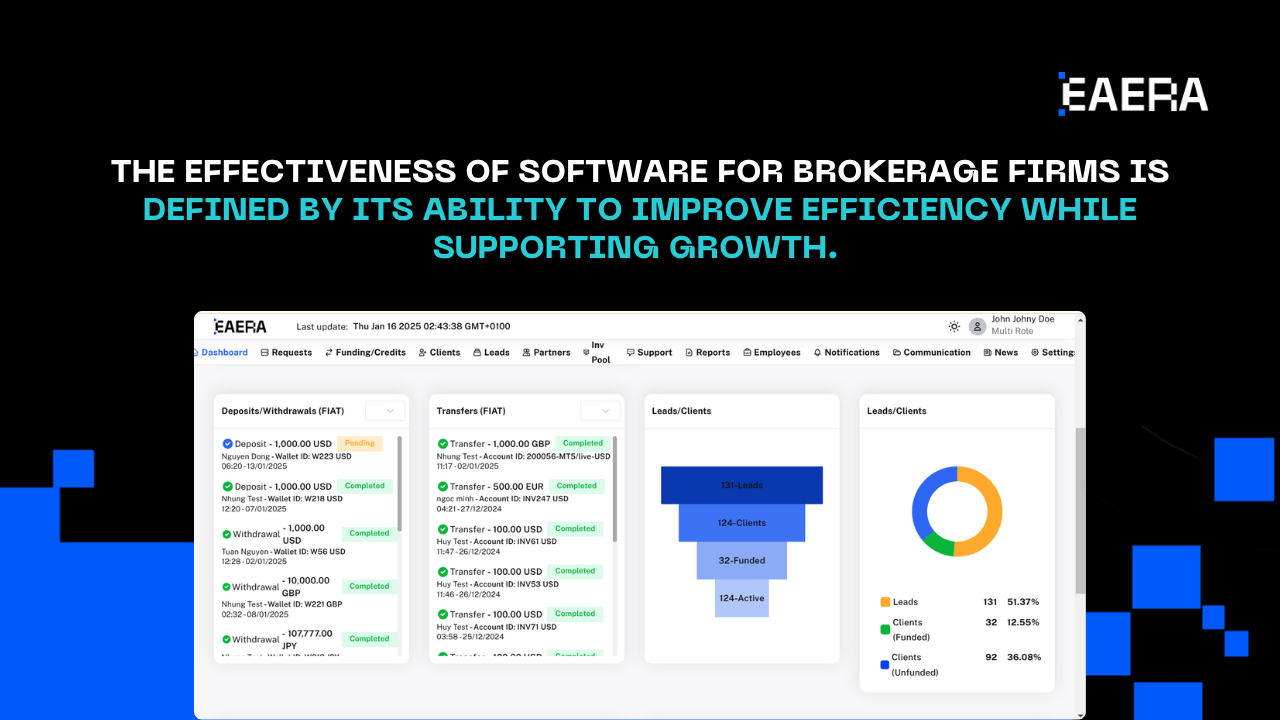
Key features include:
- Automated onboarding and KYC: Reduces manual workload and accelerates client acquisition
- Centralized client management: Provides a single source of truth for all client data
- Real-time monitoring: Enables immediate visibility into accounts and transactions
- Automated reporting and reconciliation: Minimizes errors and reduces time spent on manual processes
- Integrated payment workflows: Streamlines deposits and withdrawals
- Multi-currency and multi-region support: Enables brokers to expand across markets without additional operational complexity
- Customizable workflows and permissions: Allows firms to tailor processes based on internal roles and compliance requirements
These features directly impact both cost and growth. Automation lowers operational expenses, while improved user experience increases client engagement and retention.

Comparison: Basic vs Advanced Brokerage Software
But not all solutions are created equal. When considering the options, it’s important to understand the difference between basic and advanced systems.
Basic Systems
- Multiple disconnected tools
- Manual workflows for onboarding and reporting
- Limited automation
- Higher operational costs
- Slower response times
Advanced Systems
- Unified platform integrating all functions
- Automation-first design
- Real-time data visibility
- Built-in compliance controls
- Scalable infrastructure
EAERA’s solutions demonstrate how the combination of trading, operations and compliance in one platform can provide considerable efficiency and cost savings.
The gap between these two approaches grows wider as firms scale.
How Software for Brokerage Firms Cuts Costs and Grows AUM?
To identify the actual value of software for brokerage firms, it is important to consider how software can reduce costs and increase assets.
Cost Reduction
Modern systems reduce costs across multiple areas:
- Operational automation eliminates repetitive manual tasks
- Lower support overhead due to improved client interfaces
- Reduced errors through automated reconciliation and reporting
- System consolidation replaces multiple tools with a single platform
As a result, the cost per client decreases as the business grows.
AUM Growth
At the same time, these systems enable growth:
- Faster onboarding increases conversion rates
- Better client experience improves retention
- Multi-account and multi-asset support expands market reach
- Data insights enable targeted upselling and cross-selling
Growth is not just about new clients; it’s also about getting more from your existing clients.
The Compounding Effect
The combination of lower costs and higher AUM creates a compounding advantage.
- Costs scale slowly due to automation
- Revenue grows faster through improved client engagement
This is why modern brokers can make more and more margins over time. Platforms like EAERA showcase how integrated systems can turn operations into scalable growth engines.
How to Choose the Right Software for Brokerage Firms?
Selecting the right software for brokerage firms requires careful evaluation.
Key factors to consider include:
- Scalability: Can the system support growth across multiple markets and products?
- Integration capabilities: Does it connect seamlessly with trading platforms and external tools?
- Compliance readiness: Is it designed to meet FCA requirements?
- Automation level: How much manual work is eliminated?
- User experience: Is the platform intuitive for both clients and internal teams?
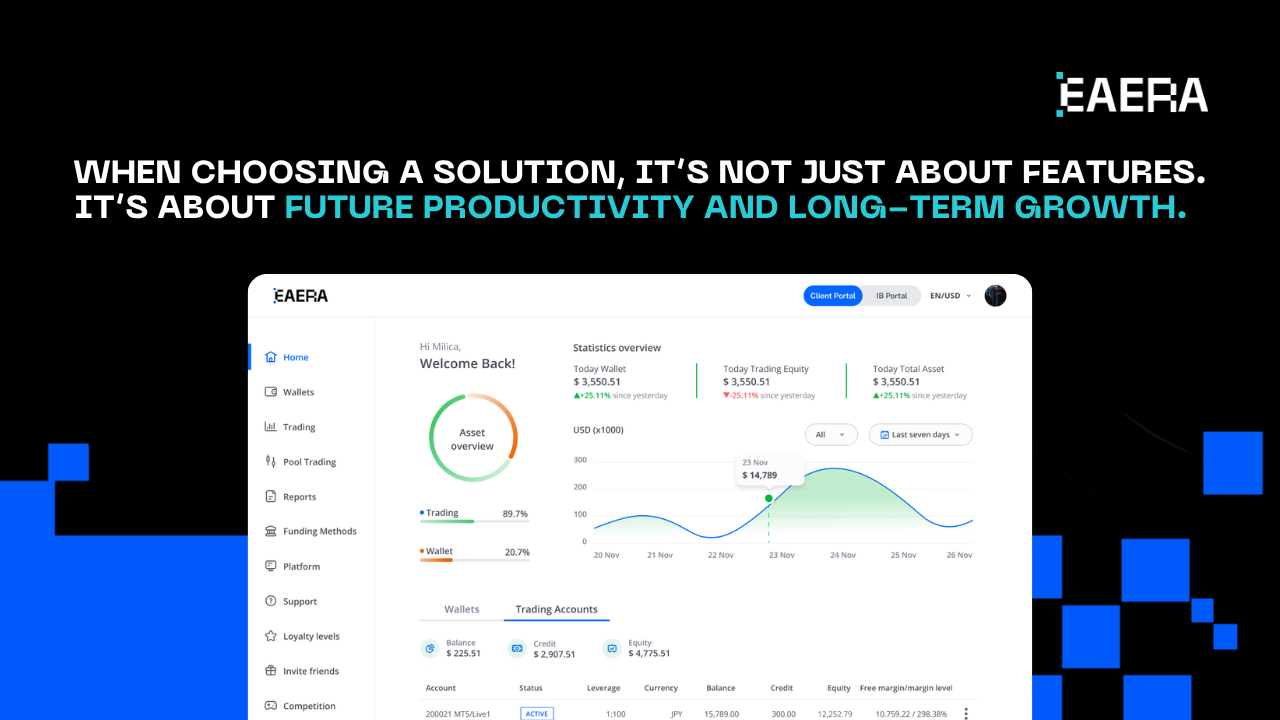
When choosing a solution, it’s not just about features. It’s about future productivity and long-term growth.
In the UK market, software for brokerage firms has been a key factor in success. Costs are rising, regulations are becoming more complex, and competition is getting more intense, meaning brokers need to run their businesses more efficiently than ever before.
Today’s platforms offer the automation, integration and scalability to drive cost reduction and AUM growth. Firms that deploy advanced systems can scale with confidence, improve the client experience and remain compliant.
Others with older tools will have a hard time keeping up. The right brokerage firm software is an investment in technology, but it’s also an investment in sustainable growth.