



AI Agents are starting to change the way companies and EAERA operate. AI is no longer just a simple chat interface but is evolving into systems that actively support daily business activities from automating repetitive workflows to assisting with research, documentation and operational coordination.
But there are still difficulties in adopting AI for enterprise settings. Many organizations are concerned with consistency, operational control, scalability, and workflow management. Teams try out isolated AI tools but struggle to integrate them into structured business operations.
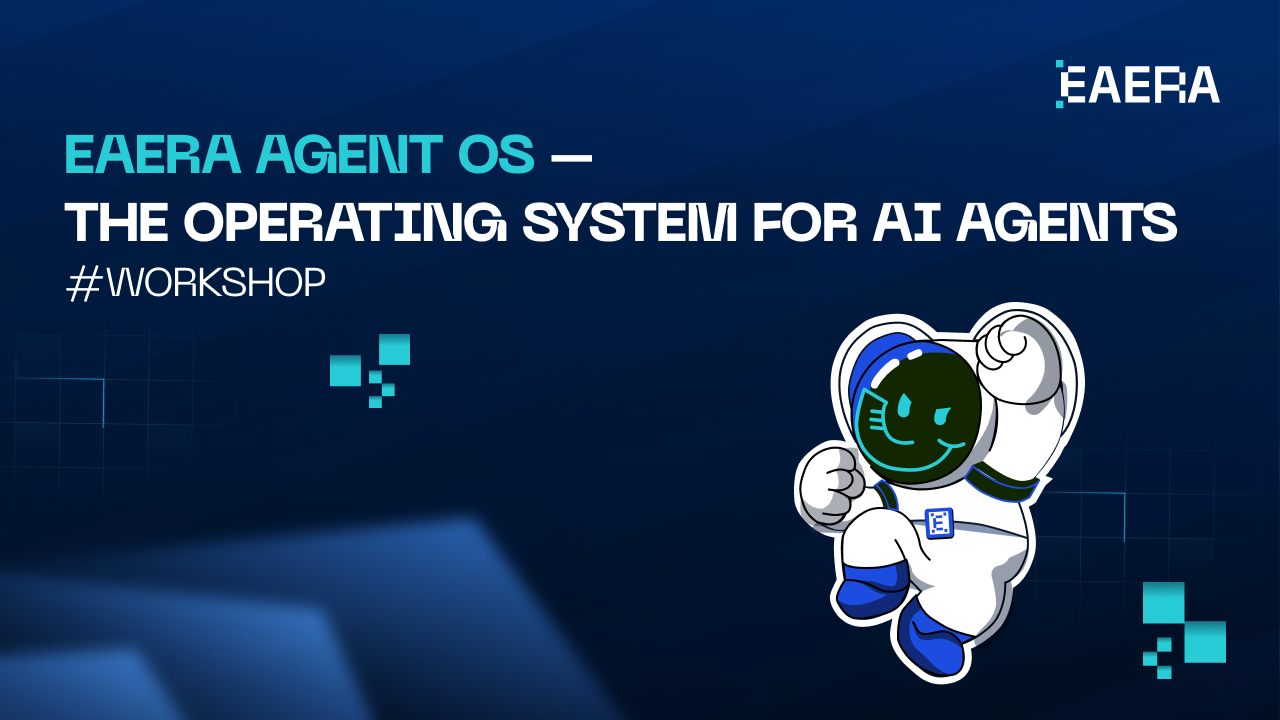
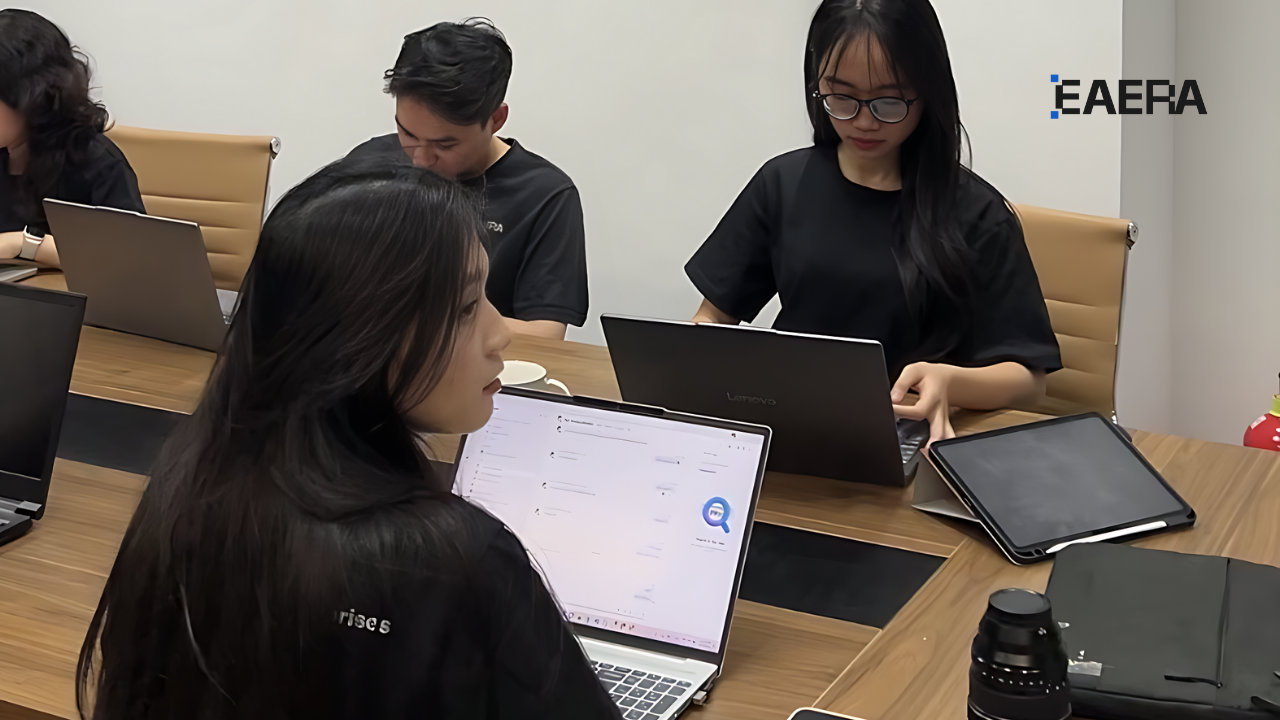
The EAERA AGENT OS Workshop considers how organizations can improve their understanding, use and operationalization of AI agents by taking a more structured and scalable approach.
What Is an AI Agent?
An AI Agent is different from a traditional chatbot.
An AI agent can maintain a persistent workspace, hold context across tasks, and execute workflows over time, instead of simply responding to prompts.
At a high level, an AI agent typically combines three key elements:
- Workspace — an environment where tasks and context are maintained
- Skills — capabilities designed for specific workflows or business functions
- Continuous operation — the ability to remain context-aware across ongoing activities
A simple way to think about an AI agent is to compare it to onboarding a new team member. That person receives:
- A workspace
- Access to tools
- A defined role
- Context about ongoing work
An AI agent can also help with tasks and workflows in an organized operational framework.
In this way, AI is embedded into everyday operational processes, rather than being used as a standalone assistant.
Why Businesses Need an Agent Operating Layer
Many organizations today already work with AI tools, but operational workflows still tend to be fragmented.
Teams may still need to:
- Move information manually between systems
- Rewrite documentation repeatedly
- Reconfigure environments across projects
- Manage disconnected workflows and contexts
An operational layer for AI agents helps to mitigate this fragmentation by providing a more coherent structure for workflows, context management, and task coordination.
The aim is not to replace human teams, but to improve operational efficiency and reduce repetitive overhead.
At EAERA, the workshop focuses on four important considerations for enterprise AI adoption:
- Operational structure
- Privacy awareness
- Workflow governance
- Sustainable scalability
These factors come into play more as organizations scale AI across departments, teams and functions.
Common Challenges Organizations Face When Using AI
When companies first start to integrate AI into their business processes, they typically face a few common issues.
Manual Environment Setup
Teams often spend a lot of time setting up environments, configuring workflows, and putting operational tooling in place before AI can be used effectively.
Inconsistent Processes
AI adoption may vary significantly across departments, leading to disparate workflows and inconsistent operational standards.
Workflow Visibility Issues
Without structured systems, organizations may be left without a clear understanding of how outputs from AI relate to requirements, decisions or operational processes.
Operational Complexity
As AI becomes more and more prevalent, the ability to keep workflows, environments and collaboration processes frictionless without a central operational structure can be a challenge.
Those challenges can reduce the actual value organizations see from adopting AI, especially as workflows expand across multiple teams or projects.
What Is EAERA AGENT OS?
EAERA AGENT OS is an operational layer for managing and supporting AI agents in business environments.
The platform is an operational framework for AI-assisted workflows, not just a chat interface.
The system is organized around a set of core infrastructure layers.
Workspace Runtime Layer
This layer supports:
- AI-assisted interactions
- Workflow execution
- Communication channels
- Operational task coordination
It acts as the central runtime environment for AI-enabled workflows.
Workspace Templates
Pre-configured workspace structures allow teams to start operational workflows faster.
Different templates can be prepared for different roles or operational scenarios.
Containerized Environments
The platform provides portable and reproducible operational environments to help teams and projects achieve consistent deployments.
Automated Deployment Workflows
Structured operational workflows can coordinate deployment and environment management processes to reduce repetitive setup tasks.
Operational Tooling
Administrative tooling supports operational lifecycle management, including:
- Workspace creation
- Environment updates
- Backup processes
- Restoration workflows
- Environment cleanup
The overall goal is to reduce operational friction while improving workflow consistency.
Four Types of Agents for Different Roles
Different teams have different operational needs.
EAERA AGENT OS offers a variety of role-based agent profiles to support a wide range of business functions.
| Agent Type | Intended Users | Example Focus Areas |
| Personal Dev | Engineering teams | Development workflows and technical assistance |
| Personal Non-dev | Product and business teams | Operational coordination and documentation |
| Operations Agent | Infrastructure and operations teams | Environment and workflow management |
| Project Agent | Cross-functional teams | Shared project collaboration |
This framework enables organizations to tailor AI-enabled workflows to their operational context instead of a one-size-fits-all approach.
How AI Agents Can Support Different Teams
AI agents can support a wide range of operational activities across different departments.
Engineering Teams
Technical teams may use AI-assisted workflows for:
- Documentation support
- Development assistance
- Workflow coordination
- Requirement interpretation
Product and Design Teams
Product and design functions can use AI-assisted environments to help with:
- Requirement organization
- Workflow analysis
- Mockup preparation
- Project coordination
HR and Operations Teams
Operational functions may use AI support for:
- Internal documentation
- Process drafting
- Communication preparation
- Organizational workflow coordination
Leadership Teams
AI-supported operational summaries, workflow transparency, and structured coordination through multiple communication channels can support leadership functions.
The workshop explores how these workflows can be made more structured, scalable and operationally manageable over time.
Real Applications Across Spec, Research, and Design
The EAERA workshop is one of the main topics of interest to show how AI-assisted workflows can benefit different steps of operational and product processes.
Specification Phase
AI-driven workflows can help to organize conversations, structure requirements, and assist with documentation preparation.
Research Phase
Agents can assist in collecting information, maintaining workflow continuity, and preserving context in ongoing discussions or projects.
Design Phase
AI-assisted environments can help with fast iterations, workflow reviews, and collaborative operational processes.
This isn’t about swapping out teams, but about reducing redundant overhead and improving operational cohesion between departments.
Key Capabilities of an AI Agent Operating Environment
Modern AI operational environments are not stand-alone productivity tools.
Some key operational capabilities explored in the workshop include:
- Faster workspace provisioning
- Structured operational workflows
- Centralized environment management
- Persistent operational context
- Workflow coordination across teams
- Role-oriented operational environments
- AI-assisted documentation and workflow support
These capabilities help organizations move from isolated experimentation to a more structured operational adoption of AI.
As the use of AI continues to grow, organizations need structured ways of operating, not just isolated productivity tools.