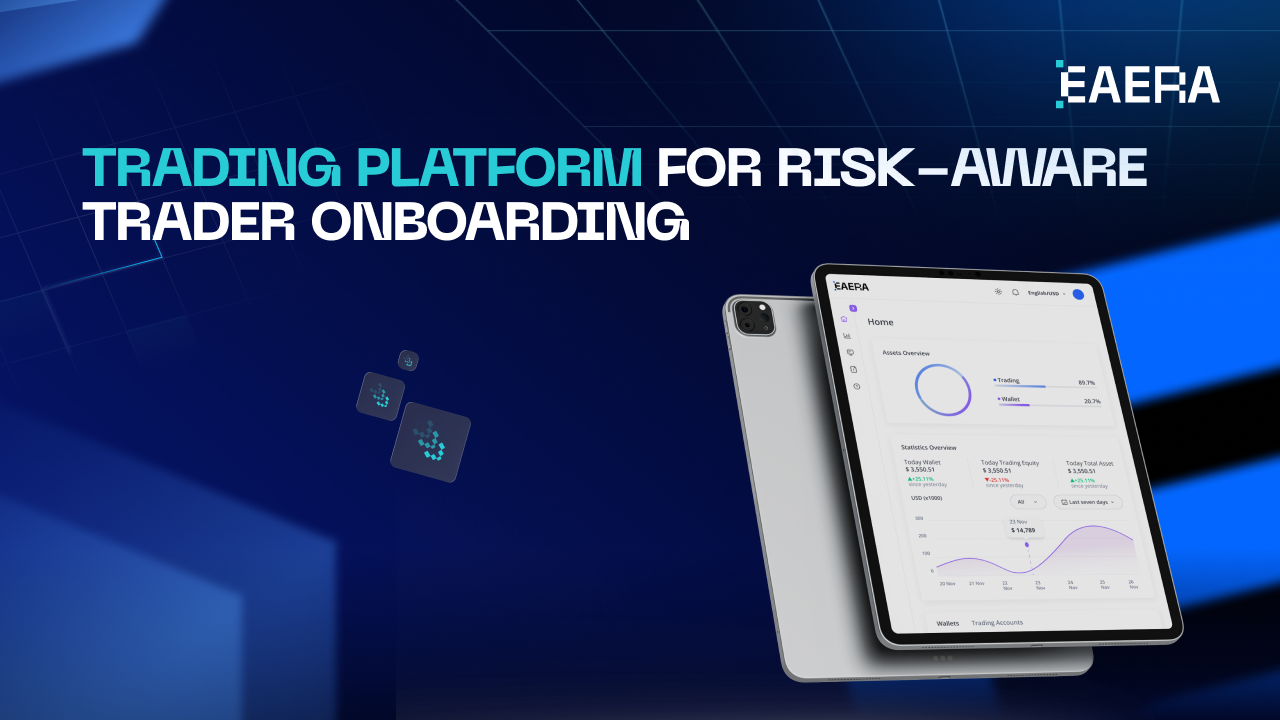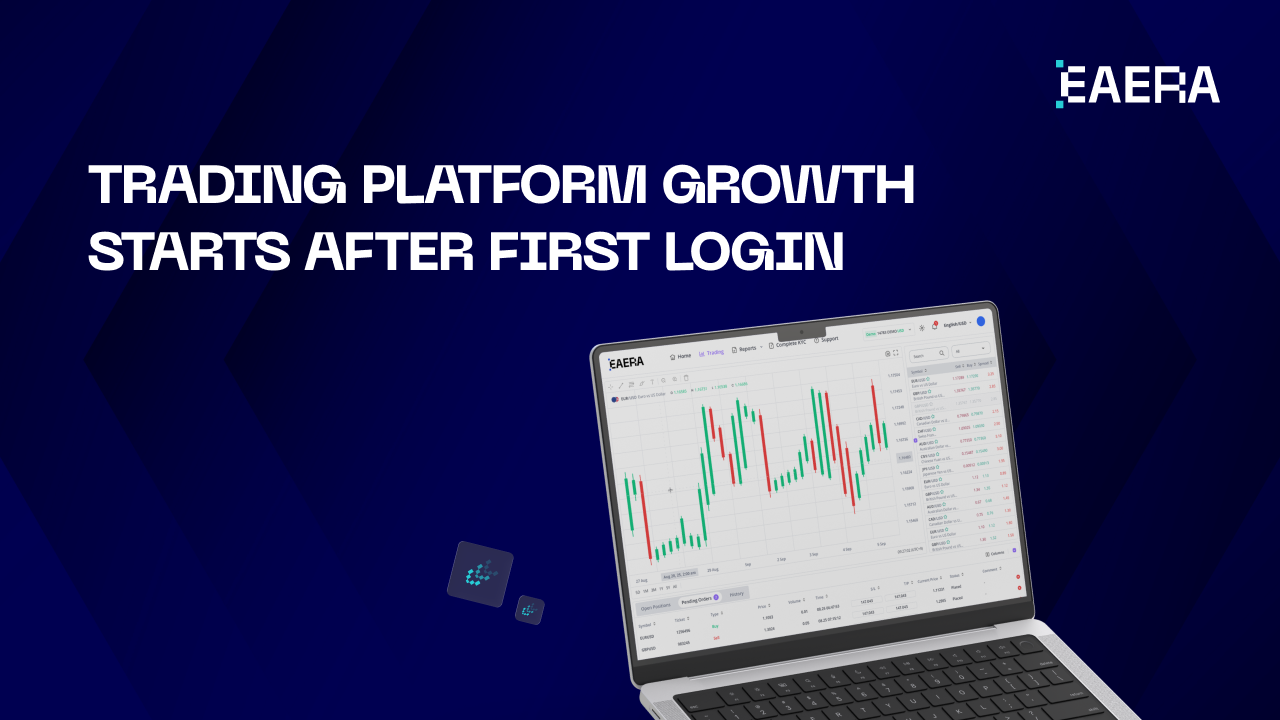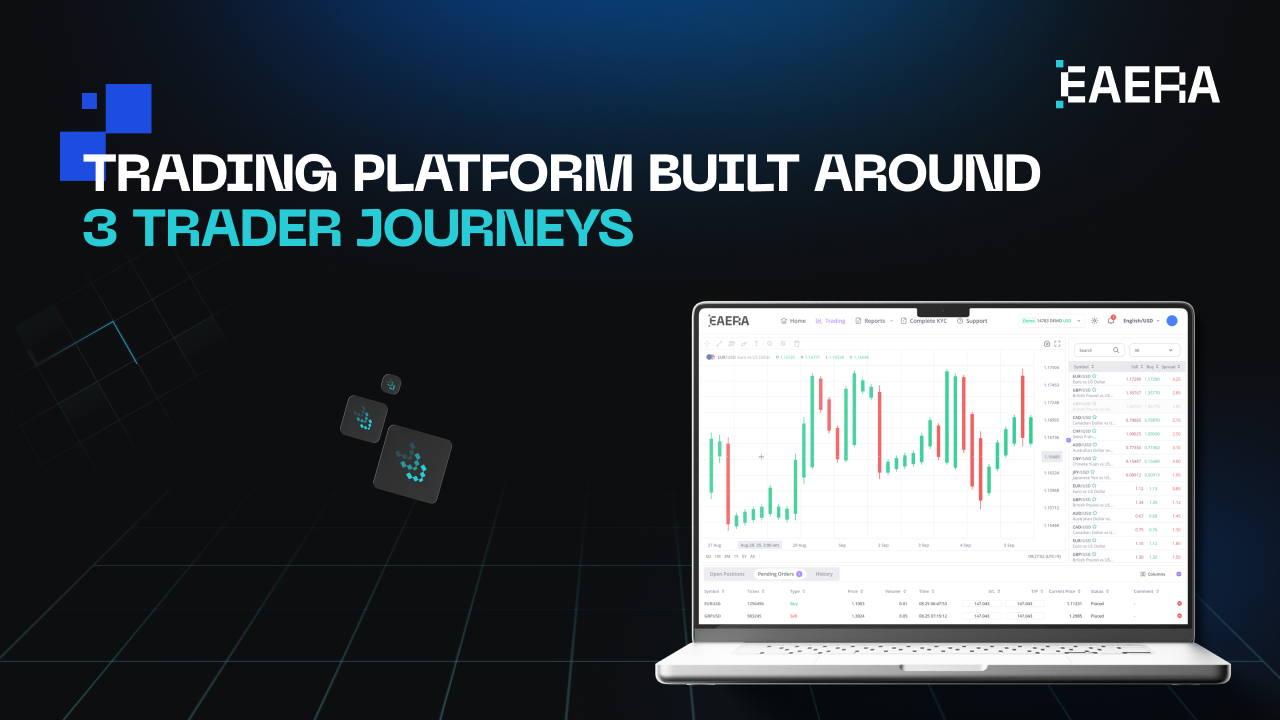




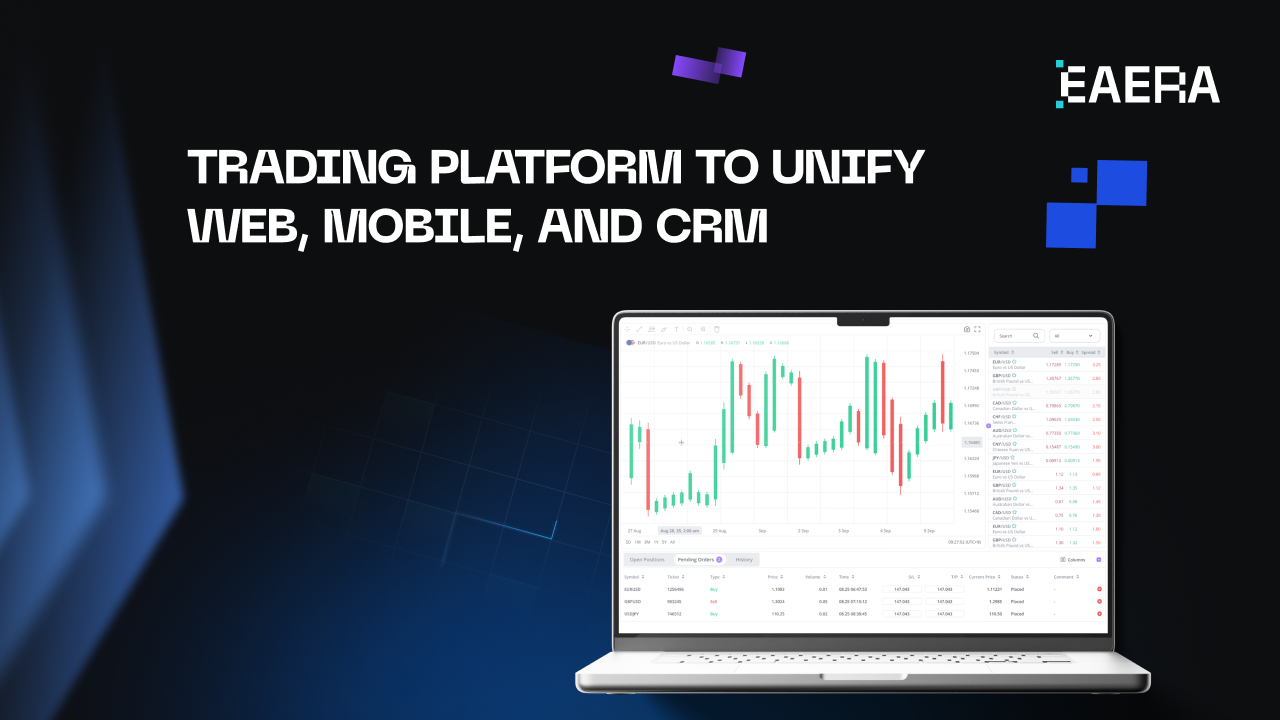
A trading platform should not be isolated from a broker’s CRM, client portal, payments, and back office. Brokers need one connected environment where clients can trade on web and mobile and internal teams can see onboarding status, funding activity, trading behavior, support history, and retention signals.
Related articles:
This article explores the need for a unified trading platform model for brokers, the problems created by disconnected systems and the capabilities that help brokerages deliver a better client experience and stronger operational control.
Why Web, Mobile, and CRM Need to Work Together?
Retail traders continue to expect to trade on the web and on mobile. A client can initiate registration from desktop, check account status from mobile, deposit from client portal, trade from web terminal and reach out to support when they need help. Fragmented experiences are the result of disconnected touchpoints.
For brokers, it’s not just the front-end interface. The bigger problem is operational visibility. A client can trade on mobile, but the latest activity may not show in the CRM. The client may be able to fund online, but the sales team may not know the funding status. A seemingly simple question may require the support person to check multiple systems.
A single trading platform connects the trader activity with the broker activity, bringing web and mobile activity into CRM visibility.
Common gaps include:
- Client trades on mobile, but CRM does not show activity
- Client deposits on web, but sales do not see funding status
- Support cannot see account activity quickly
- Retention teams cannot identify inactive traders
- Managers cannot connect trading activity to campaigns
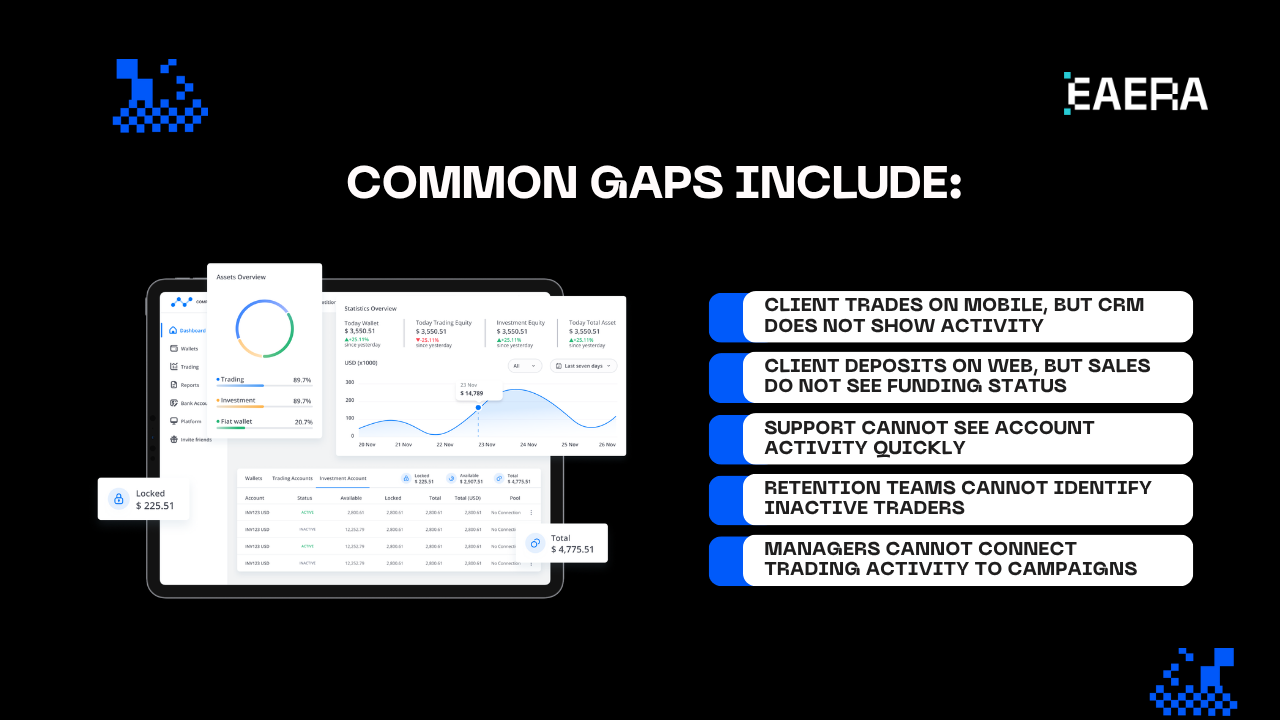
The intent is a better UI. The goal is one connected broker experience for clients and internal teams.
Problem 1: Fragmented Client Experience Across Devices
A client can start onboarding on desktop, depositing from mobile, trade on web, and contact support from the client portal. If these touchpoints are not aligned, the experience becomes inconsistent.
The client saw one status on the web and another on the mobile. They might do KYC but still see locked access to a channel. They might deposit successfully but not know if the funds are available for trading. These small gaps create friction and diminish trust.
A unified trading platform should support:
- Web trading access
- Mobile trading access
- Shared account login
- Consistent account status
- Synced watchlists or preferences where applicable
- Funding visibility across devices
- Client portal access
- Trading account status
- Clear notifications
- Support access
The most important thing is continuity. Clients should not feel like they are switching between unrelated products. They should be able to sign up, confirm, fund, trade, track, and submit support requests in a consistent experience.
A connected experience enables brokers to minimize friction between registration, funding, trading, and support.
Problem 2: Broker Teams Cannot See Real-Time Trader Activity
Trading platforms should provide broker teams with more than just execution data. It should help teams understand trader behavior and lifecycle movement.
Disconnected trading activity from CRM means teams miss key signals A funded client may not have made a first trade. An active trader can become dormant. High-value traders could scale back activity. A campaign may bring many registrations, but few active traders.
These signals matter because they tell broker teams what to do next.
Disconnected systems often create problems such as:
- Funded client has not placed a first trade
- Active trader becomes dormant
- Client trades heavily but has unresolved support issues
- High-value trader reduces activity
- Client opens account but does not fund
- Campaign brings registrations but not active traders
The platform should pass trading signals that are relevant to the CRM, such as account status, first trade, last trade, trading volume, active vs. inactive, balance and equity, and account restrictions.
A connected trading platform enables sales, retention, support and management teams to act on actual client behavior, not stale records.
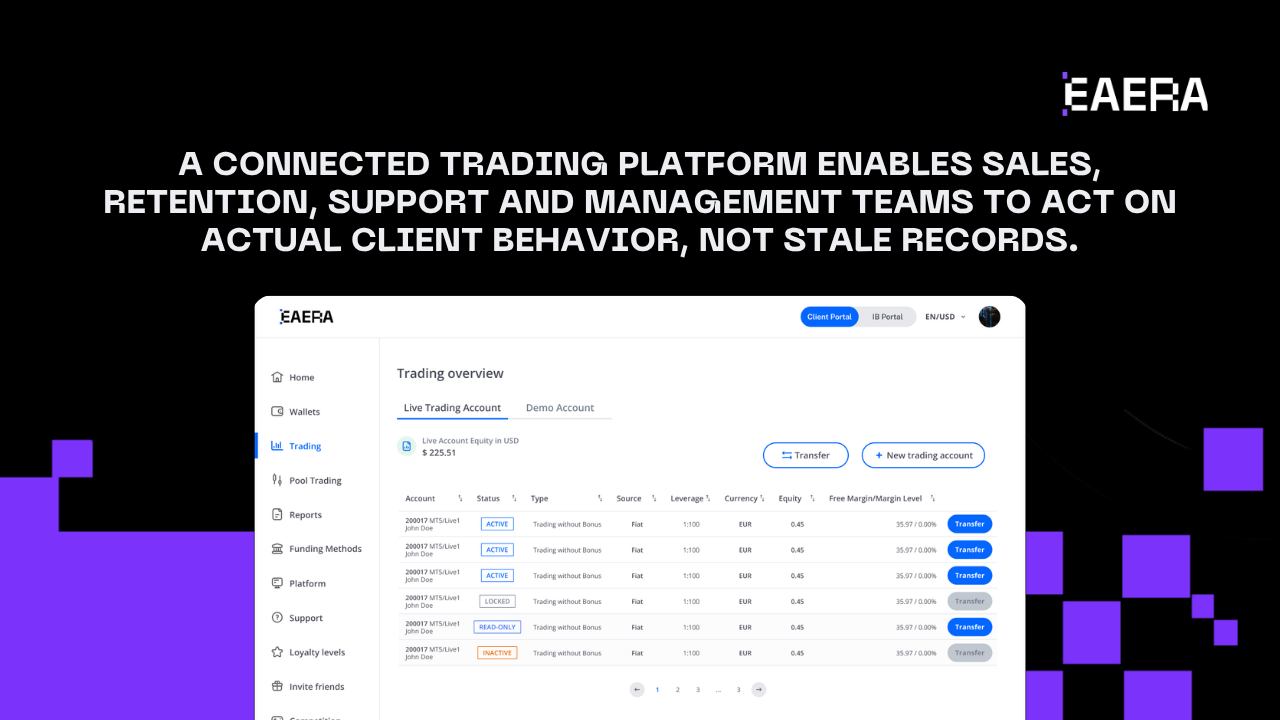
Real-time trader visibility turns trading activity into operational action.
Problem 3: Payments and Trading Activation Are Disconnected
Funding is one of the most important steps in the life cycle of trade. When a client deposits, they have intent. If the payment, wallet, and trading account workflows are not connected, that intent can be lost.
A client can make a deposit, but he can’t trade because the money does not go to the right account, or the trading account is not created, or the activation step is unclear.
A unified system should connect:
- Deposit request
- Payment status
- Wallet balance
- Trading account creation
- Account funding
- Internal transfer
- First trade status
- Failed payment alerts
- Support or activation task
A unified trading platform should connect payment activity with trading readiness.
This helps brokers reduce revenue leakage between funding and 1st trade. It also enhances customer service by allowing teams to handle payment and account questions without having to switch between different systems.
Problem 4: Retention Becomes Generic Without Unified Data
Retention is difficult when teams cannot see the full client journey. Each client may have become inactive for a different reason, but a broker can send the same campaign to all inactive clients.
One client may be inactive because they never completed funding. Another may have funded but never placed a first trade. Another may have traded actively for weeks and then stopped.
Disconnected data leads to generic retention.
A unified trading platform should help retention teams segment clients by:
- Recently funded but not traded
- Active trader with declining volume
- Dormant client with previous high value
- Demo user not converted to live
- Client with repeated failed deposits
- Client with no login after account creation
- Referred client from high-value partner
- Client requiring support follow-up
Retention improves when teams act based on behavior.
Unified data allows brokers to shift from mass messaging to lifecycle-based retention. Brokers can react based on what happened on the client journey, instead of treating all inactive clients the same.
This makes retention more relevant and more measurable.
Unified Trading Platform Checklist for Brokers
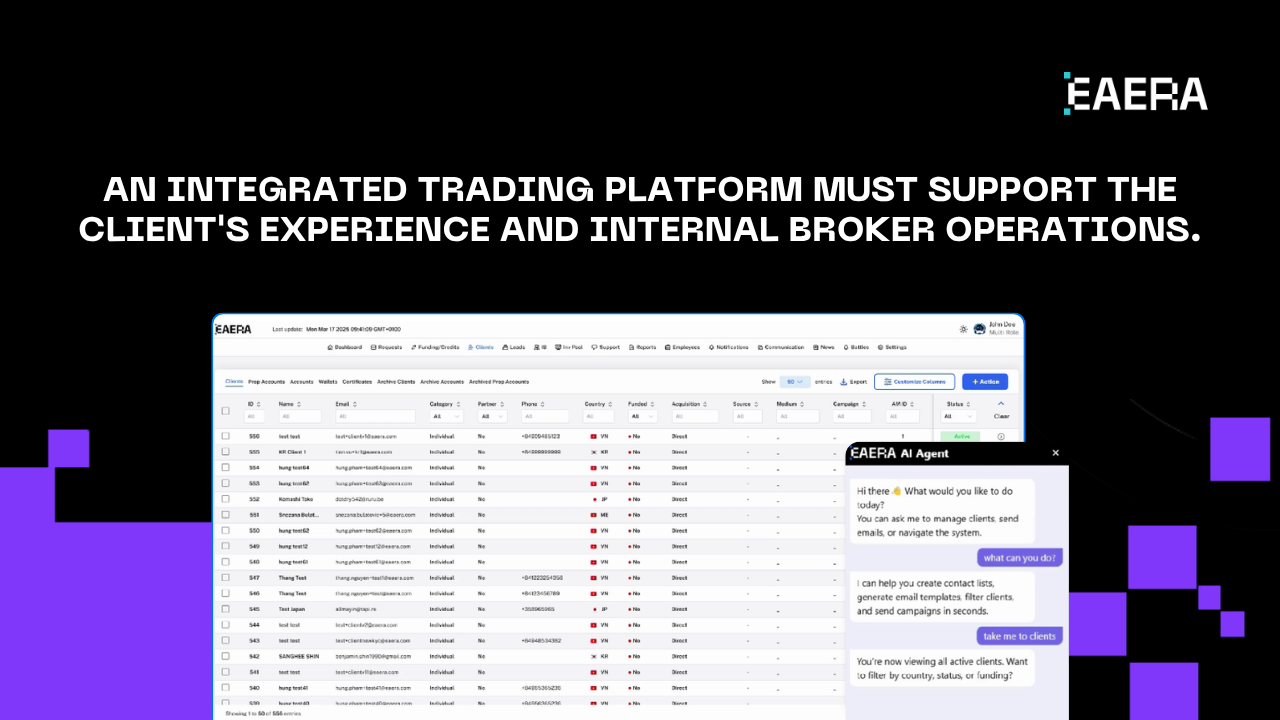
An integrated trading platform must support the client’s experience and internal broker operations. Brokers should think about whether web, mobile, CRM, payments and back-office work as an ecosystem.
| Area | What to Check |
| Web trading | Stable access, charts, order flow, account visibility |
| Mobile trading | Fast login, portfolio view, notifications, account actions |
| CRM connection | Client profile, lifecycle stage, sales owner, activity signals |
| Payments | Deposit, withdrawal, wallet, transfer, failed payment alerts |
| Trading activity | First trade, last trade, volume, active/inactive status |
| Support visibility | Client timeline, account status, payment and trading context |
| Retention | Segmentation, inactivity alerts, lifecycle triggers |
| Reporting | Conversion, activation, deposits, trading volume, retention |
EAERA helps brokers run their business with integrated CRM, client portal, back-office, funding, trading platform connections, reporting, alerts and workflow automation.
If you are a broker looking to consolidate web, mobile, and CRM workflows, EAERA can help you build a more integrated trading and client management environment.
The right trading platform should allow brokers to provide clients with reliable access while giving teams the visibility they need to grow and retain traders.