



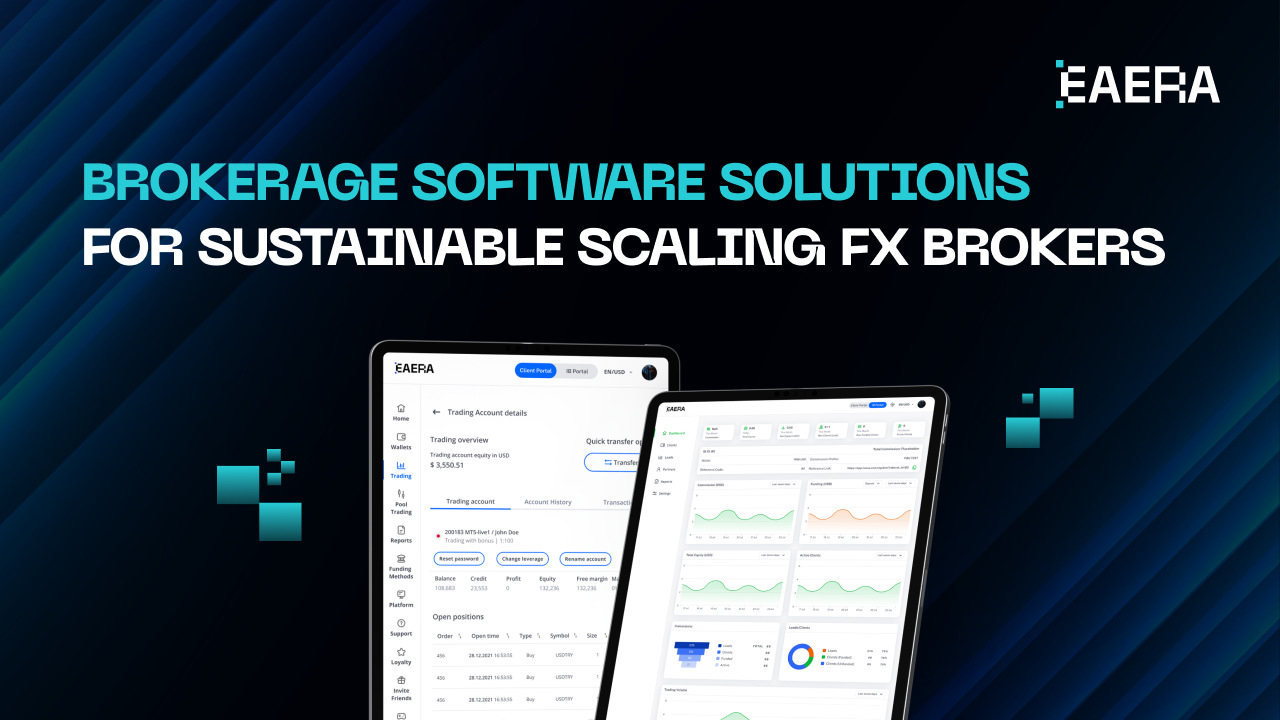
FX brokers are leveraging brokerage software solutions to scale sustainably by building connected workflows across client acquisition, onboarding, funding, trading activation, partner operations, reporting, and governance. Sustainable scaling is not just about increasing the volume of leads or adding more clients. It means growing clearly, repeatable, measurable, and in control.
Related articles:
- Broker CRM Software That Converts: Lead & Trader Management
- Brokerage Software Solutions for US Firms in 2026
This article outlines the operational software foundation FX brokers need to scale without creating client drop-off, manual workload, reporting gaps or operational risk.
Sustainable Scaling Starts with a Connected Operating System
Broker teams working out of separate systems are risky when it comes to scaling. Sales could be using one CRM, compliance could be using a different tool for KYC, finance could be tracking deposits through payment dashboards, trading operations might be relying on platform data, and support could be depending on tickets or chat history. Each team may complete its own task, but client progress becomes hard to track across the full journey.
A sustainable broker operating system should connect:
- Client profile
- Lifecycle status
- KYC status
- Payment and wallet status
- Trading account status
- Support history
- IB attribution
- Reporting data
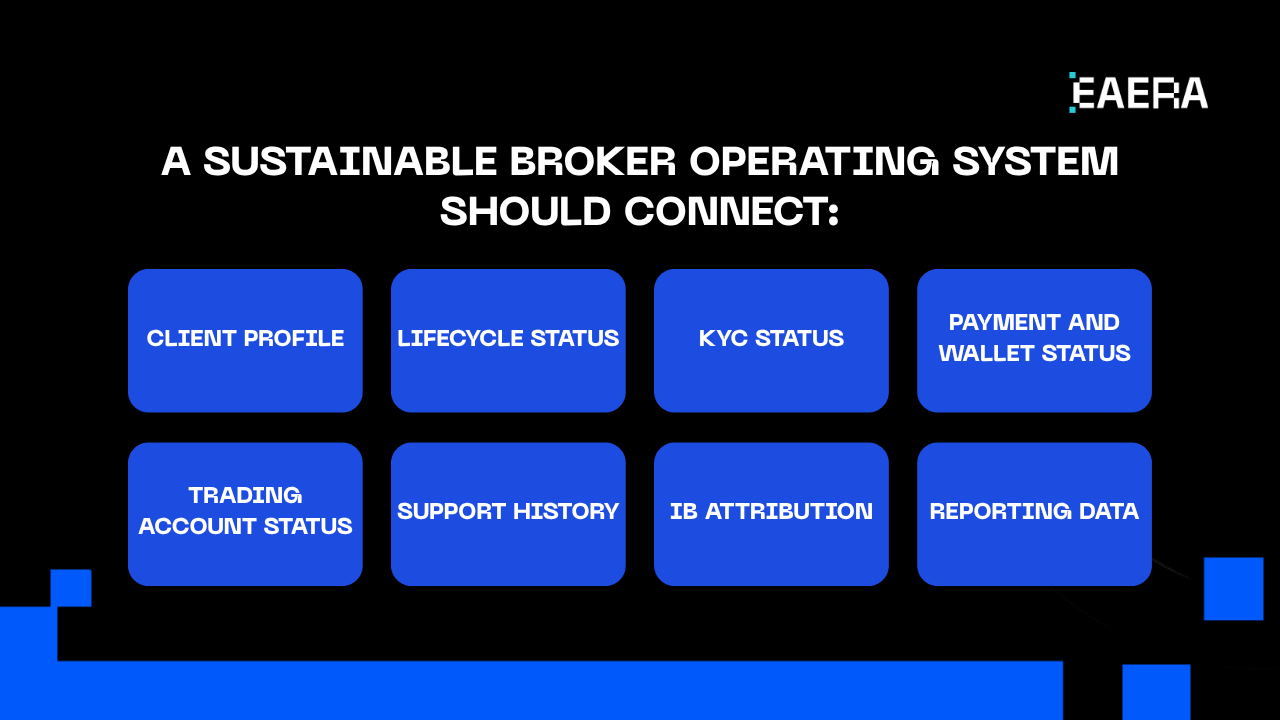
Brokerage software solutions should create one operating layer where every team can see client status, ownership, next action, and performance. This does not mean that all departments do the same work. It means that all departments are working off the same source of truth.
More clients mean more work, more support questions, more payment checks, more account updates, and more reporting problems. Connected OS manages growth.
Scale Acquisition Without Losing Lead Quality
When FX brokers scale up, they tend to increase marketing spend, campaigns, IB partnerships, paid traffic, events and referral channels. This brings more leads, but not always better clients.
The challenge will be scaling acquisition while maintaining clarity on lead ownership, source quality, and follow-up discipline. A broker may have thousands of leads, but if teams cannot identify the sources that generate verified, funded, and active traders, acquisition becomes expensive and inefficient.
Brokerage software solutions should help brokers manage:
- Lead source tracking
- Campaign attribution
- IB or referral source
- Auto-assignment
- Sales owner visibility
- Follow-up reminders
- Lead-to-registration conversion
- Demo-to-live tracking
- Lead quality by source
The broker also needs to know which channels bring registered clients, verified clients, funded clients, and active traders. A campaign with high lead volume and low KYC completion may need to optimize targeting. An IB that brings fewer leads, but more funded traders may be worth more than a partner with high registration numbers, but weak activation.
Sales teams also need defined ownership. Leads should never be left unassigned or contacted by multiple people. If a lead is coming from a high intent source, then the system should move the lead quickly. Managers should find the gap if the follow-up is overdue.

Sustainable scaling means growing a qualified pipeline, not just increasing lead volume.
Convert More Clients Through Onboarding and Funding
The next scaling challenge after acquisition is conversion. Drop off during registration, KYC and funding makes more leads irrelevant.
This is the stage where many brokers lose their growth momentum.” The broker may have paid for the lead, turned the user into a registered client and approved KYC – but still not reach funded status as the next step is unclear.
Brokerage software solutions should be able to link registration status, required profile fields, KYC document status, verification result, approval or rejection reason, missing document reminders, deposit method visibility, deposit attempt status, failed payment alerts, and wallet balance.
Smart system triggers to keep the whole onboarding and funding process moving. The CRM should auto-nudge clients who stall before KYC, show support exactly what docs are missing, and immediately unlock funding workflows; now compliance is approved. If a deposit fails, the system must capture the reason instantly so your team can swoop in and save the transaction.
This link is critical because from a client’s point of view, onboarding and funding are not two separate journeys. What the client wants to see clearly is the next step: register, verify, deposit, start trading.
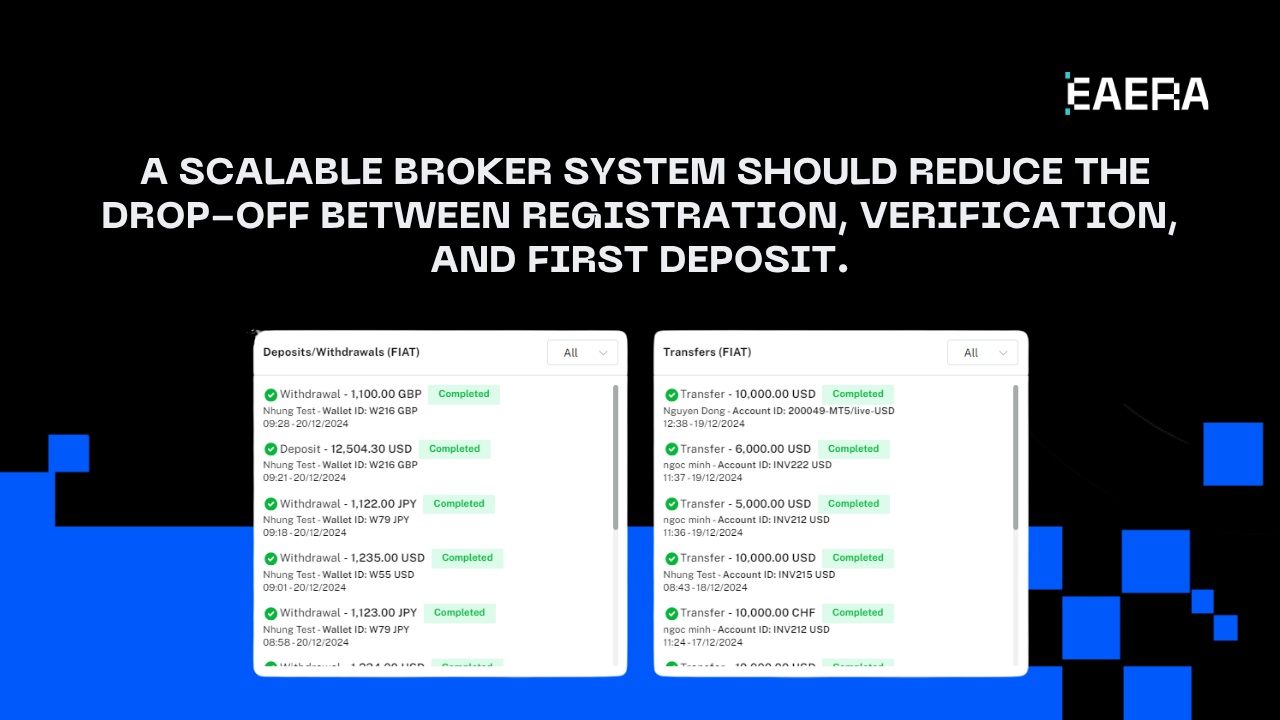
A scalable broker system should reduce the drop-off between registration, verification, and first deposit. Clear status, automated reminders, and visibility into payments help teams act before the client loses interest.
Turn Funded Clients into Active Traders
The client is a paying customer, but not yet fully engaged. Brokers need to turn funded clients into active traders to scale sustainably.
Brokerage software solutions should allow teams to monitor wallet funded status, trading account creation, internal transfer status, trading account funding, account type, account lock or restriction reason, first trade status, active trading days, declining activity, and dormant status.
Strong brokerage software solutions help brokers to differentiate between approved, funded, trade-ready, active and inactive clients.
You can also track the behaviors of clients after funding and softly nudge them towards active trading. Your team is automating the work around unallocated wallet funds or unexecuted first trades, helping clients get over the last hurdles to market entry. Plus, spotting early signs of inactivity with instant retention signals allows you to re-engage users while your product is still top-of-mind.
Sustainable scale hinges on activation quality, not just deposit volume. Brokers want to know if clients are really using the platform and if early activity leads to repeat engagement.
Scale IB, Support, and Back-Office Operations Without Manual Overload
As brokers grow, pressure on IB management, support, finance, compliance, and back-office increases. The cost of manual work rises, and it becomes harder to control.
Brokerage software solutions should: Reduce manual workload in IB onboarding, referral attribution, partner hierarchy, commission rules, payout review status, support ticket context, payment investigation, withdrawal review, account restrictions, and manual approval workflow.
System should link referred clients to partner hierarchy, trading activity, commission rules and payout status for IB operations. This minimizes disagreements and enhances transparency. To provide support, the system should display the KYC status of the client, payment history, wallet status, trading account status, restrictions, communication history, and open tickets. That helps agents expediate their responses.
Finance and back office should be able to easily identify pending approvals, withdrawal aging, manual reviews and exception cases. Don’t depend on spreadsheets to know what’s in the queue for action.
Operational scale works only when routine work is visible, assigned, and automated.
Use Reporting and Governance to Keep Scaling Sustainable
Sustainable scaling requires management visibility. Brokers need to know what’s working, where clients are getting stuck, which teams are overloaded, and what workflows are increasing risk.
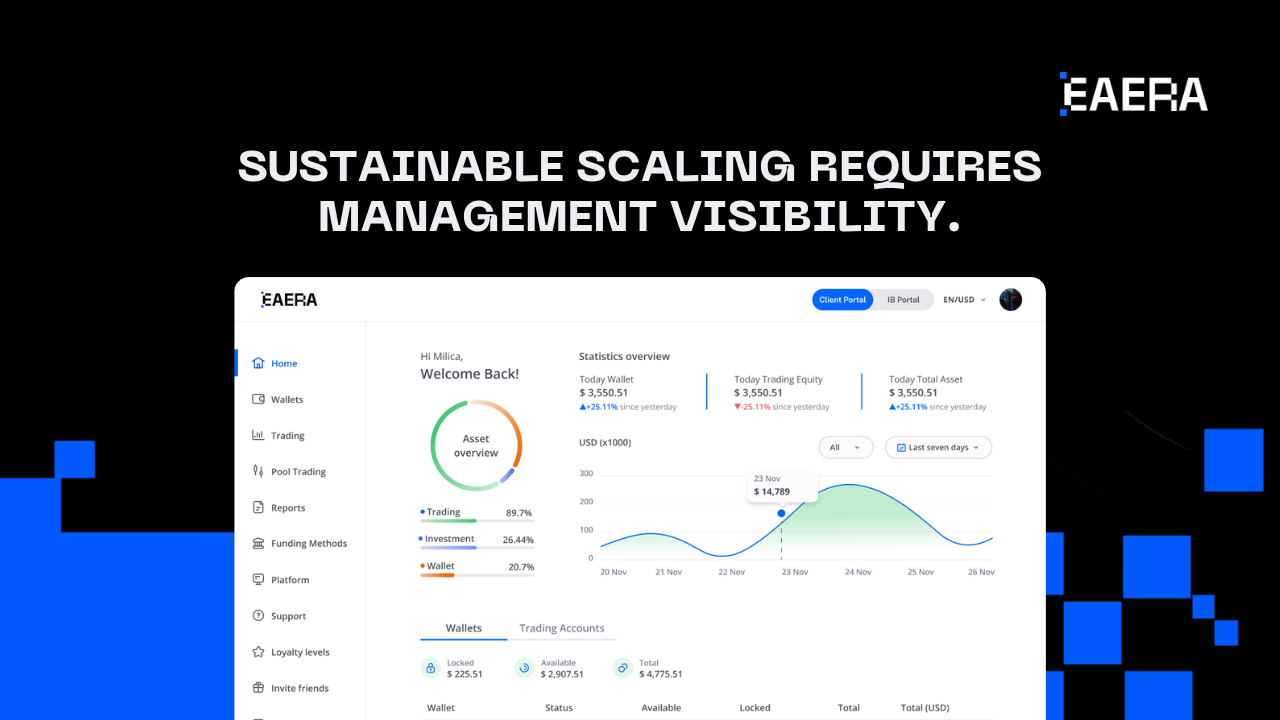
Brokerage software solutions should offer reports on lead response time, lead to registration conversion, registration to KYC completion, KYC to deposit conversion, failed deposit recovery, deposit to first trade activation, active vs. dormant clients, IB performance, commission payout status, support workload, withdrawal aging, team productivity and manual approval volume.
Such reports help leaders see if growth is healthy. High lead volume with low KYC completion could mean poor quality acquisition. Strong deposits with weak first-trade activation could highlight an operational gap. Partners may need to look at high IB registrations and low funded activities. Increasing support workload could signal unclear client status or payment friction.
Governance is equally important. As more users and teams join the system, brokers need speed without losing control.
EAERA supports broker operations through connected CRM, client portal, back office, funding, trading account workflows, affiliate management, reporting, alerts, and automation.
For FX brokers scaling sustainably, EAERA can support a connected operating environment across acquisition, onboarding, funding, activation, IB operations, support, reporting, and governance.
| Scaling Layer | What Software Should Enable |
| Foundation | Unified client status and operational visibility |
| Acquisition | Source tracking, ownership, and lead quality |
| Conversion | KYC, onboarding, and funding workflows |
| Activation | Wallet, trading account, and first-trade tracking |
| Operations | IB, support, finance, and back-office control |
| Governance | Reporting, permissions, approvals, and audit trails |
The right brokerage software solutions help FX brokers scale growth without sacrificing visibility, consistency, or control.