



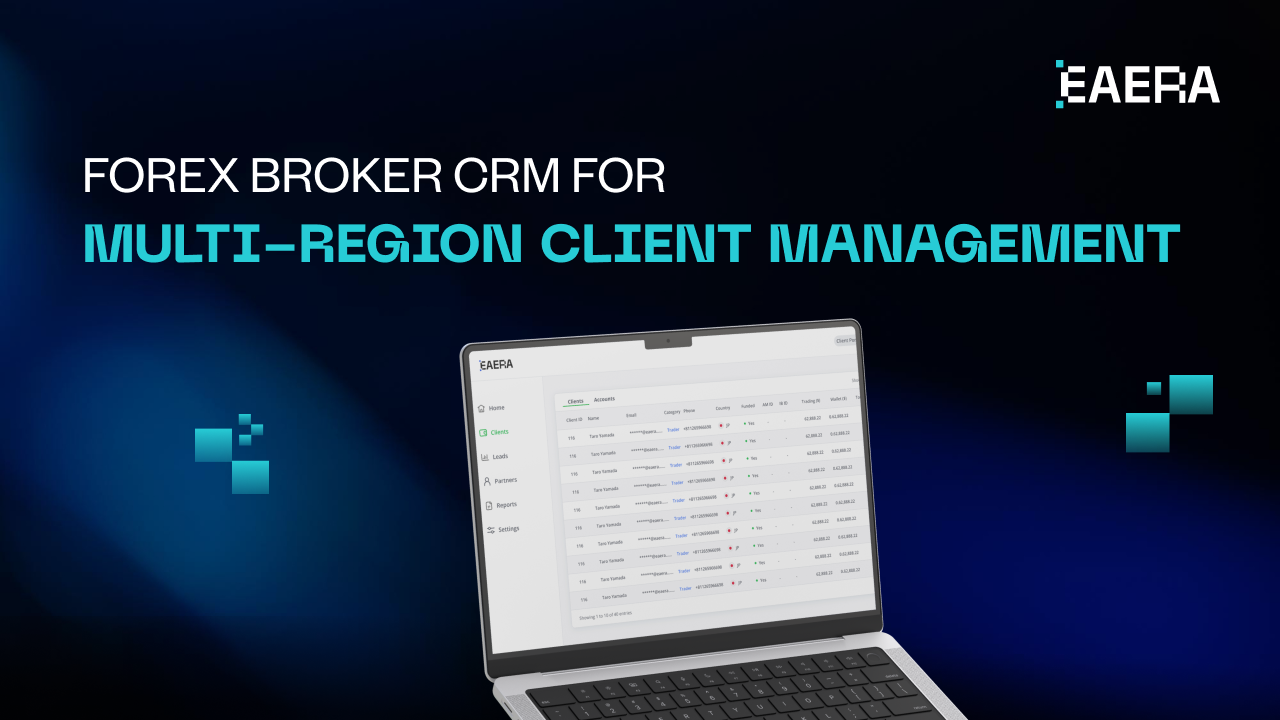
A forex broker CRM enables the brokers to manage clients across several regions. It combines lead source, onboarding rules, KYC status, payment options, trading account access, support ownership, and reporting in one system. Multi-region brokers cannot treat every client journey the same as requirements, client behavior, payment preferences, communication expectations and operational controls may be different from market to market.
Related articles:
- Best Forex CRM Agency: How to Improve Trader Activation?
- Best Forex CRM for Modern Brokerage Management in 2026
This article outlines how a well-defined CRM architecture can help brokers manage regional complexity while maintaining consistency and scalability of client lifecycle workflows.
Why Multi-Region Client Management Needs a Clear CRM Structure?
A broker in one market can often handle client flows through a standard onboarding and servicing model. A broker with a footprint in the US, UK, UAE, Asia, LATAM and Africa needs a little more structure. Each region may require different client rules, documents, payment methods, sales ownership, language support and reporting.
A forex broker CRM should help teams answer practical questions quickly:
- Which region does this client belong to?
- Which onboarding workflow applies?
- Which KYC documents are required?
- Which payment methods are available?
- Which sales or support team owns the client?
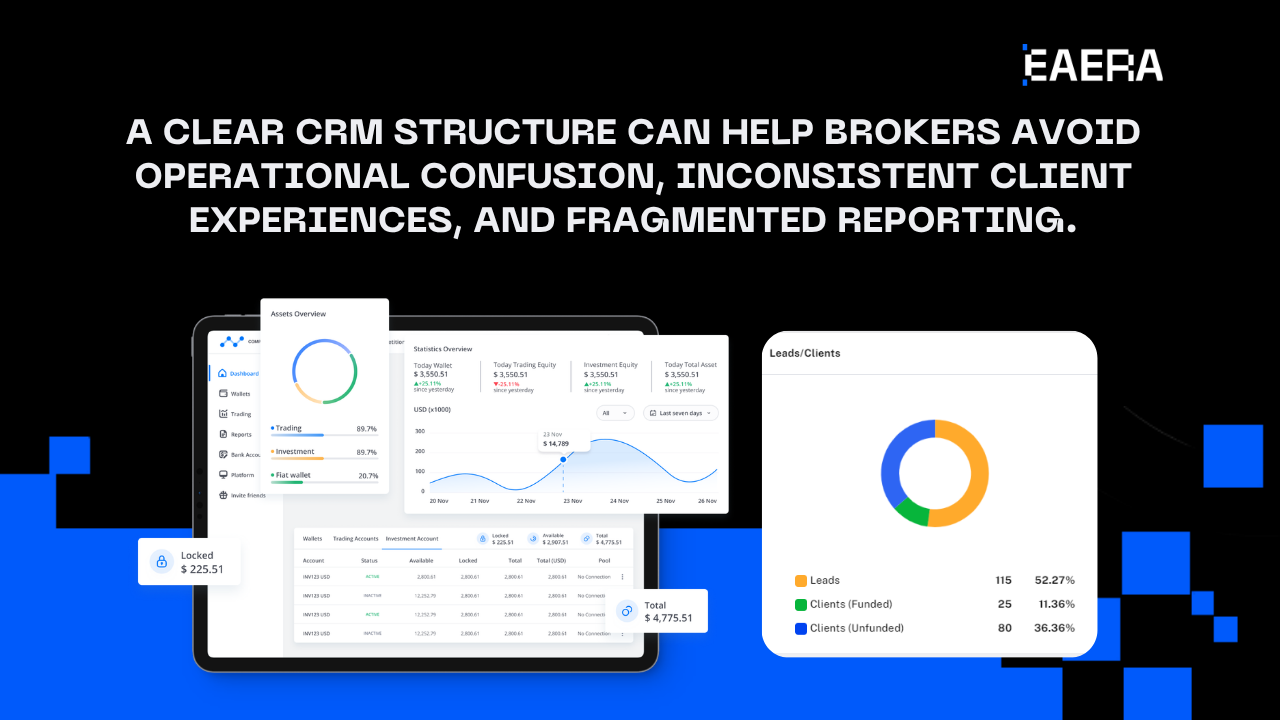
Multi-region client management needs both central visibility and local workflow control. Managers need to see global performance, but regional teams need workflows aligned to their market. A clear CRM structure can help brokers avoid operational confusion, inconsistent client experiences, and fragmented reporting.
Region-Based Onboarding and KYC Workflows
Onboarding workflows for multi-region brokers must be customizable for the needs of clients in each region. A UK client may require a different classification or product access flow from a UAE client or from some other offshore market. A US-related client may require special handling because of strict retail forex rules, registration obligations and client eligibility checks.
A forex broker CRM should support configurable onboarding rules such as:
- Country or region-based registration forms
- Required profile fields
- KYC document requirements
- Client classification
- Risk category
- Manual review triggers
- Approval or rejection reasons
- Client notification history
For example, in the UK brokers may require CRM workflows taking into account retail client classification, restrictions on product access and controlled communication. UK-facing teams may have better document suitability checks, client acknowledgements, and product-related messaging. The CRM should help teams understand whether the client is approved, under review, restricted or ineligible for certain products.
Regional onboarding should be flexible enough to support local rules while keeping global data consistent.

Regional Payments, Wallets, and Funding Controls
Payment behavior and funding options can vary from region to region. Clients in different markets may prefer bank wire, card payments, local payment methods, crypto channels, or internal transfers. Some payment methods may be available for selected countries, currencies, or client groups only.
A forex broker CRM should link regional payment rules to deposit methods available, withdrawal methods available, wallet currency, local currencies supported, payment provider routing, failed deposit reasons, withdrawal review rules, regional transaction limits, funding source checks and transaction timelines.
Why does it matter? Because payment friction is a quick road to client drop-offs. The payment method is not suitable for their region, and the client may fail to fund after KYC. Another client may try to make a deposit several times, but the support team may not see the reason for the failure. Clients can request a withdrawal, but the finance team may need to do some additional review depending on region/risk status.
A UAE client may want regional payment options, Arabic or English language support and a clear view of the wallet. A UK client may need more robust dialogue around funding risks and product access. A client from a restricted region might want payment methods hidden until manual review is completed.
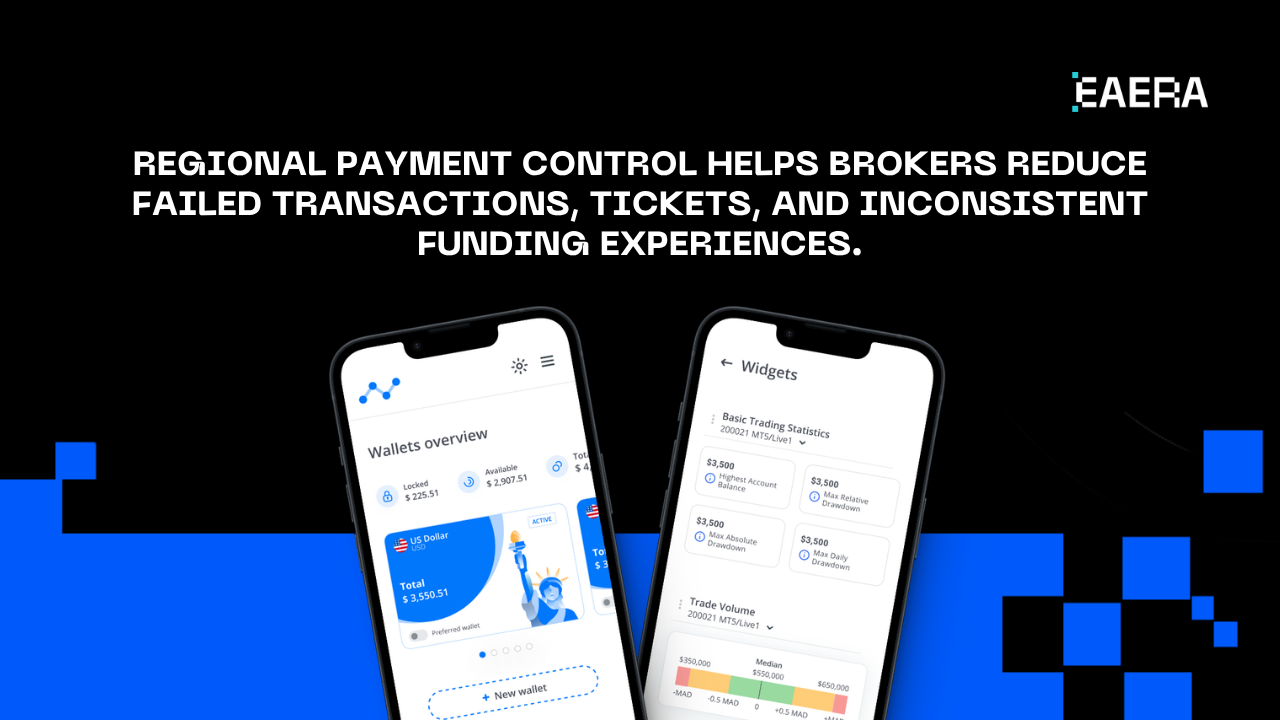
Regional payment control helps brokers reduce failed transactions, tickets, and inconsistent funding experiences. It also helps finance and support teams understand if a client is ready to fund, stuck in payment rules, pending review, or needs manual intervention.
Regional Sales Ownership, Support, and Client Communication
Clear ownership is needed to manage clients across multiple regions. Depending on the region and the client status, the client should be routed to the correct sales team, language team, account manager, support desk, or compliance queue.
The forex broker CRM should assist brokers with region-based lead assignment, language-based routing, time zone aware follow up, visibility of sales owners, support owners, communication history, regional email or notification templates, client segmentation by market, escalation rules and service level tracking.
This is important as communication expectations differ across markets. Some clients want quick phone follow-ups. Others might prefer email, messaging apps, or local support. Some markets require controlled communication of the products. Different time zones mean different operating hours for some regions.
These routing rules should be systematic, not manual, in a CRM. Sales teams need to know who their clients are. Support teams need complete context for the client. Managers can review response time, quality of follow-up, and regional workload.
Clear ownership prevents duplicate follow-up, missed leads, slow support, and inconsistent client communication.
Trading Account Access and Product Rules by Region
A multi-region broker may offer different types of accounts, leverage settings, products, symbols or platform access depending on the client’s region, classification or regulatory requirements. Control of trading accounts is therefore an important CRM function.
A forex broker CRM should connect region and client status with:
- Account type eligibility
- Trading account creation rules
- Product access
- Leverage settings
- Symbol or asset availability
- Account lock or restriction reason
- Professional or retail classification
- First trade status
- Active or dormant status
- Manual approval requirements
Access to the trading account should not be determined by client registration alone. It should be based on the client’s location, KYC status, risk status, product eligibility, funding status, and approval history.
The CRM should make it clear if a client is approved but not eligible for a certain product. If an account is locked, the reason should be shown. If a funded client does not have a trading account, assign a setup task to operations. The sales and retention teams should see activation status if the client is activated by doing the first trade.
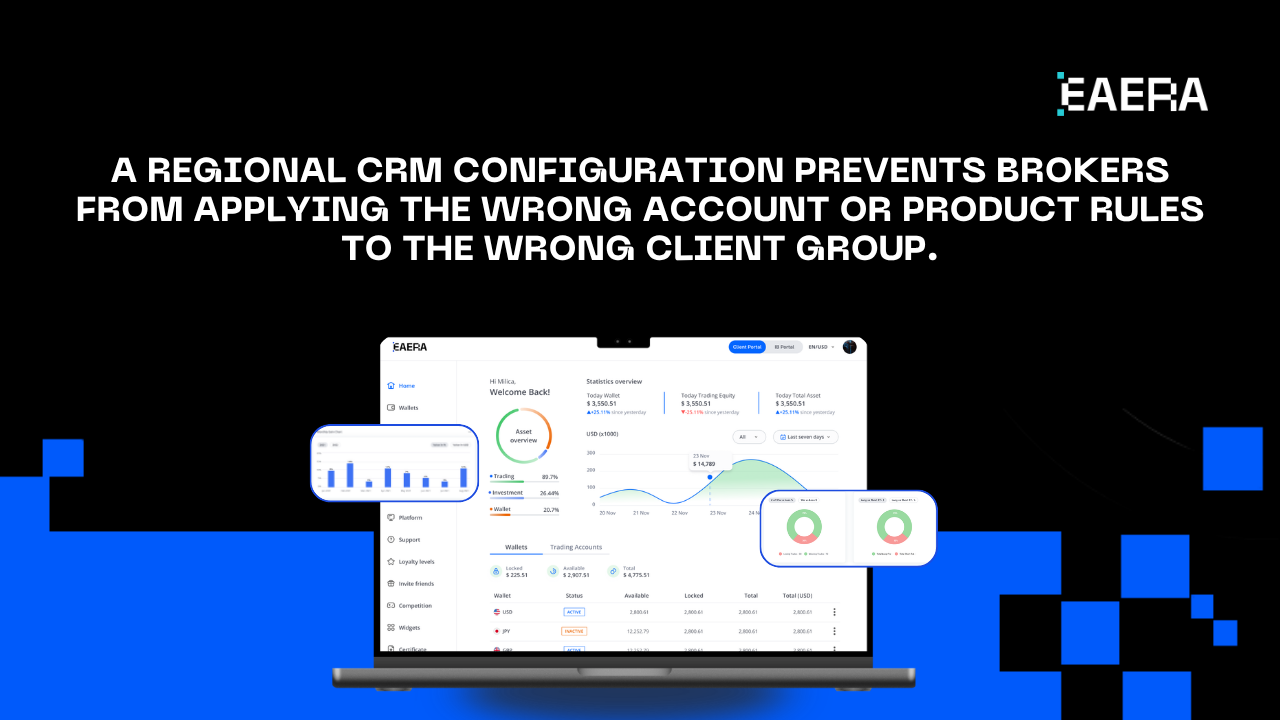
A regional CRM configuration prevents brokers from applying the wrong account or product rules to the wrong client group.
Balance Global Control with Local Flexibility
For multi-region brokers, the biggest challenge is the trade-off between consistency and localization. A broker needs global control over client data, permissions, reporting, approvals, and audit trails. At the same time each region may require different onboarding steps, KYC checks, payment options, communication templates, support ownerships and product access rules.
A multi-region forex broker CRM should help brokers create a single global operating structure and enable regional teams to establish local workflows where required.
Multi-region brokers can also leverage EAERA to enable a connected CRM environment with global teams getting visibility and regional teams getting localized onboarding, payments, support and trading account workflows.
| CRM Layer | Global Control | Local Flexibility |
| Client data | Unified profile fields | Region-specific required fields |
| KYC | Standard review visibility | Local document rules |
| Payments | Central transaction tracking | Regional payment methods |
| Teams | Role-based permissions | Local sales/support ownership |
| Reporting | Global dashboards | Regional performance views |
The right forex broker CRM allows brokers to operate a consistent global operation while tailoring client workflows to each region.