



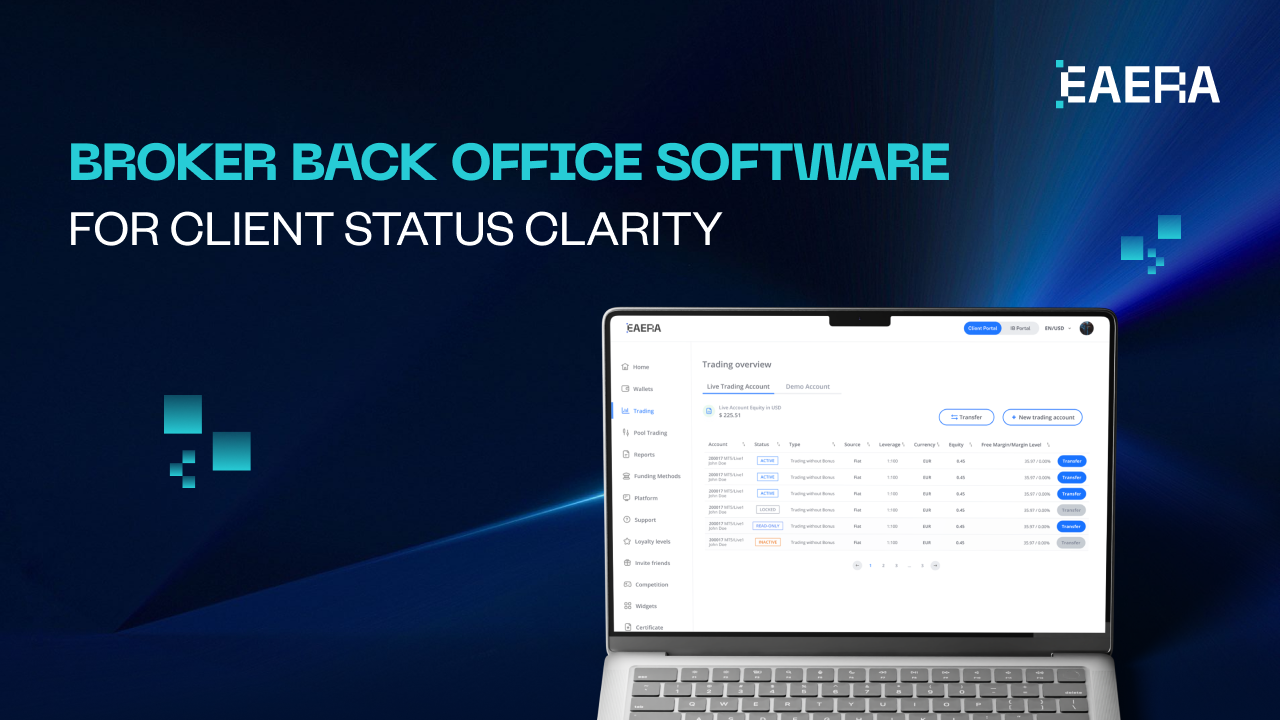
Broker back office software provides brokerages with clear visibility into client status through onboarding, KYC, payments, trading accounts, support and reporting. When client status is unclear, teams waste time checking multiple systems, clients get inconsistent answers, and managers lose visibility into where clients are blocked.
Related articles:
- Broker Back Office Software: Cut Ops Costs 40%
- 5 Best Practices FX Brokers Must Know for Back Office Software
This article covers the importance of clarity around client status, the statuses brokers need to track, and how back-office software helps teams make faster, more consistent operational decisions.
Why Client Status Clarity Matters for Brokers?
Client status is the most important piece of operational data in brokerage management. It specifies if the client is new, pending verification, approved, restricted, funded, active, inactive, under review or blocked.
When client status is unclear, your entire team has to make guesses. This data blind spot leads Sales to send the wrong follow-up, Support to misdiagnose withdrawal issues, and KYC teams to assess cases completely out of context. Ultimately, this friction leads to erratic financial approvals and messy, mistimed trading account access.
Great individual teams mean very little if their systems don’t talk to each other. When data is siloed, your operation suffers. A client may be approved in one department and still be pending in another, leaving a fully funded user stranded and unable to trade. Worse, when a restricted client contacts support, front-line agents are left completely guessing as to why the account was locked.
Broker back office software should provide a single source of truth for client status across departments. The system should display the client’s lifecycle stage, current restrictions, upcoming tasks, and next course of action, rather than requiring teams to manually verify every detail.
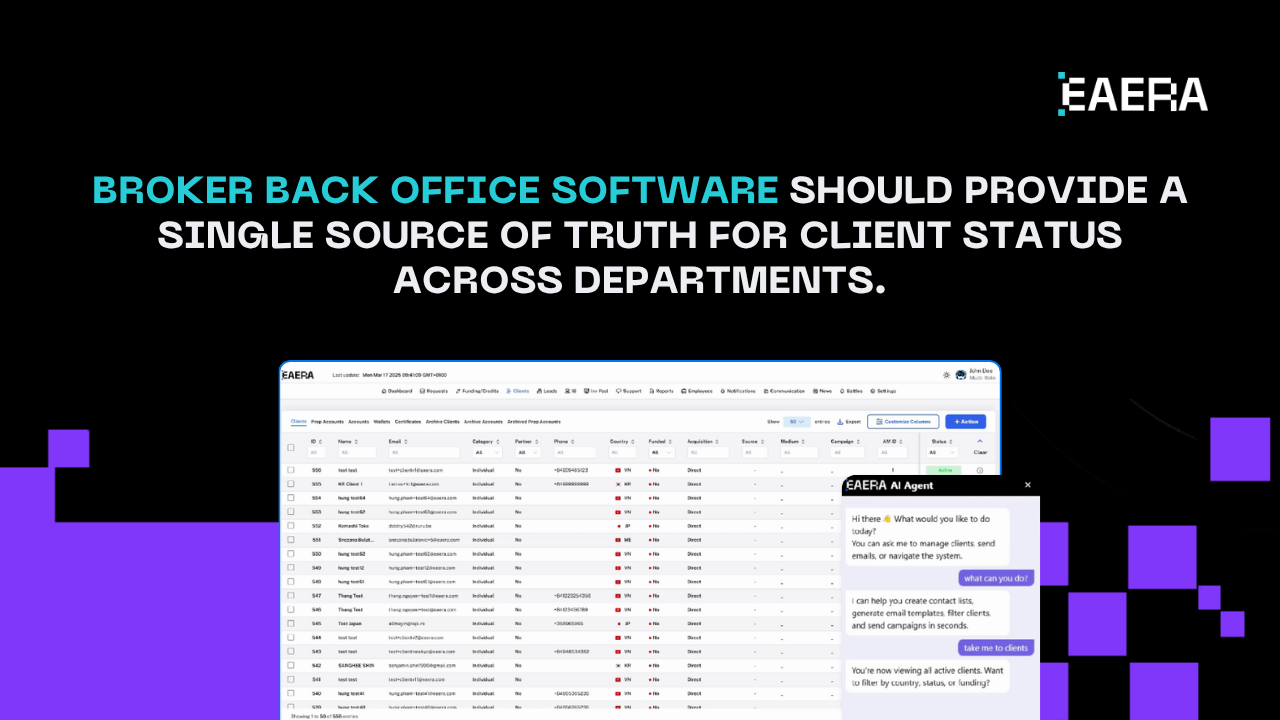
Clear status reduces confusion, speeds handoffs, and improves client experience. It also helps managers to see where clients are blocked, and which teams need to act on.
The Core Client Statuses Brokers Should Track
A broker cannot have clarity without understanding client statuses. Unless clearly defined, terms like “pending”, “active”, or “approved” may have different meanings to different teams.
For example, “pending” can mean pending KYC docs, pending manual review, pending payment approval, or pending trading account setup. “Active” may mean the client is logged in, funded, trade-ready or trading. Without clear definitions, teams may act based on assumptions.
Broker back office software should help brokers define and track statuses such as:
- New lead
- Registered client
- KYC
- Restricted
- Deposit attempted
- Funded
- Trading account
- Blocked or disabled
Each status should have a clear meaning, next action, owner, and visibility rule. Funds should be triggered when KYC is approved. “Funded” should bring up trading account readiness checks. “Dormant” should start a retention review. “Blocked” should indicate what is being blocked and why.
A good status system is more than descriptive. It should make people do something. The best status design helps teams answer four questions quickly: Where is the client right now? What is blocking progress? Who owns the next step? What should happen next?
How Client Status Connects KYC, Risk, and Account Access?
KYC status is one of the most important client status layers. A client may be registered but not verified, verified but restricted, or approved but still requiring review for certain actions.
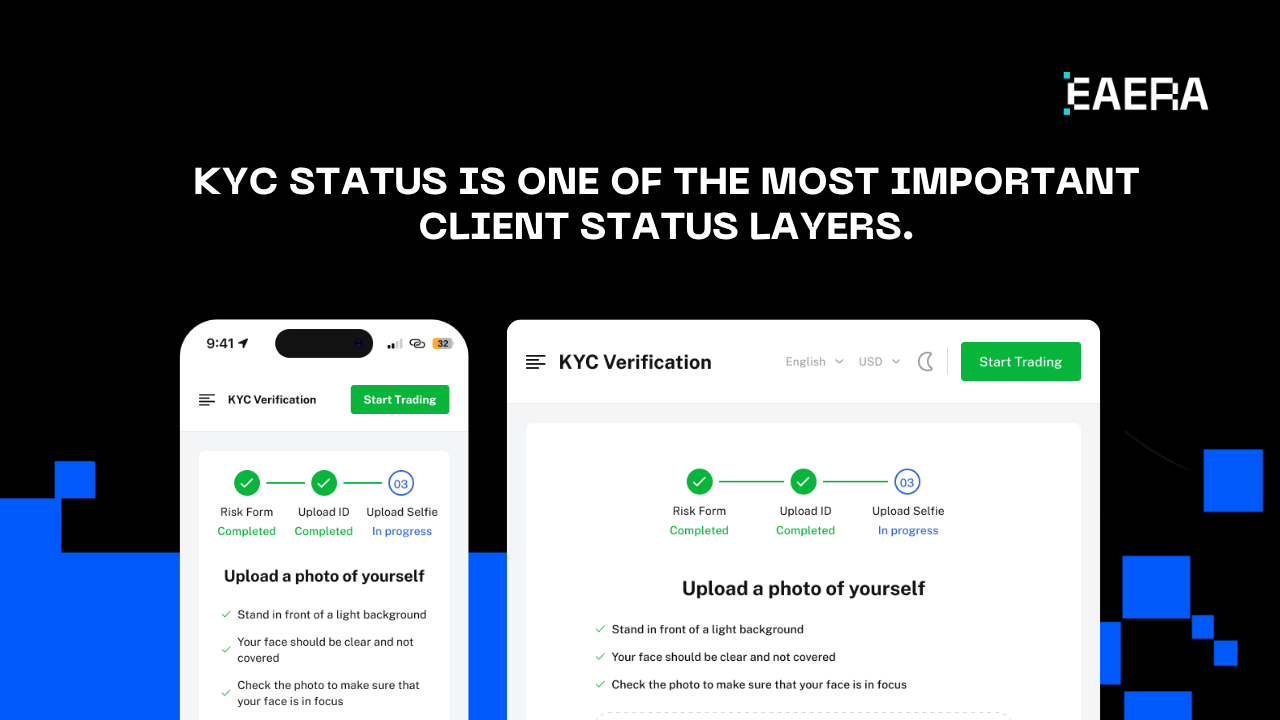
Broker back office software needs to associate KYC and risk status with: required profile fields, document submission status, verification results, approval or rejection reasons, risk categories, manual review notes, account access rules, product eligibility, trading account creation permission, withdrawal eligibility.
Status should be the gatekeeper of your client’s experience. Instead of just tracking where a user is, your system should use their status to decide what they can and can’t do. Trading should automatically be restricted with a “KYC Pending” tag, accounts should be flagged for approval with a “Under Review” status, and explicit rejection reasons should arm your support team before they even open a ticket. By tying capabilities to status, you ensure that risk management and compliance are built into every interaction.
The best broker back office software should help teams understand not only the client’s status, but what that status allows or restricts.
That cuts down on inconsistent decisions. Without connected status rules, one team could approve an action, and another team could believe the client is still restricted. With clear status logic, the system can direct teams to the right action and avoid unnecessary mistakes.
Knowing who is in what status also helps with audit readiness. Brokers can see why a client was approved, restricted or blocked with approval decisions, rejection reasons, notes from manual reviews and access changes logged in one place.
How Client Status Connects Payments, Wallets, and Trading Accounts?
Between funding and trading activity, many broker status issues arise. A client can be approved but not funded, funded but not ready for trading or ready for trading but inactive.
Broker back office software should be able to link the client status with the deposit request status, failed deposit reasons, wallet balance, withdrawal request status, finance approval status, internal transfer status, trading account creation, trading account funding, account lock or disable reason and first trade status.
A strong broker back office software setup should be able to tell you if the client is just funded, ready to trade or already active.
This distinction is important. A client with money in the wallet may not be able to trade if funds have not been moved to the trading account. A client with a trading account may still be blocked if the account is locked or missing approval. A client who deposited successfully may not be activated if the first trade has not happened.
Clear payment and trading account status reduces revenue leakage for brokers between deposit and first trade. This also helps teams answer customer questions faster because they can see payment, wallet, account, and activation status in one view.
How Status Clarity Improves Support and Internal Handoffs?
Support teams often become the first place where status confusion appears. Clients ask why KYC is pending, why deposits fail, why withdrawals are delayed, why accounts are restricted, or why they cannot trade.
If the status is not clear, support must ask KYC, finance, back office or trading operations for update. This leads to slow responses, repeated internal messages, and inconsistent client communication.
Broker back office software should give support teams visibility into client lifecycle stage, KYC status and rejection reason, payment and wallet status, withdrawal review stage, trading account status, account restrictions, open support tickets, communication history, approval records, and the responsible team or owner.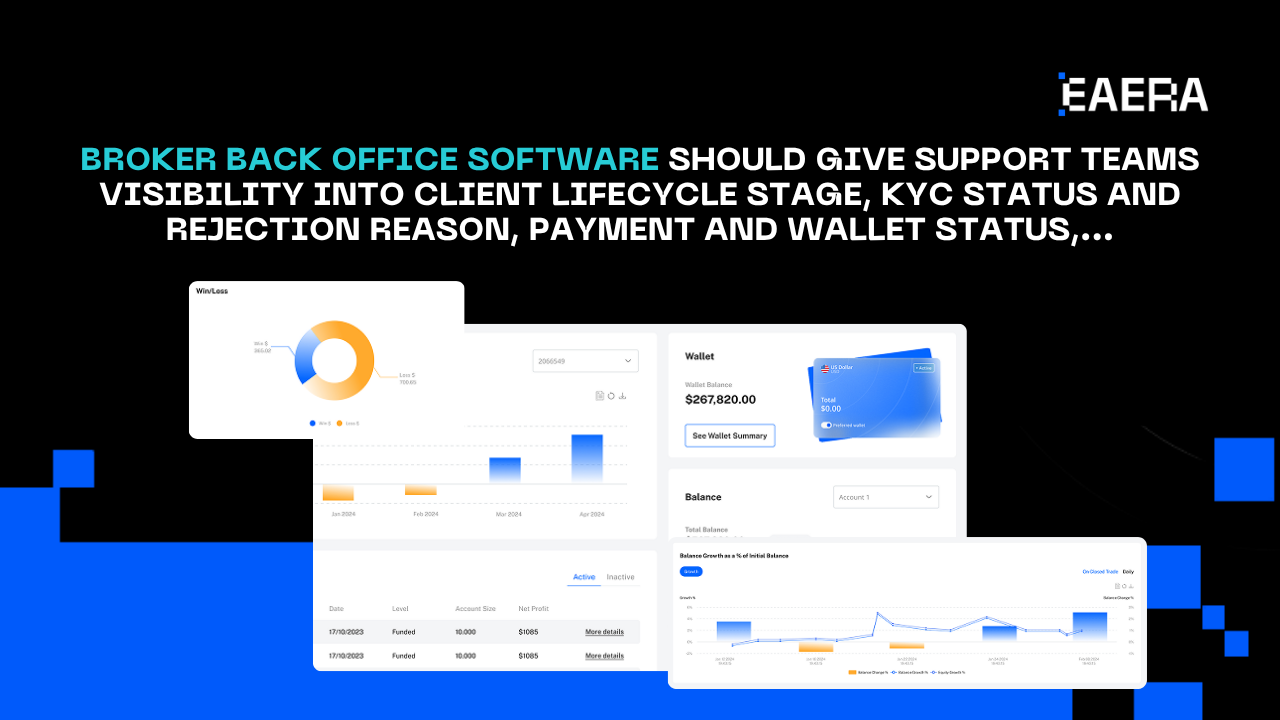
Supporting a single, shared view takes the guesswork out of customer service. Agents don’t have to dig for answers; they instantly see if a withdrawal is stuck in manual review or why a trading account was disabled.
Status clarity also helps with internal handoffs:
- Sales can see whether a client is verified or still pending.
- Finance can determine whether a withdrawal is ready for review.
- KYC teams can identify missing or rejected documents.
- Retention can see whether a client is dormant, restricted, or blocked by an unresolved issue.
- Support can route cases to the right team with full context.
When teams are on the same client status view, support is quicker; internal handoffs are cleaner.
Broker back office software helps brokerages centralize this information and turn status data into clear next steps.
Enhanced client status transparency benefits growing brokers with onboarding, activation, support quality, reporting and operational control.