



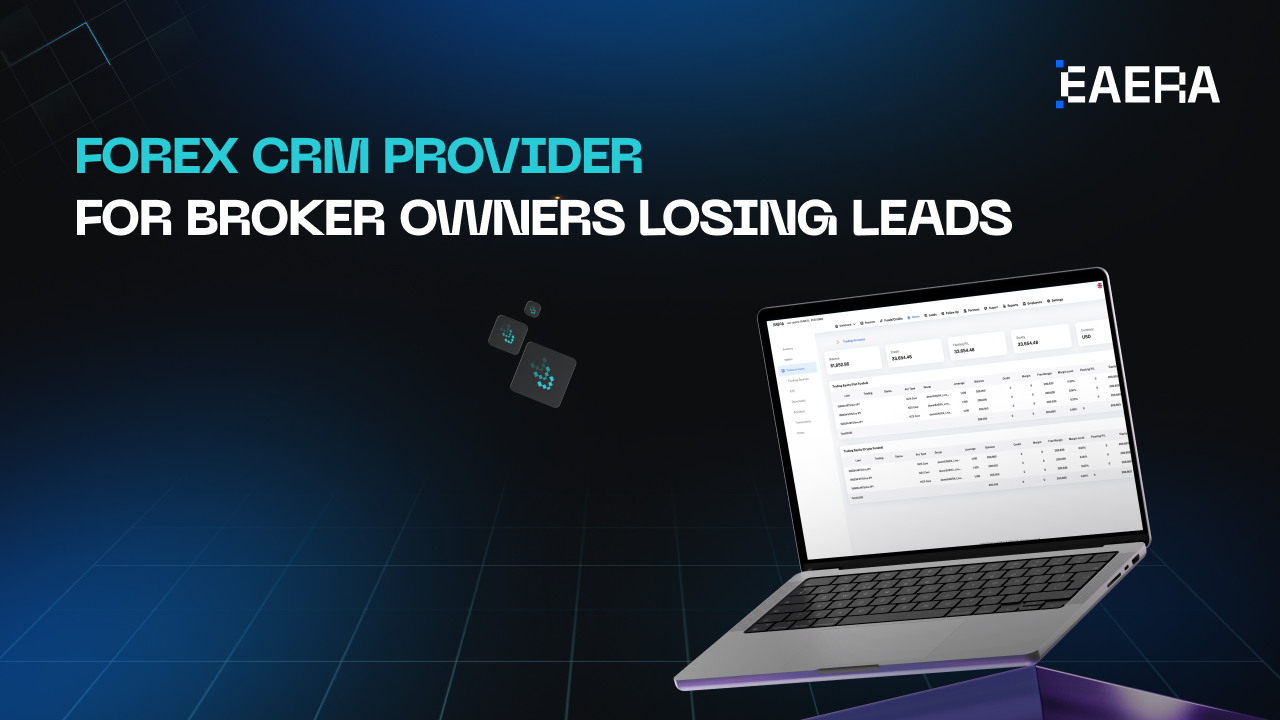
A forex CRM provider helps brokers centralize those stages, define ownership, automate follow-up and measure where prospects stop moving forward.
Lead loss usually isn’t the outcome of one missed call or one weak campaign. The bigger issue for broker owners is often poor visibility across the entire conversion journey – lead capture, assignment, follow-up, registration, KYC, funding and first trade.
Related articles:
- Forex CRM: How to Choose the Best Provider for Your Brokerage
- Best Forex CRM Agency: How to Improve Trader Activation?
Lead Leakage Starts When the Conversion Journey Is Not Visible
Broker owners can see the spend on campaigns and the total volume of leads but have no visibility of what happens once a lead enters the system. The lead can be assigned late, contacted randomly, registered without KYC, approved without deposit or funded without the first trade.
This gives an inaccurate picture of performance. Marketing may feel they are generating enough leads. Sales might think follow-up is occurring. Operations may believe onboarding is moving. But without lifecycle visibility, the owner cannot see where revenue is leaking.
A professional lead journey should track:
- Leads
- First response completed
- Registration started
- Registration completed
- KYC status
- Deposit attempted
- Deposit completed
- Trading account funded
- First trade completed
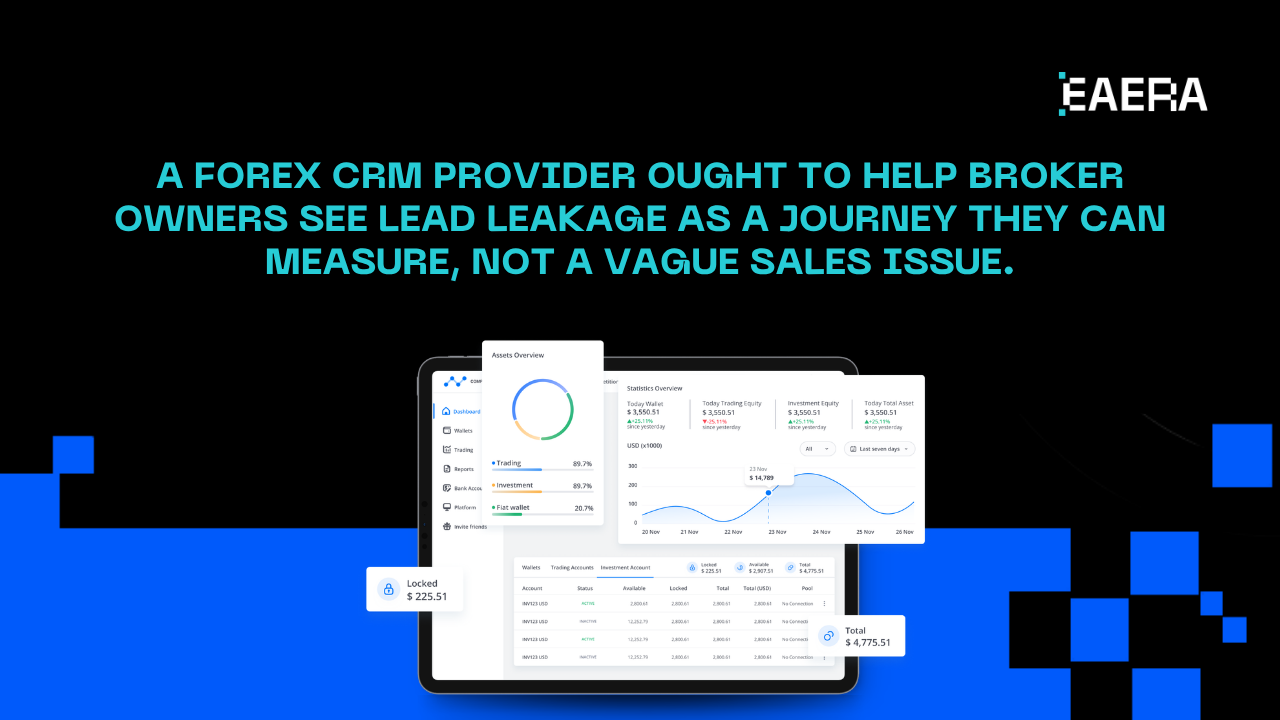
A forex CRM provider ought to help broker owners see lead leakage as a journey they can measure, not a vague sales issue. The broker can see each stage and know if the problem is acquisition quality, slow response time, onboarding friction, payment failure, or weak activation.
Define Ownership Before Increasing Lead Volume
Once the lead journey is visible, the next issue is ownership. Leads are often lost because no one has clear ownership of the next step. This occurs when teams are using spreadsheets, chat messages, manual assignments, or informal sales processes.
A forex CRM provider should support clear ownership rules for:
- Automatic lead assignment
- Sales owner visibility
- Team or region-based routing
- Lead priority levels
- Follow-up due dates
- Overdue task alerts
- Reassignment rules
- Communication history
- Manager oversight
If the lead is from a campaign, landing page, IB referral, webinar, or demo request, the system should assign it to the right person or team immediately. The owner should be able to see the next action, and managers should be able to see if that action was done on time.

Lead ownership also eliminates duplication or conflict in communication. When you have two salespeople reaching out to the same prospect, it’s unprofessional for the client experience. The broker loses a paid opportunity if there is no follow up to the prospect. Both problems stem from weak ownership.
Before broker owners spend more on acquisition, they need to be sure that every existing lead is allocated, tracked and followed up properly. Ownership makes lead management an accountable sales process rather than an individual effort.
Measure Lead Quality by Conversion, Not Volume
Lead volume does not equal lead quality. A broker may generate thousands of leads from a campaign, but if those leads don’t register, complete KYC, deposit or trade, the campaign isn’t delivering real business value.
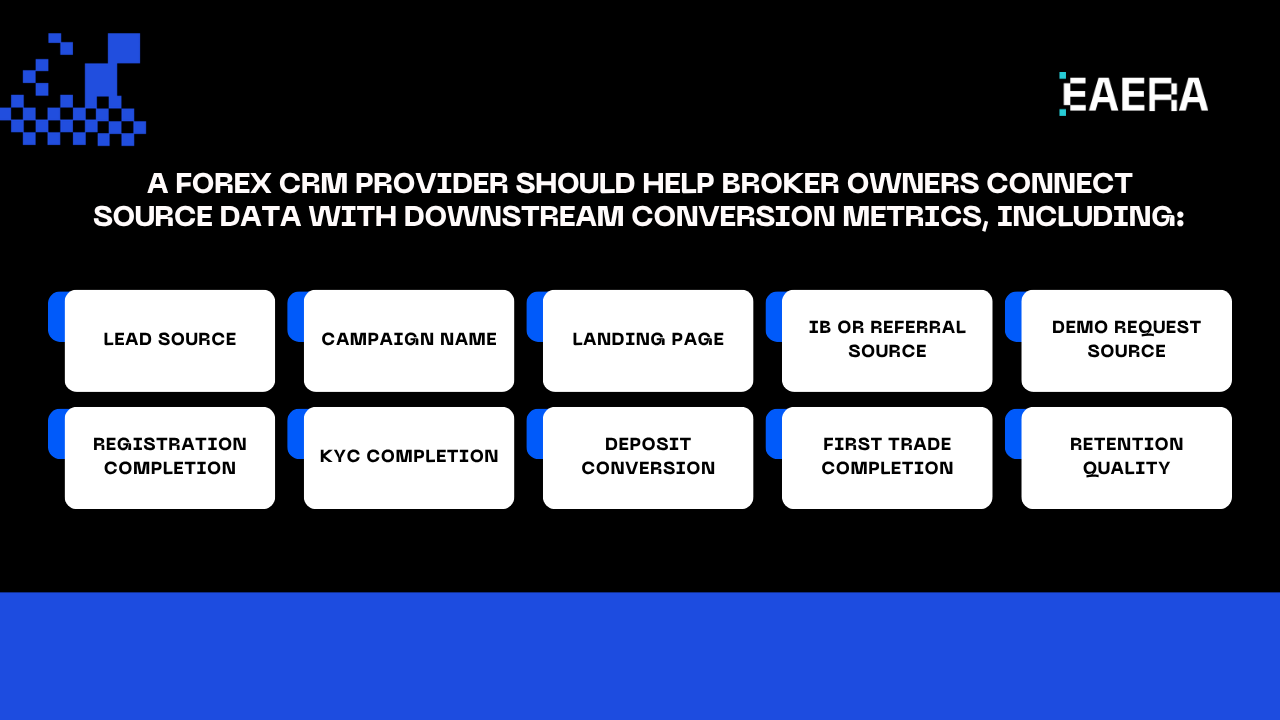
A forex CRM provider should help broker owners connect source data with downstream conversion metrics, including:
- Lead source
- Campaign name
- Landing page
- IB or referral source
- Demo request source
- Registration completion
- KYC completion
- Deposit conversion
- First trade completion
- Retention quality
This enables broker owners to compare acquisition channels with business results. For example, a campaign might be generating a lot of leads but a low KYC completion rate. Another source can generate less leads, but better deposit conversion and first trade conversion. An IB may bring a lot of registrations, but few active traders.
The goal is to identify which channels bring in customers who complete the whole journey and provide value over the long term.
Control Drop-Off Across Registration, KYC, and Funding
Many brokers lose leads after the first conversion point. Some prospects may become a registered client but still not complete KYC. Never Deposited, a Verified Client. A deposited client can’t fund a trading account or place a first trade.
A forex CRM provider should help broker owners monitor each operational conversion point:
- Registration started but not completed
- Profile incomplete
- KYC submitted but pending review
- KYC rejected with missing documents
- KYC approved but no deposit
- Deposit attempted but failed
- Deposit completed but no trading account funded
- Trading account funded but no first trade
A strong forex CRM provider will help the broker owners understand whether the leakage is due to sales follow-up, onboarding friction, KYC delays, payment issues, or weak activation workflows.
Each drop-off needs a different response.” Sales reminder for abandoned registration? Onboarding message when KYC docs are missing. Support intervention may be needed on failed deposits. Funded accounts without first trade may require product guidance or follow-up on activation.
Lifecycle tracking makes lead loss specific, diagnosable, and actionable.
Recover Leads with Timely Automation and Context
Where leaks are visible, brokers need a system that helps teams respond quickly. Timing is everything. It is easier to recover a lead that has had a relevant follow-up in the right window than one that has gone cold.
A forex CRM provider should support automation for:
- New lead assignment
- First response reminders
- Abandoned registration follow-up
- Missing KYC document reminders
- KYC approval-to-deposit prompts
- Failed deposit alerts
- Funded wallet-to-account setup tasks
- No first trade activation tasks
- Dormant lead reactivation
- Manager escalation for overdue actions
Automation shouldn’t replace sales or support teams. It should make sure the right team does the right thing at the right time with the right client context. A failed deposit alert is only useful if the team can see the payment method, failure reason, client status, and owner.
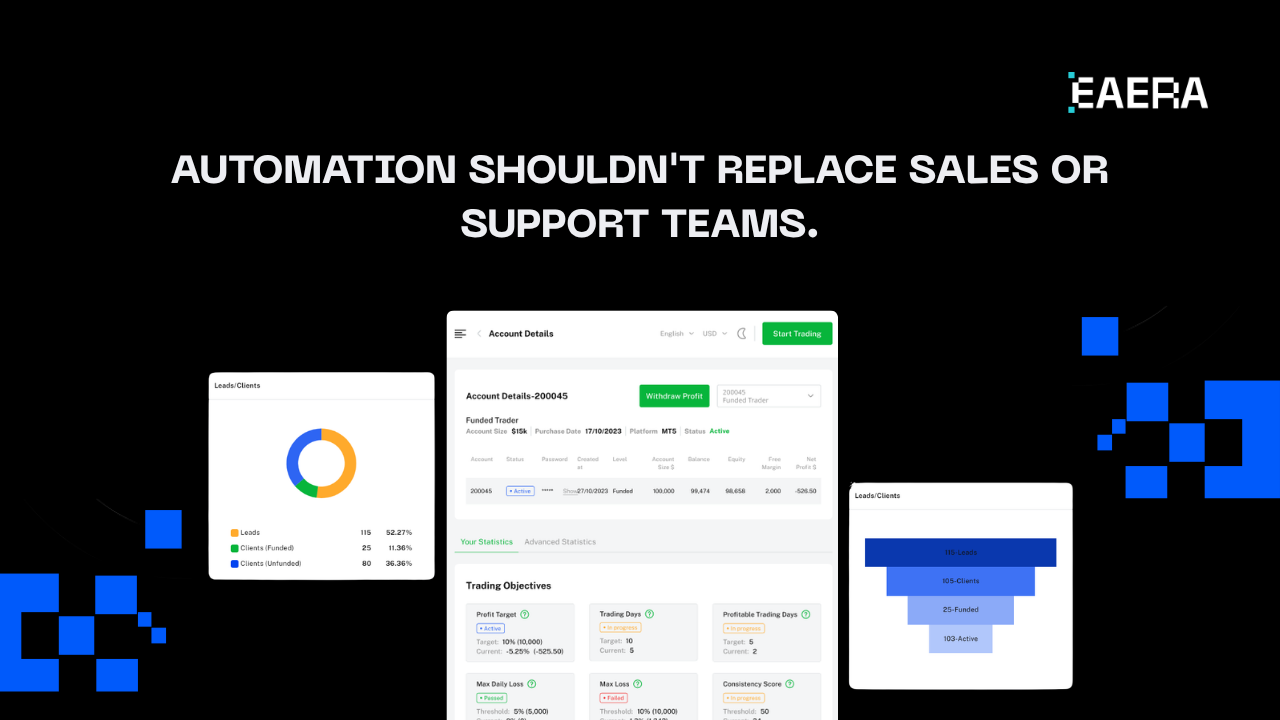
Recovery workflows are much more effective when automation is tied to lifecycle status rather than generic mass messaging. A client who is missing documents should not get the same message as a client who failed a deposit. A verified client with no first trade needs a different workflow than a funded client with no deposit.
At the right time, automation helps brokers recover prospects when their intent is still active. It also helps managers reduce dependency on memory, manual tracking, and repeated internal reminders.
A forex CRM provider helps brokers centralize lead data, assign ownership, track lifecycle conversion, automate recovery workflows, and report on performance.
For broker owners, the right CRM partner turns lost leads into visible actions, accountable teams, and clearer revenue opportunities.