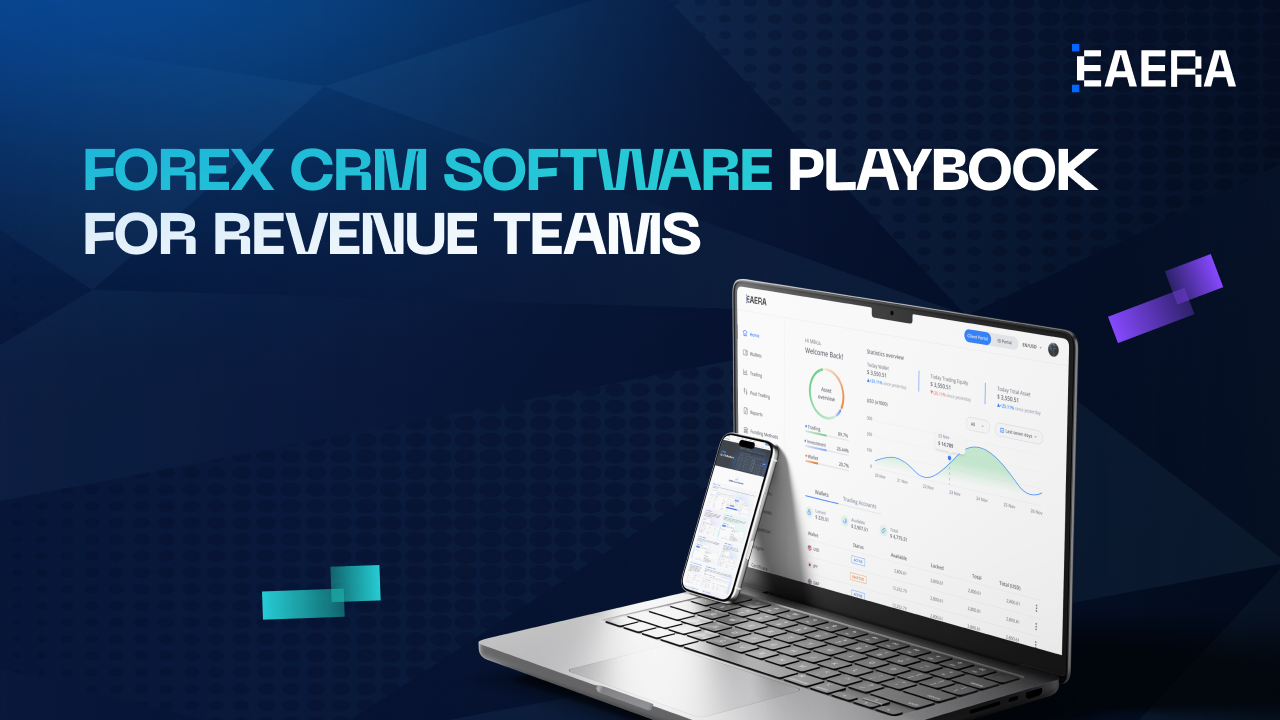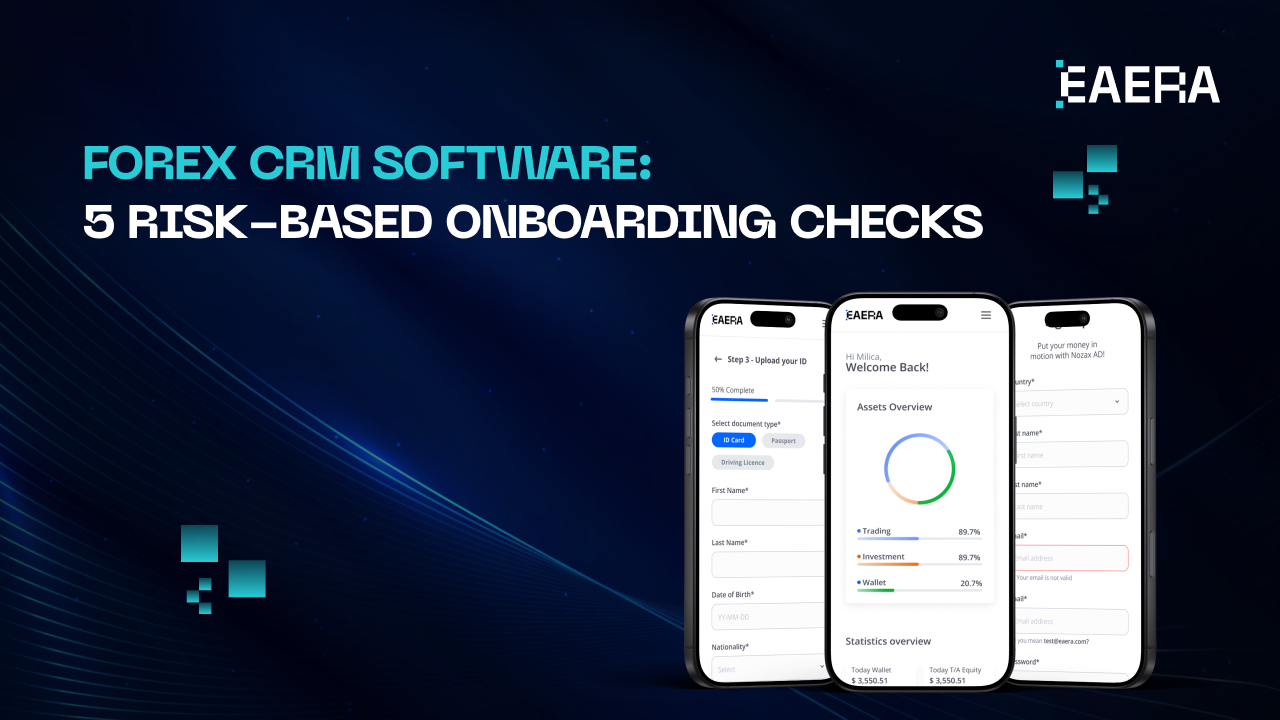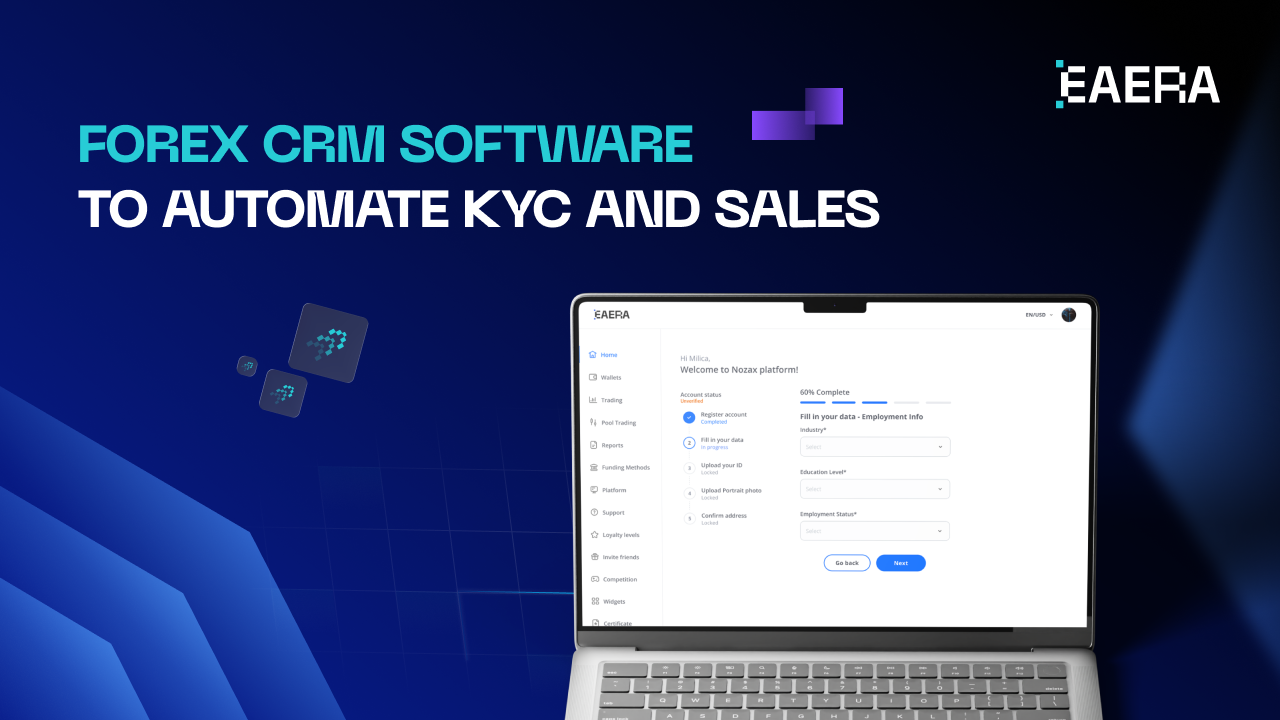




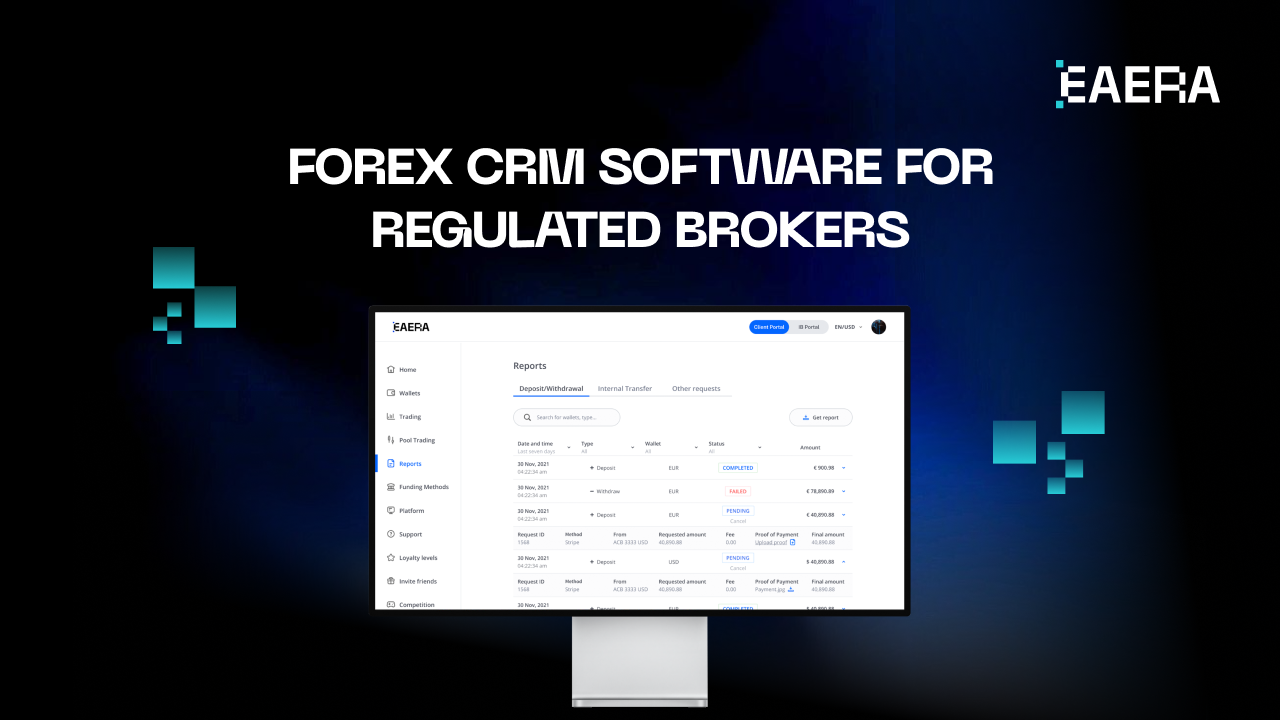
Forex CRM software for regulated brokers is more than a sales management tool. It is an operational control layer that connects client onboarding, KYC, payments, trading account access, support, reporting, and internal approvals in one structured environment.
Related articles:
- Best Forex CRM Software in 2026: Comparison for Brokers
- The Role of Quality Forex CRM Software in Managing Broker Operations
For regulated brokers, every client action can have implications for compliance, risk or service. One path for a client who registers but doesn’t complete KYC. Verified client with restrictions needs another one. Need operational visibility for a funded client waiting for trading account access.
Regulated Brokers Need More Than a Basic Forex CRM Software
A basic CRM might store leads, assign sales owners, and record communication history. This is helpful, but it is not enough for regulated brokerage businesses. Regulated brokers need a system that bridges the commercial journey with operational checkpoints.
Forex CRM software must assist regulated brokers in managing the entire client lifecycle – from verification status to payment actions, access to the trading account, approval records, permissions and reporting. If this link is missing, teams may be making decisions based on partial information.
Sales might reach out to a client unaware if KYC is declined. Support can answer a question about a withdrawal without seeing that the client is under review. Finance may require approval history before processing a transaction. Management may want to know what causes the delay between client onboarding and first trade.
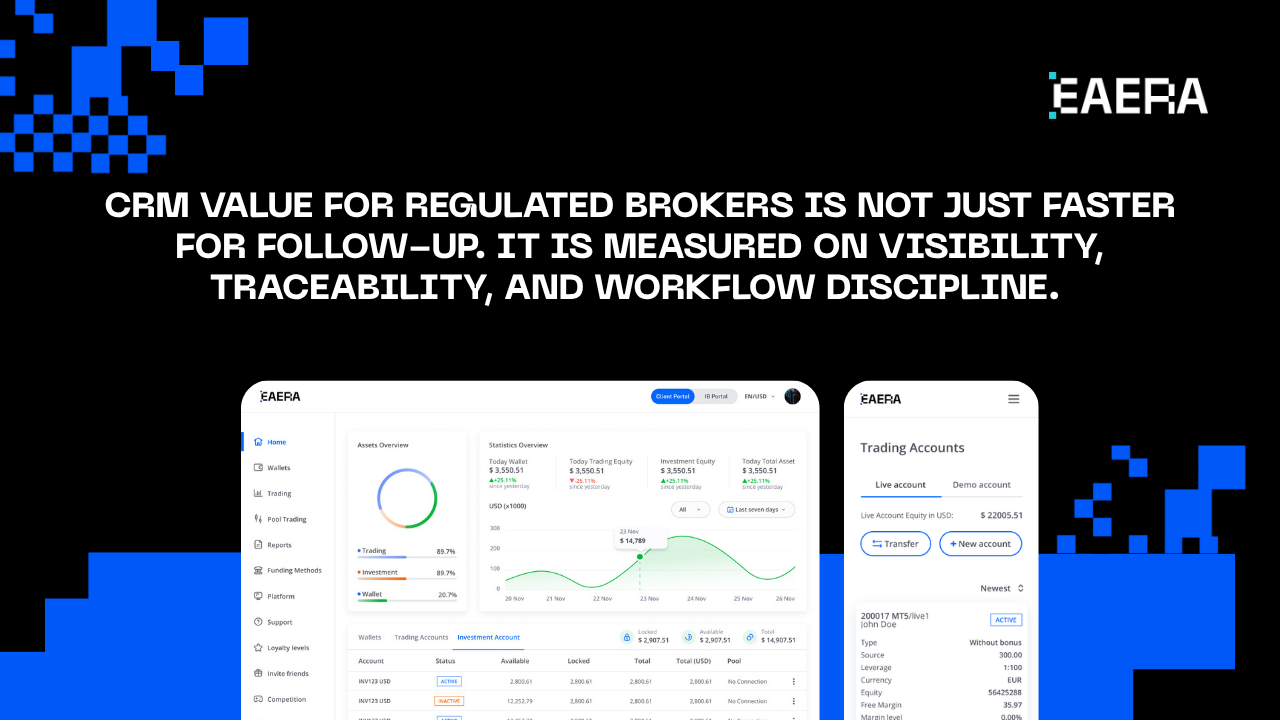
CRM value for regulated brokers is not just faster for follow-up. It is measured on visibility, traceability, and workflow discipline.
KYC Visibility Must Be Built into the Client Journey
KYC is one of the most critical workflows for regulated brokers. It should not be a manual process outside the client journey. A regulated broker should know if the client is registered, profile incomplete, pending documents, under review, approved, rejected, restricted or requires enhanced due diligence.
Forex CRM software should support clear KYC visibility across:
- Required profile fields
- Document submission status
- Missing document reminders
- Approval and rejection reasons
- Manual review queues
- Risk category
- Regional restrictions
- Review history
A regulated broker should not have to rely on informal messages between departments to know what the client’s status is. The CRM should make progress on KYC visible and actionable.
Clear KYC visibility reduces onboarding confusion, improves internal coordination, and helps brokers move clients forward with fewer errors.

Case Study: UK CFD Broker and Consumer Duty Pressure
For a UK CFD broker, operating under higher conduct expectations, CRM cannot be a sales tracker. The broker must demonstrate that it is handling client communication, product access, complaints, fees, and service outcomes. The FCA has warned CFD providers they need to meet standards set out in Consumer Duty including straightforward communication, fair value and products or services that are aligned to customer needs.
In this context, forex CRM software can assist a UK broker to connect the client lifecycle data to service and operational metrics. For example, the CRM can tell you if a client was given clear onboarding steps, if the KYC process was delayed, if support tickets are unresolved, if withdrawals are aging, or if a client was moved to a professional category workflow.
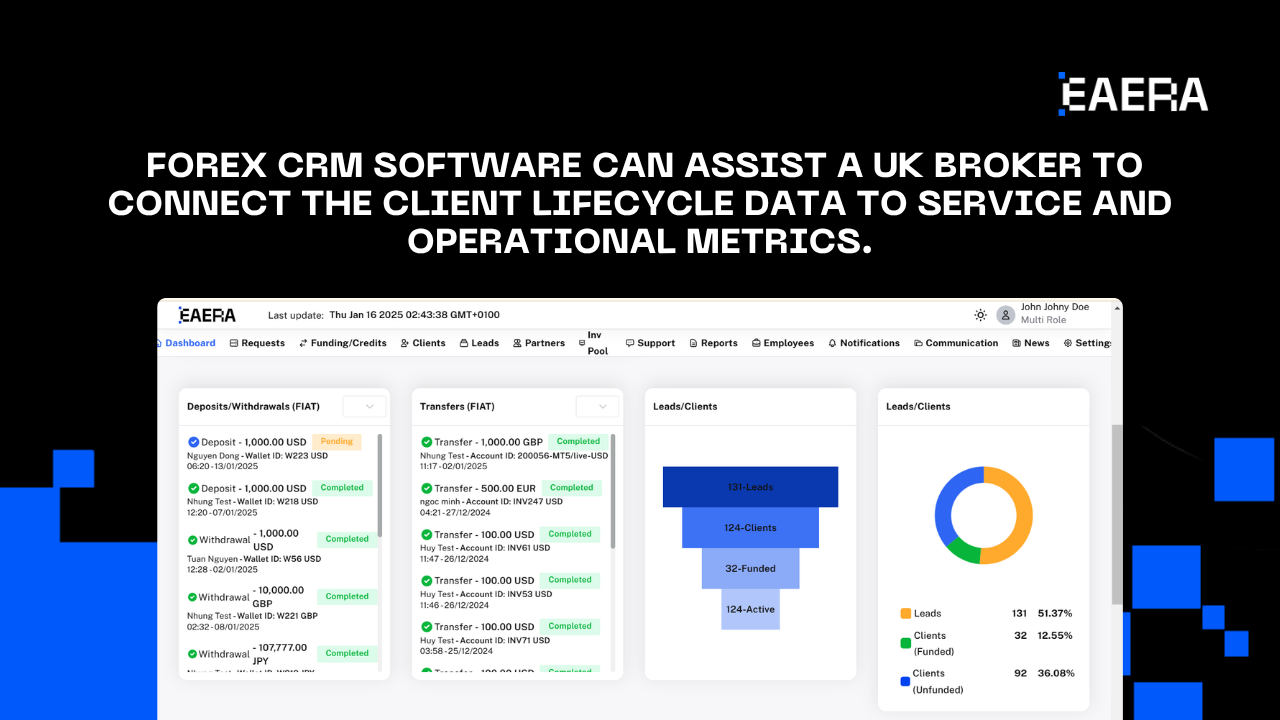
The case is about giving teams more clarity on how to operate. In case a client complains about a funding charge or withdrawal delay, support and management should be able to see the client’s account history, communication records, payment status, and responsible team.
For a regulated UK broker, CRM control helps link daily activities to better oversight. It helps teams identify where service is lacking before it becomes a bigger client or regulatory issue.
Permissions, Approvals, and Access Rules
Controlled access to sensitive client information, payment records, documents, and actions in a trading account is required by regulated brokers.
Forex CRM software should help brokers manage:
- Role-based permissions
- Department-level access
- Sensitive data visibility
- Approval workflows
- Client account restrictions
- Trading account creation rules
- Withdrawal review permissions
- Manual override records
- User action history
- Audit trails
Not all team members should be able to view or change the same information. Sales might need life cycle status and communication history. Document records and review notes may be needed for compliance. Finance might need transaction and withdrawal status. Support may need sufficient context to answer clients without accessing unnecessary sensitive data.
Permissions and approvals allow regulated brokers to scale internal teams without losing control of sensitive workflows.
Case Study: US Broker and AML/CIP Workflow Control
Another example of the importance of CRM structure is the US with its requirements for AML and customer identification. The CFTC notes that AML programs apply to the relevant futures and introducing broker situations, while the NFA guidance pertains to the customer identification program requirements under AML programs.
The challenge for a US broker is not just the collection of client information. This means having documented procedures, clear customer identification workflows, review logs, and escalation logic. This is the place where forex CRM software can help with daily control.
A CRM can be useful for team members to track if required identification fields are complete, if documents were submitted, if the client requires review, if account access is limited, or if suspicious or unusual workflow triggers require escalation.
A practical US-style workflow may look like this:
- Client registers and completes profile fields
- Required identity information is collected
- Documents are reviewed
- Risk category is assigned
- Account access is approved, restricted, or escalated
- Review actions are recorded
- Ongoing activity is monitored through reports and alerts
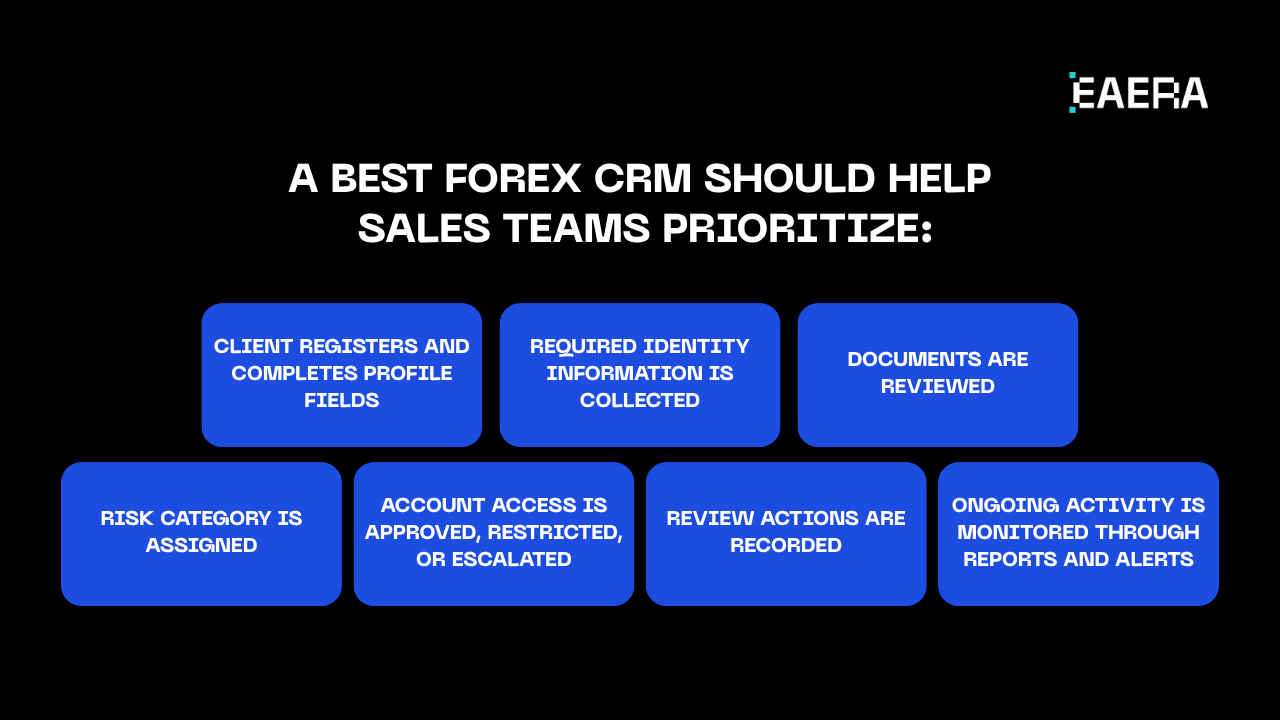
The CRM is not a replacement for legal obligations or AML systems. But it can help regulated teams maintain cleaner client records, more task ownership, and clearer visibility across onboarding and account access.
Payment, Wallet, and Trading Account Control
Payments and trading account flows are high-control areas for regulated brokers. A client might be authenticated but not have permission to do particular things. Withdrawal may be subject to review. Funds could be kept in a wallet without moving them into a trading account. Accounts may be funded but not allowed to trade.
Robust forex CRM software allows brokers to see if a client is registered, verified, funded, trade-ready, active, restricted or pending review.
This clarity allows the teams to act correctly. If a deposit fails, support should be able to see why. The money is in the wallet and not in the trading account. If so, the operations should see the activation gap. If withdrawal is in pending review status, finance and support should show the same status.
For regulated brokers, EAERA can enable a more connected environment across onboarding, KYC, payments, trading account access, support, reporting, permissions and workflow control.
Forex CRM software assists brokers to consolidate client data, cut down manual synchronization, and to keep more transparent operational records.
The best CRM for regulated brokers is one that promotes visibility, traceability, team ownership and consistency of decision making across the entire client lifecycle.