



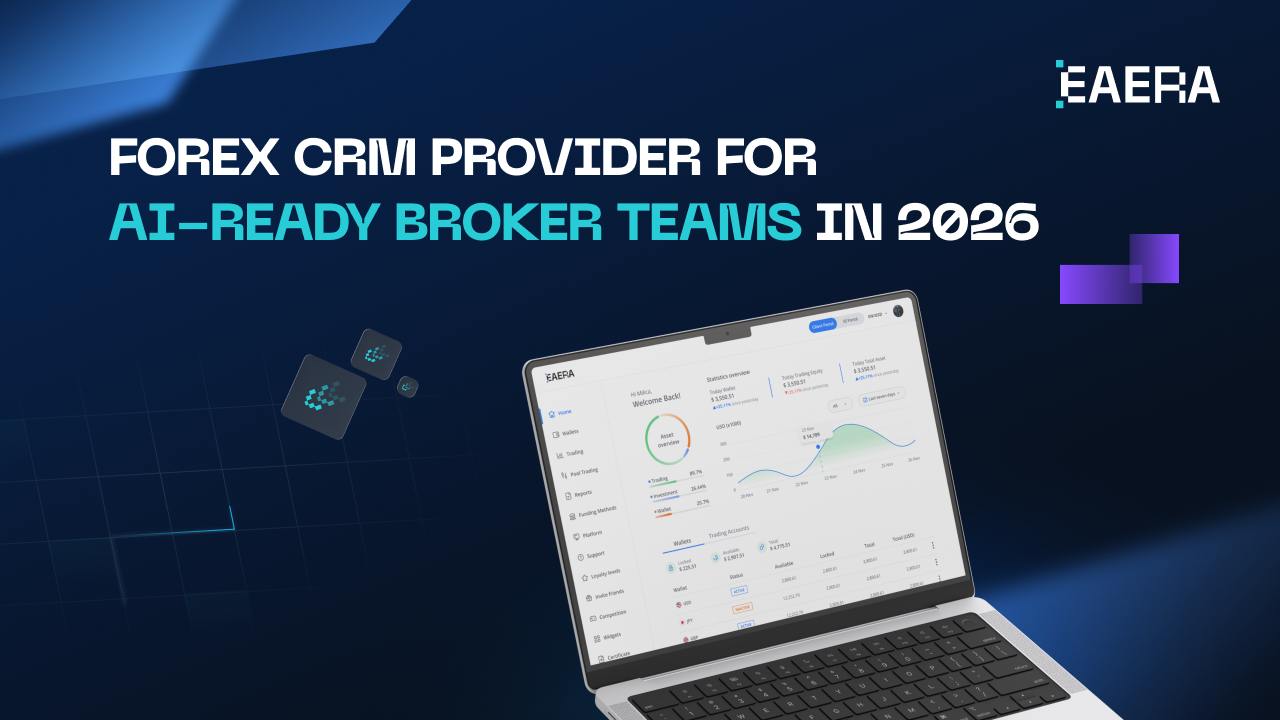
An AI-ready broker team does not begin with an AI tool. It starts with clean data, connected workflows, automated lifecycle tracking, and reliable client visibility. Without this base, AI is merely an amplification of operational noise.
The right forex CRM provider should help brokers to automate and AI-supported decision-making and prepare their sales, onboarding, compliance, funding, trading, partner, and retention workflows.
Related articles:
- 10 Reasons Why You Should Get a Forex Broker CRM
- Forex CRM: How to Choose the Best Provider for Your Brokerage
What “AI-Ready” Means for Broker Teams?
AI readiness does not mean that a broker has added a chatbot, an AI email writer or a basic automation widget. These tools might be helpful, but they don’t actually make the broker operation AI-ready.
An AI-ready broker team is one that can tap into automation and AI-supported insights because client data, workflows, and operational decisions are structured, connected, and measurable.
For brokers, this requires a strong operational foundation.
An AI-ready broker team needs:
- Clean client data
- Unified client profiles
- Lifecycle stage tracking
- Clear ownership and task logic
- KYC and compliance status visibility
Without these foundations, AI tools can deliver incomplete, irrelevant, or risky recommendations. For example, an AI sales recommendation may call for follow-up at the wrong time if a client’s KYC status is absent. If deposit history is disconnected, the team may miss a high-intent customer. If a trade activity is not connected to the CRM, retention signals are weaker.
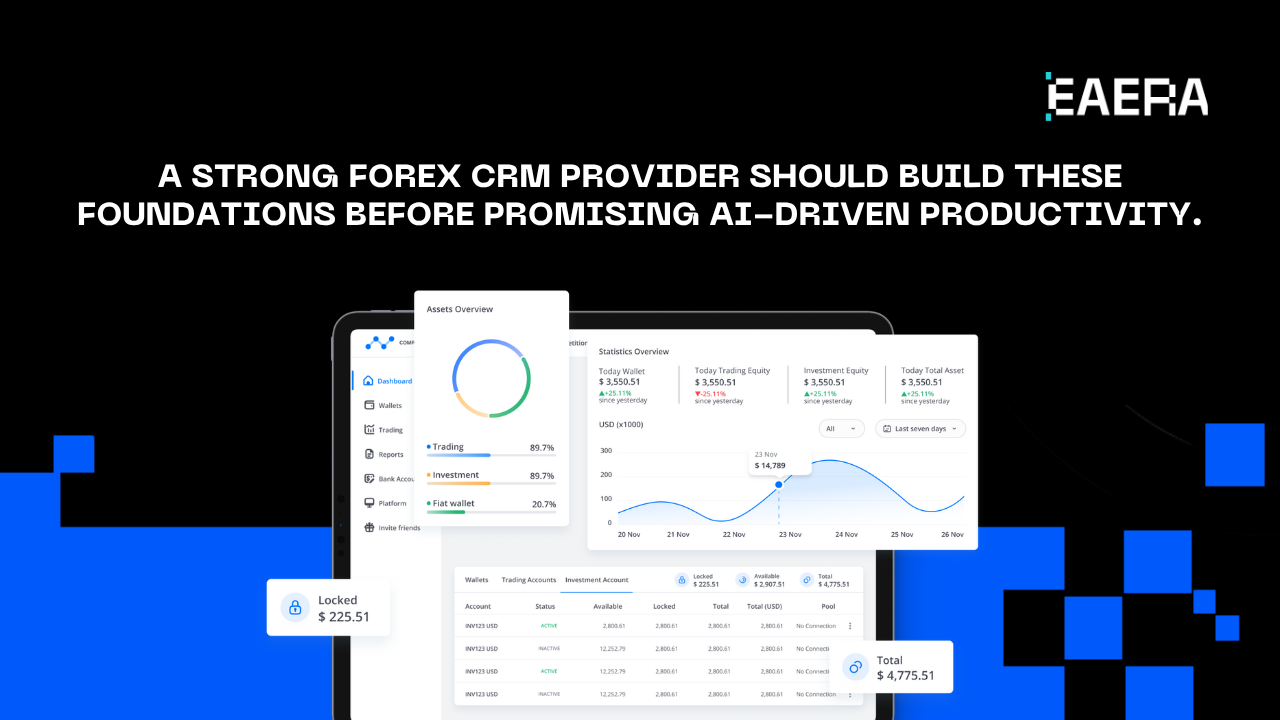
A strong forex CRM provider should build these foundations before promising AI-driven productivity.
Why AI Fails Without Connected CRM Data?
AI cannot create good decisions from fragmented data. If sales note, KYC status, payment history, trading activity, support cases and partner attribution are in different systems, AI’s output may be incomplete or misleading. It might seem sophisticated, but the recommendations will still be based on weak inputs.
Bad data creates serious operational risks.
Common problems include:
- Wrong client segmentation
- Missed KYC blockers
- Poor deposit follow-up
- Weak partner attribution
- Incomplete reporting
- Low trust in automation
This matters because broker teams rely on timing. Sales needs to know when a lead is ready. Compliance needs accurate verification status. Finance needs payment visibility. Retention needs activity signals. Partner teams need clear attribution.
If the CRM cannot connect these signals, AI cannot support the team properly.
The job of a forex CRM provider is not only to implement AI features. This is to ensure that the CRM data model supports accurate automation, lifecycle visibility, and controlled decision-making.
Bad data makes AI faster, not smarter. Brokers should fix data structure before scaling AI usage.

Core CRM Foundations for AI-Ready Broker Operations
A forex CRM provider should be helping brokers lay operational foundations that make AI useful, not risky. These are not optional bases. They’re the difference between controlled automation and confusing system noise.
1. Unified Client Profile
Every client should have one reliable profile covering source, communication history, KYC status, payment activity, trading accounts, partner attribution, support cases, and lifecycle stage.
2. Lifecycle Stage Tracking
The CRM should be able to track stages such as new lead, contacted, registered, KYC pending, verified, funded, active trader, inactive client, reactivated client, lost client.
3. Workflow Automation
CRM should be able to automate the leads assignment, reminders for KYC, failed payment alerts, trading account activation prompts, workflows for partner commissions, and retention triggers.
4. Data Governance
The CRM should be able to have required fields, duplicate checks, permission controls, audit logs, and consistent status logic.
5. Reporting and Analytics
The CRM should be able to show conversion rates, response times, KYC completion, deposit conversion, trading activity, inactive clients, partner performance, and revenue leakage.
The best forex CRM provider should help brokers turn scattered operational data into structured, usable intelligence.
AI-Ready Workflows a Forex CRM Should Support
A forex CRM provider should support workflows where automation and AI-assisted insights can create practical business value. The focus should be operational impact, not AI hype.
Sales Follow-Up
The CRM should help teams prioritize leads based on source, behavior, lifecycle stage, and intent signals.
An AI-ready use case could be next-best-action recommendations. For example, the system may suggest contacting a verified client who attempted a deposit but did not complete it.
KYC and Onboarding
The CRM should log verification status, missing documents, review queues, rejection reasons, and client reminders.
Payment Recovery
CRM needs to be able to show unsuccessful deposits, funding attempts, wallet issues, and pending finance actions. An AI-ready use case could be recommending recovery actions based on payment behavior, preferred funding method, or previous transaction history.
Retention Management
The CRM must monitor inactivity, trading volume decreases, and account status changes.
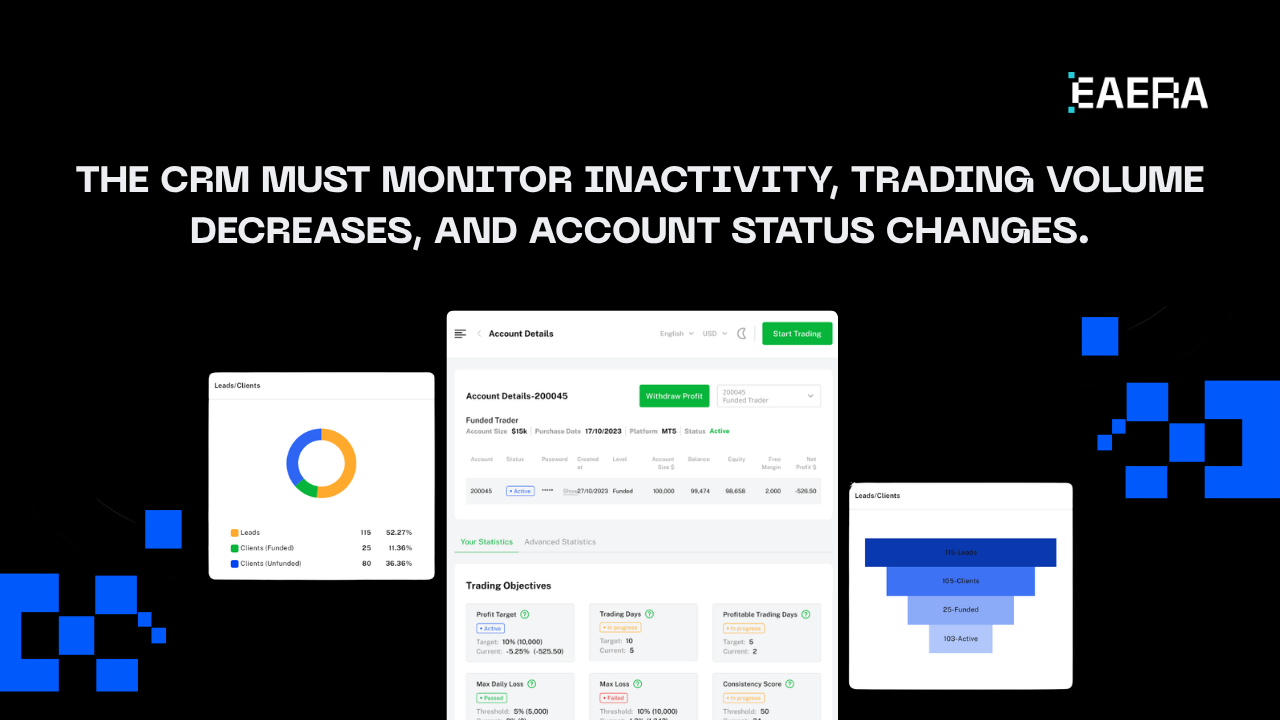
An AI-ready use case could be to segment dormant customers for reactivation campaigns before they are completely lost.
IB and Affiliate Operations
The CRM should link referral sources, partner hierarchy, commission status, and network performance.
An AI-ready use case could be identifying high-value partners, weak referral sources or attribution gaps that erode partner trust.
The right forex CRM provider needs to build AI readiness around operational control, not generic AI promises.
How to Evaluate a Forex CRM Provider in 2026?
The choice of a forex CRM provider should be based on operational readiness rather than UI design or feature count in 2026.
A modern UI is nice, but it doesn’t guarantee clean data, strong automation, or AI-ready workflows. Brokers should assess whether the provider is able to deliver the full operating model.
1. Data Structure
The provider should support clean client profiles, life cycle stages, required fields, duplicate controls, and consistent statuses. Weak data structure hampers AI readiness from the start.
2. Integration Readiness
The CRM should integrate with trading platforms, KYC vendors, payment providers, client portals, reporting tools, email systems, and partner systems. Connected data minimizes operational blind spots.
3. Automation Depth
It must lead to the automation of lead routing, KYC reminders, payment alerts, account activation, triggers for retention, commission workflows, and report generation. Visibility isn’t enough for broker teams.
4. AI Use-Case Readiness
The CRM should support realistic AI use cases, including lead scoring, lifecycle recommendations, risk alerts, churn signals, and reporting insights.
5. Governance and Permissions
The system should support audit trails, role-based access, approval workflows and controlled data visibility to protect sensitive broker operations.
6. Scalability
The CRM should scale across more clients, brands, regions, teams, partners and products without creating workflow bottlenecks.
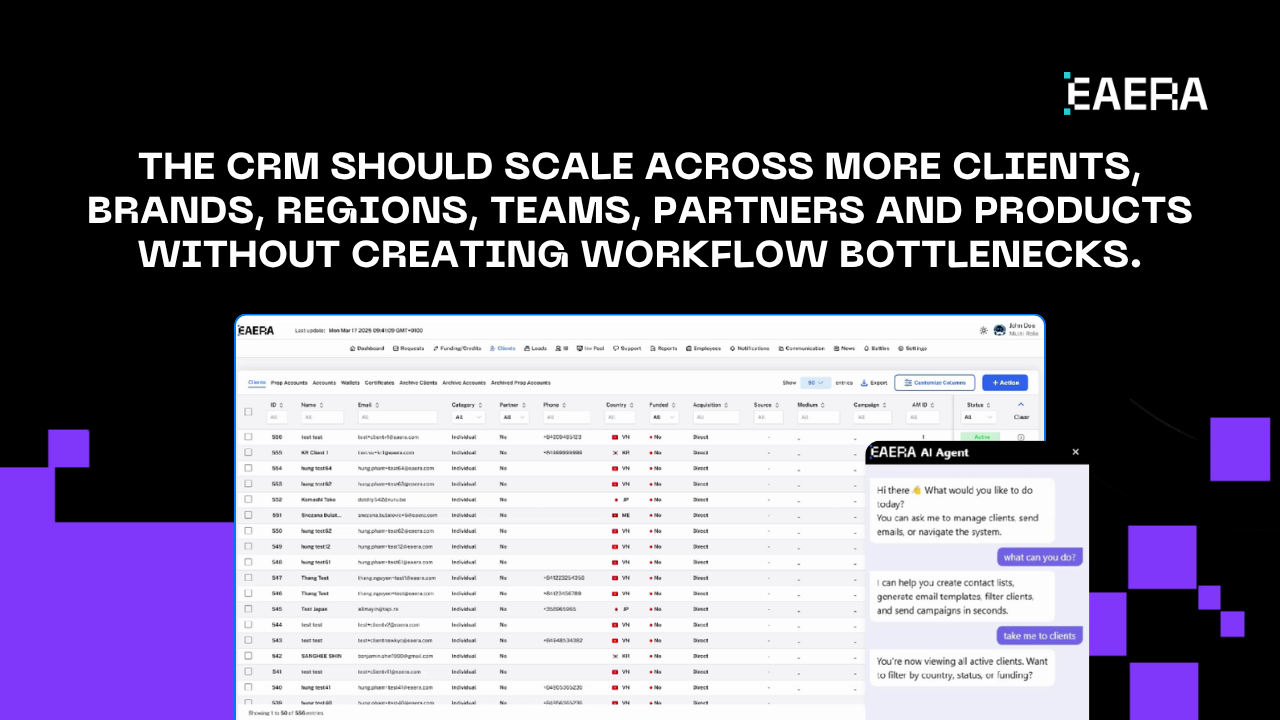
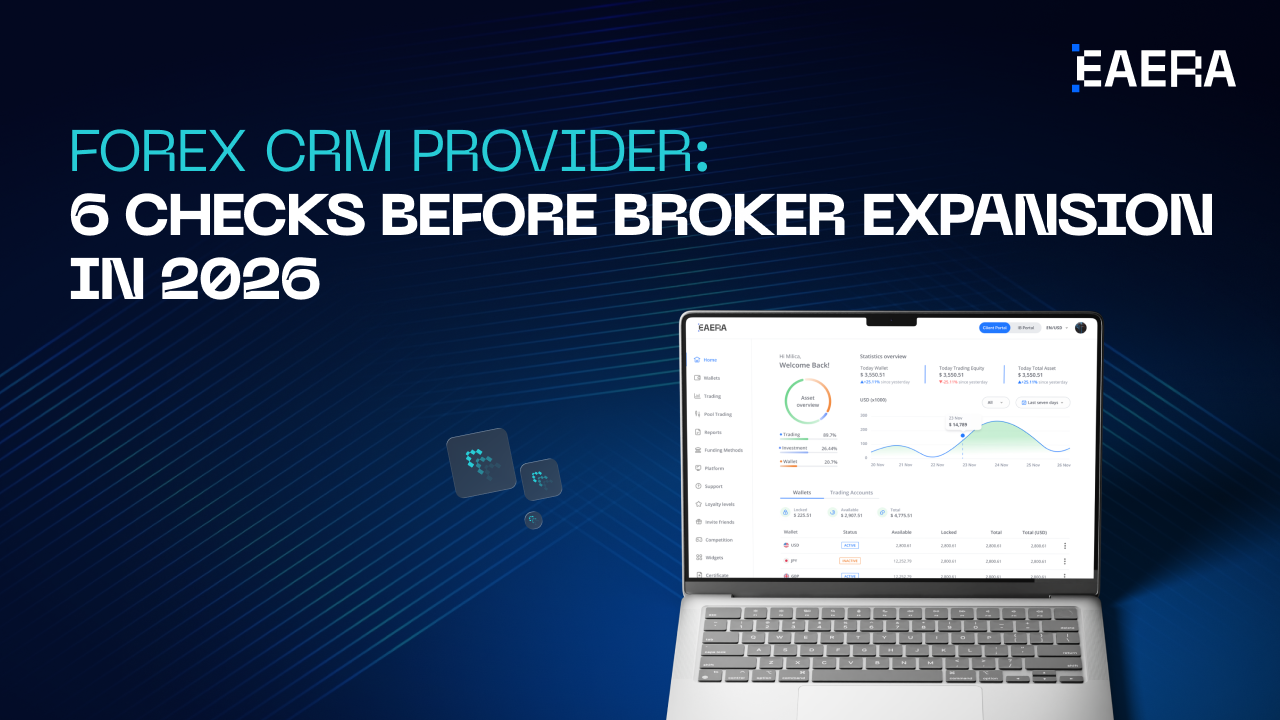
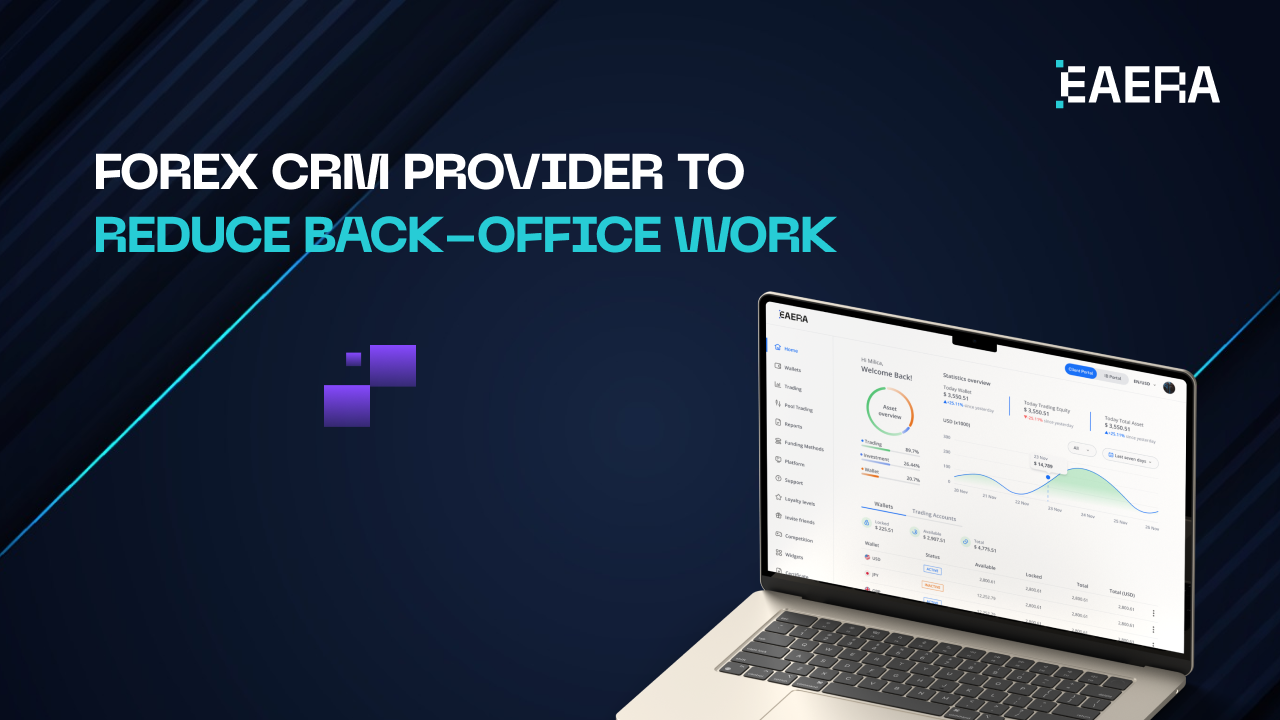
EAERA backs broker operations with connected CRM, client portal, back office, funding, affiliate management, reporting, alerts and workflow automation.
The best forex CRM provider should help brokers become AI-ready without creating new operational, compliance, or data-quality risks.
“Brokers should not select a CRM provider solely for its current features in 2026. They should pick one capable of supporting the next generation of broker operations.