



Brokerages these days don’t have trouble getting leads; they have trouble managing them well. With more ways to buy things and higher customer expectations, manual processes and broken tools quickly become problems.
This is where broker CRM software comes in handy. It is now more than just a database; it is an automation and intelligence layer that links lead management with reporting in real time. This article talks about how broker CRM software can help brokers automate their work, get more people to sign up, and see how well they are doing.
Related articles:
- Broker CRM Software That Converts: Lead & Trader Management
- Forex Broker Software: The Essential Tool for Clear Business Insights
Why Lead Management and Reporting Are Bottlenecks for Brokers?
Brokers today get leads from a lot of different places, such as affiliates, IBs, paid media, landing pages, and referrals. This makes things more complicated, but it also opens more possibilities.
Leads are all over the place in emails, spreadsheets, and tools that don’t work together. Follow-ups are inconsistent, and sales teams often prioritize volume over quality due to lack of visibility.
At the same time, reporting becomes unreliable. Brokers struggle to answer critical questions such as:
- Which channels generate the highest-quality leads?
- Where do leads drop off in the funnel?
- Which agents perform best in conversion?
These gaps lead to missed opportunities, higher acquisition costs, and unpredictable sales performance.
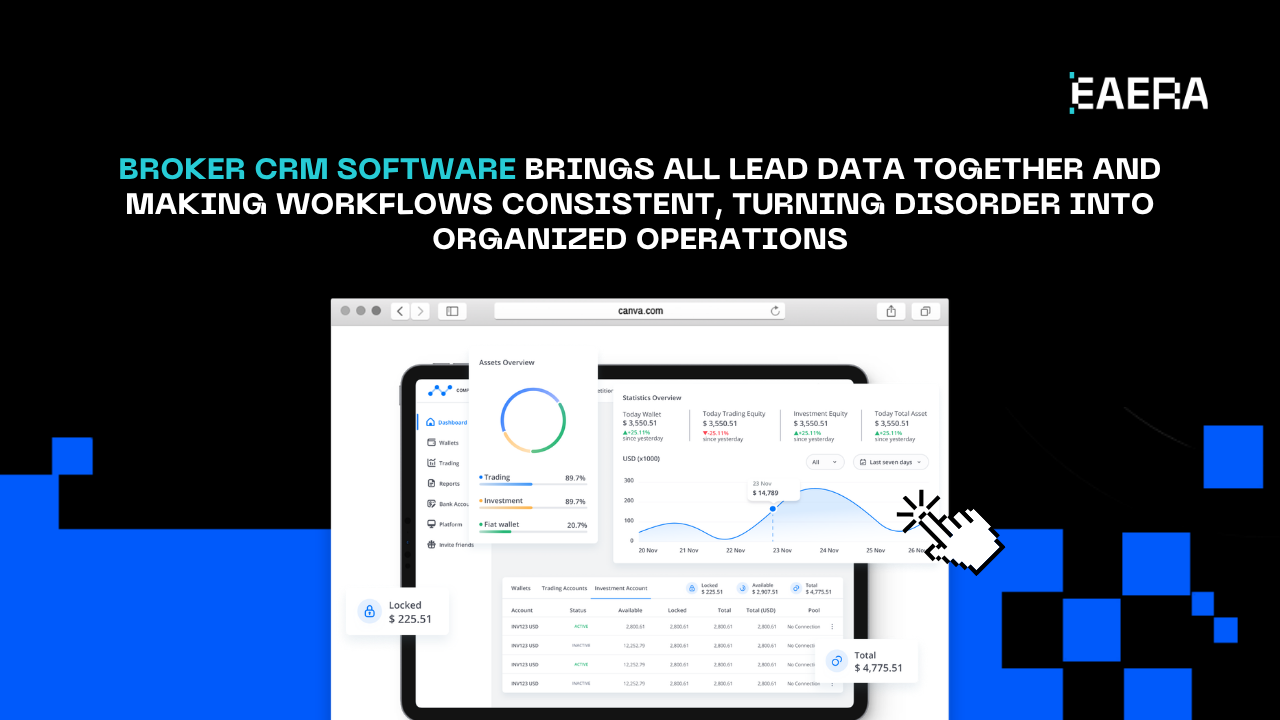
The main problem isn’t the amount of leads; it’s the lack of a single system. Broker CRM software solves this problem by bringing all lead data together and making workflows consistent, turning disorder into organized operations.
What Broker CRM software Actually Automates?
To understand how valuable it is, it’s important to be clear about what broker CRM software does. It doesn’t just manage contacts; it also manages the whole lead lifecycle.
Core automation areas include:
- Lead capture from multiple sources into a single system
- Workflow automation for follow-ups, reminders, and status updates
- Reporting and analytics generation in real time
Broker CRM software connects marketing, sales, and operations, so teams don’t have to coordinate their work by hand.
Processes are driven by the system instead of by individual discipline. Leads are automatically tracked, assigned, and watched, making sure that everyone in the company is on the same page.
This automation lays the groundwork for growth. Brokers can handle more leads without making their operations more complicated.
Automating Lead Management for Higher Conversion
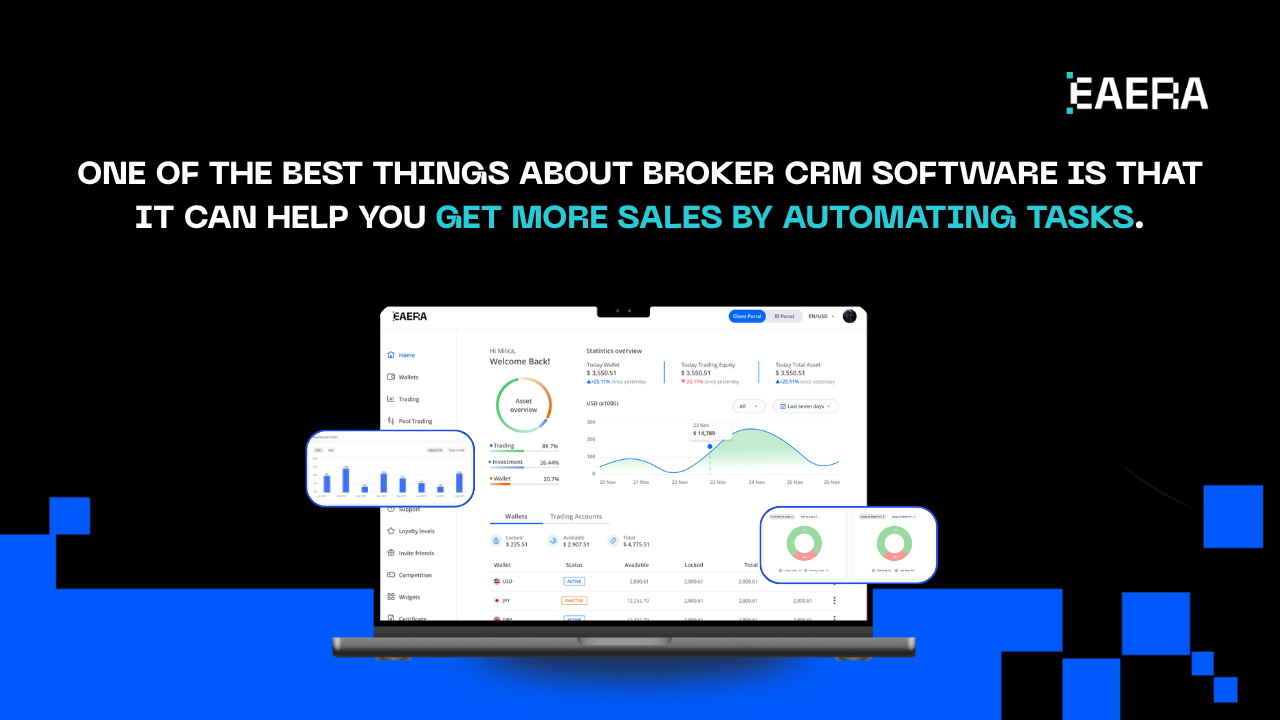
One of the best things about broker CRM software is that it can help you get more sales by automating tasks.
In lead conversion, speed and relevance are very important. The more personalized the interaction and the faster the broker responds, the better the chance of success.
Key capabilities include:
- Automated lead routing: Assigning leads to the right agent based on rules such as geography or expertise
- Behavioral lead scoring: Prioritizing leads based on activity and engagement
- Follow-up workflows: Triggering emails, calls, or notifications automatically
These features make sure that no lead is missed and that every interaction follows a set process.
They also let sales teams focus on the most important tasks. Agents can focus on building relationships and closing deals instead of organizing data or chasing follow-ups.
The result is a sales process that works better because effort is matched with opportunity. This is how broker CRM software changes the way you manage leads from being reactive to being strategic.
Real-Time Reporting and Performance Visibility
Automation alone won’t work. To make smart choices, brokers also need to be able to see how well things are going.
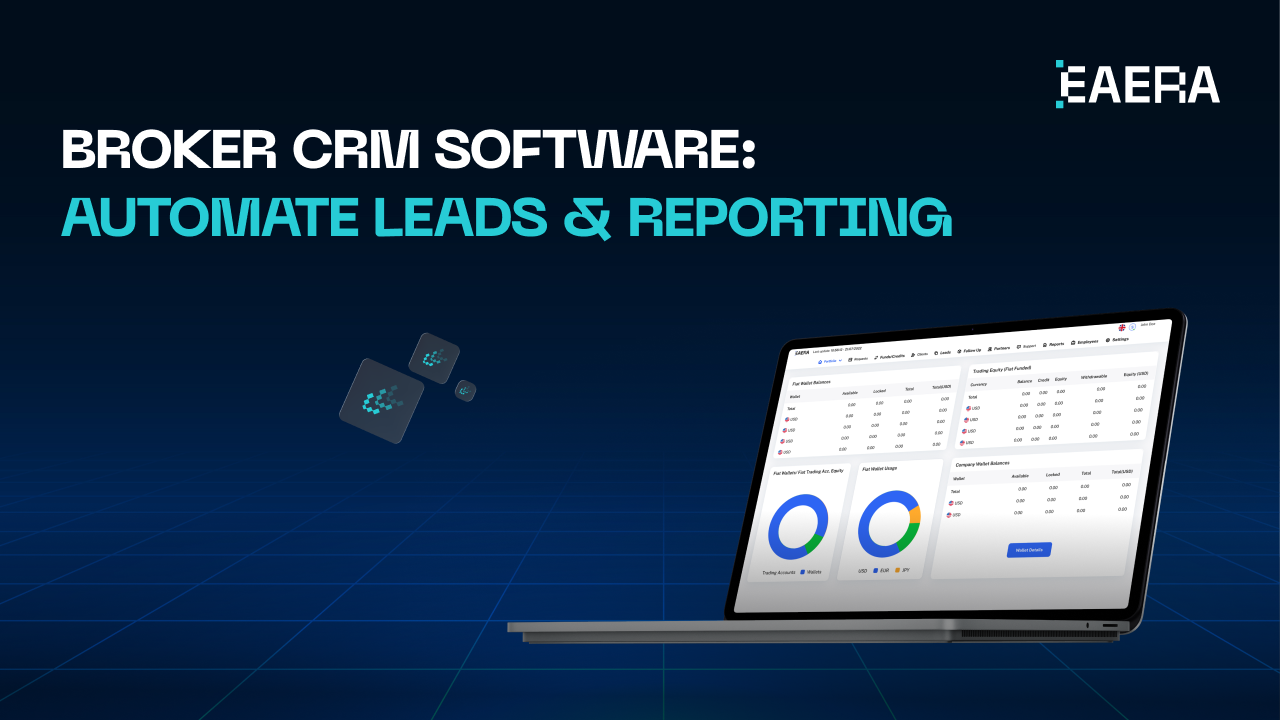
Broker CRM software lets you see reports in real time that show you the whole lead lifecycle, from getting the lead to closing the deal.
Key insights include:
- Conversion rates by channel, campaign, or agent
- Lead progression through each stage of the funnel
- Response times and engagement metrics
Brokers can see what is working and what isn’t at this level of detail. You can improve your marketing budgets based on real performance data, and you can train your sales teams using objective metrics.
EAERA and other platforms show how integrated reporting can change how things work. Brokers can see their business clearly and act by putting data from different sources into one dashboard.
Decisions are no longer based on guesses; they are based on data thanks to real-time insights.

Reducing Manual Work and Operational Errors
One of the biggest reasons brokerage firms are inefficient is because they do things by hand. Using spreadsheets, keeping track of things by hand, and using tools that don’t work together all raise the chance of mistakes and slow down execution.
Broker CRM software gets rid of these problems by making workflows the same for everyone and putting all the data in one place.
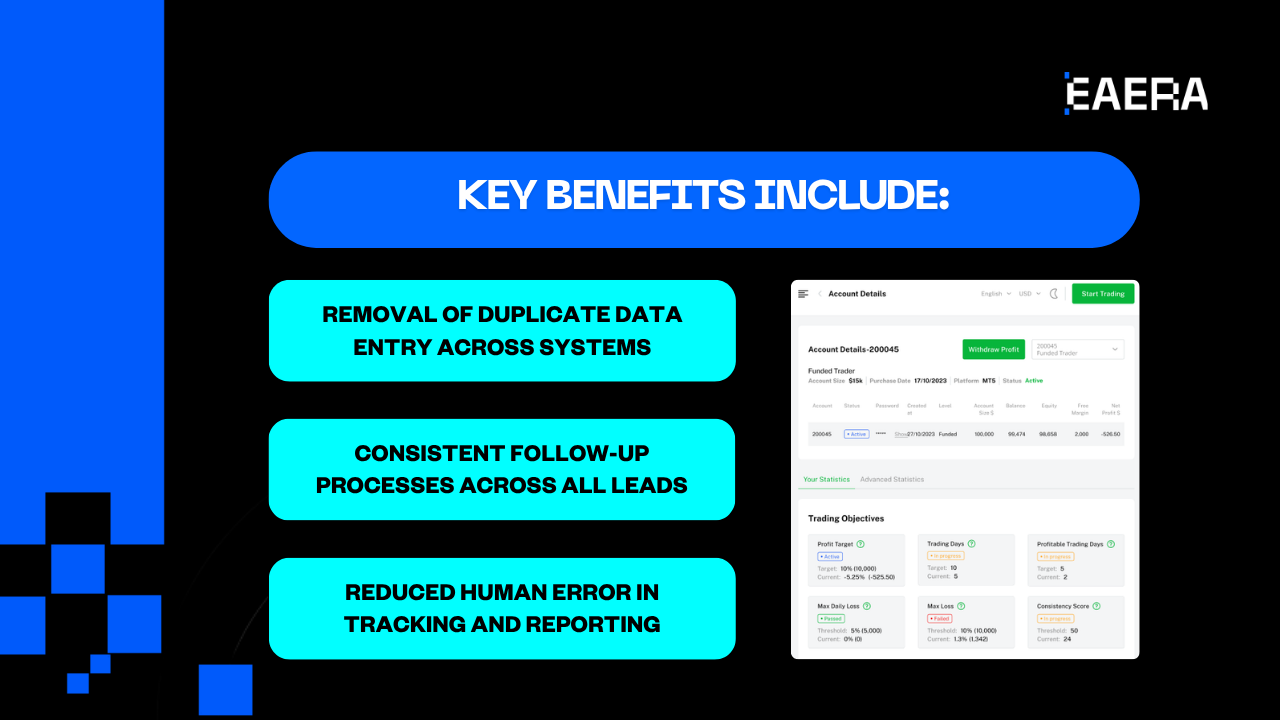
Key benefits include:
- Removal of duplicate data entry across systems
- Consistent follow-up processes across all leads
- Reduced human error in tracking and reporting
The system makes sure that every step is done correctly by enforcing structured workflows. This cuts down on the need to do things over and over again and makes things run more smoothly.
In the long run, this saves a lot of money. Teams spend less time managing processes and more time making money.
The best broker CRM software doesn’t just automate tasks; it also makes the whole operation more accurate and reliable.
Scaling Broker Operations with Automation and Integration
Growth makes things more complicated. As brokers grow, they have to deal with more leads, more salespeople, and more operational tasks.
Scaling up without the right system makes things less efficient. More leads mean more work by hand, and more staff makes it harder to coordinate.
Broker CRM software lets businesses by combining automation and integration.
Key capabilities include:
- Integration with trading platforms for full client lifecycle visibility
- Connection with payment systems for funding and transaction tracking
- Alignment between marketing, sales, and support teams
This creates a unified ecosystem where all functions operate within the same framework.
EAERA and other solutions show how integration can help businesses grow over time. Brokers can grow without losing control by bringing together data from CRM, trading, and operations.
The end result is a system that scales well. Brokers can boost sales, enter new markets, and add new products without putting too much strain on their operations.
Automation and visibility are no longer nice-to-have; they are must-have for modern brokerage businesses. Broker CRM software gives you the framework you need to handle leads well, boost conversion rates, and get real-time information about how well you’re doing.