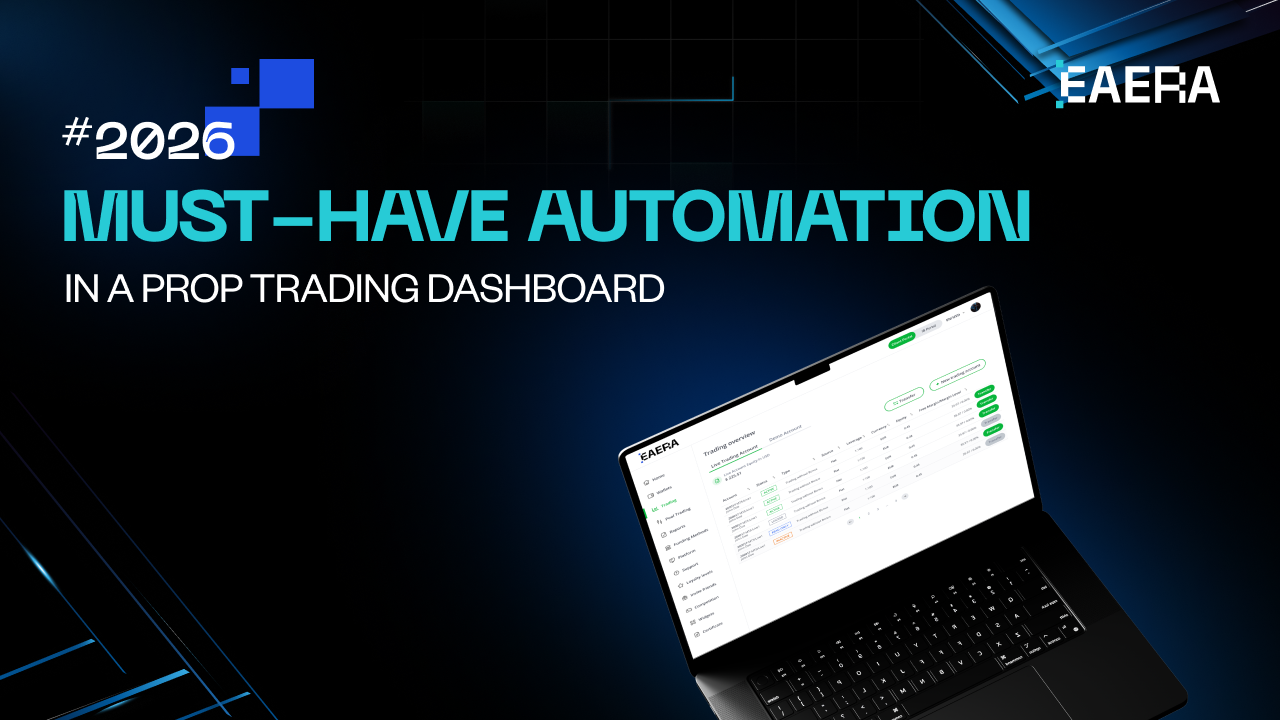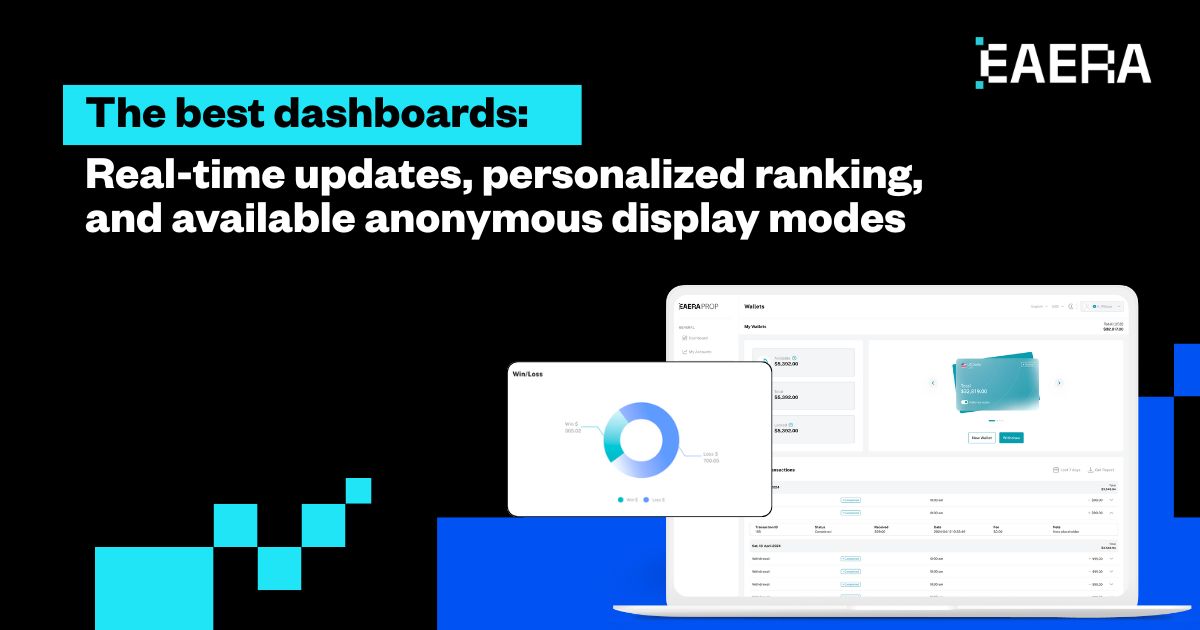




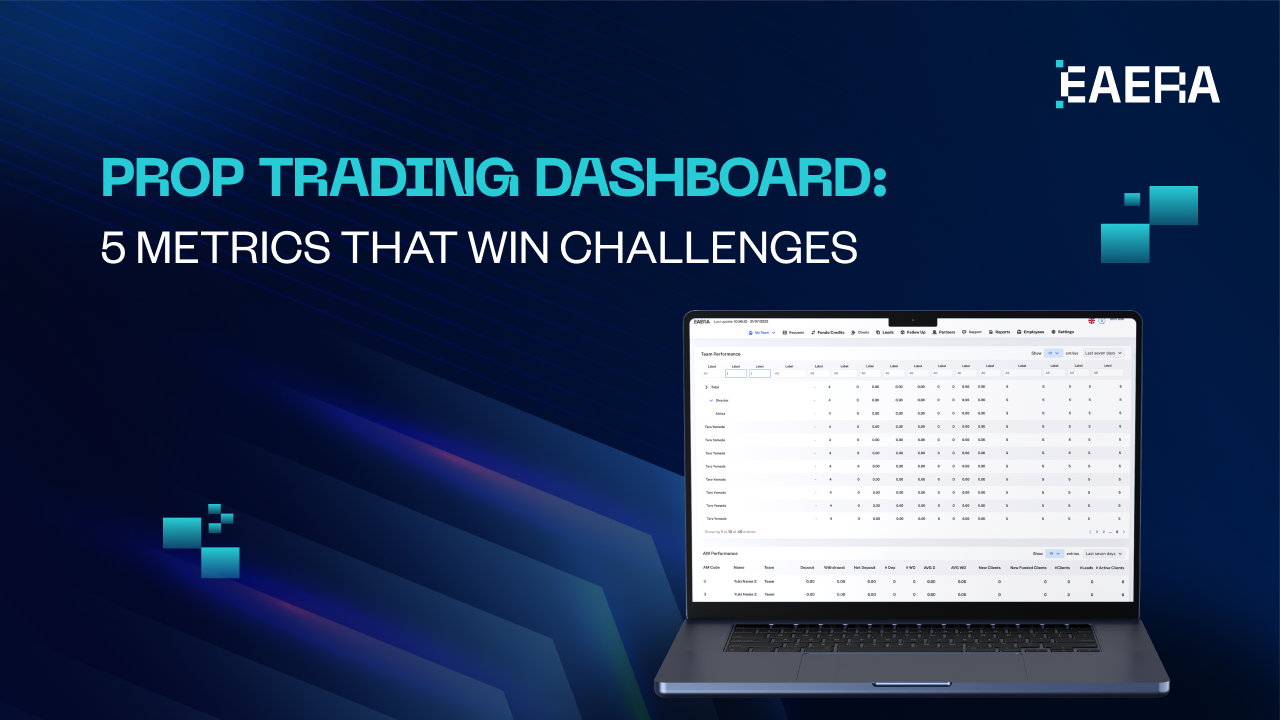
A modern prop trading dashboard is way more than just a simple account summary page. In today’s funded trading world, dashboards are essential to help traders manage risk more effectively, keep tabs on challenge progress, and prevent avoidable rule breaches.
Related articles:
- Top Prop Trading Tools for US Firms: Scale Risk-Free 2026
- Prop Trading Software with Advanced Risk Systems
One of the most common reasons traders fail funded challenges is not because of a bad strategy but because they lack visibility into key performance metrics while live trading. In volatile markets’ drawdown limits, trading restrictions and profit targets can change quickly. Even skilled traders can accidentally break rules when they don’t have clear operational visibility.
This is why top prop firms are investing more and more in advanced dashboard infrastructure. A good prop trading dashboard is a great way to improve the trader experience, increase operational transparency, and help traders make more disciplined decisions during the evaluation period.
Why Prop Trading Dashboards Matter in Funded Challenges?
Funded challenge models rely heavily on rule-based trading environments. Traders are required to operate under strict operational conditions while attempting to achieve profit targets within predefined risk limits.
This creates a very different experience compared to standard retail trading.
A trader may have a profitable strategy but still fail a challenge because of:
- Exceeding maximum drawdown
- Violating daily loss limits
- Missing minimum trading day requirements
- Overtrading near challenge completion
Challenge failures often stem not from poor market analysis, but rather from traders’ inability to see real-time operational conditions.
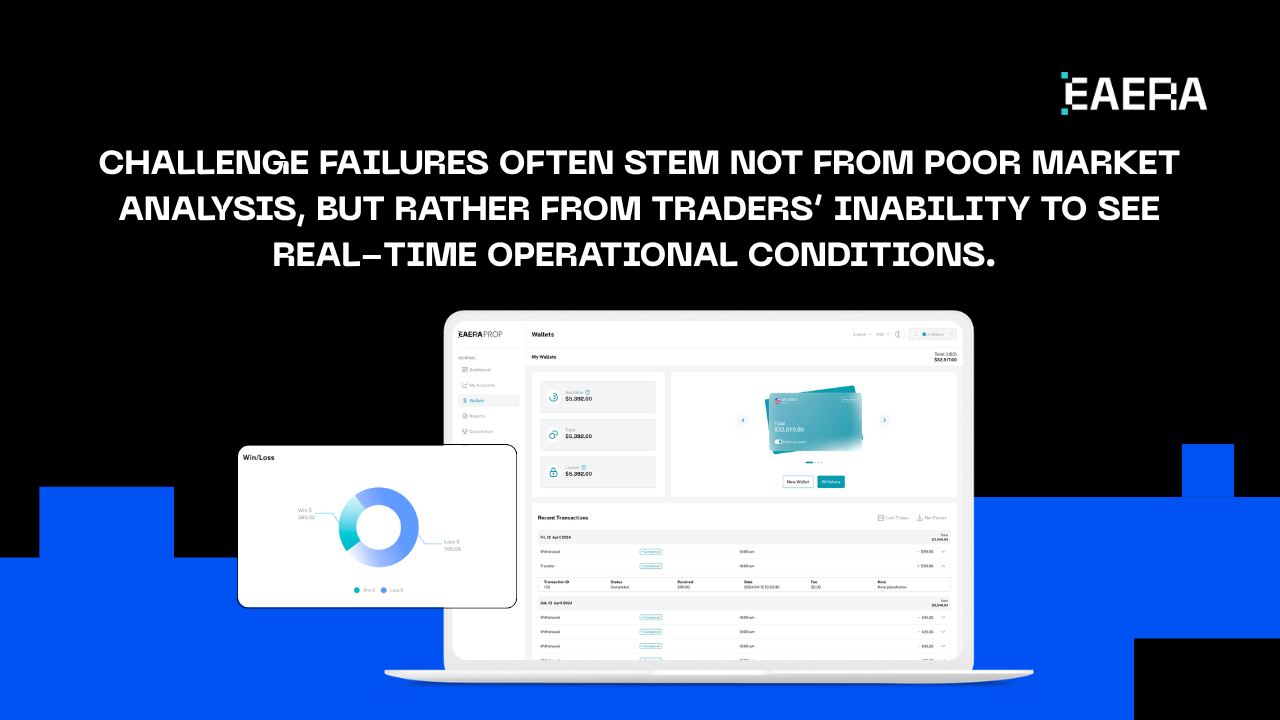
A modern prop trading dashboard helps to do this by bringing all the operational data into one environment. Traders can now continuously track their trading performance and risk live, without having to manually calculate rules or track challenge metrics separately.
This operational visibility improves:
- Risk awareness
- Trading discipline
- Decision-making consistency
- Emotional control during volatility
Dashboards also enhance transparency and trader engagement for prop firms and reduce support requests regarding challenge tracking and rule clarification.
Drawdown Tracking and Profit Target Progress
The first two metrics are among the most vital indicators in any prop trading dashboard.
Metric 1: Daily and Maximum Drawdown
One of the key operational requirements in funded trading challenges is to track drawdowns.
A modern dashboard should provide real-time visibility into:
- Daily drawdown
- Maximum drawdown
- Remaining loss allowance
- Risk exposure relative to challenge rules
Low visibility can lead to traders inadvertently breaking challenge conditions in volatile markets.
The live view of drawdowns enables traders to react faster and helps them to avoid emotional decisions when under pressure.
Operational alerts and visual cues also increased awareness before rules are broken.
This metric is particularly valuable because many failures in challenge are due to poor risk management, not poor strategy.

Metric 2: Profit Target Progress
Profit target visibility enables traders to know their current challenge status and remaining objectives.
A strong prop trading dashboard should display:
- Percentage-to-target progress
- Remaining profit requirements
- Milestone tracking
- Daily performance contribution
This operational clarity is helpful for traders to remain disciplined rather than overtrading aggressively as the challenge nears completion.
There’s also the benefit of increased trader confidence, as dynamic progress tracking provides better insight into challenge momentum and overall performance trends.
Trading Consistency and Account Performance Analytics
One of the biggest things that separates successful traders from the inconsistent performers is consistency.
Metric 3: Trading Consistency Metrics
Funded challenge environments reward disciplined and repeatable trading behavior.
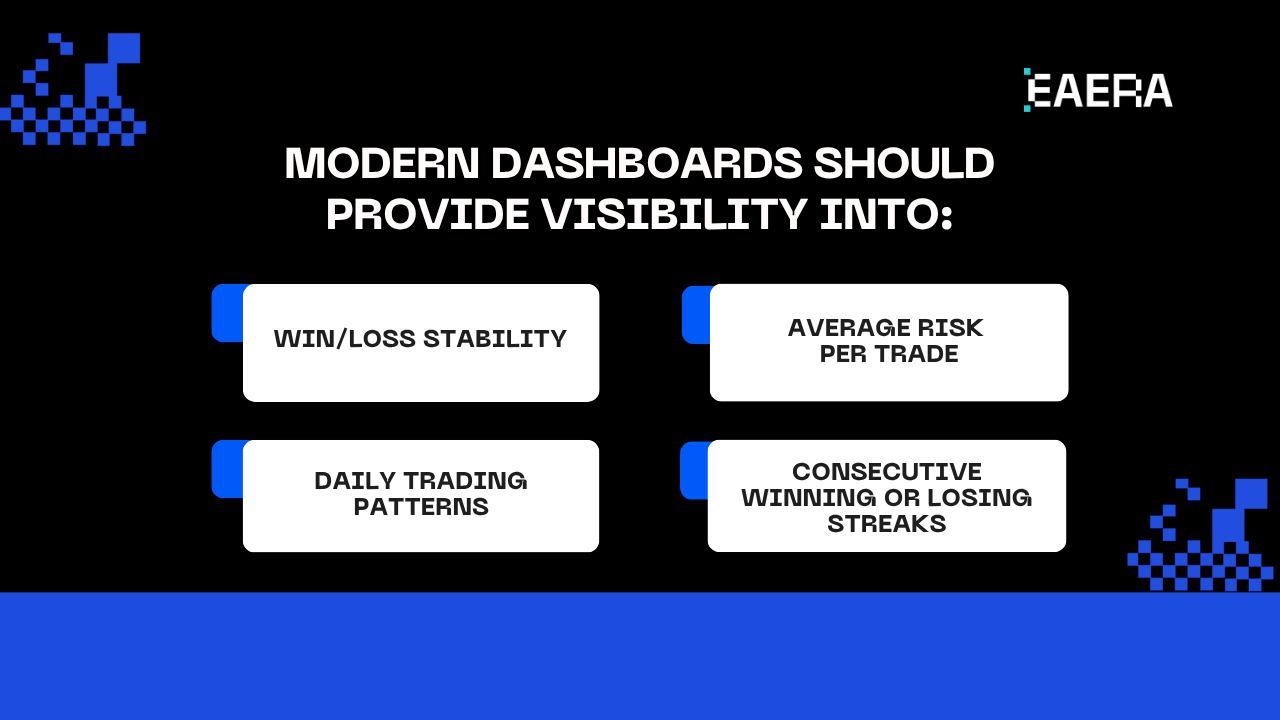
Modern dashboards should provide visibility into:
- Win/loss stability
- Average risk per trade
- Daily trading patterns
- Consecutive winning or losing streaks
These insights help traders spot behavioral patterns that could hurt challenge performance.
Metrics of consistency also help traders develop discipline in making decisions over the long term and curb impulsive behavior.
A high-end prop trading dashboard turns operational data into actionable insights on performance.
Metric 4: Account Performance Analytics
Performance Analytics helps traders assess how their strategy is performing in various market conditions.
Useful analytics may include:
- Equity curve tracking
- Profit and loss analysis
- Instrument-level performance
- Session-based performance reporting
Traders have more insight into how performance is changing over time, not just looking at current balance.
This helps improve:
- Strategy evaluation
- Risk adjustment
- Operational awareness
Analytics infrastructure also increases trader engagement and platform transparency for prop firms.
Metric 5: Rule Compliance and Operational Alerts
Rule compliance is one of the most important operational layers in the funded challenge models.
In fact, many traders fail challenges not because they trade badly, but because they accidentally break the rules.
A modern prop trading dashboard should provide real-time monitoring for:
- Trading day requirements
- Position size restrictions
- Drawdown limits
- News trading restrictions
- Account rule violations
Operational alerts are automated and enable traders to react before violations occur, thus reducing unnecessary challenge failures.
Dashboards aggregate rule visibility in one operational interface instead of forcing traders to check multiple conditions manually at the same time.
This improves:
- Trader confidence
- Risk awareness
- Operational clarity
- Overall challenge discipline
Solutions such as EAERA show how operational dashboard infrastructure can enhance the trader experience and challenge transparency in funded trading environments.
How Real-Time Dashboard Visibility Improves Challenge Success Rates?
Many traders underestimate the operational side of funded challenge trading.
Even profitable traders may struggle if they do not see the challenge conditions during live execution.
A modern prop trading dashboard can help traders better manage their operational discipline and thereby improve their challenge success rates.
Key benefits of real-time visibility include:
- Faster awareness of risk exposure
- Better emotional control during volatility
- Reduced accidental rule violations
- Clearer challenge progress visibility
- More disciplined execution behavior
Instant operational awareness for a trader approaching max daily drawdown before they break challenge rules.
A trader nearing a profit target can avoid overtrading unnecessarily by keeping a close eye on the remaining objectives.
As funded trading environments become increasingly competitive, operational visibility and disciplined execution are becoming as important as the trading strategy employed.
Platforms like EAERA show how sophisticated dashboard ecosystem can enable scalable funded trading operations and enhance operational transparency for traders.
What Traders and Prop Firms Should Prioritize in a Dashboard?
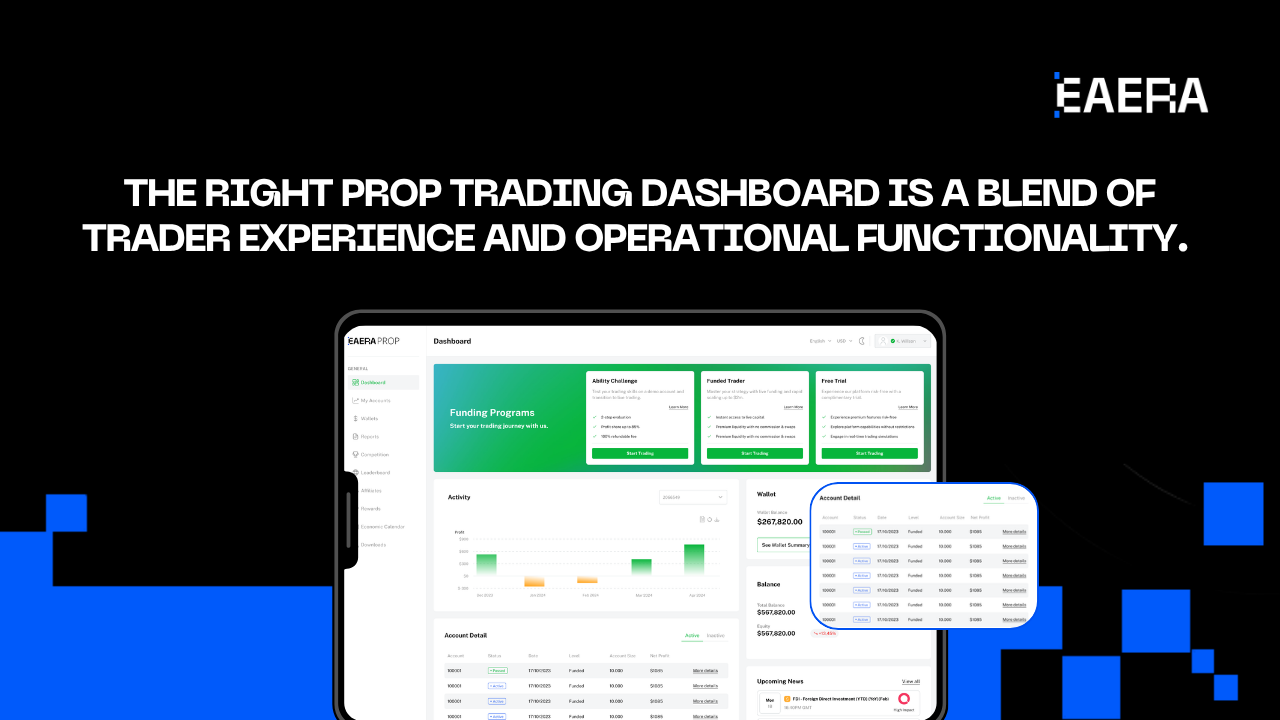
The right prop trading dashboard is a blend of trader experience and operational functionality.
For Traders
Key priorities include:
- Real-time risk visibility
- Clear challenge tracking
- Operational alerts
- Performance analytics
- Simple and intuitive UX
For Prop Firms
Operational priorities include:
- Trader engagement
- Centralized reporting
- Operational transparency
- Scalable infrastructure
- Integrated analytics
Flexibility in customization is also increasingly important as firms offer different challenge models, account structures, and trading rules.
The Best dashboard systems increase trader performance and improve internal operational efficiency.