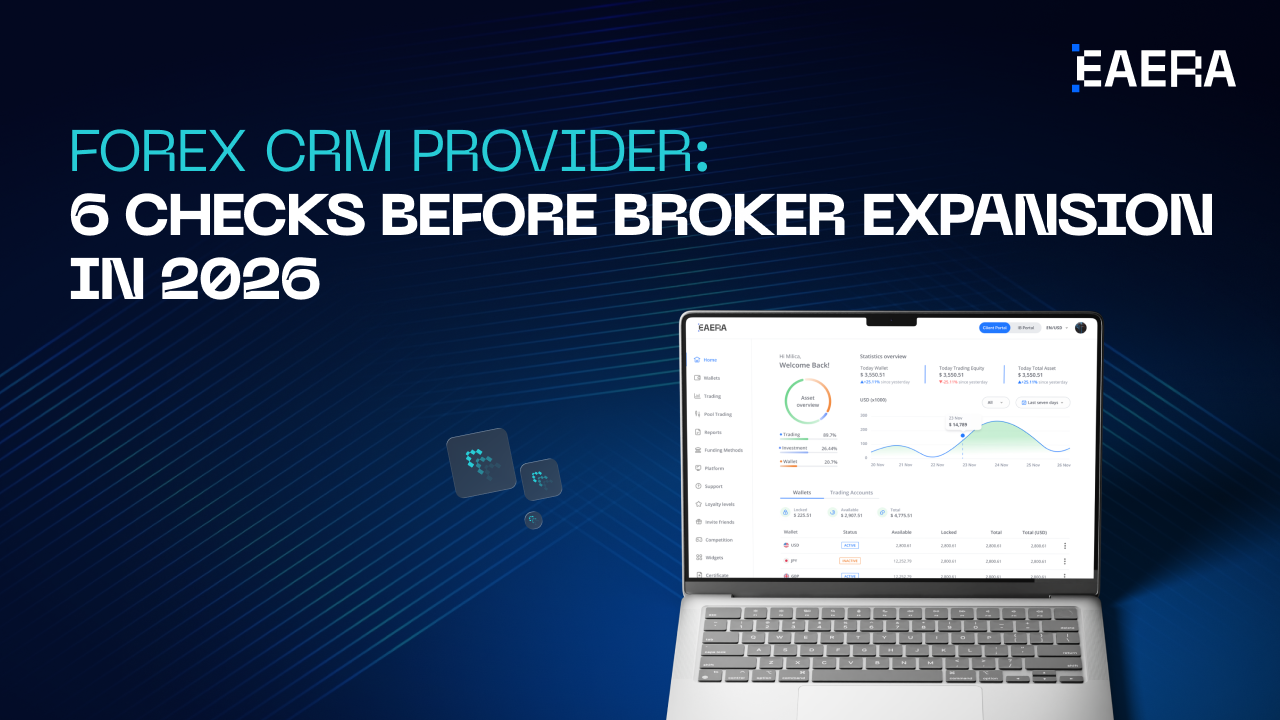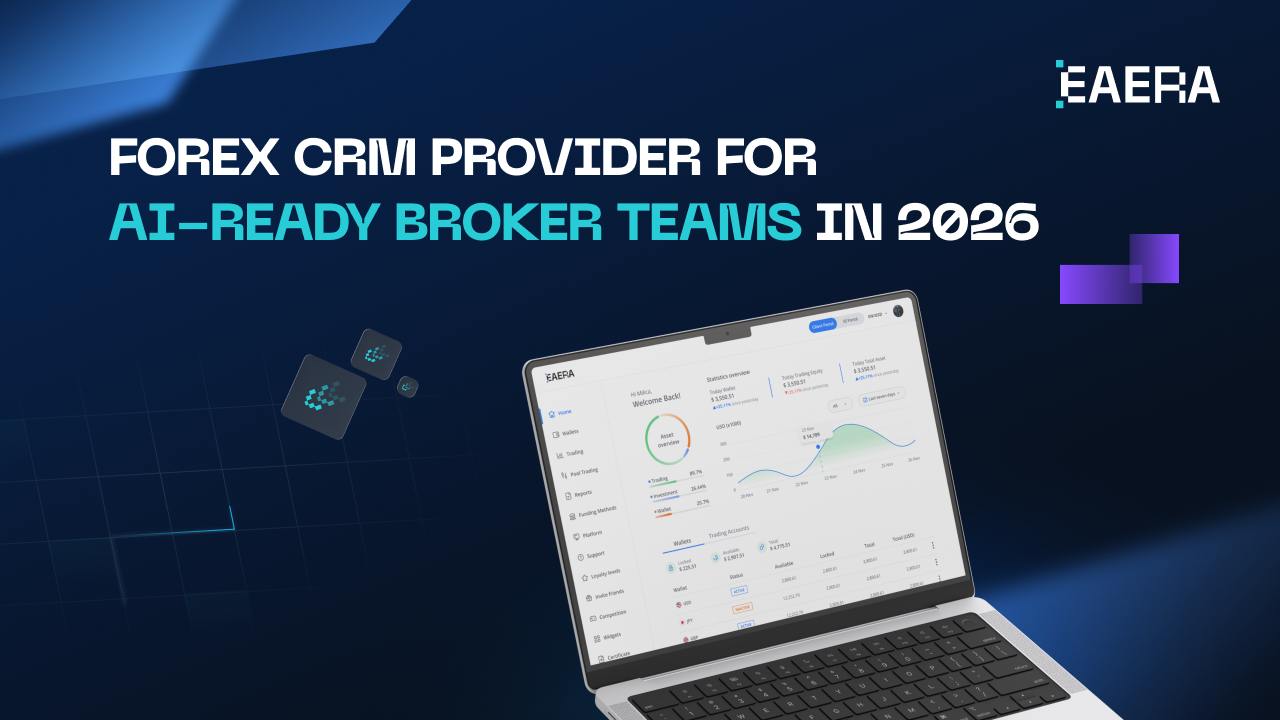




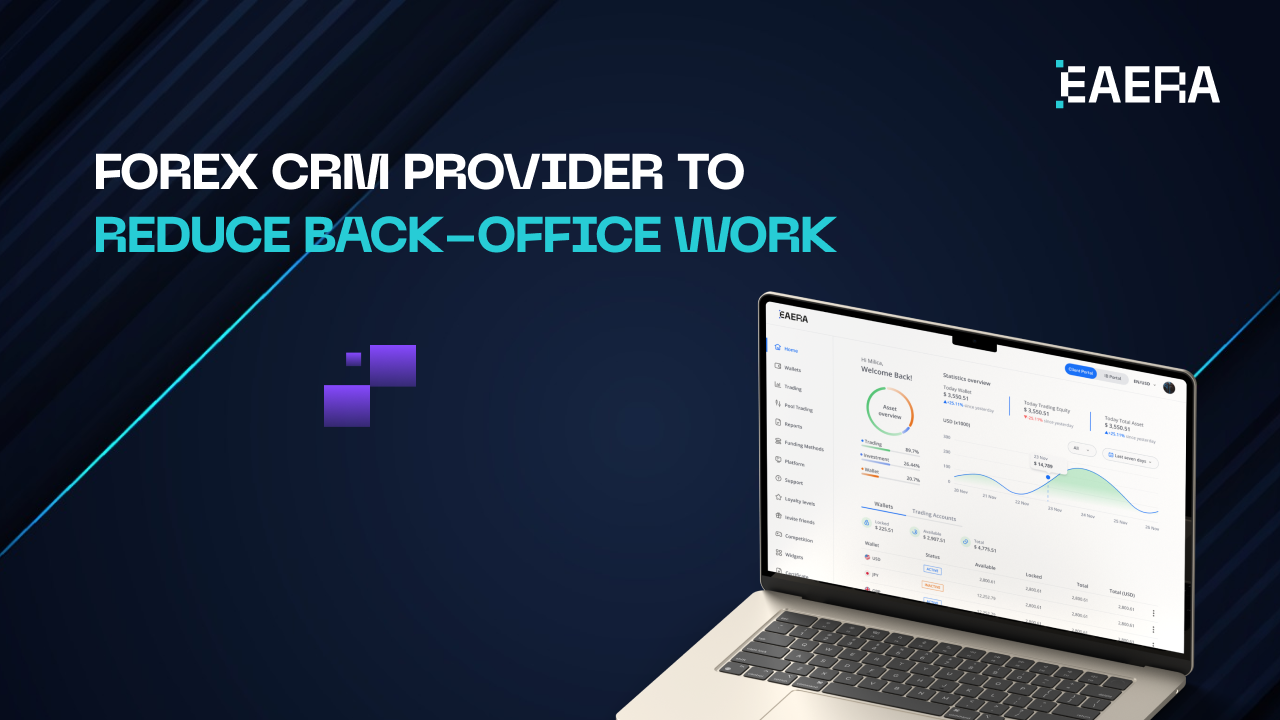
A forex CRM provider helps brokers streamline back-office operations by integrating client onboarding, KYC review, payments, trading accounts, IB operations, reporting, and support workflows into a single system. Back-office teams waste time when client data, transaction status, account updates and approval records are spread across disconnected tools.
Related articles:
- Forex CRM: How to Choose the Best Provider for Your Brokerage
- Forex CRM Software: 5 Risk-Based Onboarding Checks
This article explores where back-office workload accumulates and how the right Forex CRM provider can help brokers automate repetitive tasks, cut down on manual checks, and improve operational visibility.
Why Back-Office Work Becomes Too Manual for Brokers?
Brokers grow, back-office work stacks up. More clients = more KYC reviews, more payment requests, more trading account updates, more support cases, more IB commissions, more reports.
It’s not just the amount of work. It is disaggregation. Back-office teams often need to consult multiple systems to do one action. A basic client request might include checking CRM records, KYC status, payment history, trading account data, support notces, and approval history.
Common manual workload areas include:
- Checking KYC status manually
- Updating client approval status
- Verifying deposits and withdrawals
- Moving funds between wallets and trading accounts
- Creating or updating trading accounts
- Reviewing IB attribution and commissions
- Exporting reports from multiple systems
- Responding to support questions with incomplete data
- Tracking approvals through emails or spreadsheets
A forex CRM provider should be able to help brokers eliminate the manual work by linking the client lifecycle data to back-office workflows.
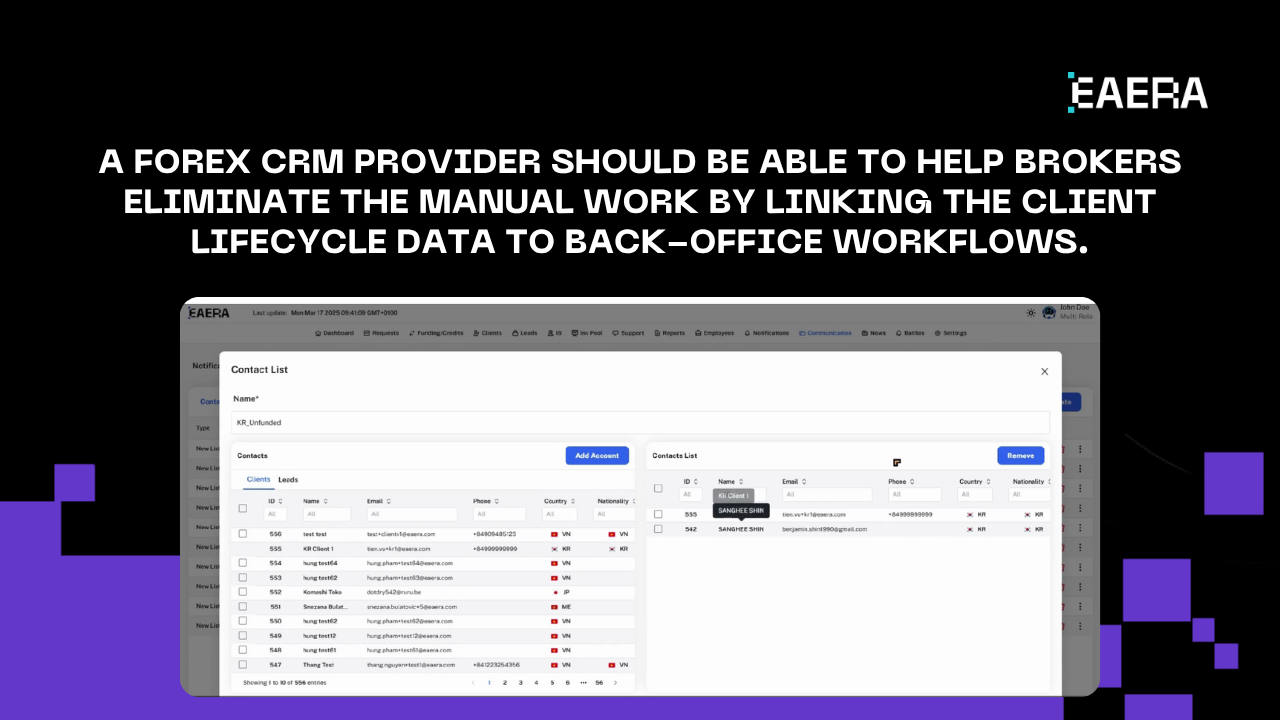
The aim is not to get rid of the back-office team. The goal is to enable them to move faster with fewer redundant checks, fewer handoffs internally and better visibility into what needs action.
Client Onboarding and KYC Review Automation
One of the biggest sources of back-office work is onboarding. Separating client documents, profile fields, verification status and approval notes causes each review to take longer to complete.
A forex CRM provider should help brokers automate and organize:
- Required profile fields
- Document submission status
- KYC provider results
- Review queues
- Approval or rejection reasons
- Missing document reminders
- Client notification history
- Manual override records
- Risk category or review status
The back-office team should have one client profile containing all the necessary information and next steps, rather than reviewing email attachments, third-party dashboards, and spreadsheet notes.
For example, the system should remind if a document is missing. If verification is approved, the client can proceed with the next phase of the lifecycle. If verification is denied, the reason should be documented and reported clearly.
This removes the need for redundant follow-ups and makes managing onboarding easier. Sales teams can see the status of a client, pending, approved, rejected, or blocked. Support teams can respond to client questions without waiting for compliance updates. Compliance teams can spend time on exceptions rather than searching for information.
Automated onboarding isn’t just a time saver. It also makes tidier records and a more uniform review for the client.
Payment, Wallet, and Withdrawal Workflows
Payments create heavy back-office workload because every transaction may require status checks, approvals, updates, or client communication.
A forex CRM provider should help brokers connect:
- Deposit requests
- Failed payments
- Pending bank wires
- Wallet balances
- Trading account funding
- Internal transfers
- Withdrawal requests
- Finance approval status
- Rejection reasons
- Client notification history
- Transaction timeline
If a deposit fails, a support or finance task should be created. A completed deposit will update wallet balance or trigger funding for a trading account. A pending withdrawal should indicate if it is waiting for finance, compliance, payment provider processing, or additional client documents.
The right forex CRM provider will reduce back-office work related to payment processing by making transaction status visible to finance, support, compliance, and account teams.
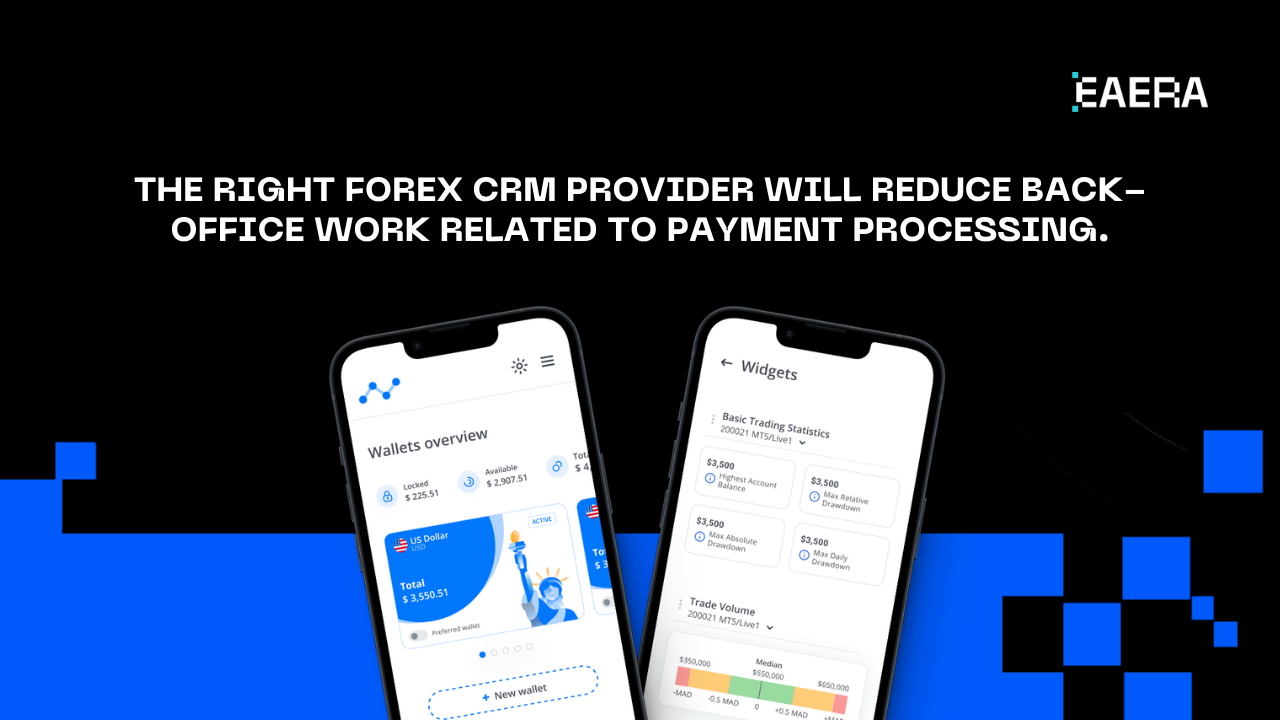
This is important as payment issues often become support tickets. Client: Why is a withdrawal still pending? “Finance asks for support. Finance checks out another system. Compliance validates if KYC is done or not. The answer may take longer than it should, because the data is scattered.
Integrated payment workflows mean teams spend less time chasing updates and more time resolving actual exceptions. Brokers can also recover failed deposits more quickly, make withdrawals with more clarity on approval status, and reduce confusion around wallet and trading account balances.
Trading Account Operations and Client Status Updates
Back-office teams are generally responsible for trading account creation, account status changes, internal transfers, account restrictions, and platform related requests. When CRM, trading platforms, and client portal data are disconnected, it’s harder to do these tasks.
A strong forex CRM provider should support visibility into:
- Trading account creation
- Account type
- Account status
- Balance and equity
- Account lock or disable status
- Wallet-to-trading-account transfer
- Trading-account-to-wallet transfer
- First trade status
- Active or inactive account status
- Manual update history
If funded, but a client has not created a trading account, the system should show that gap. Support must see the reason for a trading account lock before answering the client. Finance and support should see the status if a transfer fails without having to check multiple systems.
Linked trading account operations reduce internal handoffs and help broker teams keep client records accurate.
This is even more critical when clients go through several steps quickly: registration, KYC approval, deposit, wallet balance update, trading account creation, and first trade. If a stage is delayed or invisible, the client may call support, sales may lose visibility, and operations need to investigate manually.
A CRM vendor that combines account operations with client lifecycle data helps brokers eliminate these avoidable delays.
IB, Commission, and Partner Back-Office Work
Manual attribution, hierarchy, commission rules, and payout status management can create significant back-office workload for the IB and partner operations.
A forex CRM provider should help brokers manage:
- IB onboarding
- Referral attribution
- Client ownership
- Sub-IB hierarchy
- Commission profile
- CPA or lot-based commission
- Commission qualification rules
- Payout status
- Adjustment and reversal history
- Partner portal visibility
When client attribution is ambiguous, partners can squabble over commissions. Finance workload increases if commission rules are hand calculated. If payout status is not visible, partners contact support for updates.
Your CRM should link partner activity to client lifecycle and trading activity. Brokers need to know which IBs can bring registrations, funded clients, active traders, and long-term value.
The right provider should cut IB admin work, improve partner transparency, and payout control.
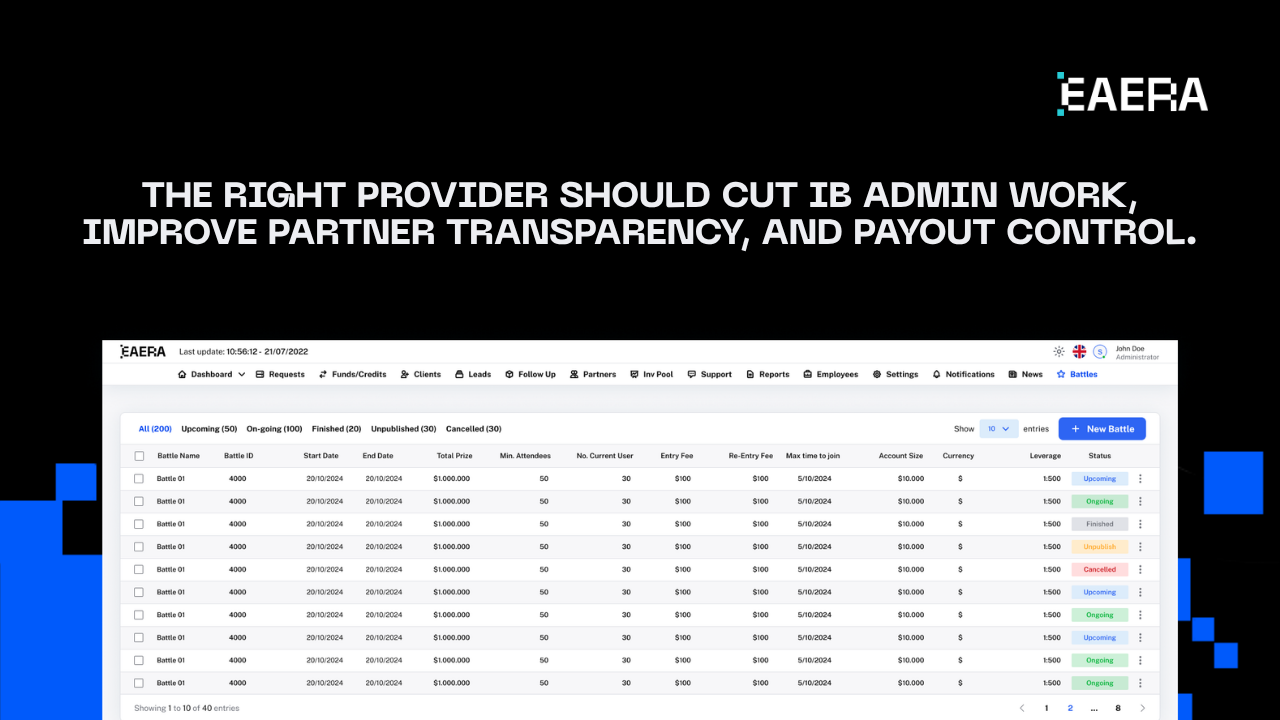
For example, when a referred client qualifies commission, the system must identify the IB, apply the correct rule, calculate the amount, and move the commission into a review or payout workflow. If an adjustment or reversal is required, the reason must be documented.
This reduces the manual calculations and gives a better perspective of the performance for internal teams as well as partners.
A forex CRM provider helps brokers ease this work by linking onboarding, KYC, payments, trading accounts, IB operations, reporting and automation.
In 2026, brokers should choose providers that help back-office teams work faster without losing control or visibility.