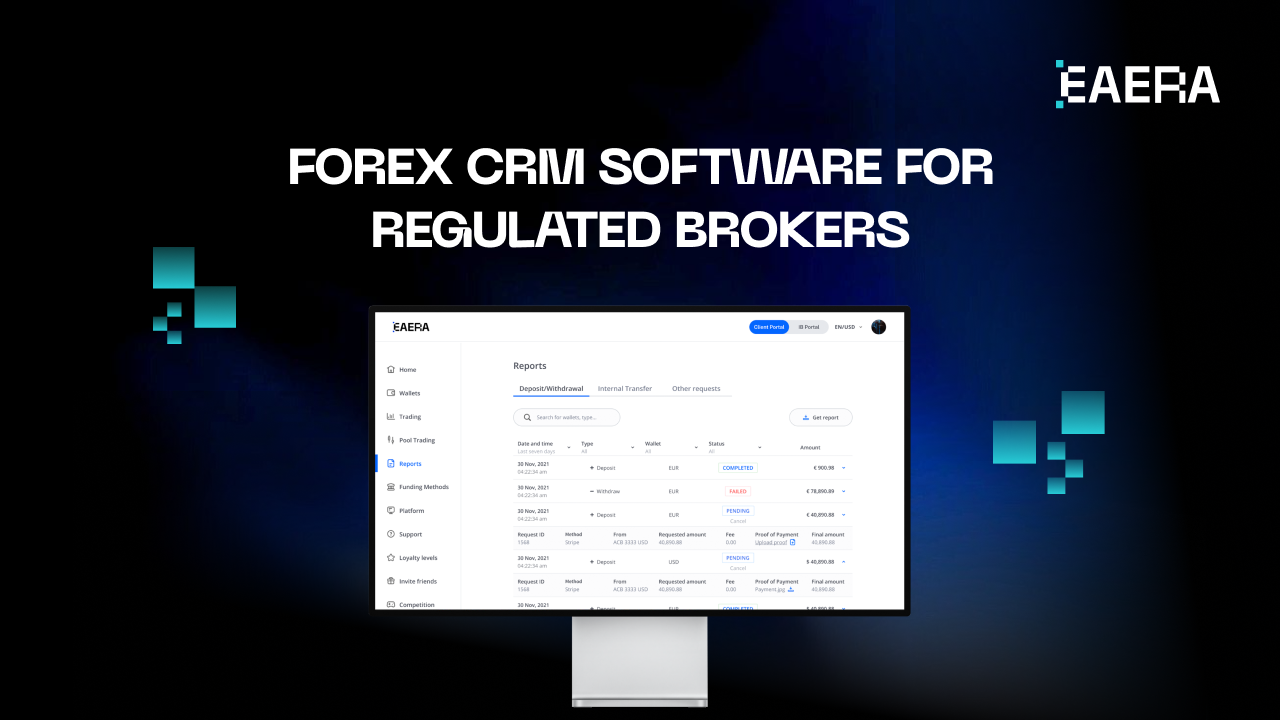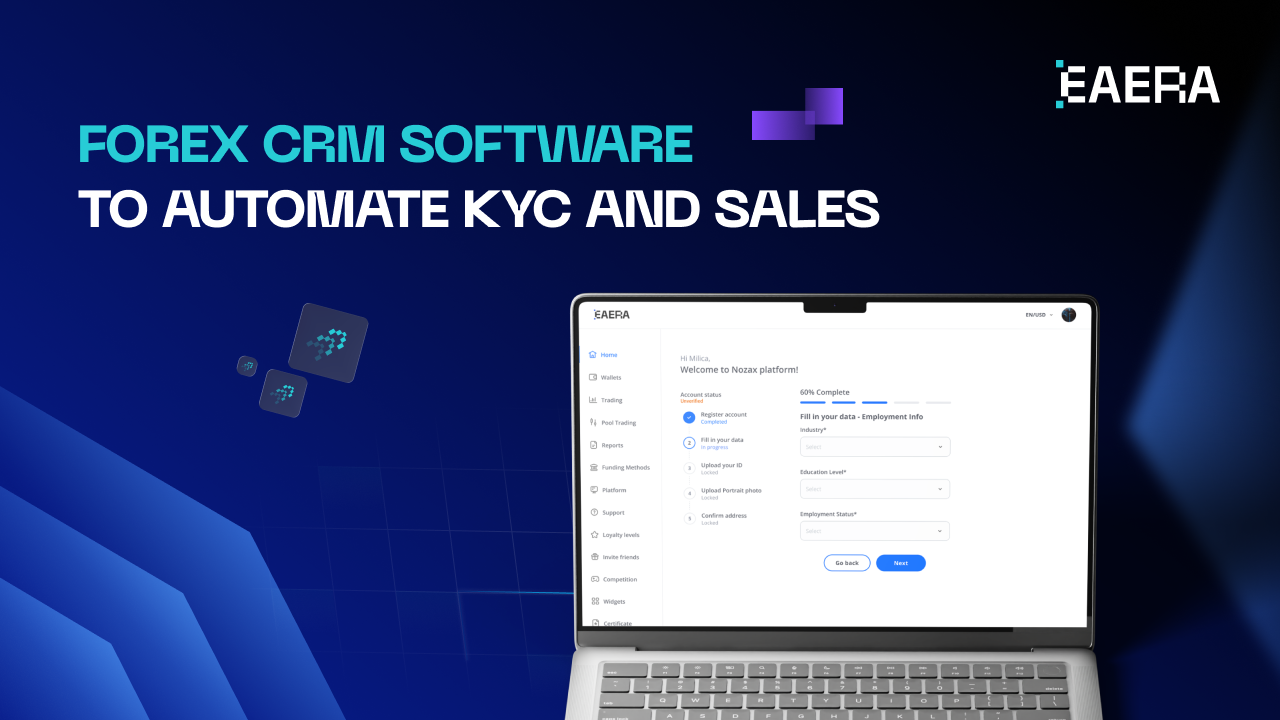




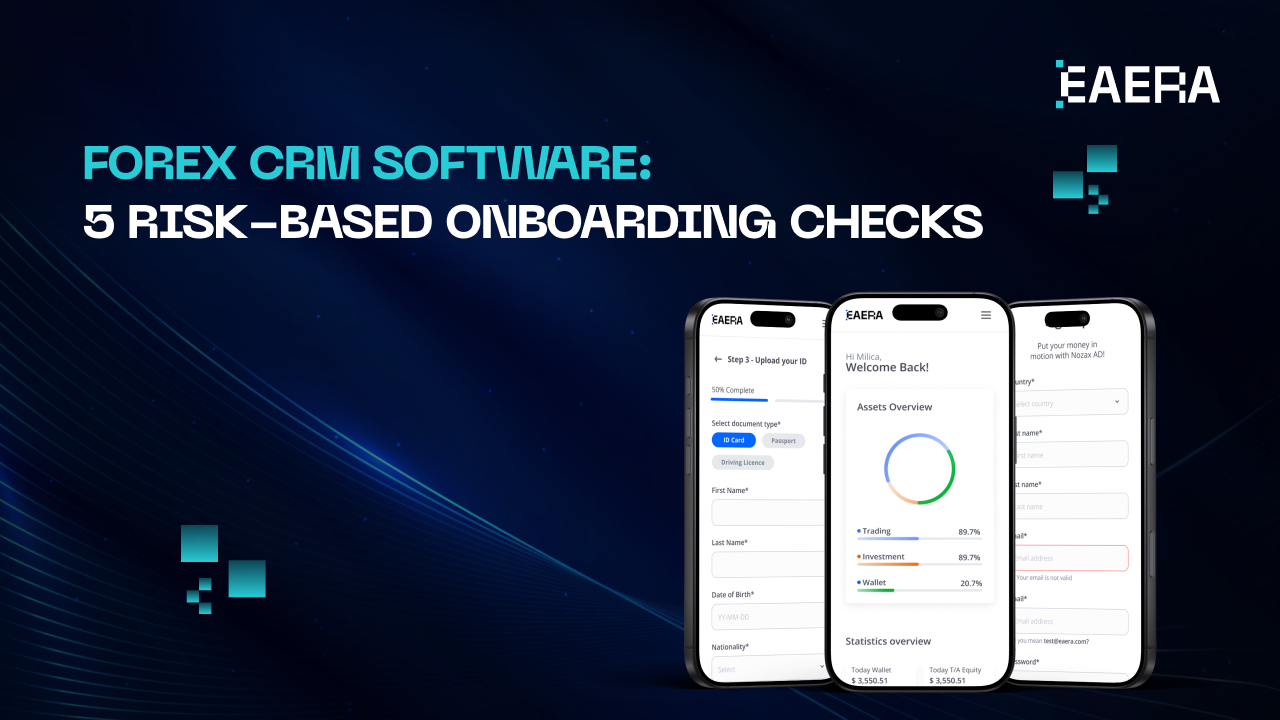
Forex CRM software gives brokers the capability to perform risk-based onboarding by consolidating client profiles, KYC status, document verification, risk scoring, payment access, trading account eligibility, and continuous monitoring into a single workflow. Instead of treating every client the same way, brokers can apply different checks depending on client risk, region, documents, funding behavior, and account activity.
Related articles:
- Top 10 Forex CRM Best Features Every Broker Needs
- Best Forex CRM Agency: 6 Tech Growth Areas for Brokers
This article outlines five practical onboarding checks brokers should manage through CRM software to reduce risk and improve compliance visibility and protect client lifecycle quality.
Why Risk-Based Onboarding Matters for Forex Brokers?
Risk-based onboarding means more rigorous checks for higher-risk clients and efficiency for lower-risk ones. For brokers, this is important because onboarding is both a growth workflow and a control workflow. Slow onboarding can reduce conversion, but bad onboarding can create compliance, payment, and trading account risk.
A broker can have many clients registering from different regions, with different payment methods, asking for different account types and trading under different conditions. When all clients take the same review path, the process may be too slow for standard cases and too weak for higher-risk cases.
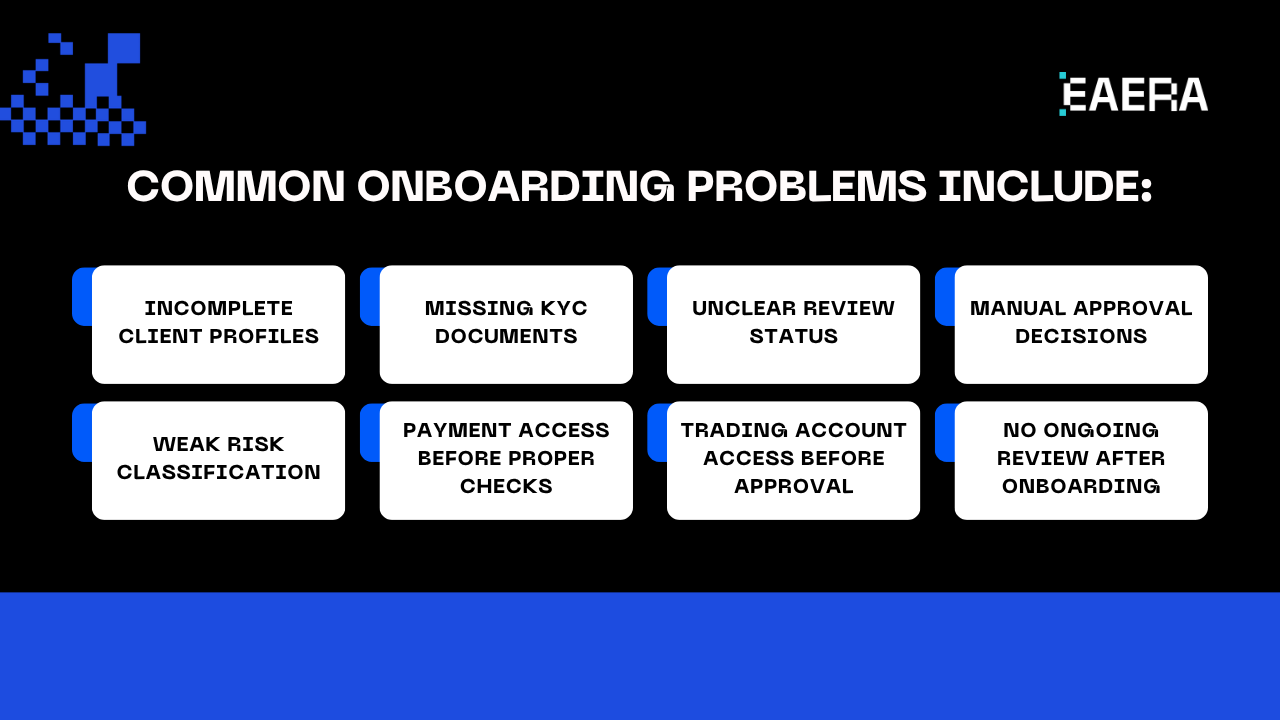
Common onboarding problems include:
- Incomplete client profiles
- Missing KYC documents
- Unclear review status
- Manual approval decisions
- Weak risk classification
- Payment access before proper checks
- Trading account access before approval
- No ongoing review after onboarding
Forex CRM software should help brokers speed up onboarding for standard cases and to make it more controlled for higher risk cases. The aim is to do the right checks at the right time, with clear documentation and regular internal procedures.
Check 1: Client Profile Completeness and Identity Data
The first risk-based onboarding check is completeness of the client profile. In the absence of required identity, contact, residence, and account information, a broker cannot make an accurate assessment of risk.
Forex CRM software should help teams verify:
- Full name
- Date of birth
- Country of residence
- Nationality
- Email and phone verification
- Residential address
- Identification document
- Tax or regulatory information, if required
- Client type: individual, corporate, IB, professional, retail
- Source or campaign
Required fields should be controlled before the client moves to the next lifecycle stage. The system will not allow approval or will create a follow-up task if core identity fields are incomplete.
A CRM should also allow for duplicate checking. Duplicate clients can cause KYC confusion, misattribution, payment issues, and account-control problems. For example, one client could have multiple profiles with different emails, or a repeated registration could be linked to the wrong sales owner or IB source.
Full profile data provides a solid base for risk review for compliance, sales, support, and back-office teams. A clean client profile will make every next step easier to handle, be it KYC review, payment access, trading account setup, support handling, or reporting.

Check 2: KYC, Document Quality, and Verification Status
Brokers need to know precisely which documents were submitted, if they passed the review, and the reason for their acceptance or rejection.
Forex CRM software should support:
- Document upload status
- Proof of identity
- Proof of address
- Document expiry date
- Document mismatch alerts
- Verification provider result
- Review queue
- Approval or rejection reason
- Manual review notes
- Client notification history
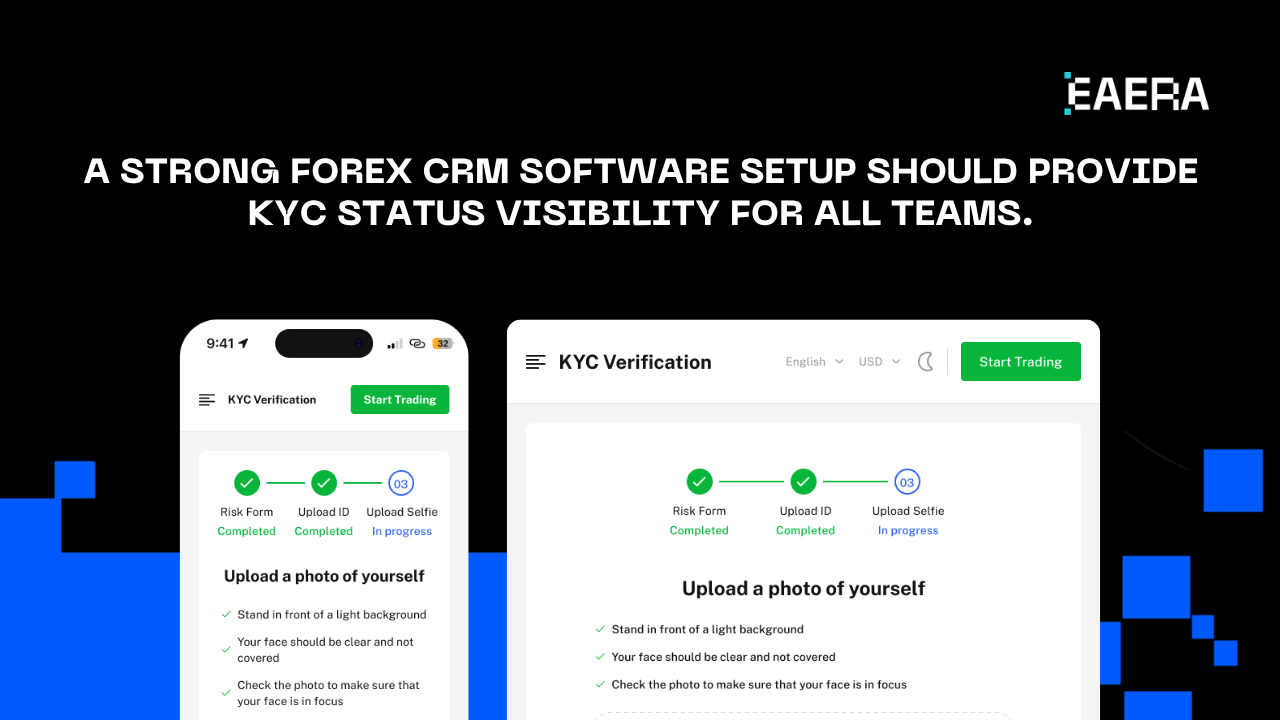
KYC visibility should not be confined to a standalone verification tool. Sales, support, compliance, and back-office teams need to have an understanding of the client’s current status. A client’s status can be pending documents, under review, accepted, rejected, blocked or restricted. Each status has to say what to do next.
A strong forex CRM software setup should provide KYC status visibility for all teams. This avoids internal confusion and avoids the wrong action happening too soon, such as allowing a client to withdraw funds or open a trading account before required checks have been carried out.
Check 3: Risk Scoring, Region Rules, and Enhanced Due Diligence
Not every client needs the same level of onboarding. A CRM should help brokers identify risk indicators and direct clients into the proper review flow.
Risk indicators may include:
- Client country or region
- Document type
- Client type
- Source of funds information
- Politically exposed person status, where applicable
- Sanctions or screening result
- High-risk jurisdiction signals
Forex CRM software needs to support risk scoring, risk categories, and workflow routing. Clients with a low risk can go through standard approval. Medium risk client requires additional review of documents. A high-risk client may require enhanced due diligence, manager approval, or account restrictions.
The best forex CRM software should be explained in risk decisions. Teams need to see why a client was tagged low, medium, or high risk and what actions are next.
Risk scoring is only useful if it drives controlled workflow action. Without the workflow rules, risk labels are simply passive information. With workflow rules, they guide approval, restriction, payment access, and ongoing review.
Check 4: Payment Access, Wallet Rules, and Withdrawal Eligibility
The fourth check is payment access. Onboarding risk does not end when KYC is approved. Brokers also need to control which clients can deposit, withdraw, transfer funds, or access specific payment methods.
Forex CRM software should connect onboarding status with:
- Deposit availability
- Withdrawal eligibility
- Wallet access
- Payment method access
- Regional payment rules
- Funding source checks
- Pending verification restrictions
- Withdrawal review requirements
- Payment failure alerts
- Transaction history
Payments should be dynamically accessed based on client status, risk level, and broker policy. Depending on the broker’s rules, a client may be allowed to deposit before full review but will be blocked from withdrawal until KYC is complete. A high-risk client may be subject to an additional withdrawal review. A client from a certain region will only be shown locally approved methods. A failed payment may trigger support or compliance review.
The CRM should enable internal teams to view payment status, wallet access, and transaction history clearly. Support needs to know why withdrawal is blocked. Finance should know the client’s eligibility for payout review. Compliance should be aware of payment activity that requires further scrutiny.
This reduces the invalid requests and increases control over movement of money.
Check 5: Trading Account Eligibility and Ongoing Monitoring
If onboarding is incomplete, risk status is uncertain, or necessary approvals are absent, then a client should not be granted full trading access automatically.
Forex CRM software should connect onboarding results with:
- Trading account creation
- Account type eligibility
- Leverage or product restrictions
- Account lock or disable status
- First trade status
- Active or inactive status
- Trading account funding
- Manual approval requirements
- Ongoing review triggers
This helps brokers control when a client can move from registration to trading activity.
The risk may change after onboarding, so ongoing monitoring is important. Unusual account activity may include updates to documents, changes in region, increases in funding activity, large withdrawal requests, inactivity, etc.
CRM workflows should support:
- Periodic KYC refresh
- Expiring document alerts
- Account restriction review
- Unusual funding or withdrawal flags
- Dormant-to-active review
- High-risk account follow-up
- Compliance task creation
- Audit trail of review actions
EAERA provides broker operations with integrated CRM, client portal, back office, funding, reporting, alerts & workflow automation.
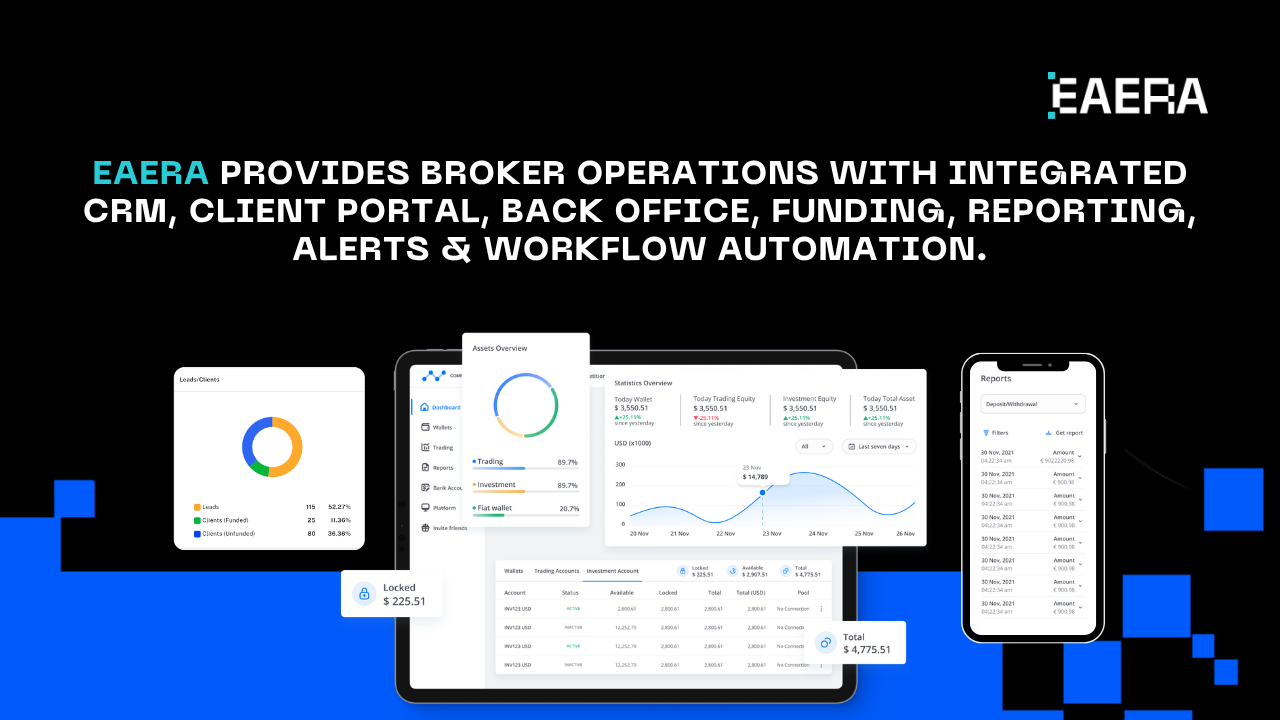
For brokers building a risk-based onboarding model, EAERA can help support more structured client reviews across KYC, payments, account access, and ongoing monitoring.
The right forex CRM software should help brokers treat onboarding as a lifecycle of events, not as a one-time approval step.