



KYC queues can quietly hurt broker conversion. Sometimes a client will register with strong intent, turn in documents, and then wait too long to be reviewed. If the delay is unclear, the client might lose confidence before getting to deposit or first trade.
Related articles:
An FX back office helps brokers better manage KYC queues through improved ownership, review status, document visibility, escalation workflows and reporting.
Why KYC Queues Become a Conversion Risk?
KYC queues are not just an internal operations problem. They directly impact the conversion. If the client waits too long after registration or submitting documents, their intent may fall. They may keep on with support, give up, or go with another broker with a smoother onboarding process.
The risk is lower because the client has already shown some real interest. They’ve signed up, begun onboarding, and provided personal information or documents. If the review process is not perfectly clear, the broker could lose a client who was almost verified and funded.
KYC queues usually grow because of:
- High registration volume
- Incomplete client profiles
- Poor document quality
- Manual review bottlenecks
- Unclear case ownership
- No review priority logic
- Missing escalation rules
- Slow communication with clients
- No reporting on aging cases
An FX back office should enable brokers to see which clients are waiting for approval, why they are blocked, who owns the case and what action is required. Without this visibility, teams may not know there is an issue until they see conversion drops.
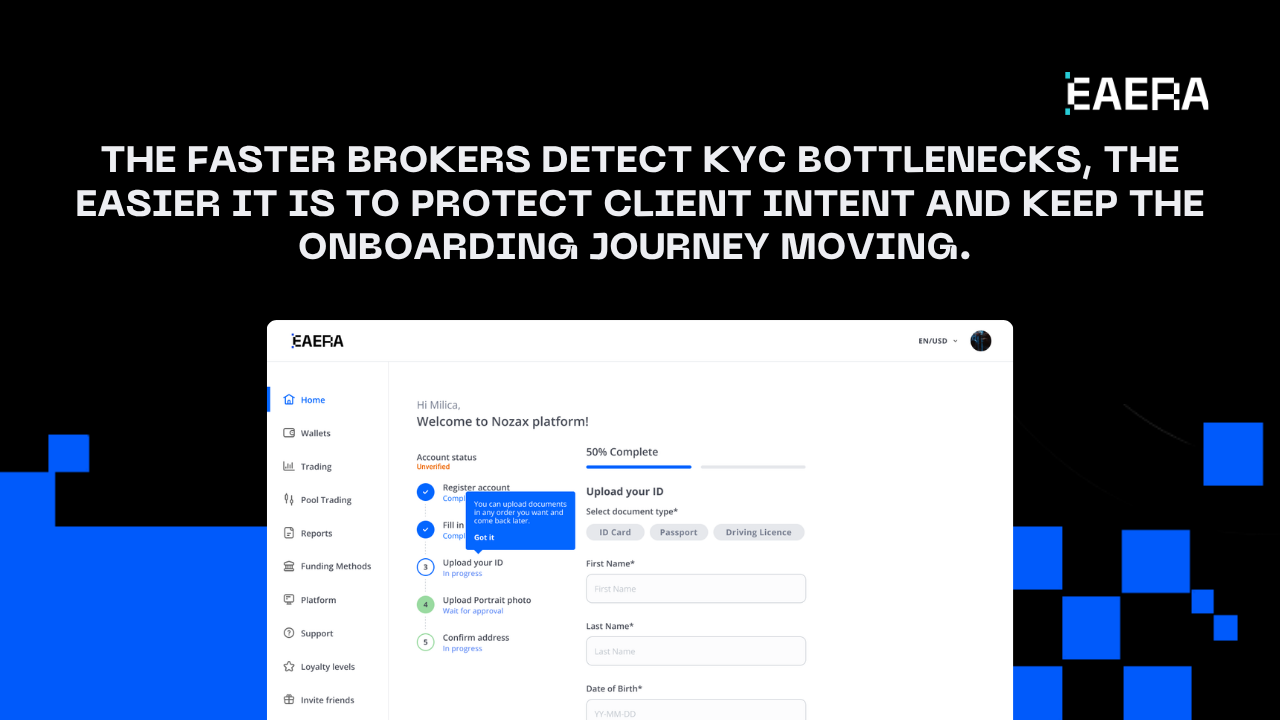
The faster brokers detect KYC bottlenecks, the easier it is to protect client intent and keep the onboarding journey moving.
Give Every KYC Case a Clear Status and Owner
A KYC queue becomes difficult to manage when every case is labeled “pending”. Pending can mean anything from waiting on documents, waiting on review, waiting on manual approval, rejected and having to resubmit, escalated risk checks.
An FX back office should break KYC queues into clear statuses such as:
- Profile incomplete
- Documents missing
- Documents submitted
- Document quality issue
- Under review
- Pending manual approval
- Pending client resubmission
- Approved
- Rejected
- Restricted
- Escalated
Each status needs an owner, a timestamp and a next action. KYC teams need to understand when cases are ready for review. Sales and support need to know the reason the client is blocked. Managers need to see overdue cases before they are conversion problems.
It is especially important to own the case. If the case is not owned by anybody, the client can be sitting in queue even if the next action is trivial. Responsibility is unclear, so a missing document reminder, manual approval, or resubmission request can be delayed.

Prioritize KYC Reviews Based on Conversion Impact
Not all KYC cases are equal in urgency. High-intent clients who have provided profile details, uploaded valid documents, and attempted a deposit shouldn’t be treated like low-intent incomplete registration.
An FX back office should help brokers prioritize review queues using operational signals such as:
- Lead source quality
- Registration completion
- Deposit intent
- Account type requested
- IB or VIP referral
- Region or risk category
- Time waiting in queue
- Number of failed document attempts
- Support ticket urgency
- Sales priority level
For example, a client from a quality IB referral that has completed the profile, uploaded documents and asked questions about deposit methods may need a quicker review than a cold lead with an incomplete profile. If a client has failed to document submission multiple times, they may need more clear support of guidance rather than just stay in the same queue.
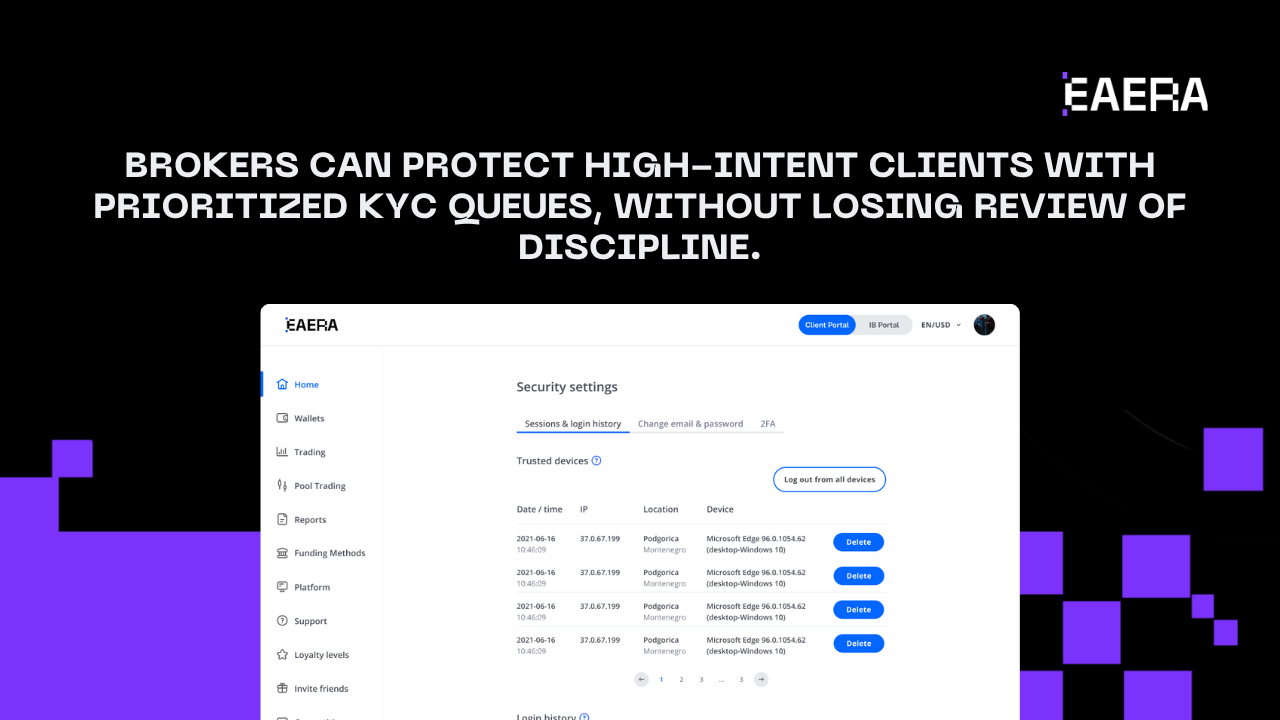
Brokers can protect high-intent clients with prioritized KYC queues, without losing review of discipline. The workflow remains managed, but the team can focus its attention where delays are most likely to cost revenue.
Connect KYC Queues with Sales, Support, and Client Communication
KYC delays are even more damaging when sales and support cannot explain what is happening. But the clients are asking why verification is pending. However, support may not see if the documents are missing, rejected, or still pending review. Sales may continue follow-up without knowing that the client is blocked.
An FX back office should connect KYC status with sales and support context. Teams should be able to see:
- Current KYC status
- Missing document reason
- Rejection reason
- Review owner
- Expected next action
- Client communication history
- Support ticket history
- Sales follow-up status
- Escalation notes
A strong FX back office should allow teams to send communication that is accurate and based on status, not generic. Support can assist the client if documents are missing. Sales can avoid overpromising if the case is in review. If the client has already reached out to support, the urgency is visible to the KYC teams.
Better communication prevents client frustrations while the review process is underway. It also stops internal teams from duplicating effort or providing inconsistent answers.
Move Approved Clients Quickly Toward Deposit
KYC approval should not stop the workflow. That should set off the next conversion step: deposit, fund the wallet, set up a trading account, and place the first trade. Many brokers lose momentum post-approval because there is no team that owns the handoff to funding.
An FX back office should connect KYC approval with post-approval workflows such as:
- Approval notification
- Sales or activation task
- Deposit method guidance
- Wallet setup visibility
- Deposit attempt tracking
- Failed deposit alert
- Trading account creation
- Trading account funding
- First-trade follow-up
This is important because KYC approval is a time of great intent. This is a huge step in the broker journey that the client has already taken. The broker needs to capitalize on that momentum and guide the client towards funding while the interest is still alive.
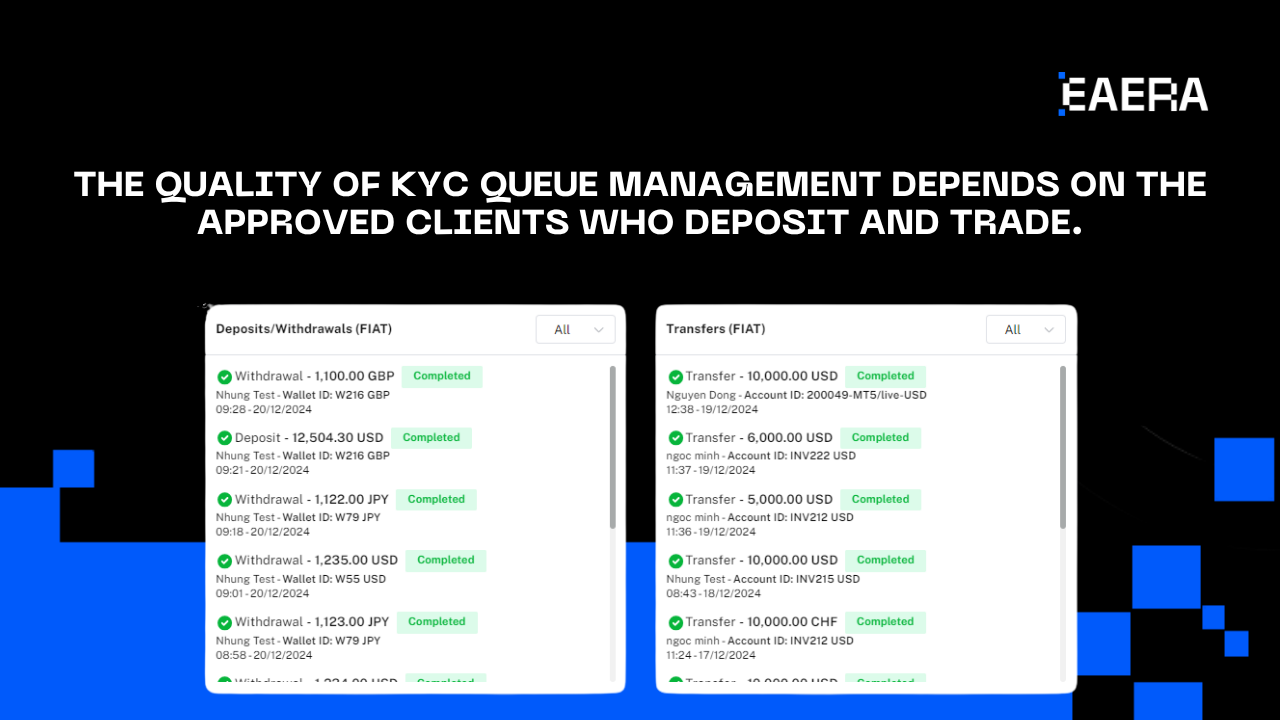
The quality of KYC queue management depends on the approved clients who deposit and trade. The back-office workflow should not end at approval. It should go until the client is funded, ready to trade, and on the way to activation.
FX Back Office Checklist to Prevent KYC Queue Damage
Brokers should assess the capacity of an FX back office to accommodate teams with KYC queues before it impacts conversion. A system must be more than a document for storage. This should assist teams with review flow, client communication, ownership, escalations, and post-KYC activation.
EAERA supports broker operations through connected CRM, client portal, back office, funding, trading account workflows, reporting, alerts, and automation.
For brokers trying to prevent KYC queues from hurting conversion, EAERA can support a connected environment across onboarding, document review, queue ownership, client communication, funding visibility, activation workflows, and reporting.
The right FX back office helps brokers turn KYC queues into controlled workflows before delays damage conversion.
An FX back office helps brokers manage KYC queues with review visibility, task ownership, aging alerts, escalation rules, and KYC-to-deposit reporting.
For brokers focused on growth, KYC queue control is not only compliance support. It is a conversion protection strategy.