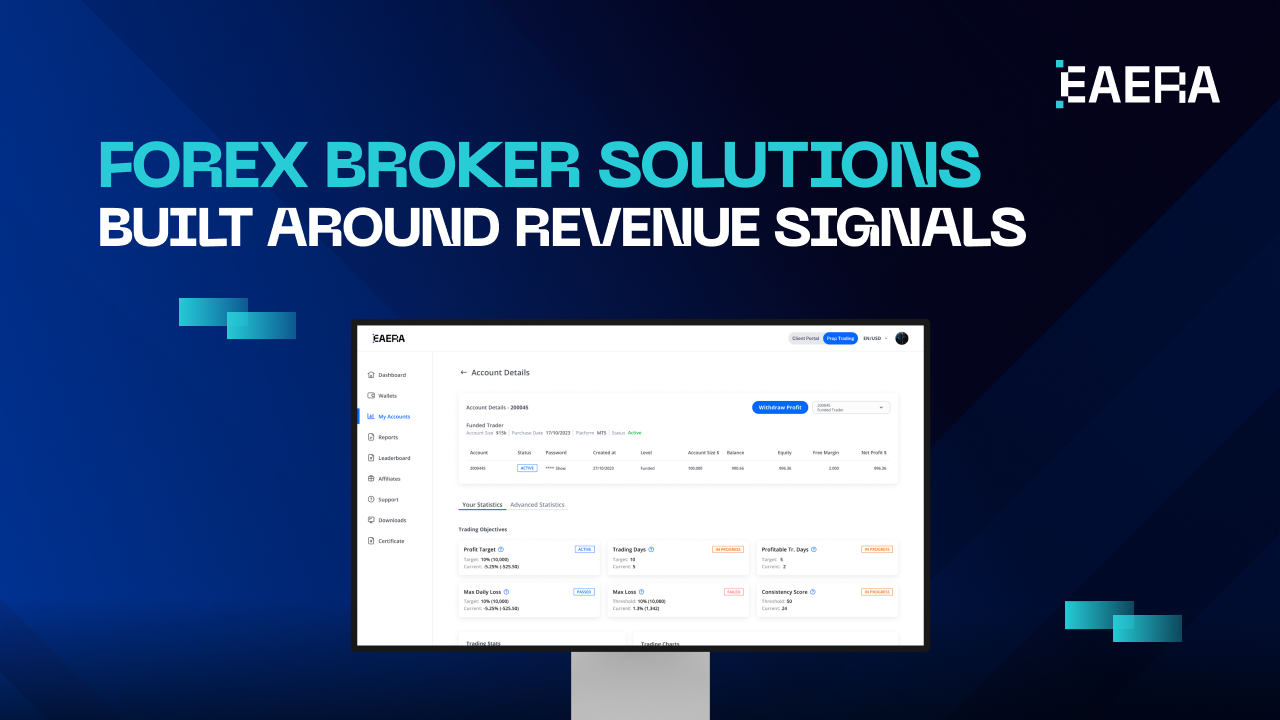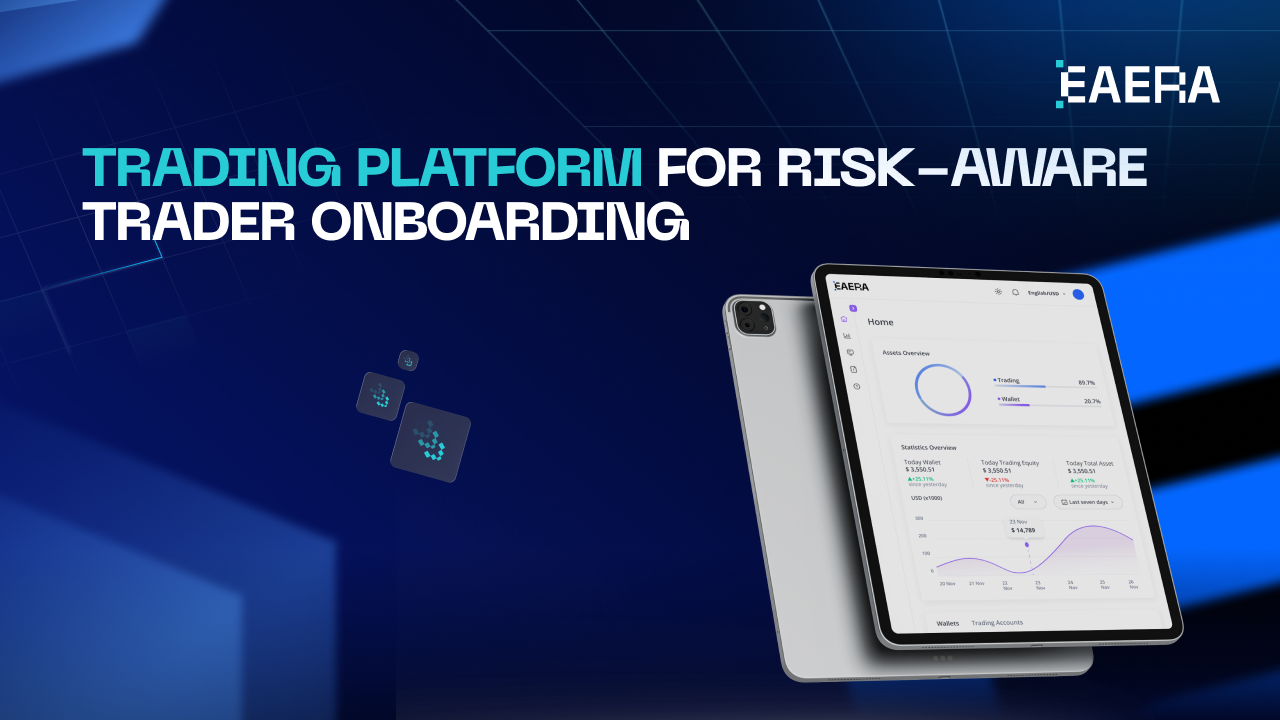




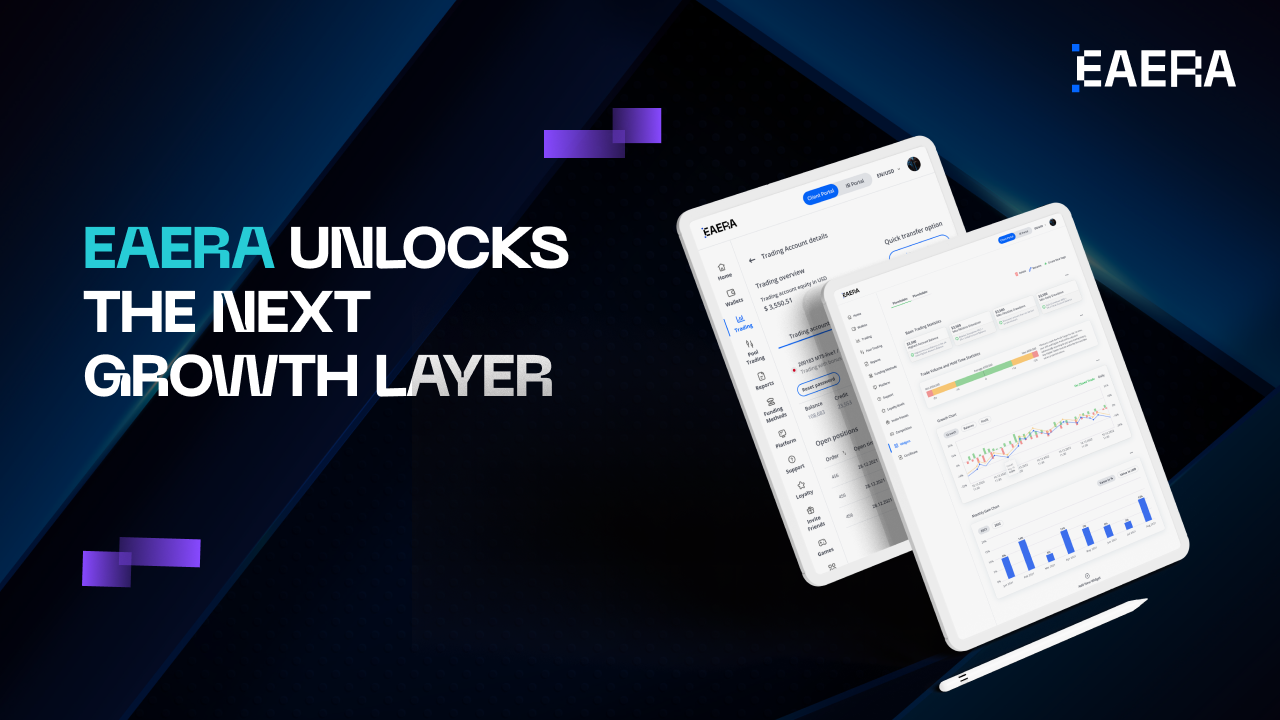
EAERA enables brokers to unlock the next layer of growth by transforming fragmented brokerage operations into a connected, scalable operating environment. As brokers transition from launch to growth, they require more than isolated tools for CRM, client portal, back office, funding, affiliate management and reporting. They want workflows that integrate client activity, internal teams, partner operations, automation, and performance visibility.
This article explains how EAERA helps brokers at each stage of operational maturity, from basic readiness to launch to smarter, data-driven growth.
The Growth Problem Brokers Face After Launch
A lot of brokers can get up and run with a trading platform, website, payment setup, and basic CRM. These tools may be enough to get you started but rarely enough to support long-term growth. The operational pressure becomes visible very soon as soon as the client volume increases.
There are more leads to assign. Need more clients to complete onboarding. More KYC cases need to be reviewed. More deposits and withdrawals to keep track of. We need to open and fund more trading accounts. More IBs and affiliates need to see performance. More support tickets need context. More managers need accurate reports.
This is where EAERA helps brokers move beyond basic launch readiness to a more connected model for scalable operations. When teams can see client status, workflow ownership, funding progress, partner activity, and business performance from a single operating environment, managing growth is easier.
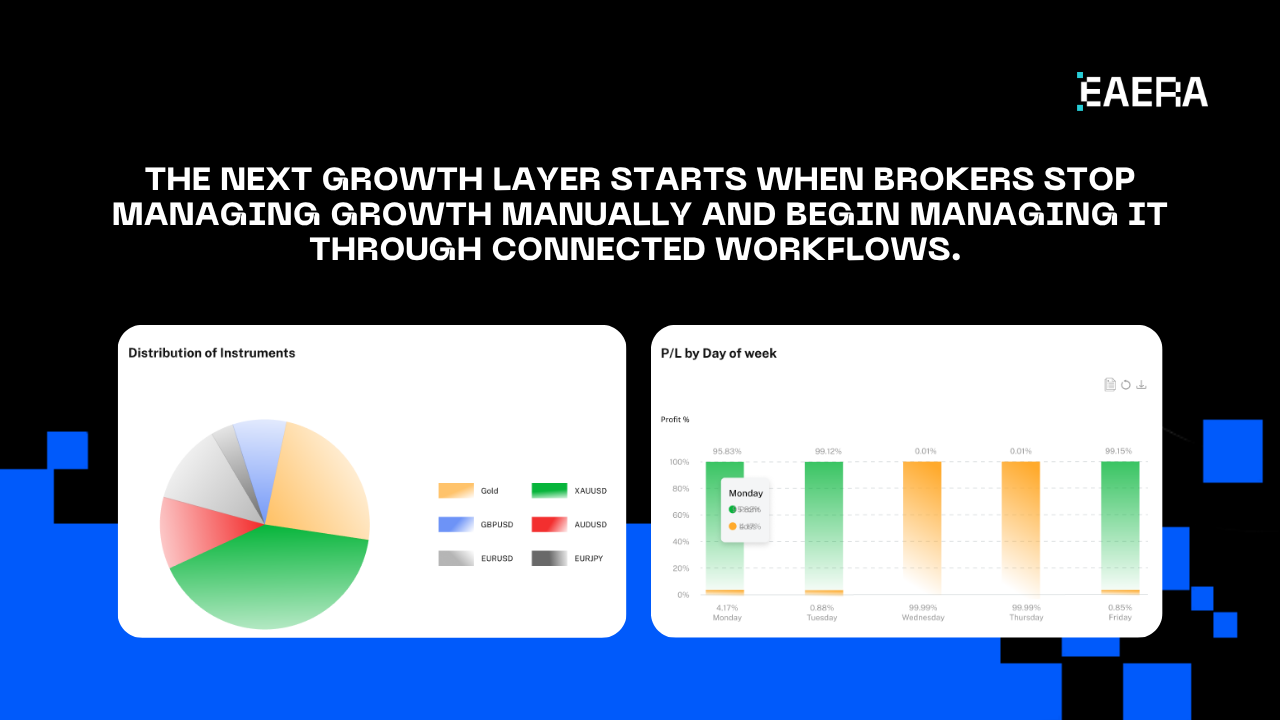
The next growth layer starts when brokers stop managing growth manually and begin managing it through connected workflows.
From Scattered Tools to One Operating Environment
As brokers expand, disconnected systems lead to quick visibility gaps. Sales may track leads in one tool. KYC may review clients in another. Finance may be monitoring payment activity separately. Support may work from the ticket history without seeing the status of the trading account. IB managers can manually check partner performance. Reports prepared from multiple sources could be used by management.
The result is a patchwork system that creates delays and uneven decisions. A client may be verified but unfunded. Wallet can be funded but there is no trading account. An IB-referred client could be active, but attribution is murky. An agent may respond to a client without a full operational context.
Related articles:
- EAERA: CFD WebTrade – A Next-Gen Personalized Web Trading Platform for Brokers
- Forex CRM Software: 5 Risk-Based Onboarding Checks
EAERA helps brokers connect core operational layers, including:
- CRM and client lifecycle
- Client portal workflows
- Back-office operations
- Funding and wallet workflows
- Trading account processes
- Affiliate and IB management
- Reporting and data visualization
- Alerts and workflow automation
The value is not only having more features. The value is the connection. A connected environment helps teams understand where the client is, what action is pending, who owns the next step, and where growth is being delayed.
Broker growth becomes easier to manage when the business works from one operational layer instead of fragmented tools.
From Client Acquisition to Lifecycle Control
Growth is not achieved by capturing a lead. It happens when the broker holds that lead all the way through the client lifecycle: registration, verification, funding, trading account readiness, first trade, repeat activity and retention.
Without lifecycle control, brokers risk losing clients between stages. A lead could register and never get to the KYC completion stage. Verified clients cannot deposit. A funded wallet does not mean a funded trading account. A client can trade once and then become inactive with no retention signal.
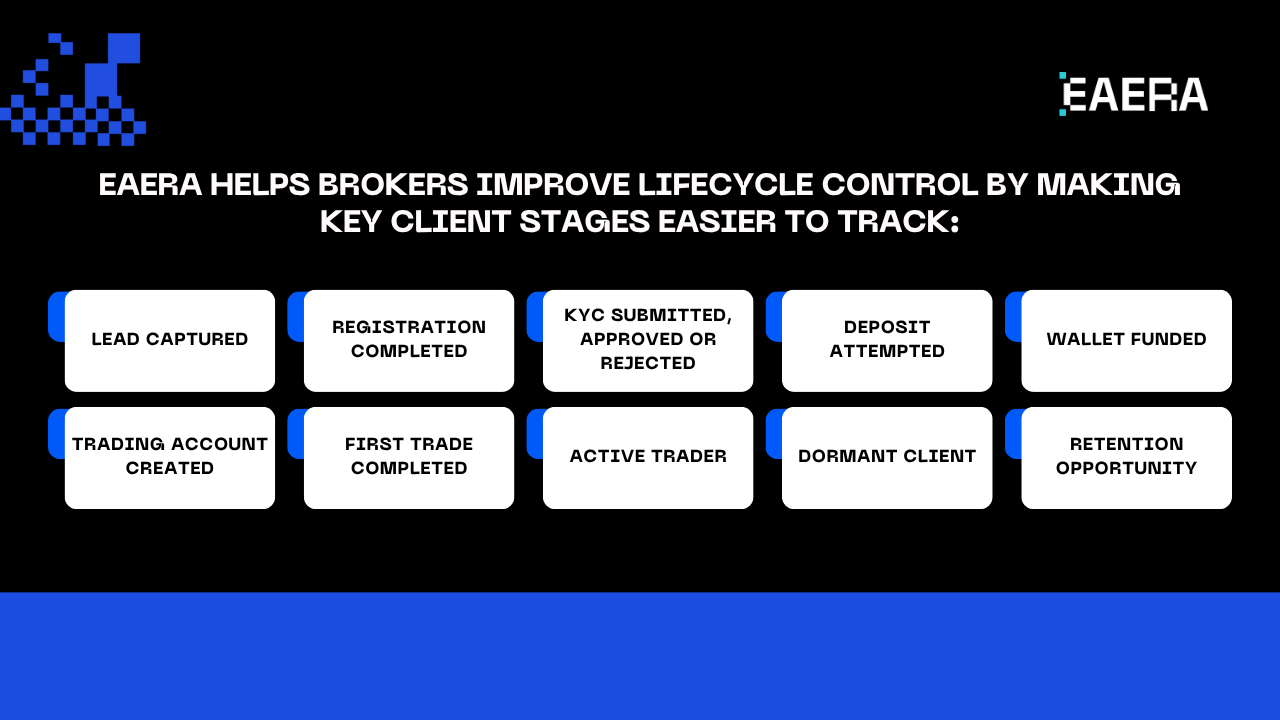
EAERA helps brokers improve lifecycle control by making key client stages easier to track:
- Lead captured
- Registration completed
- KYC submitted, approved or rejected
- Deposit attempted
- Wallet funded
- Trading account created
- First trade completed
- Active trader
- Dormant client
- Retention opportunity
Visibility of lifecycle stages allows teams to act more precisely. Sales can follow up with verified but unfunded customers. Support can assist users who are blocked by KYC or payment problems. Operations can find clients with wallet funding that are not ready to trade yet.
This visibility also helps management understand conversion quality. Instead of only tracking lead volume or deposit totals, brokers can see where clients slow down and which workflows need improvement.
The next growth layer depends on knowing where each client is and what should happen next.
From Manual Coordination to Workflow Automation
With more broker volume, manual coordination becomes expensive and unreliable. Teams spend time allocating leads, checking KYC progress, confirming payment status, following up failed deposits, creating trading accounts, checking IB commissions, and preparing reports.
These are important tasks, but they should not be entirely reliant on chat messages, spreadsheets, or repeated internal reminders. Manual coordination risks missed actions, slow handoffs and inconsistent service quality.
EAERA supports workflow automation that helps brokers reduce repetitive coordination, such as:
- Lead assignment
- KYC reminders
- Approval routing
- Failed deposit alerts
- Wallet-to-account setup tasks
- First-trade follow-up
- Dormant client alerts
- IB commission reporting
- Management dashboards
Automation is not to replace team control. It should set up alerts, task ownership, approval visibility, and traceable workflow actions to clarify control.
The next layer of growth is when brokers can scale repeatable work without adding operational noise.
From Partner Growth to Partner Performance Control
IBs and affiliates can help brokers grow faster, but partner growth can also bring complexity. The more partners you have, the more referral links, more attribution rules, more commission calculations, more payout questions, and more performance comparisons you have to deal with.
Managing partner operations manually can lead to increased disputes. IB managers struggle to identify partners who really add value. Finance teams can spend too long reconciling commissions. Management may see partner volume but not partner quality.
EAERA helps brokers manage partner performance more transparently through:
- IB onboarding
- Affiliate campaign tracking
- Referral attribution
- Partner hierarchy
- Commission workflows
- Payout visibility
- Partner performance reporting
- Revenue contribution tracking
The idea is not just to bring in more IBs or affiliates. The goal is to find partners who deliver high-quality clients: registered, verified, funded, active, and retained traders.
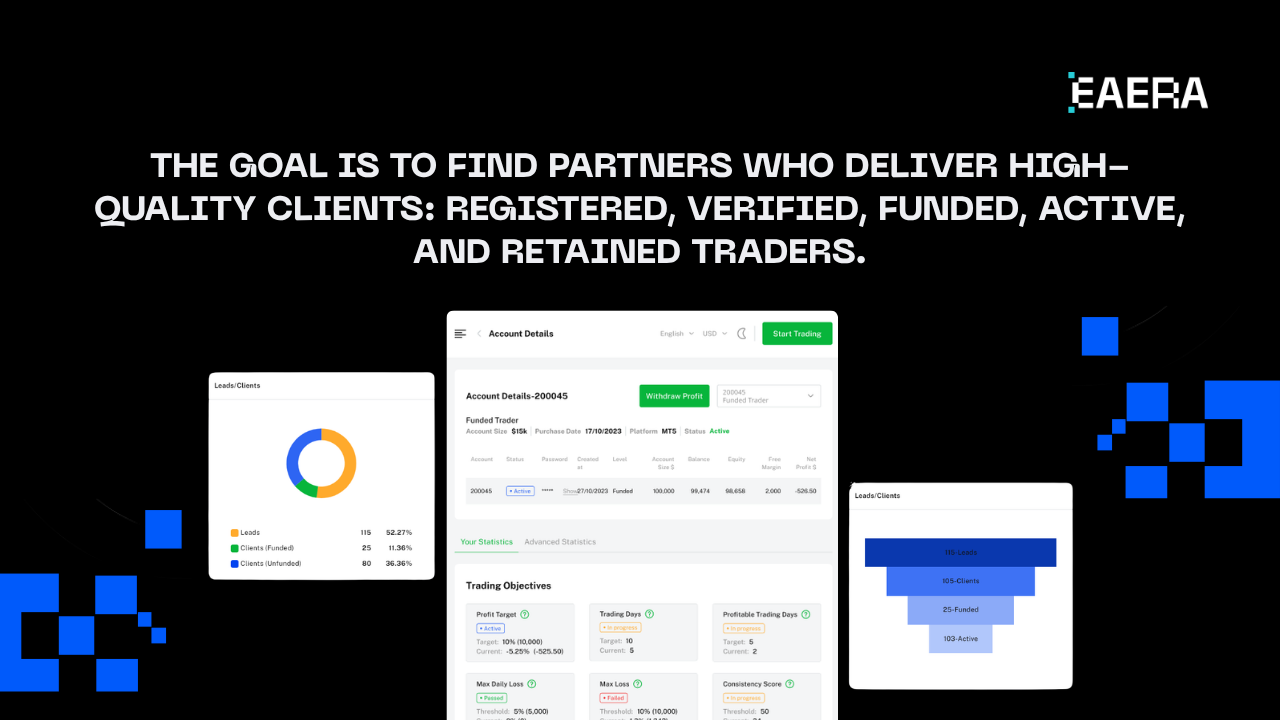
A partner that generates many registrations, but few funded clients may not create long term value. A different partner that brings in fewer, but more active traders might be more valuable to the brokerage. Enhanced partner visibility allows brokers to make smarter decisions around campaigns, incentives, commission structures, and relationship management.
The next level of growth requires brokers to grow partner networks with visibility, not just with volume.
EAERA enables brokers to go from launch readiness to scalable, data-driven operations.
EAERA provides the operating foundation for brokers looking to grow with more control, manage complexity, improve visibility and scale smarter.