



Trader onboarding should not be measured only by completing registration. For brokers, the more important question is whether the trader is verified, funded, informed, eligible, and ready to use the trading environment responsibly. A trading platform can enable risk-aware onboarding by combining readiness assessment, guided activation, account access, product eligibility, and early behavior signals.
Related articles:
Risk-Aware Onboarding Starts with Trader Readiness
Many brokers are obsessed with how quickly clients can open accounts. But fast account creation doesn’t mean the trader is ready to fund, trade or access specific products. A risk-aware onboarding model allows brokers to assess the client’s readiness before taking them further along the trading journey.
A trading platform should help classify readiness across several areas:
- Identity verification
- Profile completeness
- Funding readiness
- Product eligibility
- Risk disclosure acceptance
- Trading account setup
- Platform familiarity
- Support dependency
- Early trading intent
- Potential friction signals
This approach transforms onboarding from a linear form submission process into a structured readiness model. Rather than providing a ‘one size fits all’ approach to new clients, brokers can route each trader based on status, eligibility and next best action.
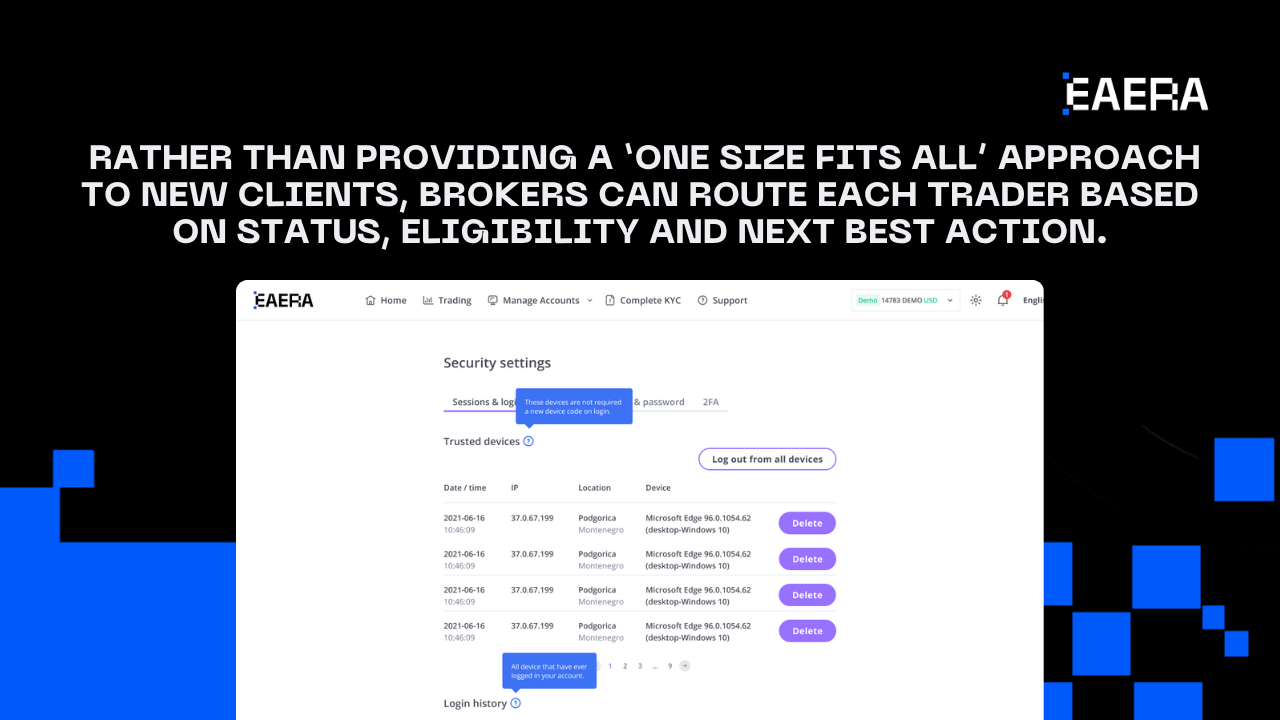
For instance, one trader may be prepared to venture into demo trading but not yet eligible for live trading. Another may have done KYC but still need funding guidance. Another one could be funded but not sure how to activate a trading account. All cases are different onboarding tracks.
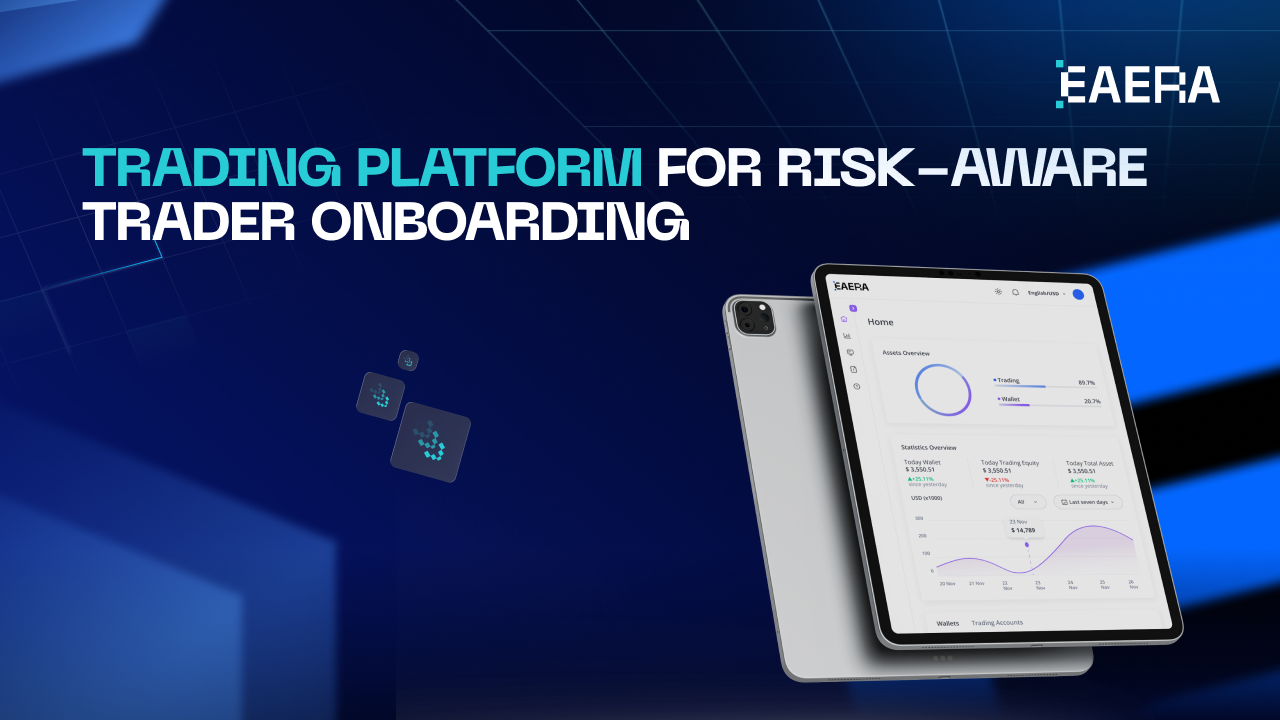
Supporting risk-aware trader onboarding with a trading platform including client readiness assessment, access control, funding guidance, product eligibility, and early trading behavior monitoring.

Separate Access Readiness from Trading Readiness
A client may be allowed to log in but not yet ready to trade. Access readiness and trading readiness should be treated as different operating states.
A trading platform should allow brokers to separate:
- Login access
- Profile editing access
- KYC submission access
- Deposit access
- Wallet access
- Trading account creation
- Live trading access
- Product or instrument access
- Leverage availability
- Withdrawal eligibility
This separation gives more control to brokers. The trader can sign up and go through the onboarding steps before they can deposit. Another trader can be verified and allowed to deposit funds but may require further acceptance before they can access some product, account types or leverage conditions.
Excessively broad access levels may lead brokers to allow traders to engage with products or actions before they are sufficiently prepared. If the levels of access are too restrictive, traders will find unnecessary friction and drop out of the journey.
This more controlled approach allows the platform to progressively unlock functionality. The trader knows what is on offer now, what is coming, and what needs to be done next. Internal teams also get a clearer picture of why a trader can or can’t take certain action.
Risk-aware onboarding requires access that changes according to readiness, not a single all-or-nothing account status.
Use Guided Activation to Reduce Early Friction
Many new traders fall off the onboarding journey simply because they don’t know what to do next. They might not know whether to upload documents, choose account type, deposit money, transfer money, sign disclosures, or open the trading terminal.
A trading platform should provide guided activation through:
- Step-by-step onboarding progress
- Clear pending actions
- Contextual prompts
- Account setup guidance
- Funding instructions
- Product access explanation
- Risk disclosure reminders
- Trading account readiness status
- First-login guidance
- First-trade preparation
Guided activation reduces dependency on support and enhances quality of onboarding. Instead of the client asking for support for what is missing, the platform should make clear what is the next required step.
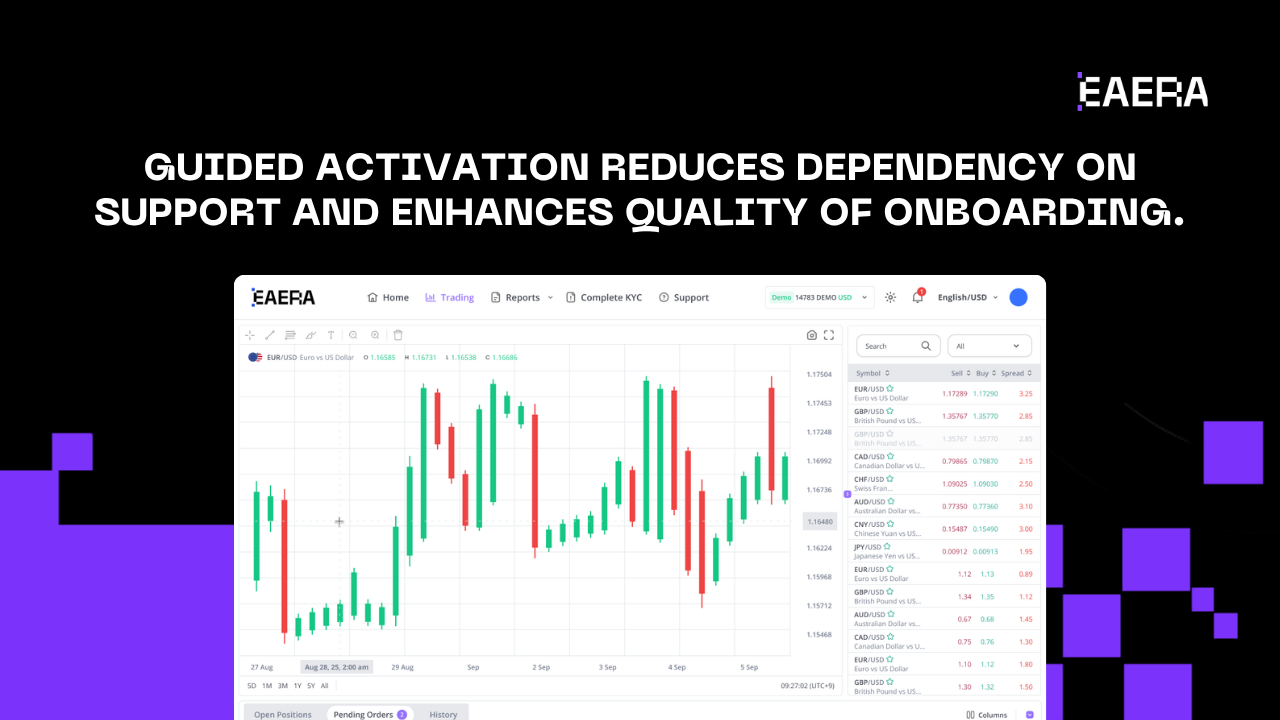
Guided onboarding is more than a user experience feature for brokers. It is a control mechanism for conversion. When the next action is clearer, more traders can move from registration to verification, funding, and first trade with less operational gaps.
A platform-driven guidance layer helps to translate trader intent into structured activation.
Align Product Exposure with Trader Profile and Broker Policy
Product exposure should be linked with trader profile data in risk-aware onboarding. Not every trader should have the same account type, leverage, access to assets or trading conditions from the first login.
A trading platform should help brokers align product exposure with:
- Client classification
- Jurisdiction or region
- Account type
- Verification status
- Disclosure acceptance
- Suitability or appropriateness checks
- Deposit status
- Leverage policy
- Product availability
- Internal risk policy
A risk-aware trading platform enables brokers to manage “what” traders can access based on operational rules and readiness indicators.
This is important because onboarding doesn’t stop when the account is created. The first trading environment a client is exposed to should be a reflection of eligibility, broker policy, and readiness. Enabling product access prematurely could introduce unwarranted risk to the broker. If access is not clearly explained, the trader may feel blocked and not know why.
Product exposure should be a deliberate onboarding choice, not an automatic default.
Capture Early Behavior Signals Before Problems Escalate
The first few steps after onboarding pay dividends. They show whether the trader has a grip on the platform, has funded, opened an account, made the first trade or is inactive.
A trading platform should help brokers observe early behavior signals such as:
- First login completed
- Time to complete profile
- Time to submit documents
- Time to first deposit attempt
- Failed funding attempts
- Wallet funded but no account created
- Account created but not funded
- First trade completed
- Rapid early drawdown
- Inactivity after funding
- Repeated support requests
- Abandoned activation steps
These signals are useful for conversion and risk oversight. A trader who is funding but not trading may need some product guidance. If a trader has repeated payment failures, he may have to support intervention. An aggressive early behavior trader may also require risk visibility for broker policy.
Early behavior data also helps teams to prioritize action. Sales teams can concentrate on high-intent customers. When there’s friction, support teams can help. And teams at risk can see the early warning signs. Management can see where onboarding is falling off the most.
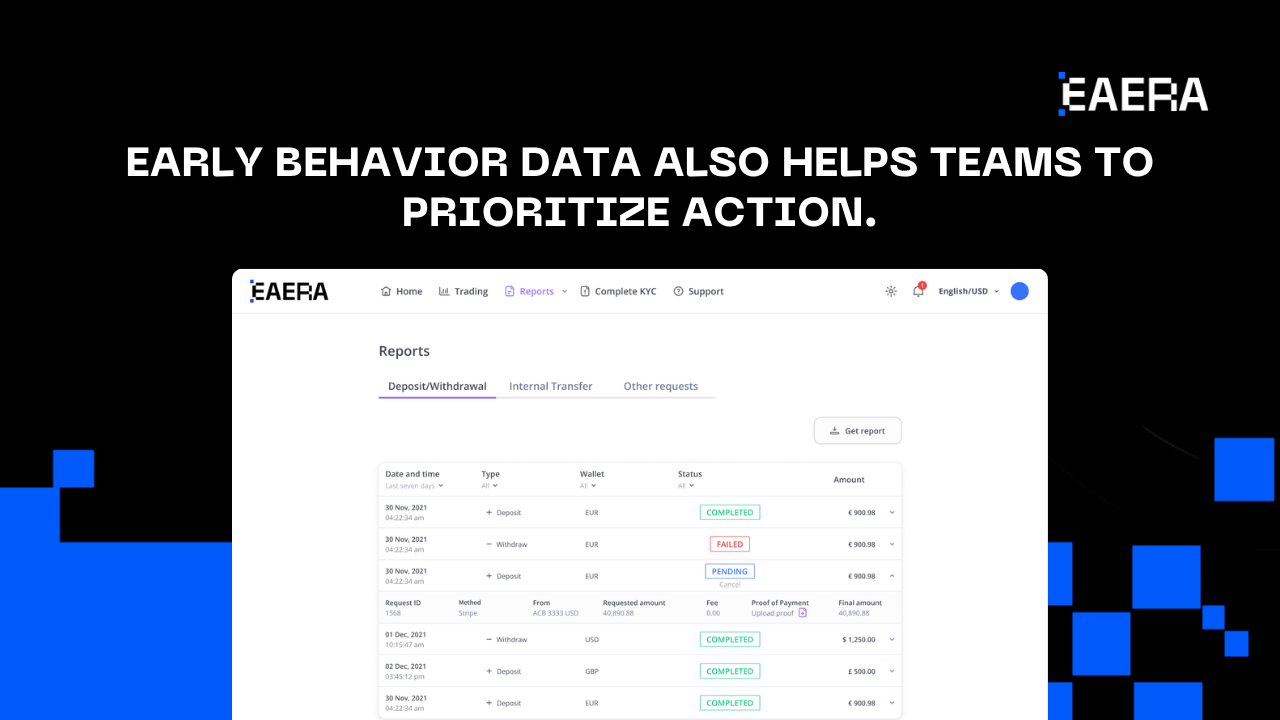
Early behavior data helps brokers support traders before friction becomes churn or risk.
Build a Risk-Aware Onboarding Model into the Trading Platform
Brokers need to assess a trading platform on how well it can support a structured onboarding model. The platform shouldn’t just open accounts. It should help brokers understand readiness, control access, guide activation, align product exposure, and monitor early behavior.
EAERA provides broker operations support with connected CRM, client portal, back office, funding, trading account workflows, reporting, alerts, automation and trading platform capabilities.
EAERA can offer brokers a connected environment to improve the quality of onboarding, managing trader readiness, funding visibility, account activation, product access, and early behavior signals as a single lifecycle.
With the right trading platform, brokers move from a basic account onboarding process into a more controlled, measurable and risk-aware activation model.