



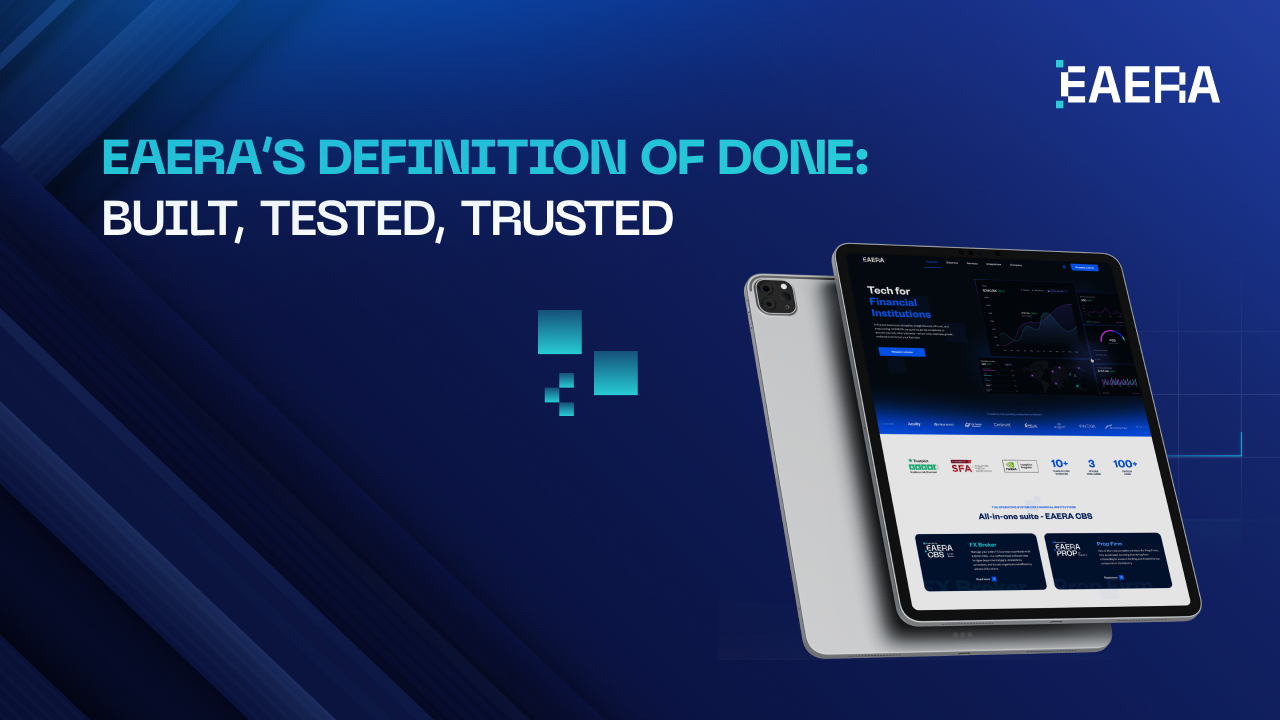
At EAERA, “done” means more than finished development. A product isn’t ready until it’s built to client specs, tested for key workflows, reviewed for real brokerage use cases, and trusted to hand over to clients. Quality assurance is part of the delivery process prior to release and during use by the client.
The article describes how EAERA’s approach to QA protects product quality, reduces operational risk, and ensures brokers have technology they can rely on.
What “Definition of Done” Means at EAERA
At EAERA, the definition of done is the benchmark to determine whether a feature, module or product release is really ready. It is not a development check list. It is a quality gate that links requirement understanding, implementation, testing, review, handover and post release support.
A feature should not be considered done just because the code is complete. It should be validated in the business context and the user journey, and how the brokers will use it in everyday practice.
A strong definition of done should include:
- Business requirements
- User flow expectations
- Broker operation logic
- UI/UX behavior
- Permission rules
- Data accuracy
- Edge cases
- Integration behavior
- Error handling
- Handover readiness
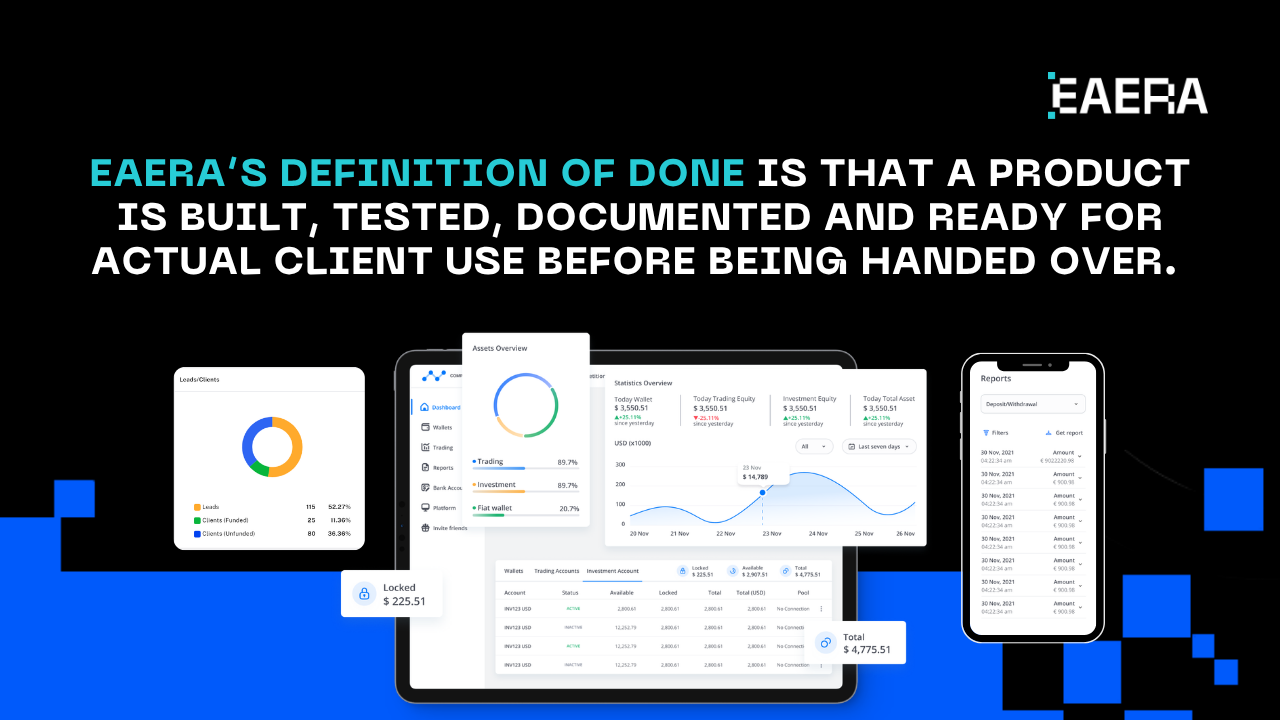
EAERA’s definition of done is that a product is built, tested, documented and ready for actual client use before being handed over.
This makes QA a delivery responsibility, not a last stage task. Quality is not something you put in at the end. It is incorporated into each step of the product lifecycle, from the requirements definition to the client support.
QA Starts with Clear Requirements, Not Just Testing
QA starts before the first test case is run. Product quality is a function of the team’s understanding of the client’s needs, the broker’s use of the feature, and the risks the workflow may create.
Before testing, the team should clarify:
- What business problem the feature solves
- Which user roles will use it
- What data is required
- Which permissions apply
- Which workflows are affected
- Which integrations are involved
- What success should look like
- What failure cases must be handled
Broker technology isn’t typically a standalone need. Change in funding may impact wallet balance, transaction status, finance approval, client portal display, back-office reporting, and email notification. An IB commission change can affect client attribution, hierarchy, payout logic, and partner reporting.
This is why EAERA considers clarity of requirements to be part of quality assurance.
Clear requirements enable QA teams to test the product against real business logic, not assumptions. They also save developers from rework; product teams define acceptance criteria, and clients get what they are paying for.
Better requirements lead to less misunderstood deliveries and help teams validate if the product solves the right problem.
Built for Real Broker Workflows
A product is useful only if it works in real broker operations. For EAERA, the build stage should reflect the way brokers manage clients, accounts, payments, partners, reports, and internal teams.
Quality should be checked across core brokerage workflows such as:
- Client registration and onboarding
- KYC review and approval
- Client portal actions
- Back-office permissions
- Deposit and withdrawal requests
- Wallet and trading account transfers
- Trading account creation
- IB and affiliate attribution
- Commission and payout workflows
- Reporting and data visibility
- Alerts and notifications
“Built” means the feature is built into the full product ecosystem. There are many interconnected modules in a broker platform, and one change can affect many user roles and workflows.
For instance, withdrawal status should also be updated in finance records. It should show up correctly in the client portal, back office, notification flow, audit trail, and reporting where appropriate. Missing part of the flow can affect both the client experience and the internal operation.
When a product is built around real broker workflows, QA can verify business value, not just screens.
Tested Across Functionality, Data, and Edge Cases
EAERA testing should be more than just if a button works. It must verify that the functionality works properly across functionality, data, user permissions, integrations, and edge cases.
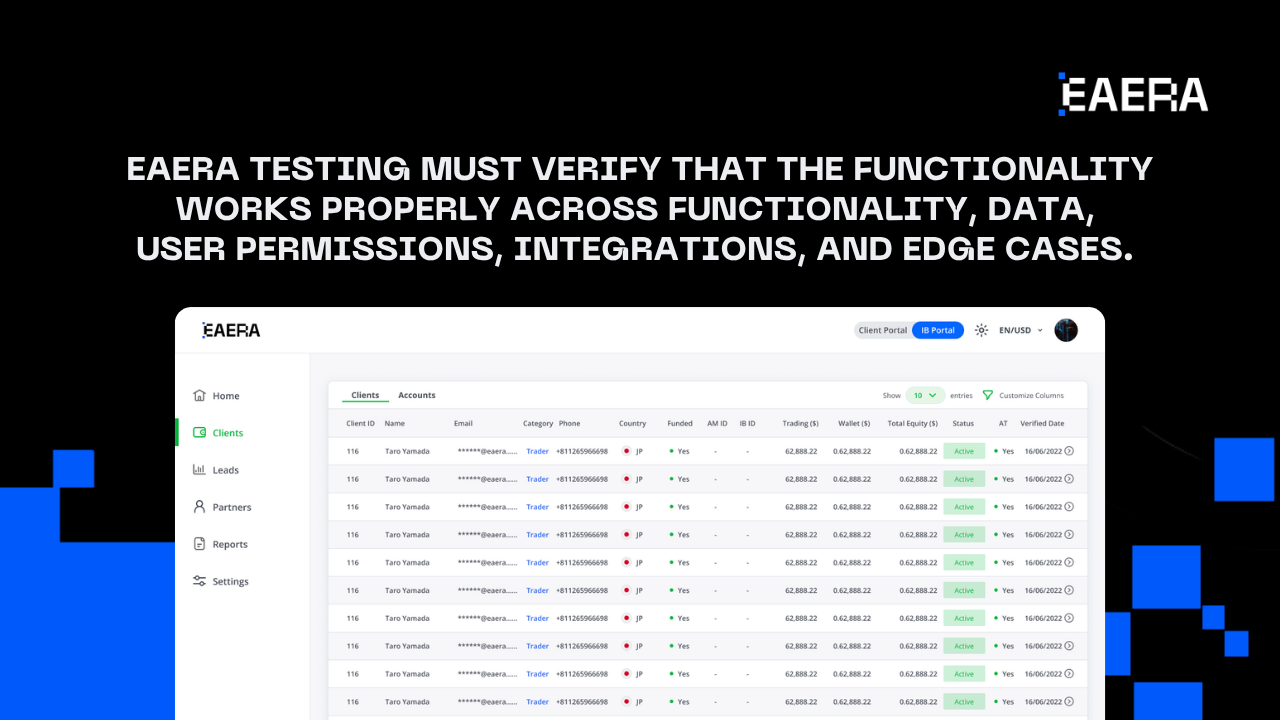
Functional testing ensures that each function performs as required by the approved specifications. Workflow testing tests the entire user journey, not just a one-off screen. Permission testing ensures that each role can only access and perform allowed actions.
Data testing is important as well. Broker platforms deal with statuses, balances, transaction amounts, reports, client records, account information, and commission logic. A small data problem can cause a big operational problem.
Integration tests test the modules’ integration. One workflow could be CRM, back office, client portal, payment providers, trading platforms, email systems, and partner modules.
The tests also have to include error handling. Actions that fail should produce clear messages and not produce broken records. Regression testing is also needed to ensure new changes do not break existing workflows.
For EAERA, testing is not only about finding bugs. It is about protecting the broker’s daily operations before the product reaches the client.
A QA-ready broker product should be tested across user flows, data accuracy, permissions, integrations, and business-critical edge cases.
Trusted Before Client Handover
A product should be quality checked before being delivered to a client. At EAERA handover quality should ensure that the client receives a product that is stable, understandable, and usable.
Handover readiness may include:
- Key workflows tested
- Known issues reviewed
- Critical bugs resolved
- Configuration checked
- Client-specific settings verified
- User roles and permissions confirmed
- UAT feedback addressed
- Release notes prepared
- Handover documents updated
- Support team briefed
The goal is to reduce the gap between “development finished” and “client can use it confidently.”
And a solid handover process builds trust. Clients should know what has been delivered and tested, what has changed, and how to use the product in daily operations.
EAERA’s trusted delivery means the product is not only ready to be released, but ready to operate for the client.
Handover is a quality checkpoint, not a formality. This helps to make sure the client gets a product that has been looked at from both a technical and operational point of view.
Quality Continues While Clients Use the Product
The quality of the product doesn’t stop at handover. Once clients start using the product, real-world usage may reveal new workflows, edge cases, configuration needs, or improvement opportunities.
At EAERA, quality should continue through client feedback, support monitoring, issue tracking, release improvement, and operational review.
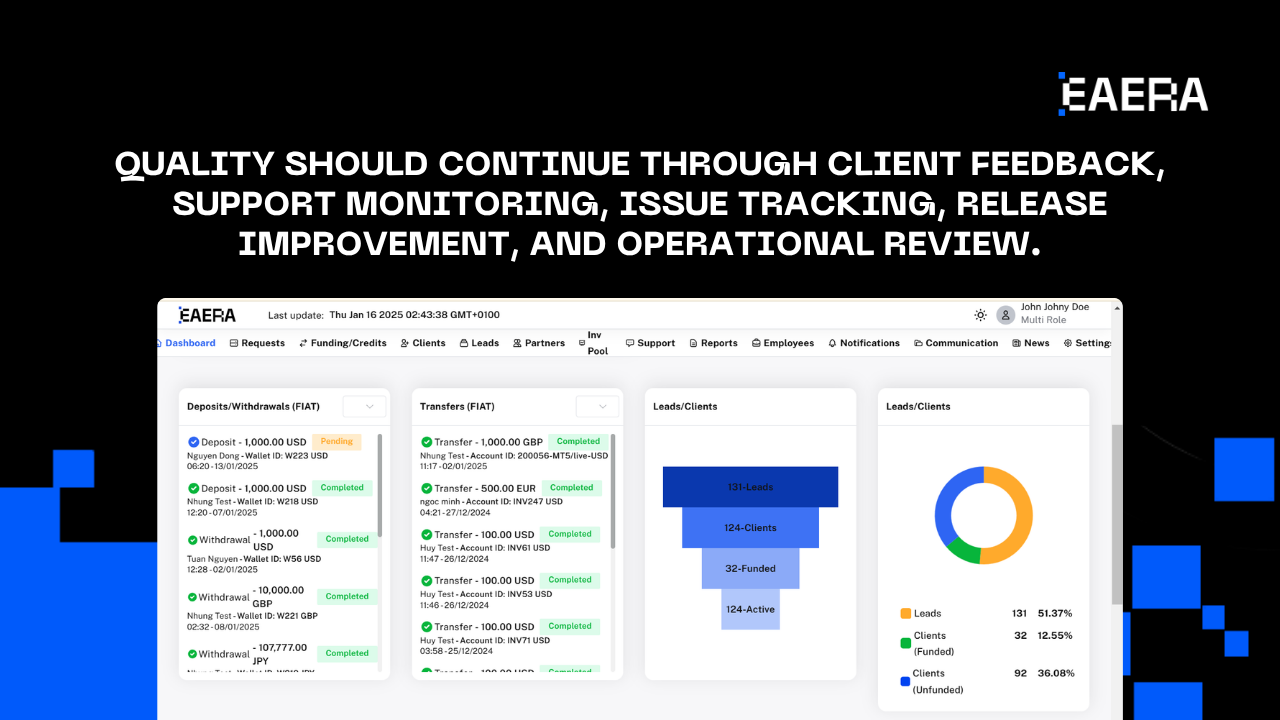
Post-handover quality activities may include:
- Monitoring client-reported issues
- Prioritizing bugs by severity and business impact
- Reproducing issues with clear steps
- Checking whether issues are product bugs, configuration gaps, or user-flow questions
- Communicating fix status clearly
- Improving documentation based on repeated questions
- Reviewing support trends
- Validating fixes before release
- Ensuring regression checks after updates
- Collecting feedback for future improvements
This makes QA a continuous trust system. As brokers onboard clients, process payments, manage accounts, run reports and support daily operations, a broker technology product needs to continue to function.
For EAERA, post-handover quality is about maintaining the client’s confidence as the product is used in real broker environments.
Ongoing QA also means the product gets better. When support feedback, product updates, and testing cycles are integrated, the platform is more stable and better meets client needs.
QA is not just a testing phase. It’s a framework of trust that helps brokers acquire technology that is built, tested, and supported for day-to-day.