



Prop trading firms use challenge models to test trader discipline, risk control and performance before granting access to funded accounts or rewards. The most common models include 1-step challenges, 2-step challenges, and instant funding programs.
Related articles:
- Trading Competition Software for Multi – Asset Contests
- EAERA Trading Platform Secure, Monitor, and Optimize Trading
Trading competition software helps firms manage these challenge types through transparent rules, automated tracking, breach detection, trader dashboards, performance reports, and payout workflows.
Why Prop Challenge Types Need Structured Software?
Prop challenge types may seem simple from the trader’s perspective, but they create complex operational requirements for the firm. Each challenge has different rules, targets, limits, stages, account permissions, evaluation logic, and payout conditions.
In the absence of structured software, prop firms may rely on manual checks, spreadsheets, screenshots and support tickets to verify trader progress. This creates operational risk, inconsistent decisions, delayed upgrades, payout disputes, and weak auditability.
A prop challenge system usually needs to manage:
- Account provisioning
- Profit targets
- Daily loss limits
- Overall drawdown limits
- Minimum trading days
- Trading rule violations
- Phase progression
- Challenge reset or retry rules
- Trader dashboard visibility
- Admin review workflows
- Payout eligibility
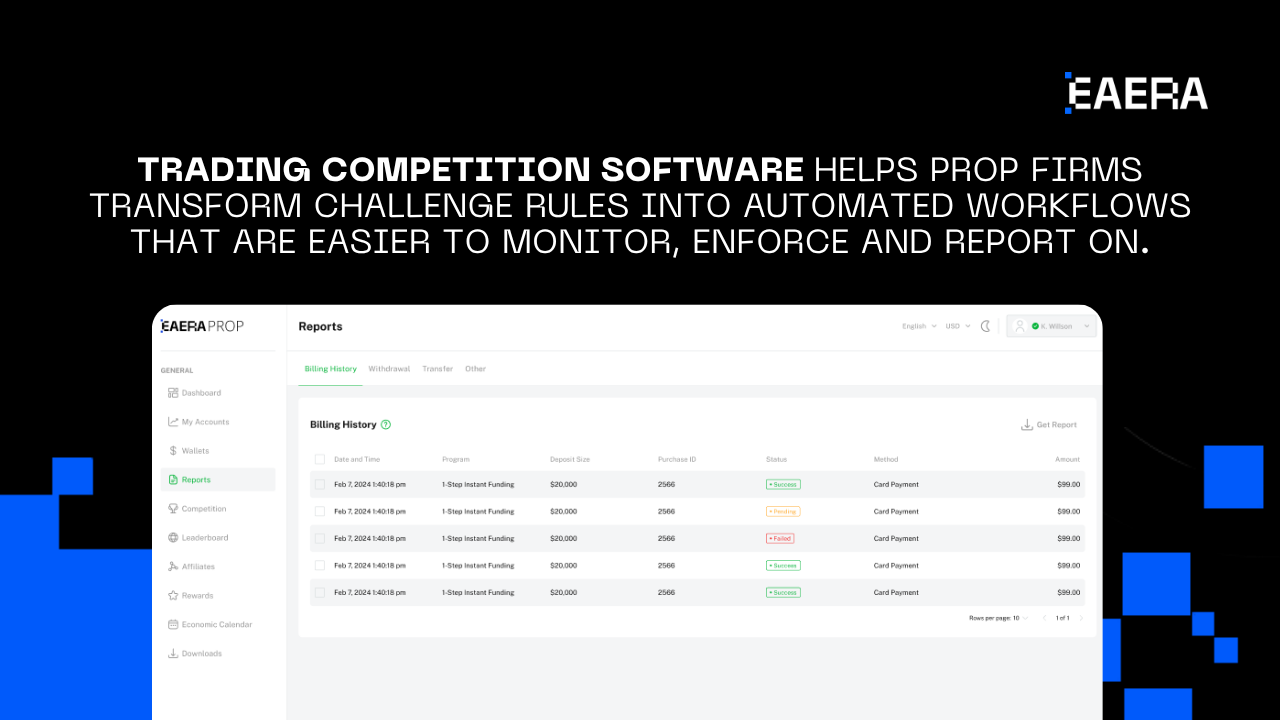
Trading competition software helps prop firms transform challenge rules into automated workflows that are easier to monitor, enforce and report on. Rather than manually checking performance after the fact, firms can continuously monitor the status of each trader and respond more quickly when a rule is passed, breached or pending review.
Structured software is about more than just the efficiency for prop firms. It also makes it more consistent. This consistency helps to reduce disputes and build trust in the challenge model.
Challenge Type 1: 1-Step Prop Challenge
Often the simplest evaluation model is a 1-step prop challenge. Traders must pass a phase by reaching a profit target while adhering to risk rules. If they pass, they can go straight to a funded account or to a payout-eligible stage, depending on the firm’s model.
Typical 1-step challenge rules may include:
- Profit target
- Daily drawdown limit
- Maximum overall drawdown
- Minimum trading days
- Restricted trading behavior
- Time limit or no time limit
- Account size
- Reset or retry conditions
The trading competition software should allow the firms to monitor the progress towards the profit target in real-time and to check compliance with the rules. This is important because a trader may appear close to passing but still be invalidated if they break a daily loss rule, violate consistency rules or do not meet minimum trading day requirements.
Speed and clarity are important for 1-step challenges. Admin teams need to be able to assess if the performance is valid. Risk teams need to be able to immediately see if a trader is in violation of daily or overall loss rules.
The 1-step model is easier to market because it feels simple to understand. However, it still needs to be automated correctly. If the profit, drawdown and eligibility calculations are not clear, the firm can have unnecessary support tickets and payout disputes.

Challenge Type 2: 2-Step Prop Challenge
A 2-step prop challenge requires traders to pass two separate phases before reaching a funded stage. Phase 1 usually tests profit generation under risk limits. Phase 2 often confirms consistency, discipline, and repeatability under a lower or adjusted target.
Common 2-step challenge elements include:
- Phase 1 profit target
- Phase 2 profit target
- Daily loss limit
- Overall drawdown limit
- Minimum profitable days
- Consistency rules
- Phase upgrade logic
- Reset or retry rules
- Verification account creation
- Funded account eligibility
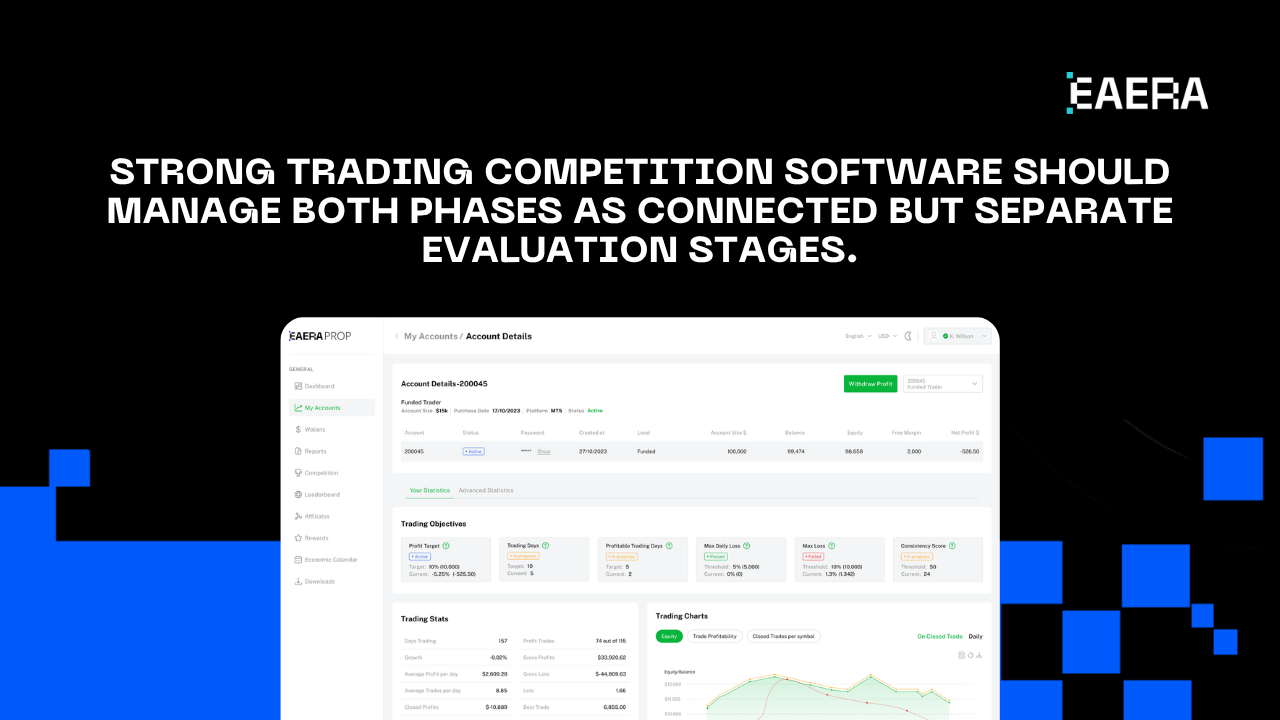
Strong trading competition software should manage both phases as connected but separate evaluation stages. Some rules might be shared between Phase 1 and Phase 2, but more often the targets, permissions and completion conditions will be different.
Once Phase 1 is completed, the system should automatically go through all rules prior to the trader progressing to Phase 2. Once Phase 2 is complete, the software should check whether the status is funded or whether administrative review is required.
Progression logic is important. Without automation, admin teams can get bogged down by verifying that a trader really passed, that a breach occurred before completion, or that the correct account should be set up for the next phase.
The 2-step model provides firms with greater depth of evaluation but also requires stronger audit trails. Every upgrade, reset, breach and completion decision should be traceable.
When a trader passes Phase 1, the system should automatically check all the rules and upgrade the trader to Phase 2. Once Phase 2 is complete, the software should check whether the status is funded or whether administrative review is required.
Progression logic is important. Without automation, admin teams can get bogged down by verifying that a trader really passed, that a breach occurred before completion, or that the correct account should be set up for the next phase.
The 2-step model allows greater depth of evaluation of firms but requires stronger audit trails. Each upgrade, reset, breach and completion decision should be traceable.
Challenge Type 3: Instant Funding Programs
Instant funding programs allow traders to get access to a funded or payout-eligible account faster, usually without having to go through a traditional evaluation challenge.
Instant funding models may include:
- Higher entry fee
- Lower initial scaling limits
- Stricter drawdown rules
- Profit split rules
- Payout cycle rules
- Consistency requirements
- Account scaling criteria
- Account termination rules
- Risk review triggers
Trading competition software should allow firms to monitor instant funding accounts with real-time risk alerts, performance tracking, payout eligibility verification, and admin approval workflows.
Instant funding is attractive to traders because it reduces the waiting time. But for firms, it means a greater need to monitor drawdowns reliably, spot suspicious activity and review payouts.
This model also requires clear trader communication. Traders should know their account status, payout rules, scaling conditions, and restrictions. Admin teams should be able to see if the trader is eligible, in breach, under review or ready for payout.
Instant funding begins with trader access earlier and requires the strongest risk visibility.
Core Software Features Across All 3 Challenge Types
Although 1-step, 2-step, and instant funding models differ, they share the same operational foundation. Firms need accurate data, automated rule enforcement, trader-facing transparency, and admin control.
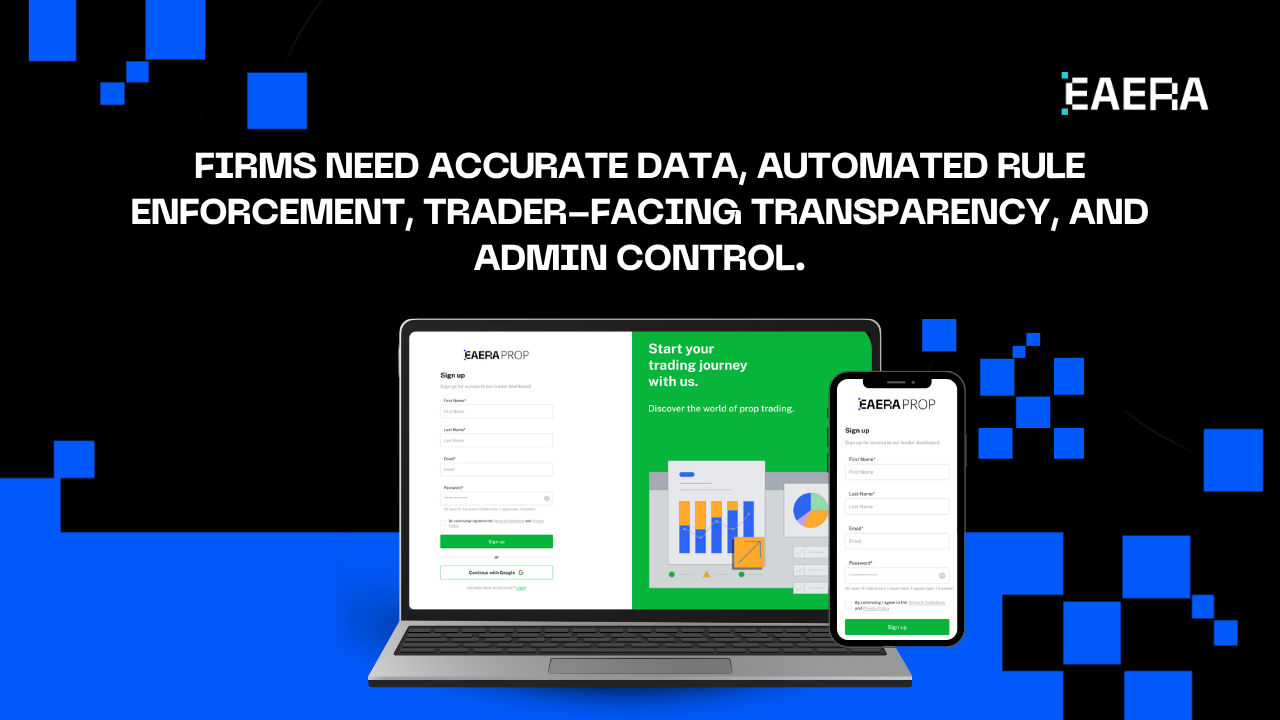
Trading competition software should support:
- Challenge plan setup
- Account size configuration
- Rule templates
- Profit target tracking
- Daily and overall drawdown monitoring
- Trading day calculation
- Breach detection
- Phase upgrade automation
- Trader dashboard
- Admin dashboard
- Payout eligibility tracking
- Audit logs
- Reporting and analytics
The software should be able to show performance post hoc. It should be able to continuously track whether a trader is still eligible, close to passing, in breach, pending review, or ready for payout.
The right trading competition software helps prop firms run multiple challenge types with clearer rules, faster operations, stronger risk control, and better trader experience.
Trading competition software helps firms manage these models with rule automation, breach detection, trader dashboards, admin workflows, payout tracking, and reporting.