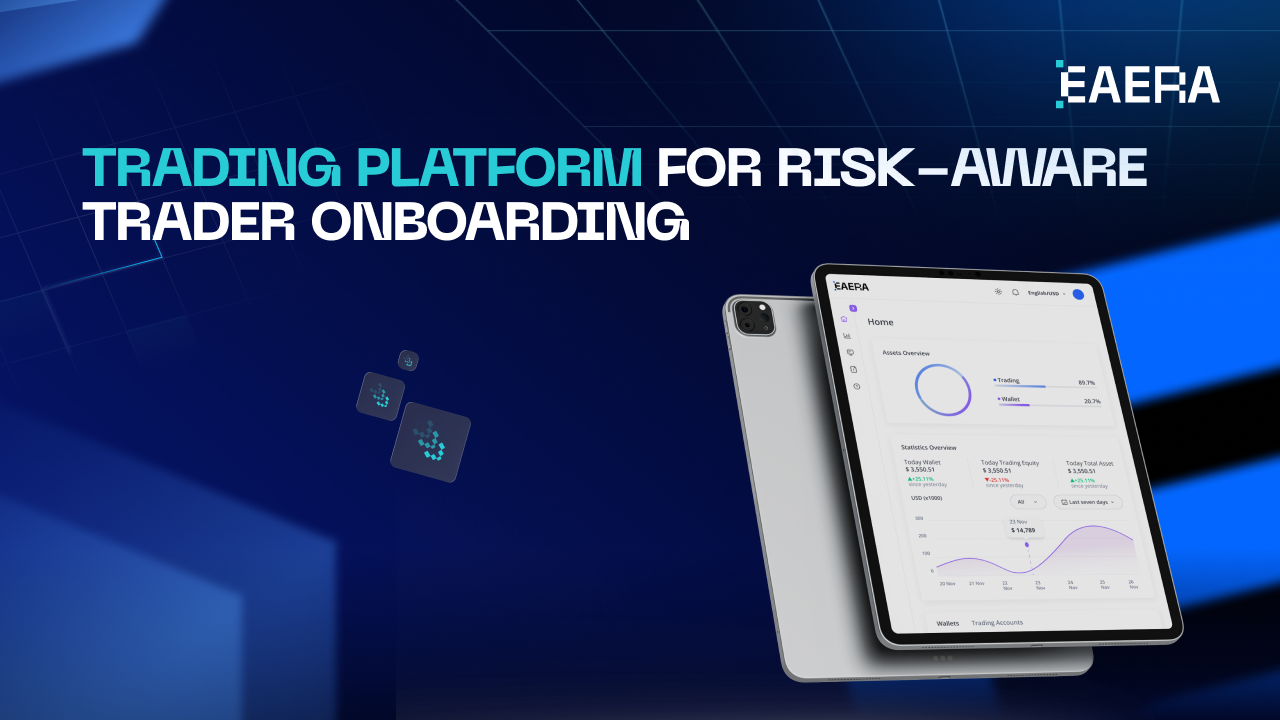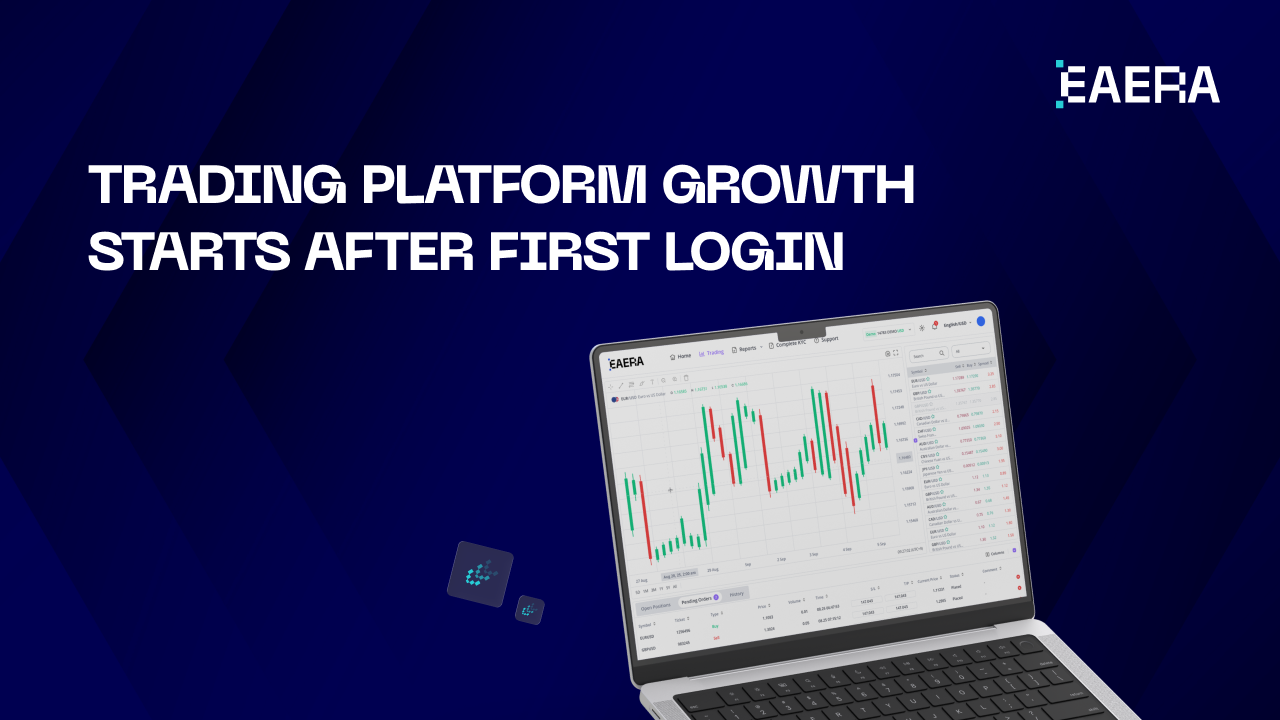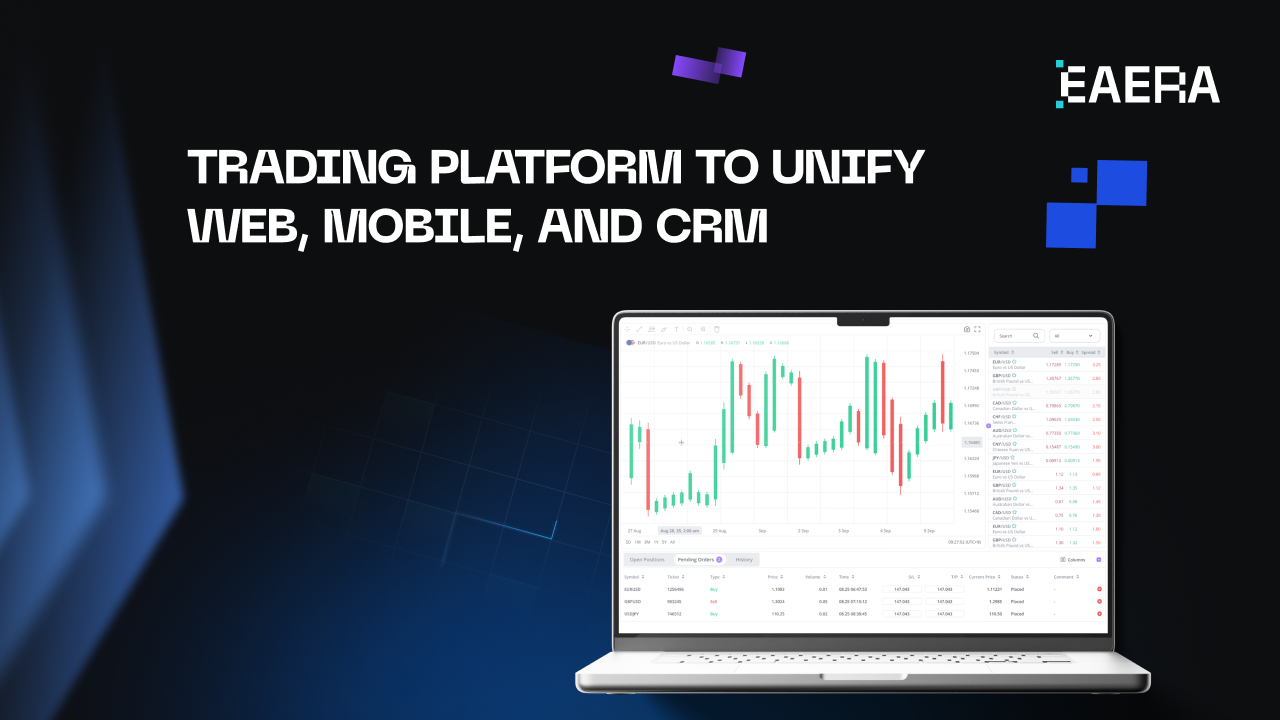




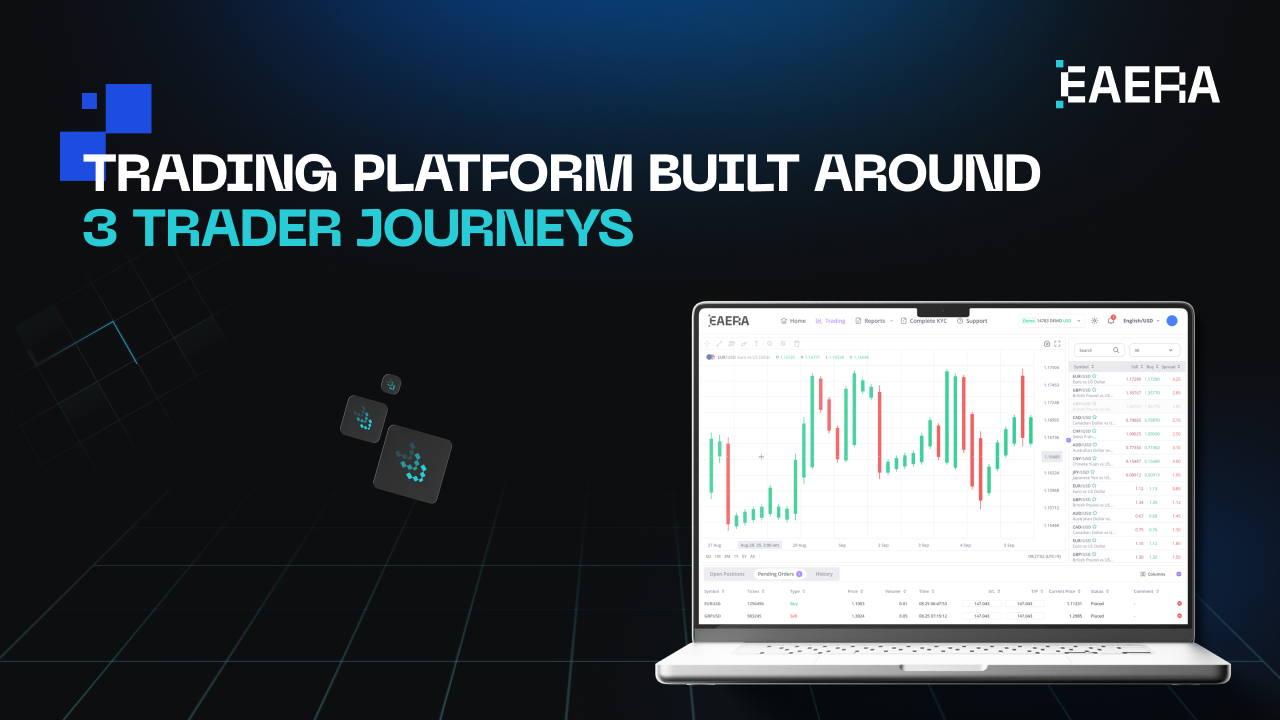
The trading platform should be based on how traders actually go through the broker lifecycle. Brokers need a connected platform that supports each trader journey from initial engagement to sustained activity, rather than separate workflows for registration, funding, trading, support and retention.
Related articles:
- Trading Platform to Unify Web, Mobile, and CRM
- Trading Contest Platform: 5 Must-Haves Before Going Live
In this article, we’ll outline three core trader journeys that all brokers should be designing for: onboarding, funding and first trade, and active trading and retention. For each journey, you need clear data, automation, visibility, and client experience control.
Why Trader Journeys Matter in Platform Design?
Many brokers measure technology by a list of features: charts, CRM, deposits, trading accounts, support, reports, and mobile access. But traders don’t see a broker as discrete modules. They have a sequence of steps that must seem connected.
A trader can register from a campaign, complete KYC, deposit funds, create or access a trading account, place a first trade, track performance, request support, and then either stay active, become inactive or return through a retention workflow. The quality of the next step is determined by the quality of the previous step.
If these steps are not connected, friction happens quickly. A trader can register but not understand the KYC requirement. The client can be verified but does not know how to transfer money to the trading account. An active trader can stop trading without sending any signals to the retention team.
Modern trading platforms should enable these journeys as connected workflows, not as isolated product screens. A trading platform built around trader journeys connects onboarding, funding, first trade, active trading, support, and retention, so brokers can reduce friction and improve lifecycle performance.
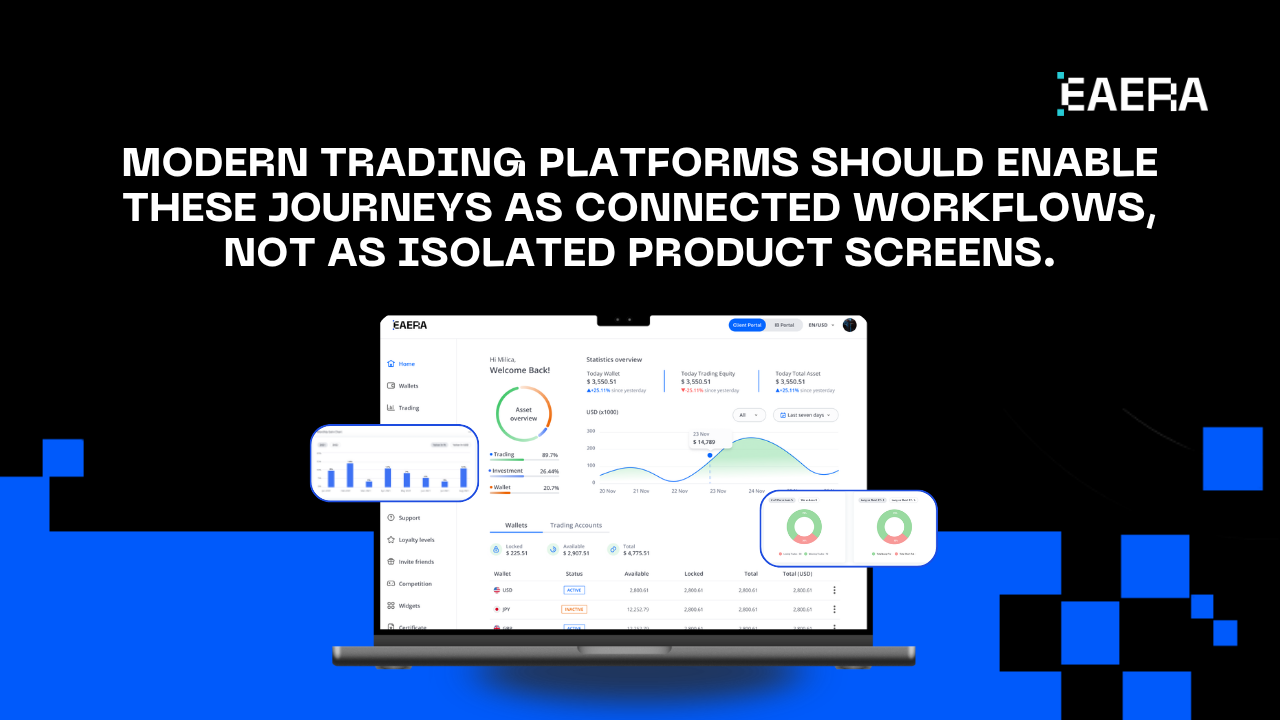
The value of journey-based platform design is simple: traders get clearer next steps, and broker teams get better visibility.
Journey 1: From Visitor to Verified Trader
The first journey begins before trading. visitor, then lead, then registered client, then verified trader. At this point, the trader will decide if they trust the broker enough to keep trading.
If the registration and verification process isn’t clear, traders may leave before they even get to the platform. The problem isn’t always a lack of interest. Often the trader does not know what to do next, what document is missing, or why the account is still pending.
This stage should be easy and transparent on a trading platform. The registration process must be transparent. Simple fields to fill-up for profile and KYC document upload tied to review status and client notifications.
Key elements at this stage include:
- Simple registration flow
- Required profile fields
- Email and phone verification
- KYC document upload
- Approval or rejection status
- Client notification history
- CRM lifecycle status
The most common friction points at this stage are repeatedly filling out profile fields, lack of clear KYC instructions, slow document review, missing approval status, and poor communication after rejection. These problems are not only for traders. They also add more work for sales, support, and back-office teams.
This helps internal teams as well. Sales can check if the client is only registered, pending verification, approved or blocked. Support can field onboarding questions without waiting for back-office confirmation. Clients can see where managers drop off.
The goal is to get qualified clients from interest to verification without unnecessary friction.

Journey 2: From Verified Trader to First Trade
A verified trader is not an active trader yet. The second journey is to take the client from approval to funding, account readiness, and first trade.
Often, this journey breaks as payments, wallets, trading accounts, and CRM workflows are disconnected. A trader may be approved but has never deposited. A deposit can be missed if not followed up. Funds can be kept in a wallet but not moved to a trading account. An account can be created, but the customer is unable to make the first trade.
A trading platform should link deposit requests, failed payment notifications, wallet balance, trading account creation, internal transfer, account status, first trade signals, activation tasks, and client communication. These elements should not be considered separate records for finance, sales, and support teams.
The best trading platform should connect the funding and the first trade as one seamless activation journey.
Important activation signals include:
- Deposit completed
- Deposit failed
- Wallet funded but no trading account created
- Trading account created but no first trade
- Account locked or restricted
- Funded client inactive after a defined period
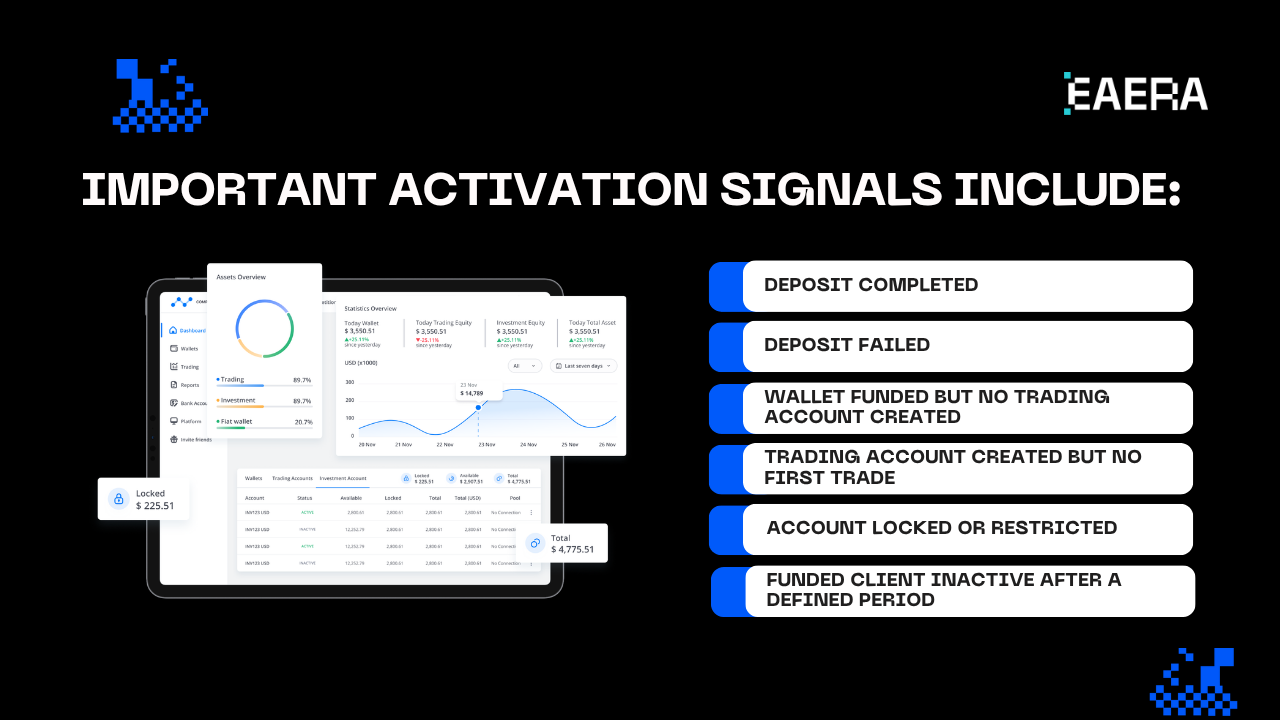
This journey allows brokers to minimize revenue leakage between KYC approval, funding, and trading activity. It also improves the client experience by providing traders with more clarity at the right time to act.
The first trade is a big activation signal for brokers. It shows the trader has moved past registration and funding and is actively using the platform. A connected journey can help broker teams find where activation is being blocked and intervened before the client loses steam.
Journey 3: From Active Trader to Retained Client
The third journey follows the first trade. Brokers at this stage need to enable active trading, account visibility, performance tracking, support, and retention signals.
Trading platform should help traders check account balance, equity, open positions, order history, trading performance, deposits, withdrawals, account status, notifications and support requests. These features are not only of the interface. They determine if traders feel informed and in control.
But that’s just one side of the client-facing journey. Broker teams also need visibility into the lifecycle. Retention shouldn’t rely on manual reviews or generic campaigns.
The system should be able to highlight clients that are active but seeing a decline in volume, funded but not trading recently, dormant after high activity in the past, impacted by unresolved support issues, or hampered by payment issues and account restrictions.
Retention teams should be able to act on signals such as:
- Active trader with declining volume
- Dormant high-value client
- Funded client with no recent trade
- Client with repeated failed deposits
- Client with unresolved support issue
- Client with account restrictions
Retention improves when a broker’s team understands why a trader’s behavior is changing. Support issues may require a trader to follow up with the service. A dormant trader may need to be reactivated. Declining high-value traders may require the attention of the account manager. A trader with repeated failed deposits might need the help of finance or support before any campaign message is sent.
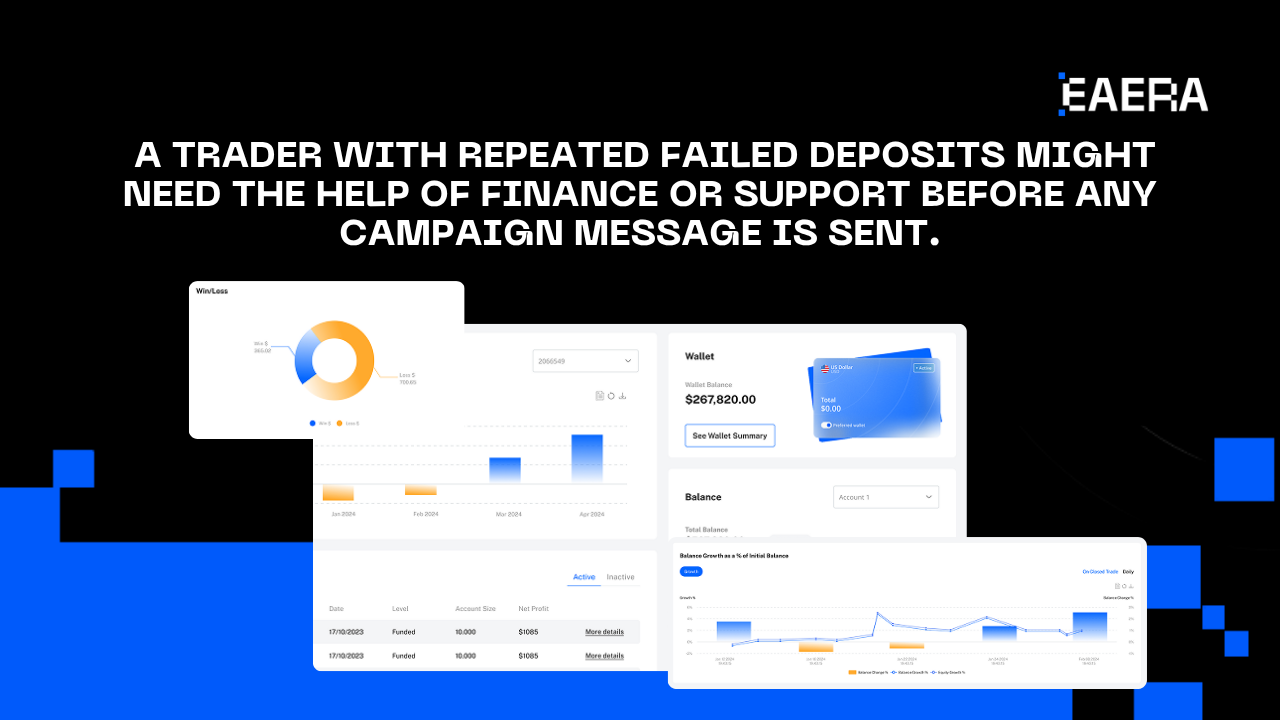
The goal is to keep active traders engaged in relevant action, not mass communication. Connected journey helps brokers move from general retention to behavior-based engagement.
This means better support, more transparent account visibility, and more relevant communication to traders. For brokers, that means better retention and lifecycle control.
A modern trading platform should be designed around trader journeys, not disconnected features. Brokers need to support clients from visitor to verified trader, from verified trader to first trade, and from active trader to retained client.