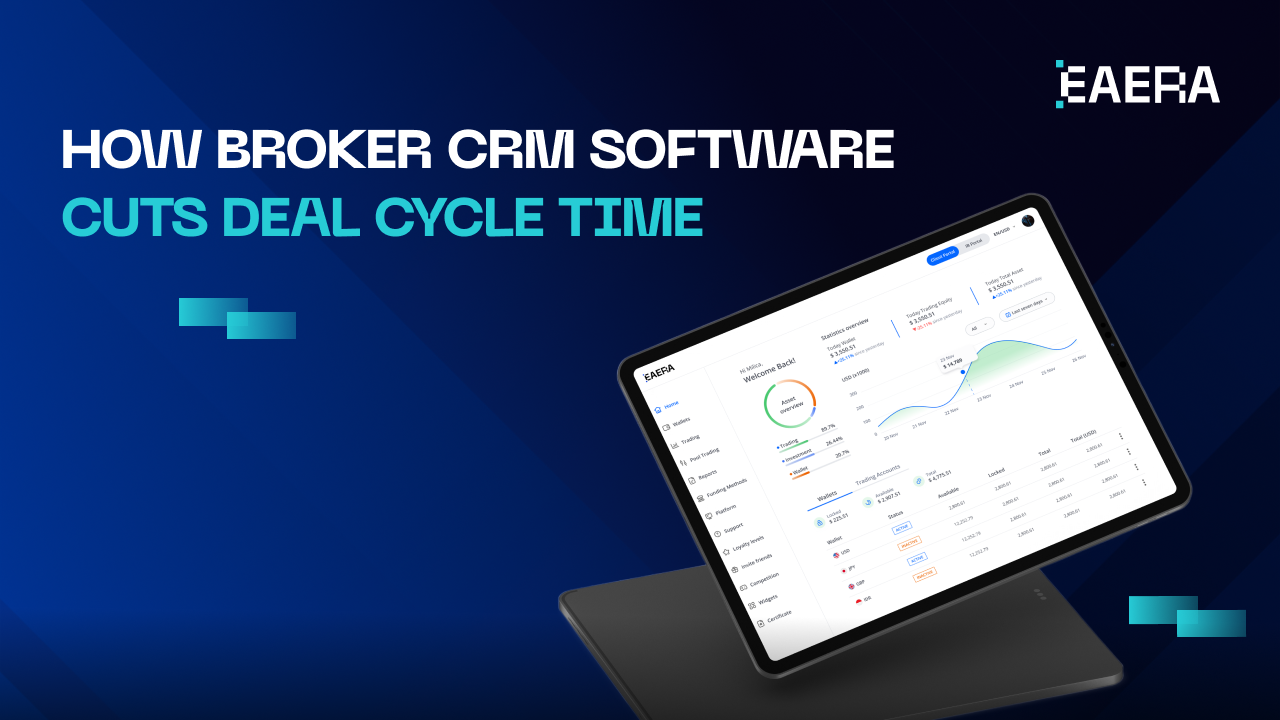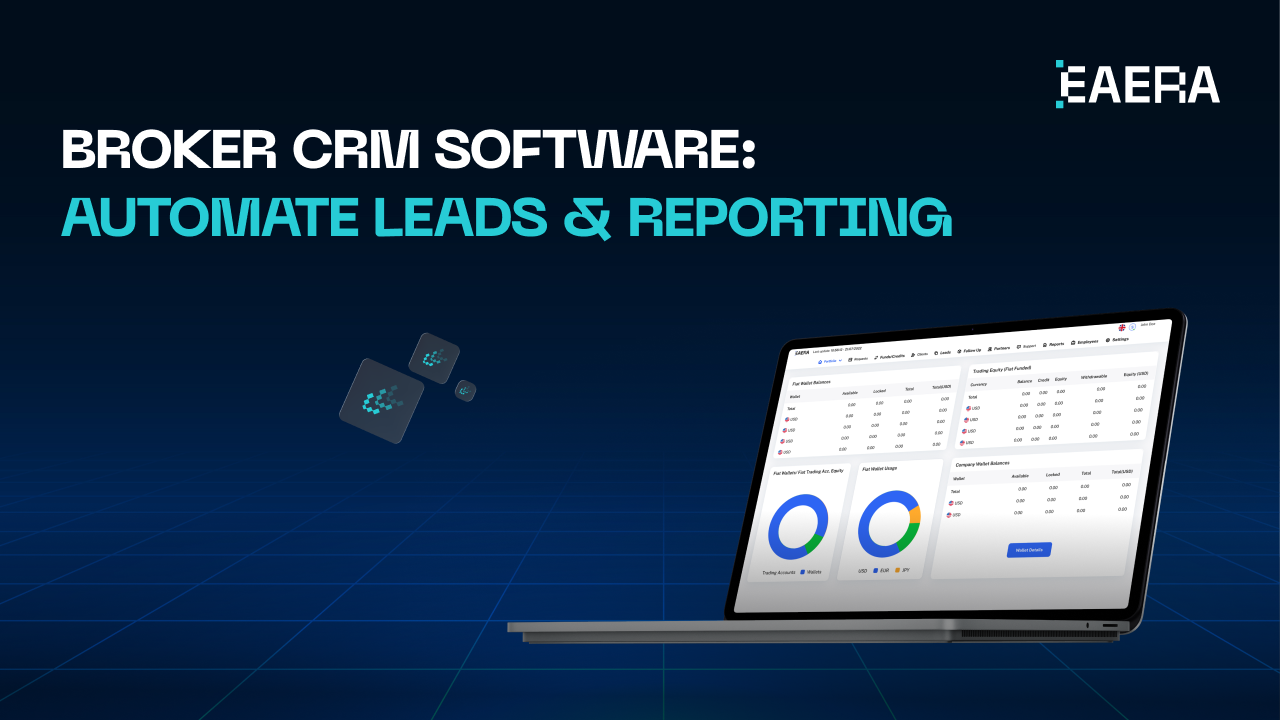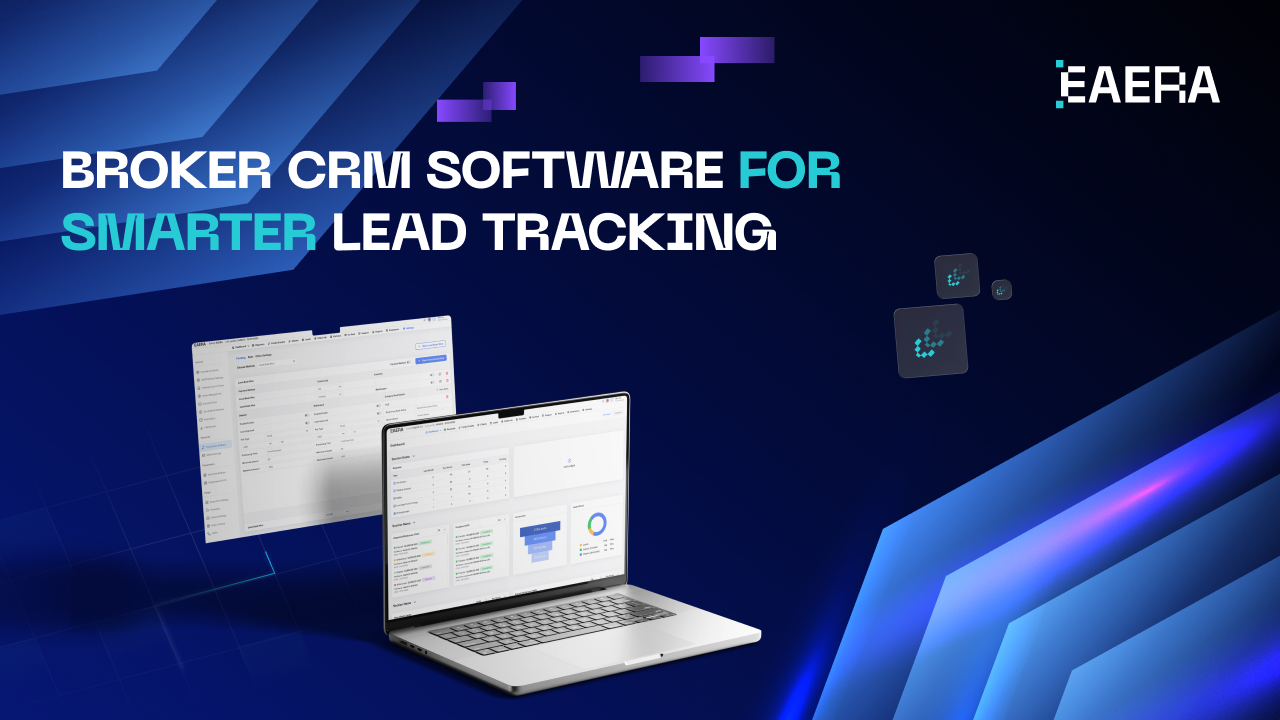




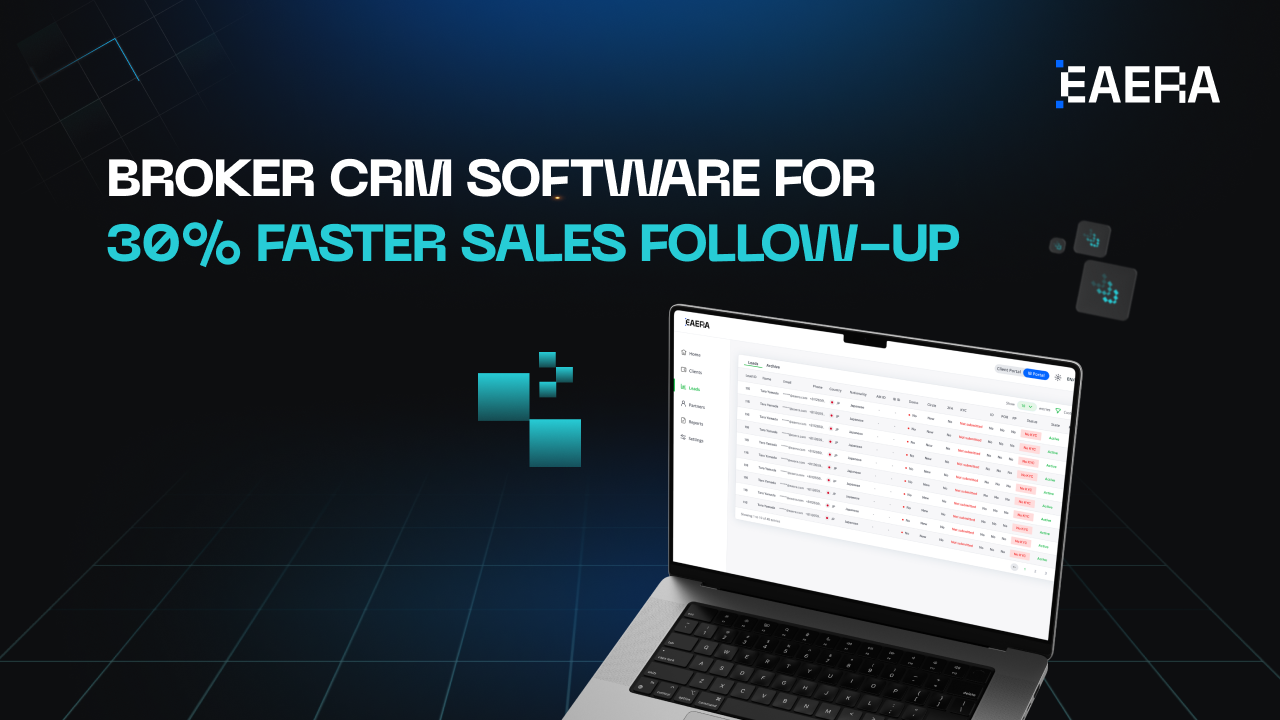
Slow sales follow-up is one of the easiest ways for brokers to lose qualified leads. Timing is crucial in brokerage sales. Often, prospects will shop around with multiple providers before making a decision.
Related articles:
Broker CRM software helps brokers accelerate follow-up by automating lead assignments, tracking client intent, triggering reminders, centralizing communication history, and giving sales teams one view of every prospect. In 2026, the winners are the brokers who respond faster, act with better context, and move every opportunity through the client lifecycle with less friction.
Why Sales Follow-Up Speed Matters for Brokers?
Brokerage leads are time sensitive. When traders fill out a form, create an account, ask about funding or replies to a campaign; they are already in decision mode.
Slow follow-up is generally caused by a badly constructed sales flow. It’s not usually just one salesperson. It’s a system problem, quite often.
Common causes include:
- Leads are not assigned instantly
- Sales teams do not know lead priority
- Client source data is unclear
- Follow-up reminders are manual
- KYC or deposit status is not visible
- Sales notes are scattered across tools
- Managers cannot see overdue actions
- Teams rely on spreadsheets or chat messages
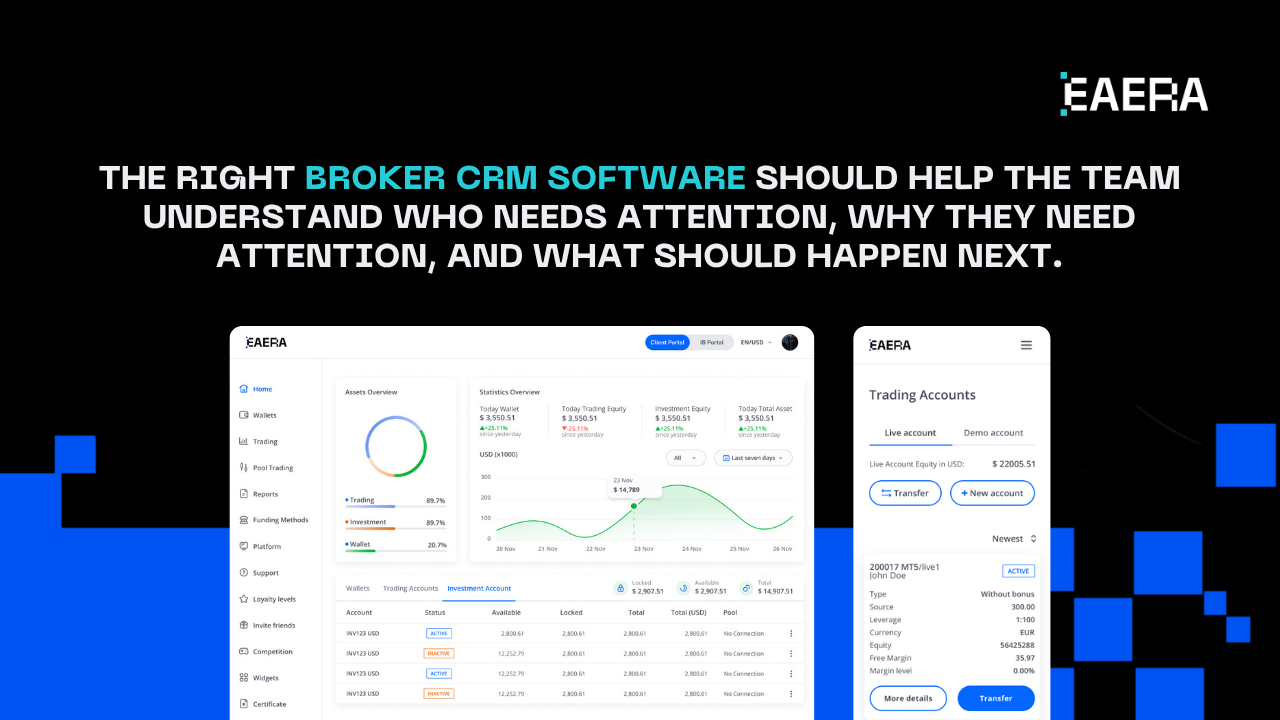
The right broker CRM software must be able to reduce the response delay and make every next step visible. It should help the team understand who needs attention, why they need attention, and what should happen next.
Where Broker Sales Teams Lose Time?
Rarely is it laziness that causes slow follow-up. Usually, it’s caused by a broken workflow design.
It takes time for sales teams to check multiple systems to understand a client’s status. The disjointed process results in delay even before the salesperson begins the conversation.
The main time-wasting points are clear.
Lead Assignment Delay
Manual lead assignments might make hot prospects wait too long. In a competitive brokerage market, a small delay can cut intent.
Poor Lead Prioritization
Sales teams don’t score leads or have intent signals for all leads. A high-intent prospect who submitted documents or tried to make a deposit might get the same attention as a low-intent form submitter.
Missing Client Context
Sales can’t personalize follow-up if they can’t see registration status, KYC progress, funding attempts, or account activity.

Manual Reminder Tracking
Follow-up is inconsistent if it depends on memory, spreadsheets, or chat messages for reminders.
No Manager Visibility
If managers cannot see overdue leads, missed tasks, and slow response times, they cannot coach or intervene.
Such delays can be eliminated by a resilient broker CRM software platform that combines lead data, client lifecycle status and task automation in a single platform.
How Broker CRM Software Speeds Up Sales Follow-Up?
Broker CRM software speeds up sales follow-up by turning manual sales coordination into automated workflows. The aim is to enable sales teams to move faster with better information.
-
Automatic Lead Assignment
The CRM should assign new leads to the right salesperson based on region, language, campaign source, product interest, department or workload.
This means that every new opportunity immediately has an owner. This is a new intent, and no lead should wait for manual distribution.
-
Follow-Up Task Automation
The CRM should create tasks automatically after major client actions.
It helps sales teams know what to do next, all the time. Rather than asking “who should I call today?” the team can work from a structured task queue based on true client behavior.
-
Lead Prioritization
Not all leads are equal in the urgency department. The system should also help teams identify high intent leads by behavior, source, account status, funding signals, or campaign engagement.
-
Centralized Client Timeline
Sales teams need to have a single view of the client activity around the profile with information on communication history, KYC status, payment status, trading account status, notes, and previous interaction.
This means more relevant and faster conversations. You shouldn’t need five tools to understand one client, as one salesperson.
-
Manager Dashboards
Managers should watch for overdue tasks, response time, conversion rate, team workload, and lost opportunities.
That makes follow-up something you can measure. If a team is slow, the manager can see where the delay occurs and can fix it.
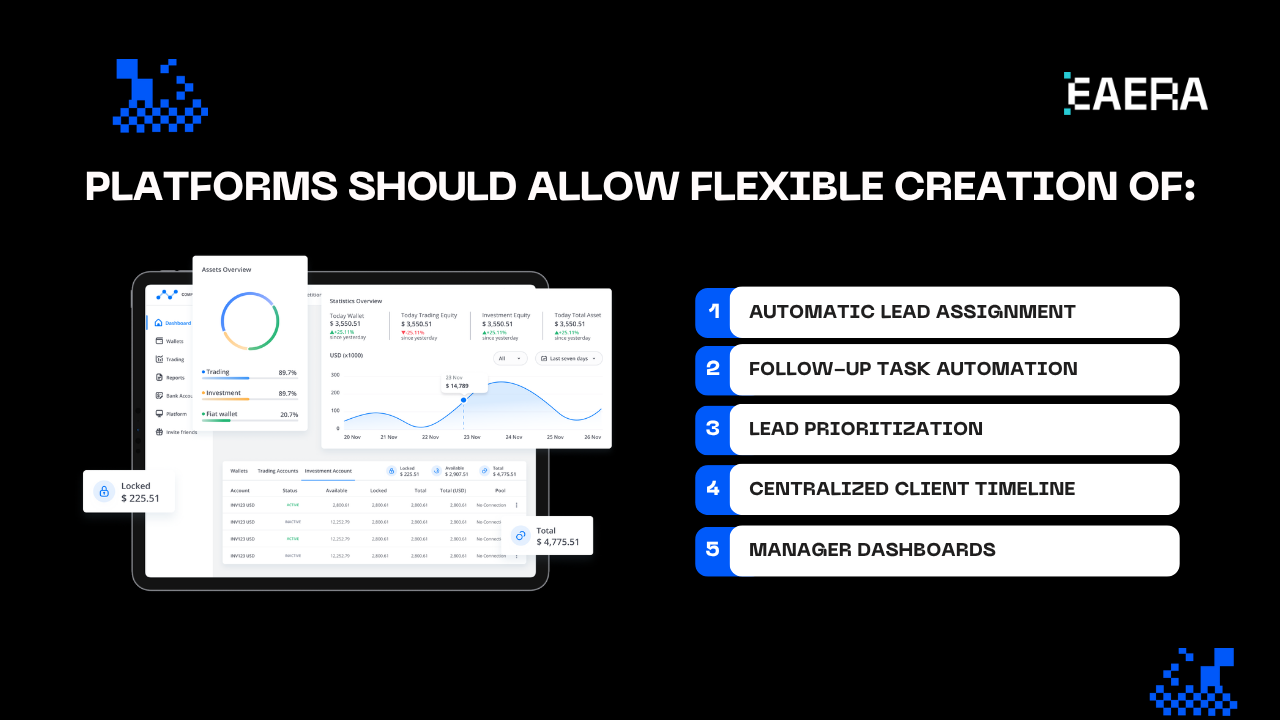
The best broker CRM software does more than just remind sales teams to follow-up. It tells them who to call, when to call, why they should care about the client, and what the next step should be.
The 30% Faster Follow-Up Framework
A broker can strive for up to 30% faster sales follow-up by reducing three types of delay: assignment delay, context delay, and action delay.
This percentage should be seen as a tangible performance goal, not a vague promise. Brokers should check it against internal metrics before using it as a public claim.
| Delay Type | CRM Fix | Business Impact |
| Assignment delay | Auto-routing | Faster first contact |
| Context delay | Unified client profile | Better conversations |
| Action delay | Tasks and alerts | Fewer missed follow-ups |
Reduce Assignment Delay
Automate lead routing so every new lead is assigned to an owner immediately. This removes the delay between lead capture and the first sales action.
Reduce Context Delay
Centralize your client data so sales teams stop wasting time checking multiple tools. One profile should show where the client came from, what stage they are at and what they have already done.
Reduce Action Delay
Automated tasks, reminders, and alerts keep every opportunity moving. The CRM should trigger the next step when the client reaches a new lifecycle stage.
A broker CRM software system that is workflow automation, not just data storage, can help you follow up faster.
To illustrate the 30% improvement, the metrics prior to and post-CRM implementation should be compared. These metrics include average first response time, overdue task rate, lead to registration rate, and registration to deposit conversion.
CRM Features Brokers Should Prioritize in 2026
Don’t start with the longest feature list when choosing broker CRM software. Brokers should seek out features that lower friction in the sales execution process and improve visibility throughout the lifecycle.
Lead Routing Rules
Leads should be routed by language, market, product interest, campaign source, sales team, or availability. This enables short response times and better ownership clarity.
Sales Pipeline Visibility
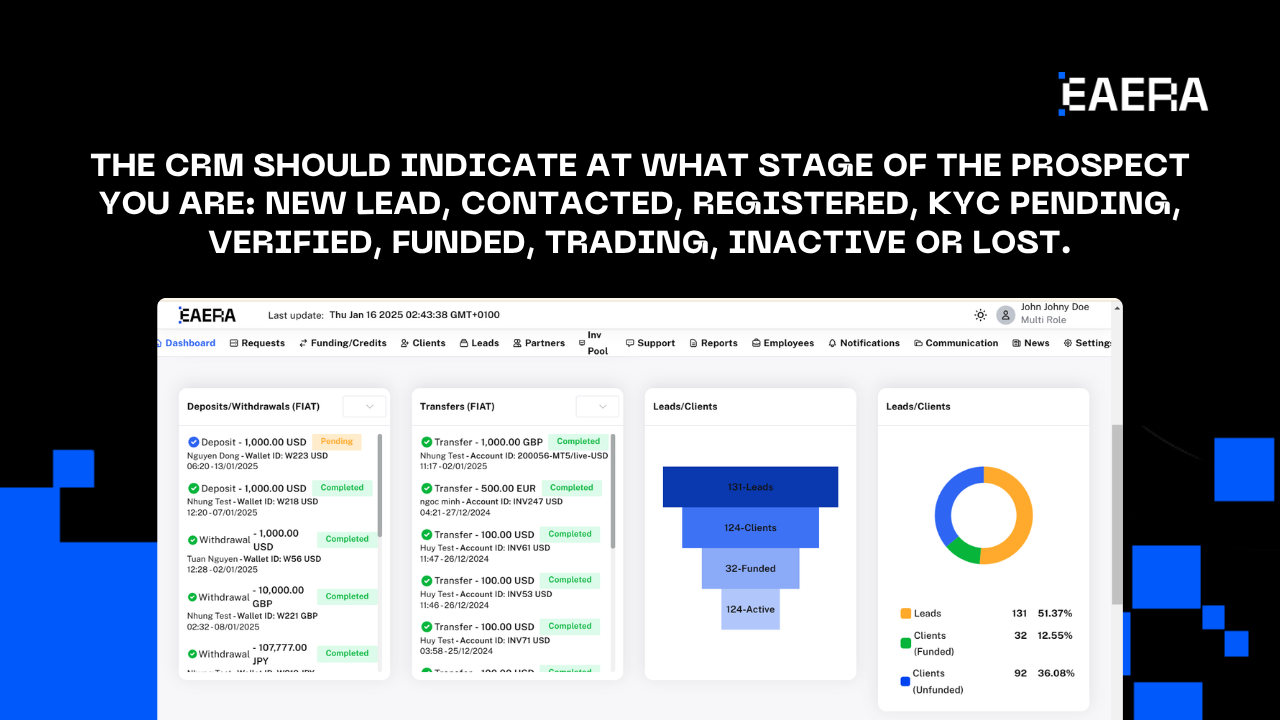
The CRM should indicate at what stage of the prospect you are: new lead, contacted, registered, KYC pending, verified, funded, trading, inactive or lost.
Automated Alerts
Alerts should be for high intent actions, failed payments, abandoned onboarding, inactive clients or important lifecycle events.
Client Activity Timeline
Sales teams need one view of client behavior, documents, payments, accounts, notes, and previous conversations.
Communication Tracking
Calls, emails, messages, notes, and next actions should all be in one place. This prevents the repetition of conversations and poor handover between team members.
Conversion Dashboards
The CRM should track sales performance by source, salesperson, campaign, region, and lifecycle stage.
Permission and Audit Control
Teams need to have access to the right client information but still retain operational control. This is important as brokers scale across departments, products and regions.
EAERA helps brokers run their businesses with CRM, client portal, back office, funding, affiliate management, reporting, alerts and workflow automation to improve visibility across the client lifecycle.
The right broker CRM software should help teams act faster without creating chaos or losing control.