



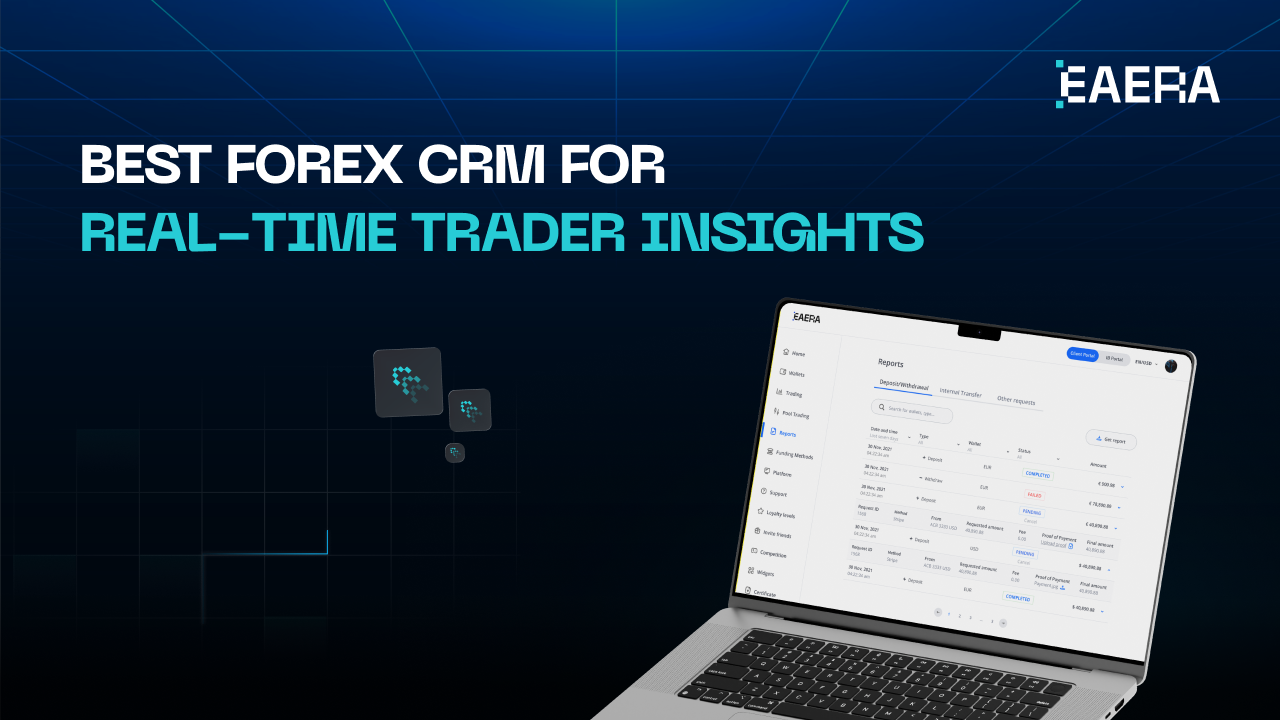
The best forex CRM for real-time trader insights helps brokers see what clients are doing, not just who they are. It brings together client profiles, trading activity, account status, funding signals, lifecycle stages, and retention data into a single operating view.
Related articles:
Real-time insights are useful not only for reporting to brokers. They allow sales teams to speed up, retention teams to spot drop-off earlier, risk teams to spot unusual activity, and managers to know which trader segments deliver real value.
Why Real-Time Trader Insights Matter for Brokers?
Many brokers have client data, but not enough actionable trader insight. The client profile will display the name, email, phone number, country, account status, and assigned salesperson. Meanwhile, trading activity, funding status, account usage, and retention signals may be in different systems.
The separation breeds blind spots.
Maybe a sales team doesn’t know if a verified client tried and failed to deposit. The retention team might not be aware that a high value trader has ceased trading. A manager might not know what campaign does really bring active traders, not just registrations that are not active.
Real-time trader insights help brokers understand:
- Who is actively trading
- Who deposited but has not traded
- Who is reducing activity
- Who is increasing volume
- Who may need retention follow-up
- Which clients are high-value
- Which accounts show risk signals
- Which segments drive revenue
Real-time trader insights – live or near-live signals from client, funding and trading activity – provide brokers with an understanding of trader behavior and help them to decide what the next operational move should be.
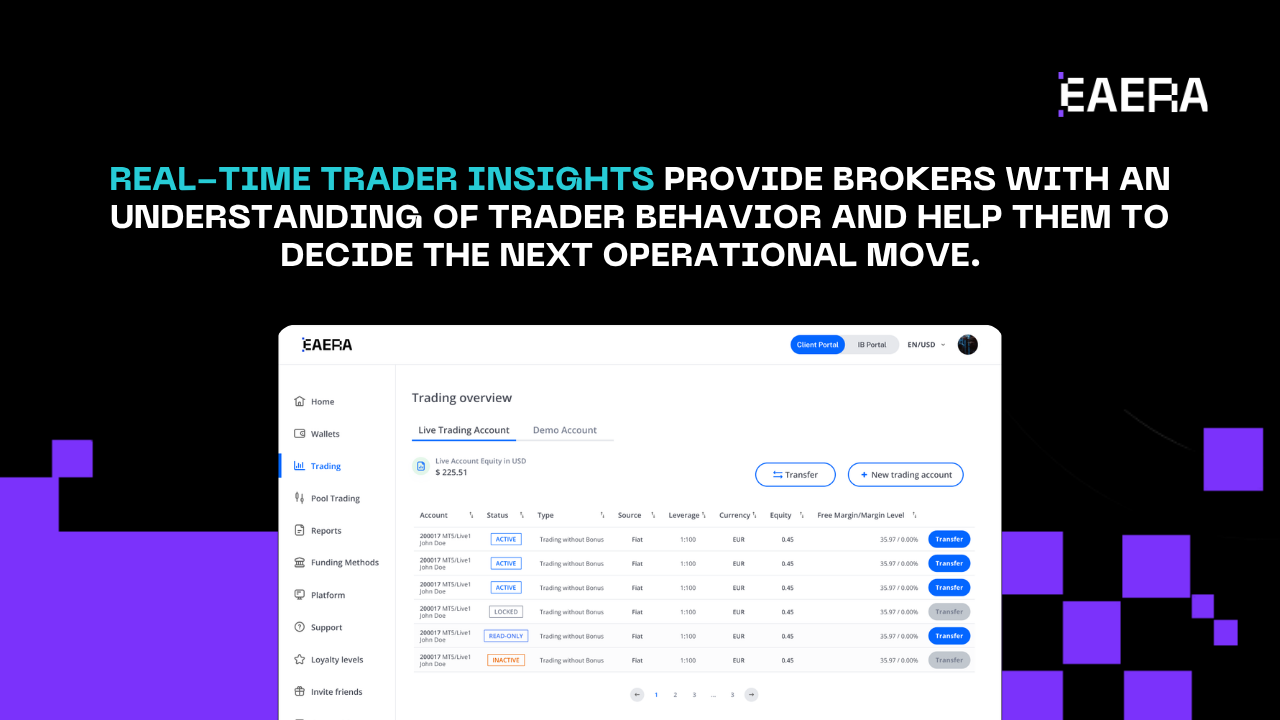
The best forex CRM should be able to turn these signals into actionable workflows for sales, retention, risk, and management teams. It’s not just about presenting data. It should help teams know when to act.
What Real-Time Trader Insights Should Include?
The best forex CRM should not have trading data as a separate report. It should link trader behavior to the client profile and lifecycle stage.
A broker doesn’t need isolated dashboards with numbers only. It requires connected insights that tell us what is happening with each trader and what the business should do next.
Account Status
The CRM should show if the trading account is created, active, disabled, read-only, pending setup or inactive. This helps teams understand if the client is ready to trade or if there is still an operational step blocking them.
Funding Signals
One of the best signals for what traders are trying to do is funding activity. The system should be able to show deposits, failed deposits, withdrawals, wallet balances, funding sources, and transaction status.
A failed deposit should trigger attention. A successful first deposit should trigger activation support.
Trading Activity
The CRM should record first trade, last trade, trade frequency, trading volume, open positions, closed positions, balance, equity, leverage and account usage where applicable.
Teams can use these insights to know if the client is active, new, declining, or at risk to become dormant.

Behavior Signals
The system must detect fading activity, higher volume, inactivity, sudden account changes, and high-intent actions.
Behavior signals are important because they signal movement. A client’s status may still show as “active”, but their activity may already be declining.
Lifecycle Stage
Tagging each trader by stage, e.g. registered, verified, funded, first trade completed, active trader, dormant client, reactivated client etc.
Lifecycle visibility aids in avoiding generic communication between teams.
Segment Value
The CRM should be able to identify high-value clients, low-activity clients, newly activated clients, and clients that need follow-up.
A best forex CRM should make trader insights visible, measurable and linked to team action.
How Real-Time Insights Improve Sales Follow-Up?
In a static CRM, a broker could have many look-alike clients, but the real-time behavior is very different. One client has just passed the KYC. Another tried to deposit and didn’t make it. Another opened a trading account and has not yet made a first trade. One returned after weeks of nothing.
Each client needs a different follow-up.
A best forex CRM should help sales teams prioritize:
- Verified clients who have not deposited
- Clients with failed payment attempts
- Funded clients who have not traded
- Leads who returned after inactivity
- Clients who opened an account but stopped onboarding
- High-intent clients from campaigns
- Clients waiting for account activation
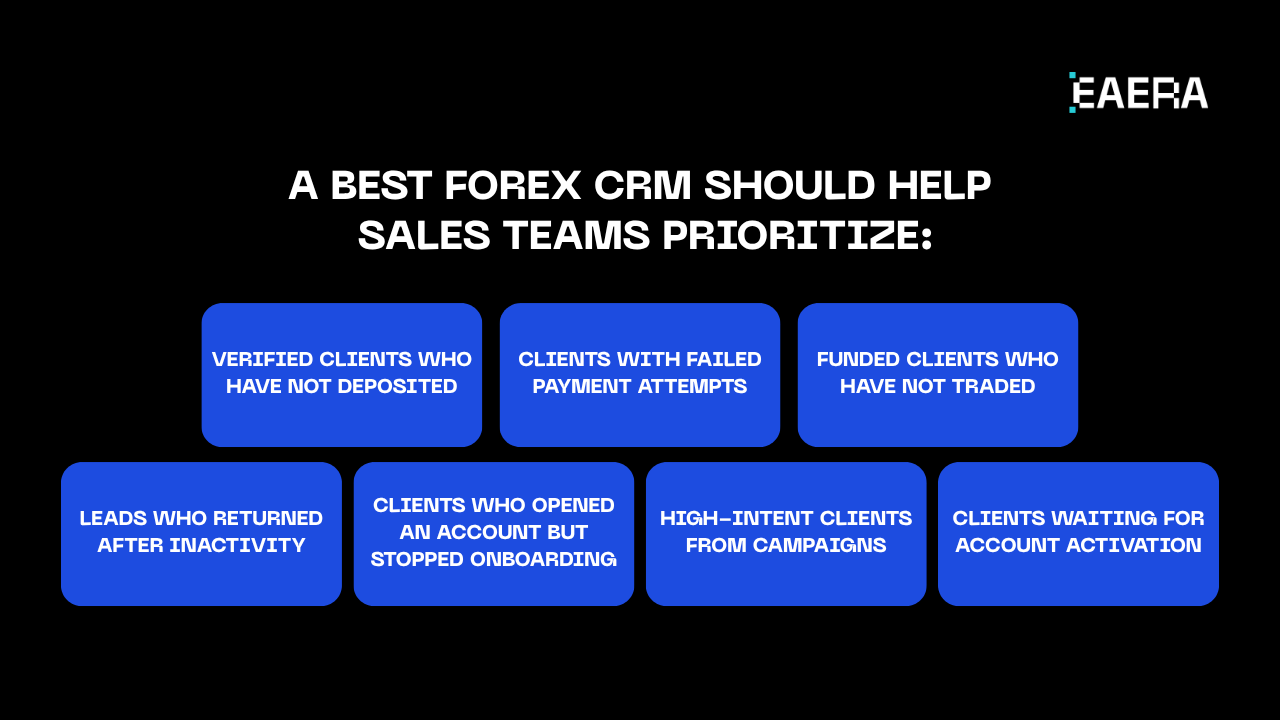
Sales teams can respond differently to each client based on what the trader has done, rather than calling every client with the same message. This makes the conversation more relevant and more likely to move the client forward.
This means faster response, more relevance, and less revenue left on the table.
Real-Time Insights for Risk, Revenue, and Management
Real-time trader insights should not only go to sales and retention teams. They should also help management, risk, finance, and operations understand business performance.
Risk Visibility
The CRM should permit teams to find clients with unusual activity, high leverage exposure, margin pressure, abnormal volume changes, or behavior needing review.
This means that broker teams should have enough trader context to be able to identify signals that need attention.
Revenue Visibility
Managers should know what clients, segments, regions, campaigns, partners and account types drive trading activity and deposits.
Not only must a broker measure how many clients signed up. It should measure who is funded, active, and valuable clients.
Operational Visibility
Teams should look for traders who are stuck: verified but not funded, funded but not trading, trading but declining, or inactive but recoverable.
These stages show where revenue leakage occurs.
Partner Visibility
If the broker has IBs or affiliates, the CRM should be able to attach trader activity to partner attribution. That helps teams understand which partners have active traders, not just registrants.
Management Dashboards
Dashboards should show:
- Active traders
- Dormant clients
- First-trade conversion
- Trading volume by segment
- Net deposits
- Revenue contribution
- Retention campaign impact
- Partner-driven activity
- Lifecycle drop-off points
The best forex CRM needs to be able to turn real-time trader data into decisions that improve revenue control, risk awareness, and team accountability.
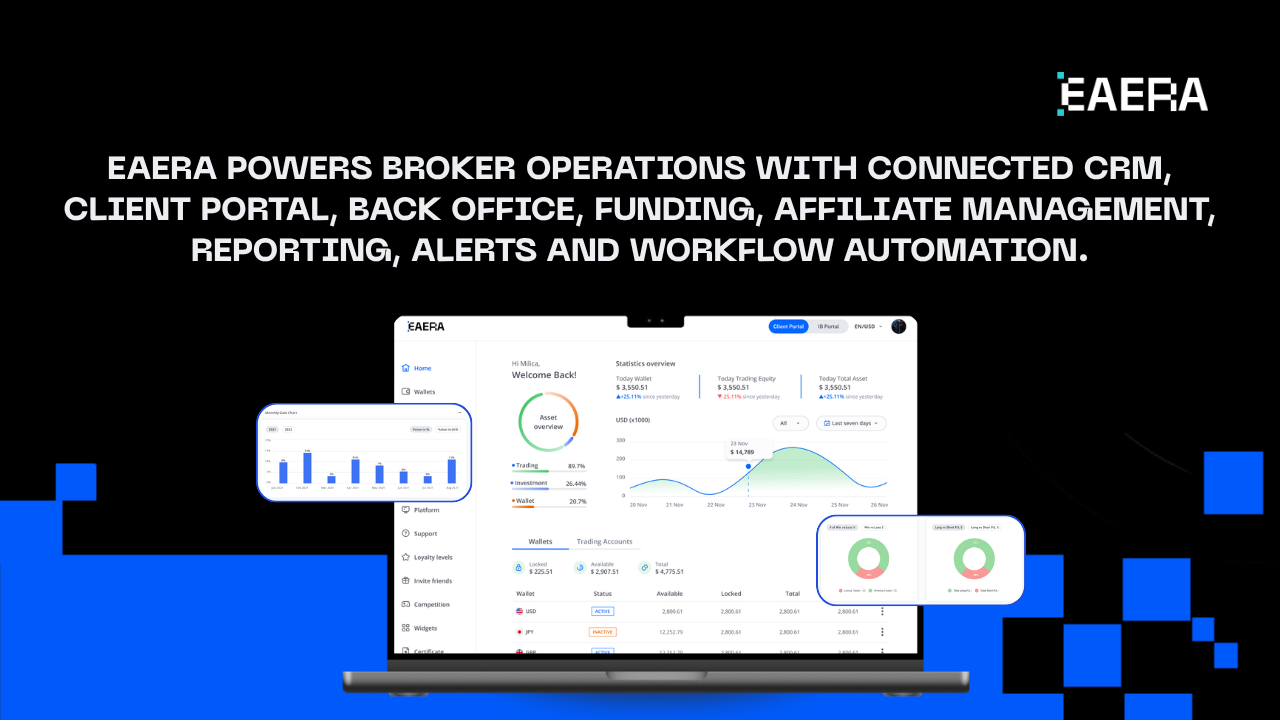
EAERA powers broker operations with connected CRM, client portal, back office, funding, affiliate management, reporting, alerts and workflow automation.
Checklist for Choosing the Best Forex CRM for Trader Insights
Brokers should ask whether their CRM can truly facilitate real-time decision-making. If the system can’t connect client, funding, trading and lifecycle data, a modern interface isn’t enough.
| Insight Requirement | What the CRM Should Support |
| Unified client profile | Client, KYC, funding, account, activity data |
| Trading activity visibility | First trade, last trade, volume, account usage |
| Funding signals | Deposit status, failed payments, wallet activity |
| Lifecycle tracking | Registered, verified, funded, active, dormant |
| Sales triggers | Failed deposit, no first trade, high intent |
| Retention triggers | Inactivity, lower volume, reduced engagement |
| Risk signals | High exposure, margin pressure, abnormal activity |
| Partner attribution | IB source, partner quality, referred trader activity |
| Reporting | Dashboards, segmentation, revenue visibility |
For brokers wanting to link trader behavior, lifecycle stages, funding signals and reporting, EAERA can facilitate a more structured CRM and broker management environment.
The best forex CRM should enable teams to know what is happening, why it matters, and to act at the right time.
In 2026, brokers should choose CRM systems that turn trader behavior into measurable business action.