



Forex broker solutions help brokers by removing friction in their workflow, linking the entire client lifecycle from first lead to active trading, retention, IB management and reporting. Most of the friction happens when one team finishes a task, but the next team doesn’t get the right status, data, or trigger.
Workflow Friction Starts When Client Data Is Not Connected
Broker operations are based on a lot of moving parts: CRM, client portal, KYC tools, payment providers, trading platforms, IB systems, support tools, reporting dashboards. Each system might work well independently, but the friction happens when the systems are not clearly communicating.
The problem isn’t always a single broken workflow. It’s often the handoff between workflows. A lead is a registered client, but sales don’t know that the client has started onboarding. A deposit is completed, but the trading account is not ready. A client becomes inactive, but retention does not receive an alert.
Common examples include:
- Sales does not know KYC is completed
- Support does not know why a withdrawal is pending
- Finance does not know whether a client is verified
- Retention does not know whether a funded client has traded
- IB managers cannot see which referred clients became active
- Management cannot see where clients drop off
Forex broker solutions need to consolidate data across systems, so all teams are working from the same lifecycle view.
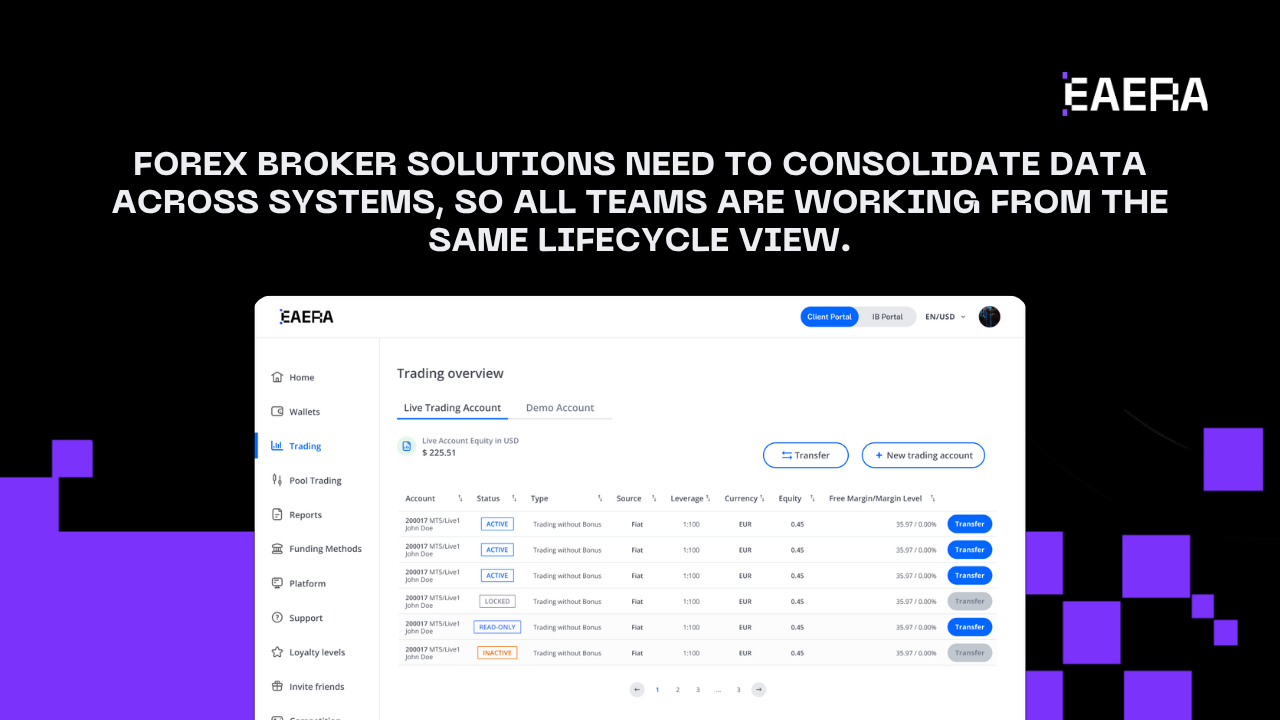
Brokers need a connected data foundation before automating workflows. With connected data, each team can see the status of the client, who owns it, the next action, and the history behind each request.
From Lead to Verified Client: Reducing Sales and Onboarding Friction
One of the first big friction points seems to be between lead capture, registration, KYC, and approval. This stage is important because it represents the initial impression of the broker to the client.
Forex broker solutions should support:
- Lead source tracking
- Auto-assignment
- Sales owner visibility
- Client lifecycle stage
- Required profile fields
- KYC status
- Missing document reminders
- Review queue
- Approval or rejection reason
- Client notification history
The client and internal team have a well-defined workflow. Next step is clear to the customer. Sales know that the client is a lead, a registered user, or a verified client. Back office or compliance knows what cases they need to review.
Reducing early-stage friction improves conversion from lead to verified client and prevents avoidable delays before the client is ready to fund.
From Verified Client to Funded Account: Reducing Payment Friction
A verified client is valuable, but the broker doesn’t get much until the client funds and is ready to trade. Payment friction can impede or halt that transition.
Forex broker solutions should connect:
- Deposit status
- Failed payment alerts
- Wallet balance
- Payment method availability
- Regional payment rules
- Withdrawal eligibility
- Finance approval status
- Transaction timeline
Payment workflows shouldn’t be limited to finance. For example, when a deposit fails, the system should generate a support task with the payment method, failure reason, and client profile. The deposit was successful, updating the client lifecycle stage. When a withdrawal is pending, the system should display if it is pending finance, compliance, payment provider processing, or additional client documents.
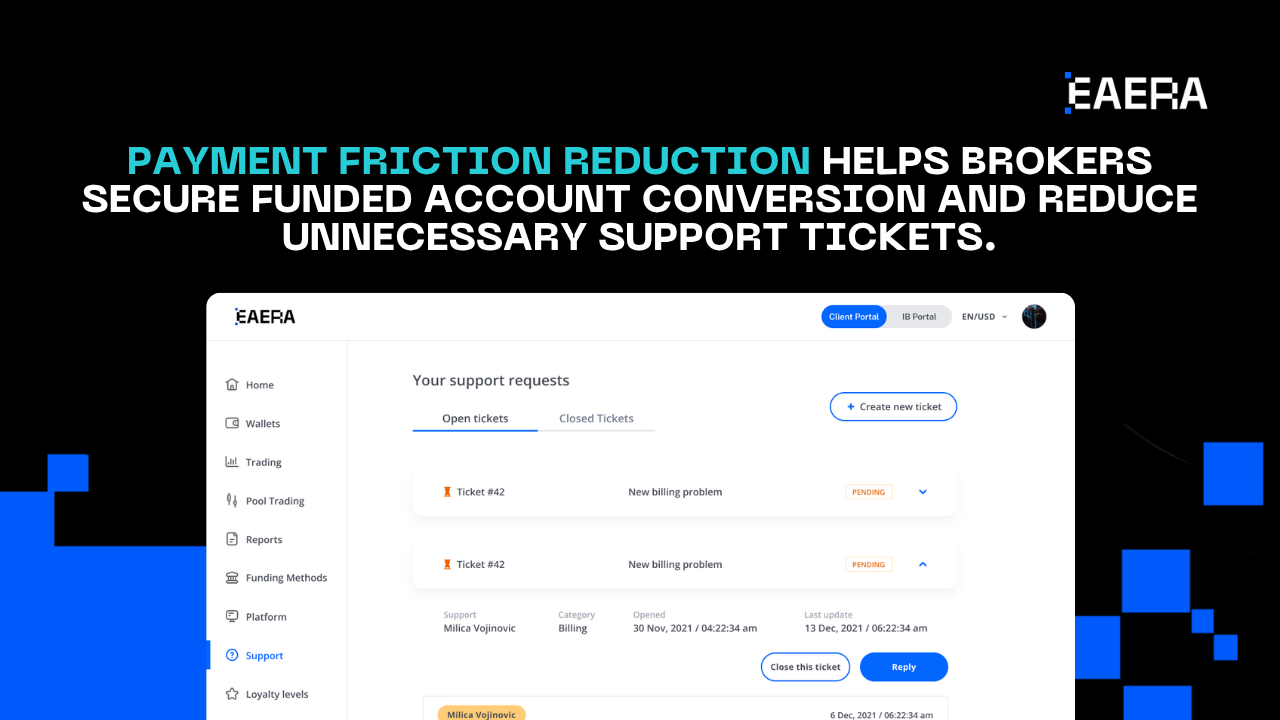
Payment friction reduction helps brokers secure funded account conversion and reduce unnecessary support tickets. It also provides teams with greater visibility into the movement of money, client intent, and what’s next.
From Funded Account to Active Trader: Reducing Activation Friction
Many brokers go cold after funding. The client has made a deposit, but trading has not started due to uncertainty about the account setup, wallet transfer, or activation follow-up.
This step is important because funding shows intent, but first trade shows activation. If the client deposits into an account and then stops, the broker has to know why. The trading account cannot be created. Funds may still be in wallets. An internal transfer can fail. Your account may be blocked or restricted. The client may just need guidance on the product/platform.
Forex broker solutions should support:
- Trading account creation status
- Wallet-to-account transfer status
- Account type visibility
- Account lock or disable reason
- First trade status
- Balance and equity visibility
- Activation task
- Inactivity trigger
Activation friction often increases when teams think of payment, account setup, and trading as different silos. They are from the same client lifecycle.
Reducing activation friction helps brokers turn funded clients into active traders faster and gives teams a clear way to manage the transition from deposit to trading activity.
From Active Trader to Retained Client: Reducing Retention and Support Friction
If teams don’t understand why client activity is changing, they have poor retention. Support slows down when agents lack the complete picture of the client.
There are many reasons why a client may be inactive. There may be an open support issue. They might have failed deposits more than once. Their volume of trade may have fallen after an active period. Their documents are probably about to expire. They may be limited to their accounts. Retention teams don’t have the ability to pick the right action when they just see “inactive clients”.
Forex broker solutions should help teams segment and act on:
- Funded but not traded
- Active but declining volume
- Dormant high-value client
- Client with open ticket
- Client with repeated failed deposits
- Client nearing document expiry
- Client requiring account review
Support visibility is just as important. If a client asks about a withdrawal, or a trading account, or a failed transfer, or a restriction, support shouldn’t have to ping multiple teams for some basic context.
A strong support view should include:
- Client profile
- KYC status
- Payment history
- Trading account status
- Account restrictions
- Support ticket timeline
- Communication history
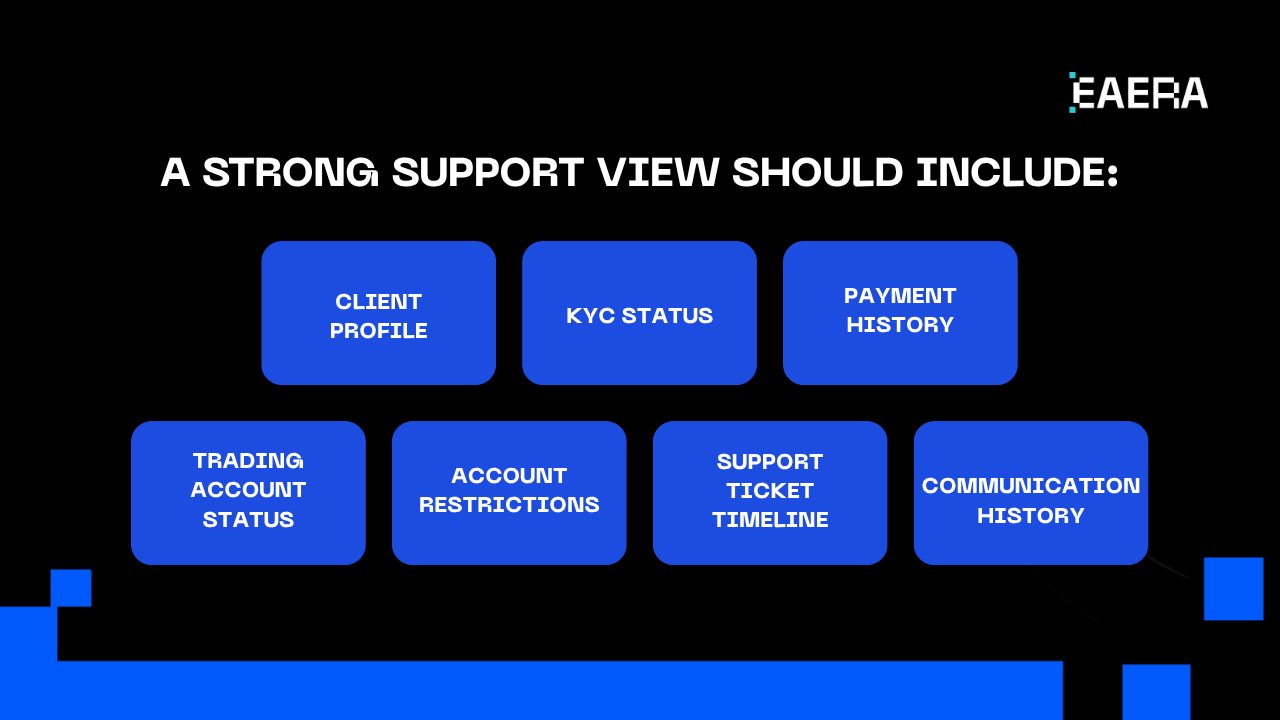
This reduction in friction in the areas of retention and support can improve the client experience and keep valuable traders. It also prevents the wrong message from the wrong client. A client has a problem with payment. Active but unfunded clients may need guidance on boarding. Active trader is dropping; account manager follows up needed.
From IB Growth to Management Reporting: Reducing Scale Friction
As brokers grow, friction appears in their IB operations and reporting. Partners want to be transparent. Managers have to see what is going on. Finance needs accurate commission and payout data.
Forex broker solutions should support:
- IB onboarding
- Referral attribution
- Partner hierarchy
- Commission profiles
- Payout review
- Partner portal visibility
- Lifecycle reporting
- Team productivity dashboards
- Audit trails and permissions
- Automated alerts
When managers need spreadsheets to see what is going on, friction is said to be present. They need to know where leads are dropping off, how many clients are completing KYC, how many verified clients are depositing, how many funded clients are trading, which IBs are bringing active clients, and which teams have overdue tasks.
EAERA supports broker operations through connected CRM, client portal, back office, funding, affiliate management, reporting, alerts, and workflow automation.
For growing brokers, reducing workflow friction is one of the fastest ways to improve conversion, retention, and operational efficiency.