



An FX broker platform should help brokerages reduce manual work throughout the entirety of the client lifecycle – from lead management and onboarding, to funding, trading activation, partner operations, reporting and support. Manual tasks slow down teams, produce inconsistent records, add support workload, and make it more difficult for managers to see operational bottlenecks.
Related articles:
- FX Broker Tech That Grows with US Brokerages
- FX Back Office for Compliance – First Broker Teams in 2026
Why Manual Tasks Slow FX Broker Operations?
Many brokers do not struggle because teams lack effort. They’re struggling because too many workflows are still based on manual checks, spreadsheets, emails, disconnected dashboards, and repeated internal confirmations.
As a forex broker, manual work usually occurs when one team completes a task, but the next team does not receive the appropriate status, data, or trigger. Sales can close follow-up, but onboarding doesn’t get the right client status. KYC may be approved, but funding does not become the next action. A deposit may succeed, but trading activation may not happen.
Common signs include:
- Leads are assigned late
- KYC status is unclear
- Deposit follow-up is delayed
- Trading account setup requires manual checks
- IB commission review depends on spreadsheets
- Support teams ask other departments for updates
- Managers prepare reports manually
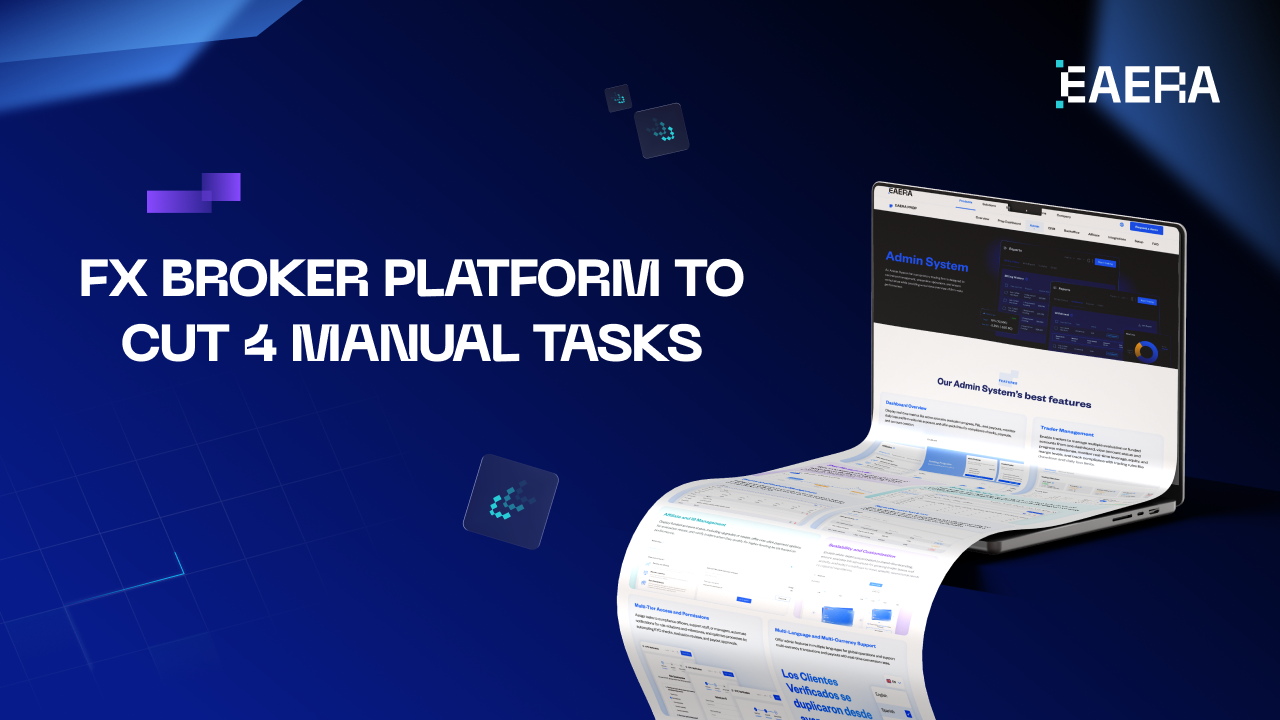
A single operating system for an FX broker platform that connects client data, workflow triggers, approval logs, payments, trading accounts, partner activity, support history, reporting and reduces manual tasks.
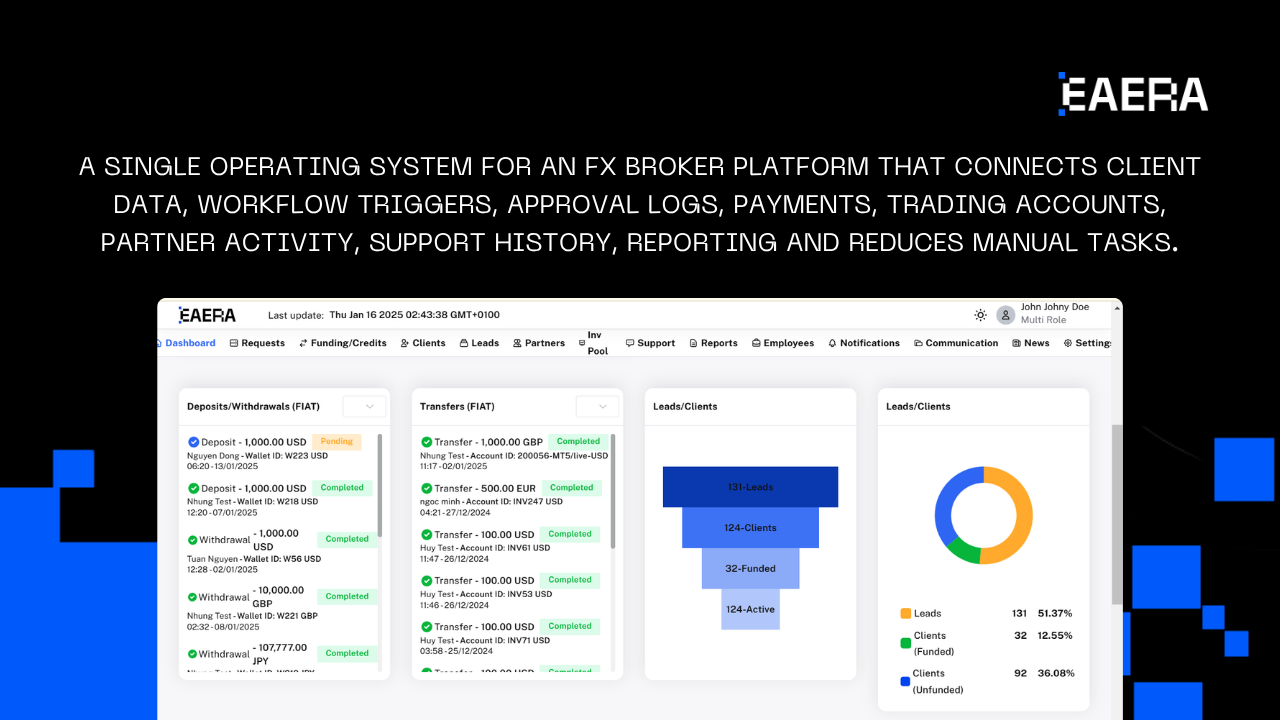
Task 1: Manual Lead Assignment and Sales Follow-Up
High-volume sales teams can’t afford to manually distribute leads or track personal follow-up.
That impacts conversion directly. A lead from a paid campaign may be interested right now, but that interest can fade if there isn’t someone to follow up quickly. Another lead might begin registration but not finish onboarding. Without automation, the sales team may miss the right time to act.
An FX broker platform should automate:
- Lead routing by region, language, source, campaign, product interest, or workload
- Sales owner assignment
- Follow-up reminders
- Overdue task alerts
- Lead lifecycle status
- Communication history
- Manager dashboards
Automation also helps managers understand how well their team is doing. They can spot the untouched leads, the tasks that are overdue, the campaigns that yield better leads, and sales representatives who need help.
Automating manual lead assignment and follow-up tracking saves broker time and helps preserve acquisition spend and conversion velocity. It also makes ownership cleaner as every lead has a status, owner, and next action.

Task 2: Manual KYC and Onboarding Review
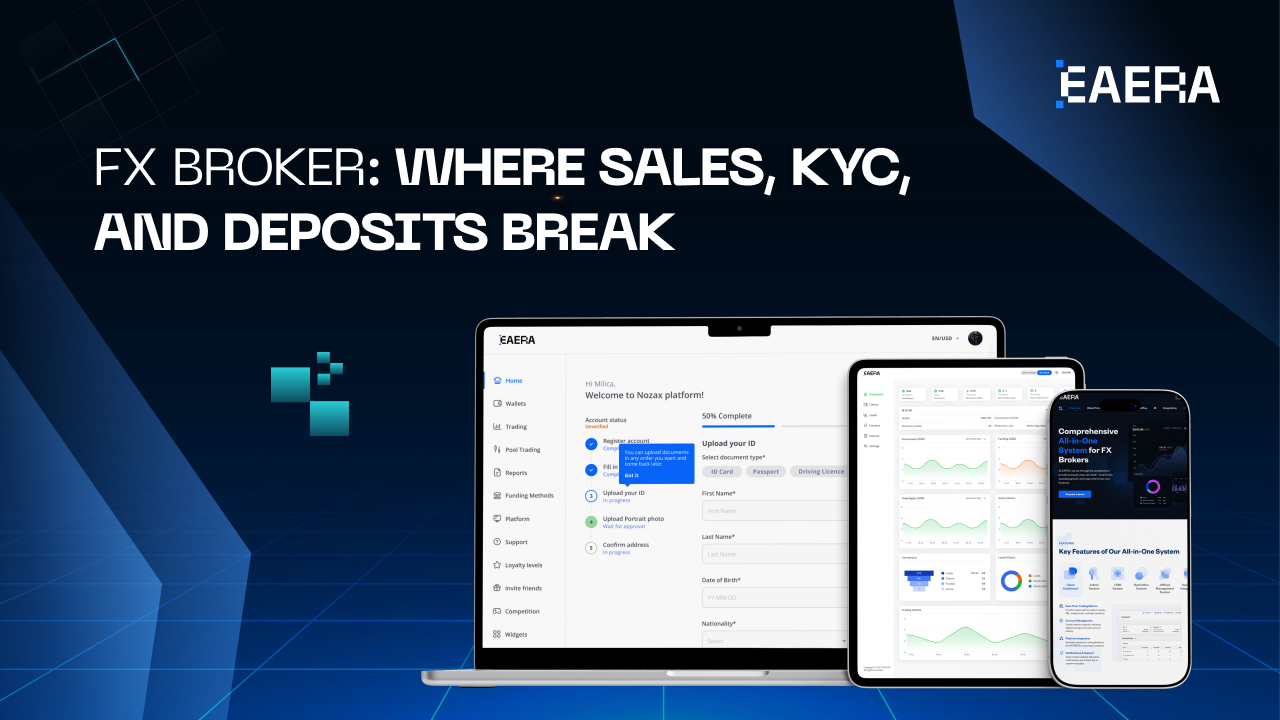
KYC and onboarding create a significant back-office workload, as teams have to check multiple systems to understand the status of their clients. Without a centralized place for documents, profile fields, verification results, approval notes, and rejection reasons, the process slows down.
Onboarding a forex broker is a growth workflow and a control workflow. Clients may walk away before funding if onboarding is too slow. The platform should allow teams to review clients in an efficient manner with clear record keeping.
An FX broker platform should reduce manual checks by showing:
- Required profile fields
- Submitted documents
- Missing documents
- KYC provider result
- Review queue
- Approval status
- Rejection reason
- Risk category
- Manual review note
- Client notification history
This helps teams avoid repeated questions such as “Has this client submitted documents?” or “Why was this account rejected?” Support teams can answer client questions faster. Sales teams can see whether a client is ready for the next step. Compliance and back-office teams can focus on cases that truly need manual review.
Fewer manual onboarding checks help brokers get clients from registration to approval faster and keep review records clean.
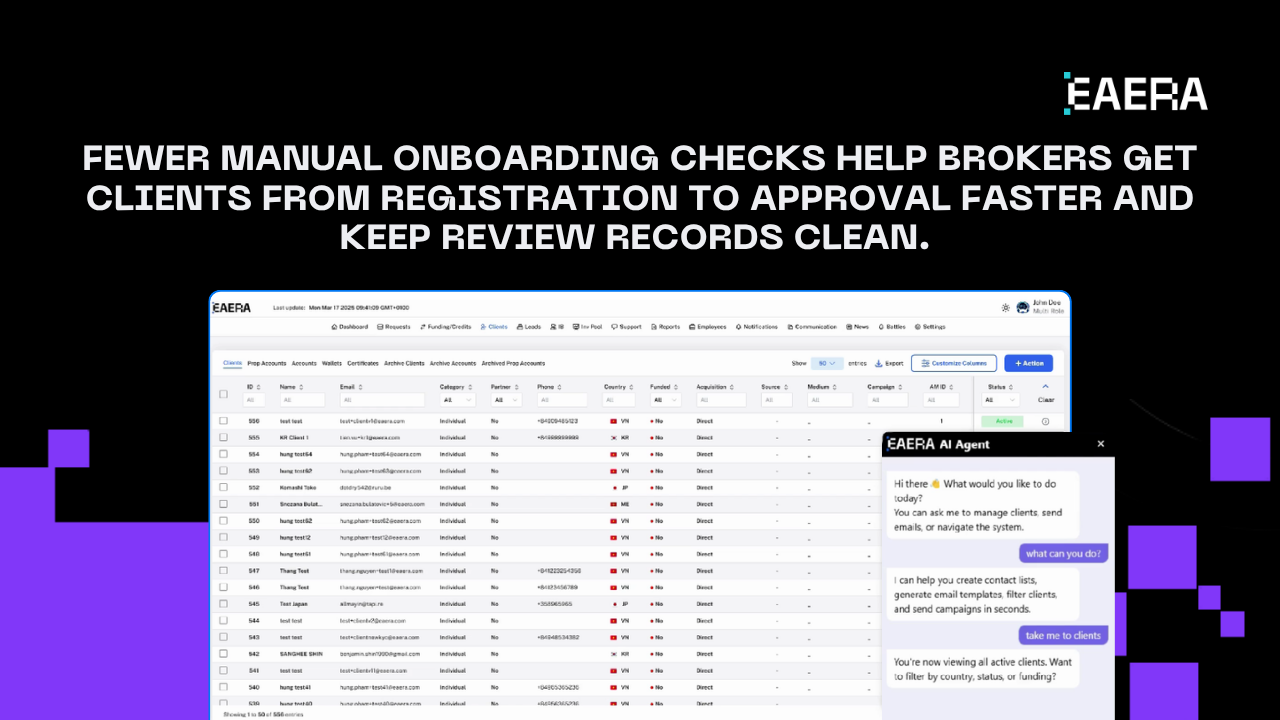
Task 3: Manual Payment, Wallet, and Trading Account Follow-Up
Funding and trading activation go hand in hand. There are instances where a client deposits successfully, but the client fails to trade because the funds are not moved correctly, the trading account is not created or there is no activation follow-up.
A forex broker’s payment status shouldn’t be isolated within finance workflows. It should trigger sales, support, or activation actions as appropriate.
An FX broker platform should connect:
- Deposit request status
- Failed payment alerts
- Wallet balance
- Withdrawal status
- Finance approval status
- Internal transfer status
- Trading account creation
- Trading account funding
- First trade status
- Account lock or disable reason
This reduces revenue leakage between funding and first trade. This also reduces pressure on support, because teams can view payment status, wallet balance, trading account status, and account restrictions, all in one view. A connected platform offers teams a single operating view of the client’s funding and trading readiness.
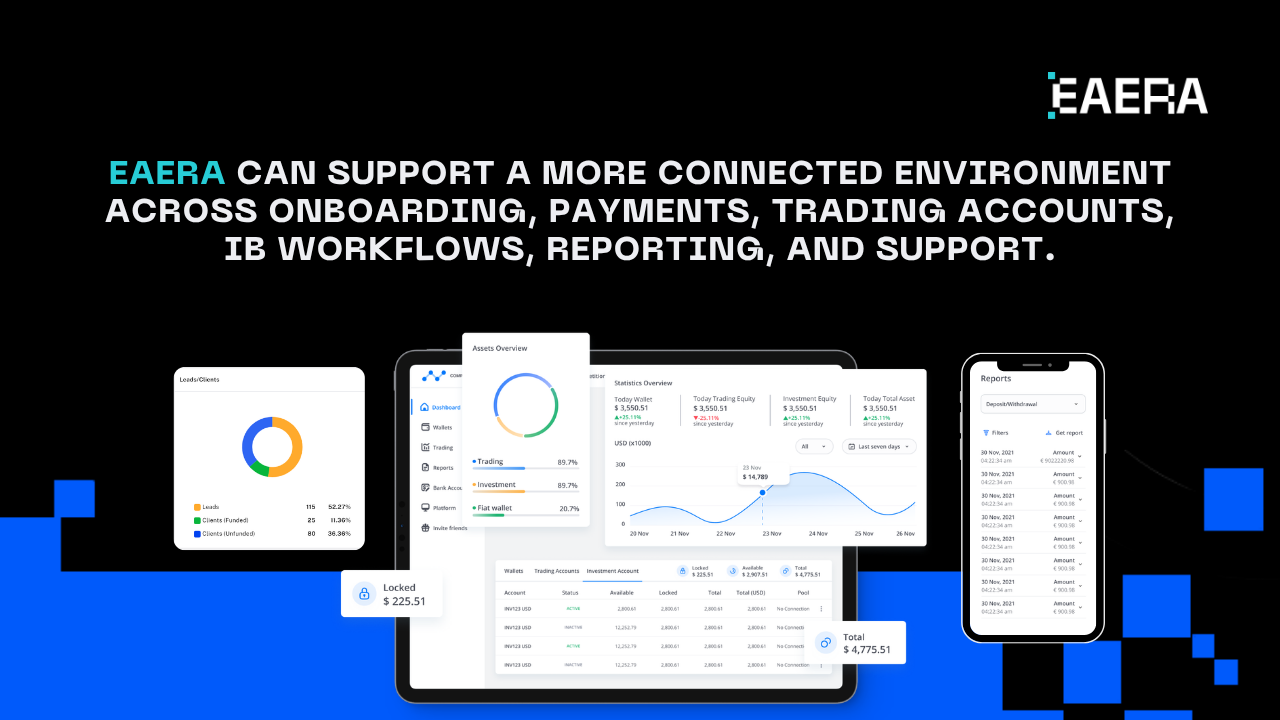
Brokers can capture client intent as trading activity quicker by eliminating manual follow-up on payments, wallets, and trading accounts.
Task 4: Manual IB, Reporting, and Support Operations
The fourth task group relates to scale operations: IB workflows, reporting, and support investigation. These areas create a large manual workload when data is not connected.
IB operations become more complex when brokers manually manage multiple partners, sub-IBs, referral links, commission rules, payout statuses, and partner questions. It’s harder to report when managers need spreadsheets to make sense of performance. Support is slower when agents must ask other teams for a basic client context.
An FX broker platform should reduce manual reporting by tracking:
- Lead response time
- KYC completion rate
- Deposit success rate
- Failed deposit recovery
- Withdrawal aging
- Funding-to-first-trade conversion
- Active versus inactive clients
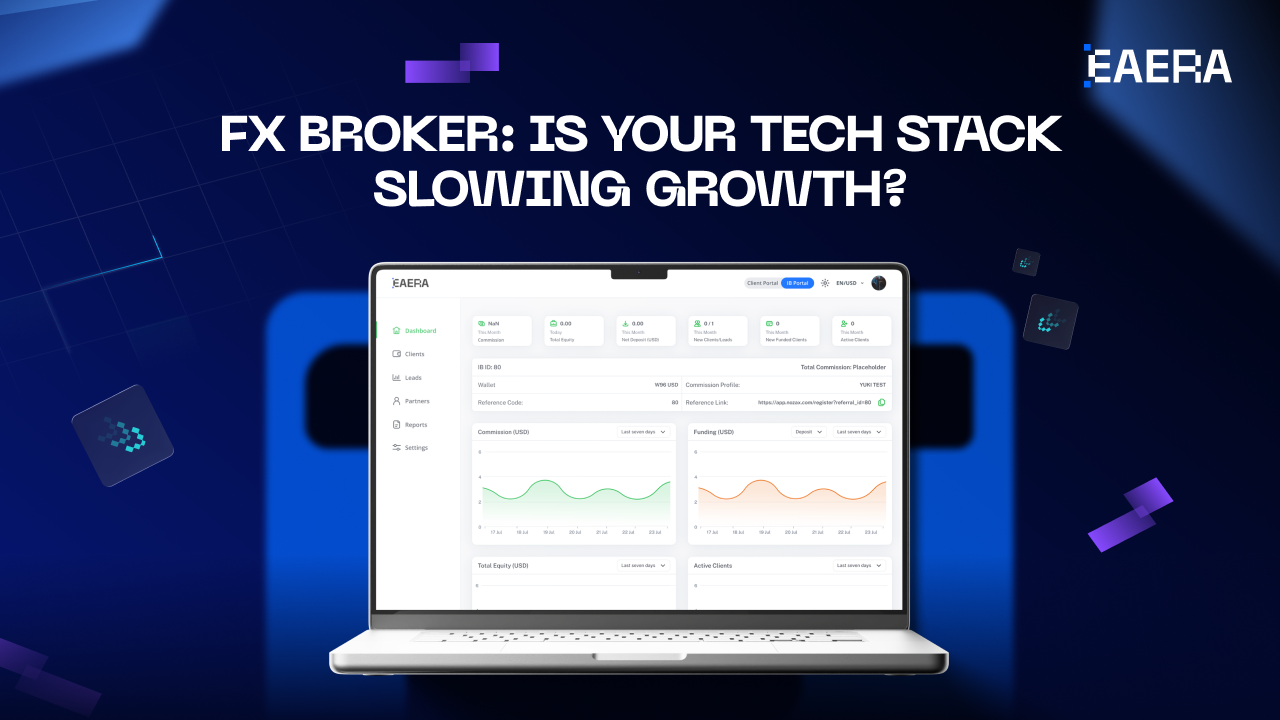
- IB performance
- Commission payout status
- Support workload
- Team productivity
Support teams should be able to see the entire client timeline including client profile, KYC status, payments history, wallet and trading account status, account restrictions, support tickets, communication history and approval records.
EAERA assists brokers with their operations through connected CRM, client portal, back office, funding, affiliate management, reporting, alerts and workflow automation.
For a forex broker looking to cut manual work, EAERA can support a more connected environment across onboarding, payments, trading accounts, IB workflows, reporting, and support.
Brokers can scale without adding admin headcount by cutting manual IB, reporting and supporting operations.
FX Broker Platform Checklist for Cutting Manual Work
The best FX broker platform will help to eliminate manual work by linking client lifecycle data, automating routine triggers, providing shared visibility to teams, reducing reliance on spreadsheets, building audit-ready records, revealing bottlenecks sooner and enabling role-based access and approvals.
The platform should make daily work easier for all the teams. Sales must have lead status and follow-up activities. Review queues and missing documents should be visible to KYC teams. Finance should be able to see payment status and wallet movement. Support should have access to the full client timeline. IB managers should be able to see partner attribution and commission status. Managers shouldn’t have to wait for manual reports to see performance and bottlenecks.
| Manual Task Group | Platform Capability Needed |
| Lead assignment and follow-up | Auto-routing, owner visibility, reminders, overdue alerts |
| KYC and onboarding review | Document status, review queue, approval notes, client reminders |
| Payment and trading account follow-up | Deposit status, wallet visibility, account creation, activation triggers |
| IB, reporting, and support operations | Attribution, commission workflow, dashboards, client timeline |
The right FX broker platform should turn disconnected manual actions into visible, automated, and measurable workflows.