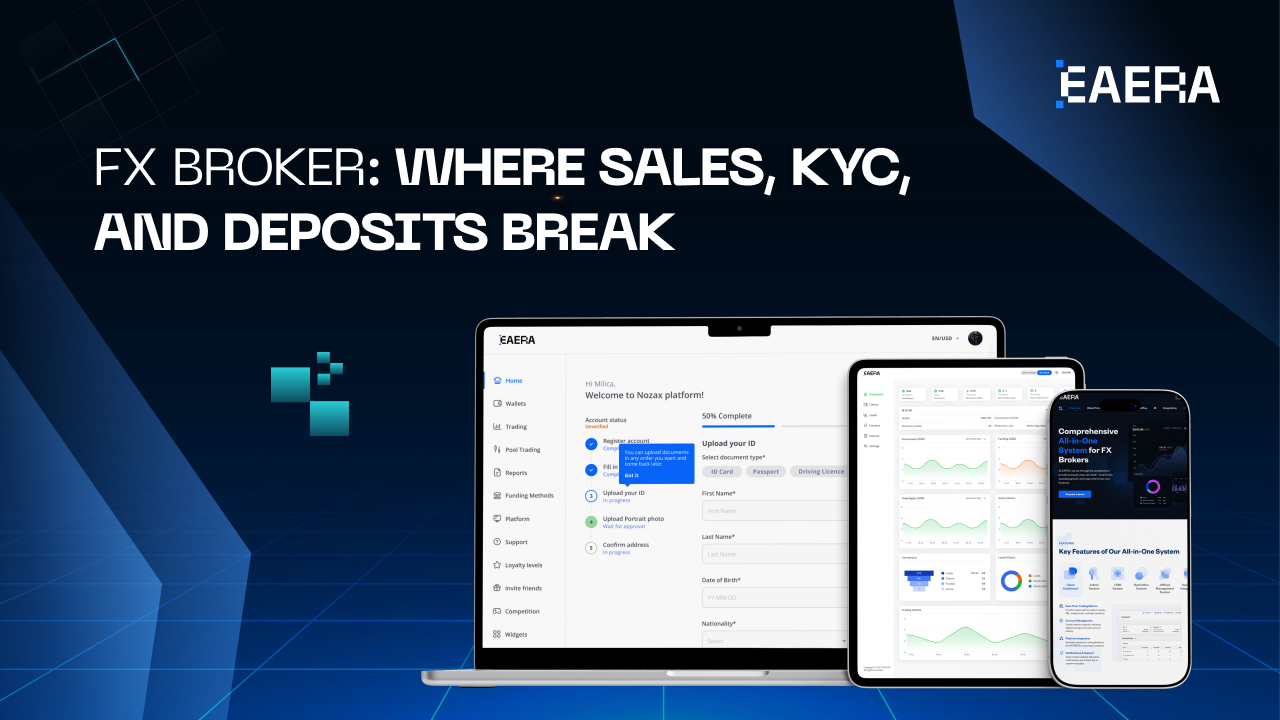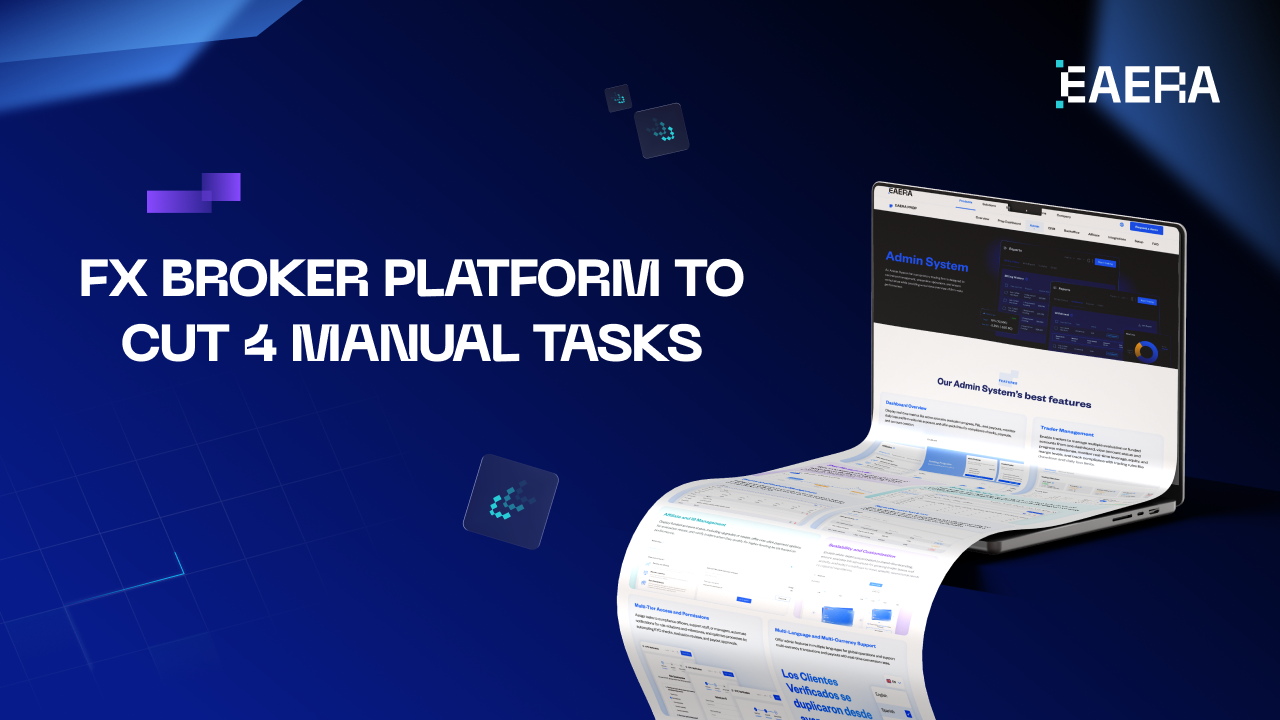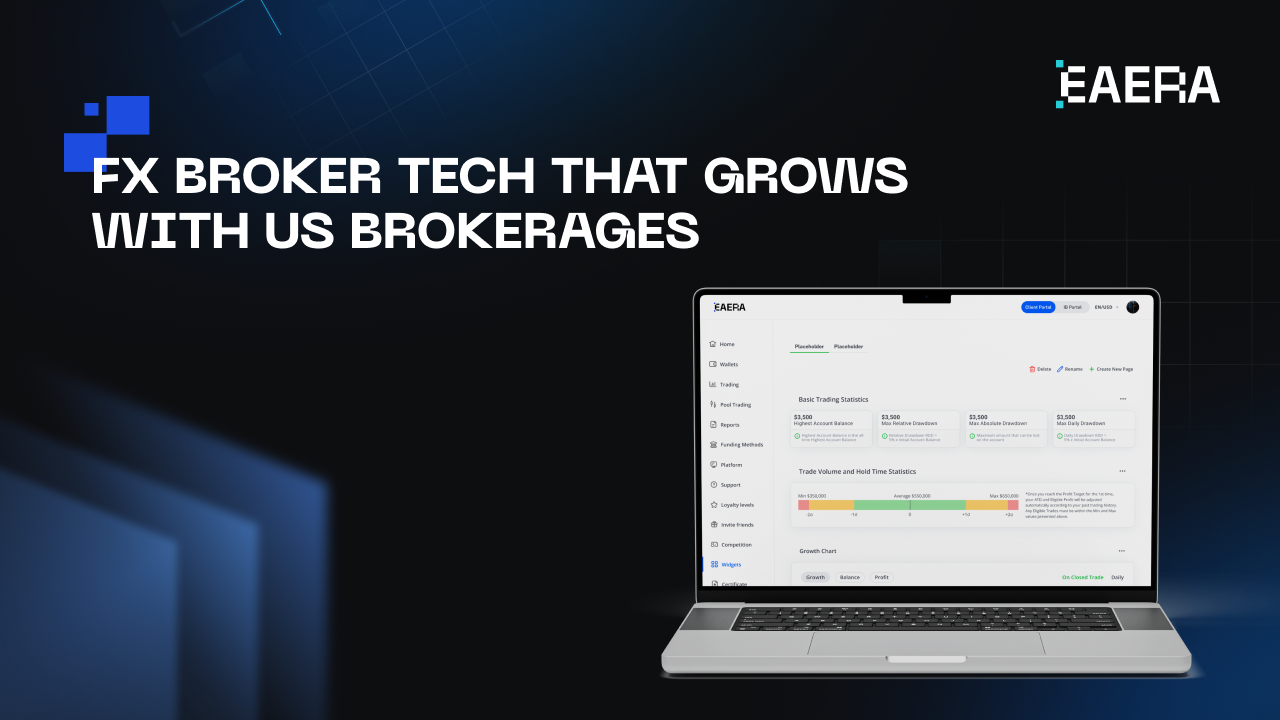




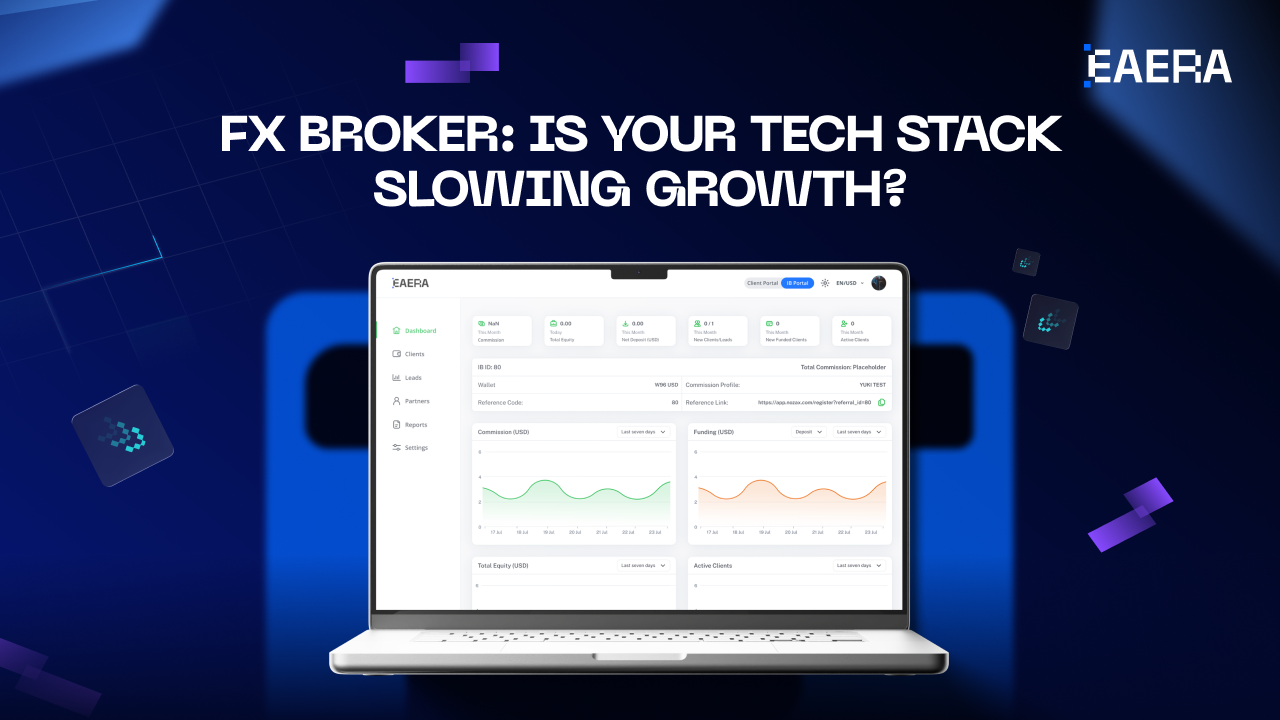
A FX broker could be spending a lot on acquisitions, sales capacity, liquidity, trading platforms and market expansion, but still be experiencing slow growth if the underlying technology stack is fragmented. Disconnected CRM, onboarding, KYC, payments, client portal, trading account operations, support, IB management and reporting reduce operational efficiency and miss conversion opportunities.
Related articles:
- Choosing the Best CRM for FX Brokers: A Step-by-Step Guide
- FX Brokers: Build CRM or Use EAERA Software? Best Choice Revealed
Disconnected Systems Create Operational Drag
The first sign of a weak technology stack is operational fragmentation. Different systems can be used for lead management, onboarding, KYC, deposits, withdrawals, trading accounts, support tickets, IB tracking, reporting, etc. Each tool could do a particular function but if there is no integration, it creates friction across the broader operating model.
For an FX broker, this can result in:
- Inconsistent client status visibility
- Slow interdepartmental handoffs
- Duplicate manual updates
- Limited management reporting
- Delayed funding and trading account activation
- Incomplete support context
- Manual reconciliation across systems
- Poor visibility into conversion bottlenecks
When systems are disconnected, internal teams become the integration layer. Sales must request verification status compliance. Support needs to check with finance as to when the payment will be made Operations needs to verify that the wallet funds are deposited to the trading account. Management has to wait for manually prepared reports to find out where clients are slowing down.
This creates operational friction. The broker can still generate leads and process clients, but each workflow requires more coordination than necessary. These delays, in turn, reduce conversion speed, increase workload, and limit the company’s ability to scale efficiently over time.
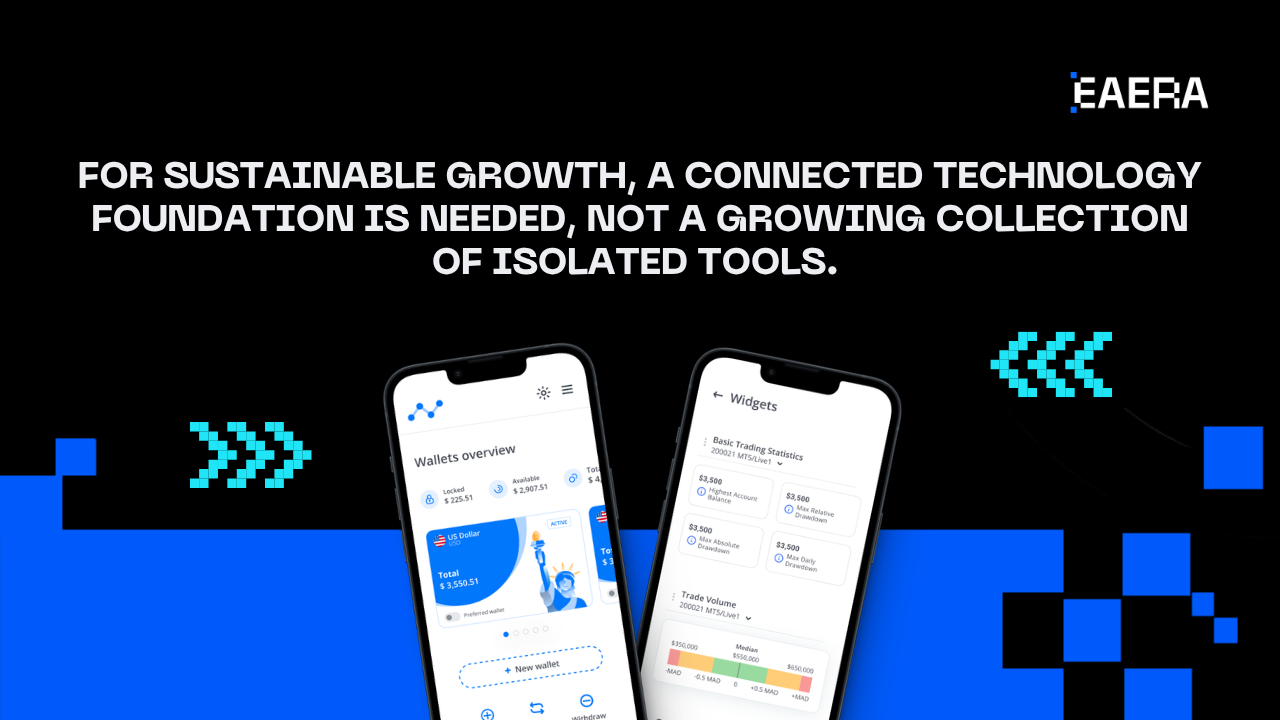
For sustainable growth, a connected technology foundation is needed, not a growing collection of isolated tools.
Weak Lead Ownership Reduces Sales Efficiency
Lead generation by itself doesn’t produce growth. Leads for an FX broker may come from paid campaigns, landing pages, IB referrals, webinars, social media, events, or demo account requests. Without clear ownership and structured follow-up in place, high-intent prospects can fall off before registration.
A growth-ready technology stack should support:
- Lead source tracking
- Campaign attribution
- Automatic assignment rules
- Sales owner visibility
- First response tracking
- Follow-up task management
- Communication history
- Lead prioritization
- Registration status visibility
- Conversion reporting by source
Lead assignment is dependent on manual processes, so response times will vary. A high intent demo request gets ignored; a low-quality lead gets instant attention. A prospect may be called twice—by two different salespeople—or not at all. These problems are not usually caused by lack of effort. They are usually caused by unclear systems.
Sales leaders need to see source quality too. If the technology stack only shows lead volume, management may continue to spend money on campaigns that generate contacts, but not verified, funded, or active traders. A more connected stack should show which channels create real pipeline progression.
A scalable sales workflow should convert lead activity into measurable movement from lead capture to registration, verification, funding, and trading activation.

Onboarding and KYC Bottlenecks Weaken Conversion
Client onboarding is a key conversion point for any FX broker. A prospect may sign up, start KYC, upload documents and then wait too long to be reviewed. If the customer can’t see what’s missing or why the verification is taking so long, conversion intent could drop before funding.
A strong technology stack should provide visibility into:
- Registration progress
- Profile completion
- KYC document status
- Missing document reasons
- Approval and rejection status
- Manual review queues
- Case ownership
- Risk or restriction status
- Client communication history
- KYC-to-deposit conversion
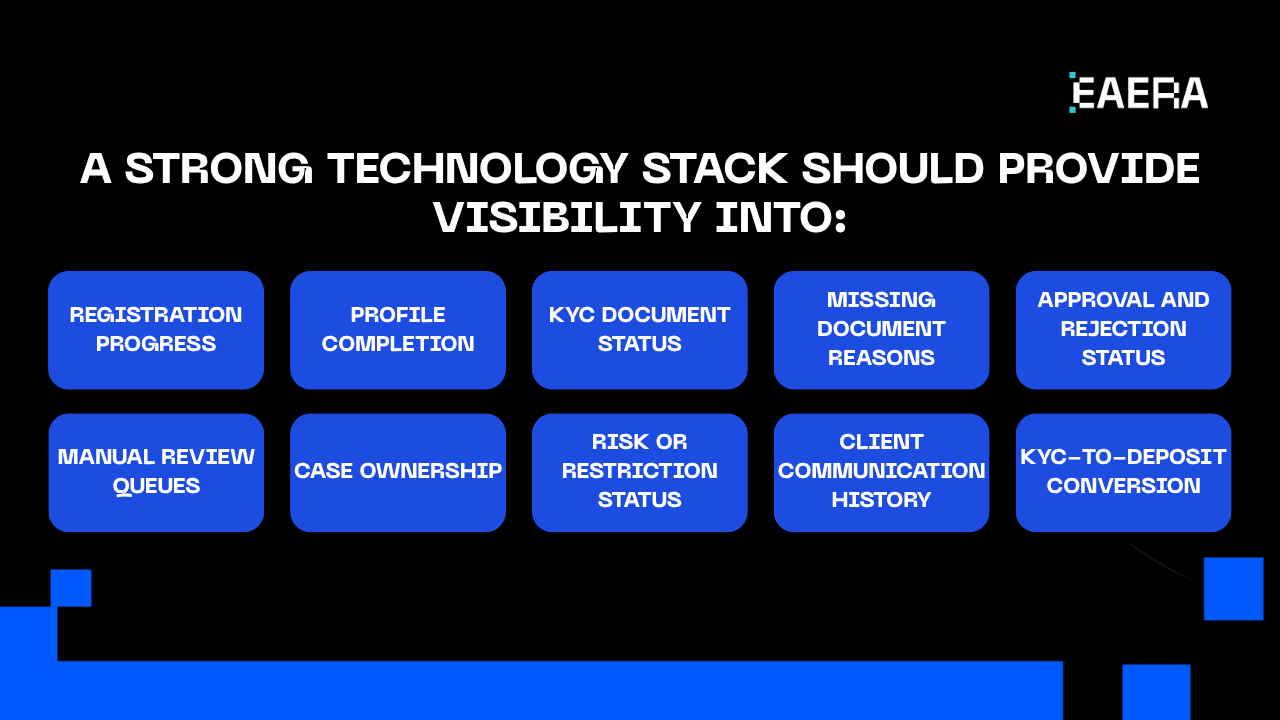
Onboarding in a fragmented stack is hard to manage. Sales may not know if a client is verified. Support may not understand why docs were not accepted. Aging cases may not be seen by compliance teams. Managers might not see bottlenecks in review until they’ve already impacted deposit conversion.
The commercial impact is major. When a client reaches KYC, the broker has already expended acquisition budget and sales effort. If that client waits too long in a queue or receives unclear communication, the broker may lose a high-intent opportunity.
A scalable onboarding workflow should move clients from registration to approval with clear status, ownership, and communication. KYC should not operate as a black box. It should be part of a visible client journey that all relevant teams can understand.
Payment and Trading Account Gaps Delay Activation
Growth can be lost even after onboarding is complete if funding and trading account workflows are not connected. A client can be approved and not deposited. Another may try to deposit and fail. One can fund a wallet but not fund a trading account.
For an FX broker, activation requires visibility across:
- Deposit eligibility
- Payment method availability
- Deposit attempt status
- Failed payment reason
- Wallet balance
- Withdrawal review status
- Internal transfer status
- Trading account creation
- Trading account funding
- Account restriction reason
- First trade status
A growth-ready FX broker technology stack should show whether a client is verified, funded, trade-ready, active, restricted, or blocked.
If failed deposits aren’t visible, support can’t quickly recover high intent clients. Operations may miss the activation gap if wallet funds are not transferred to a trading account. Retention teams need a timely signal if a first trade doesn’t happen. Without this visibility, the broker may assume the client lost interest when the real problem is operational friction.
Technology should assist brokers in turning approved clients into funded and active traders with less operational delays. Growth is not only about generating deposits. It is about connecting every step from approval to wallet funding, account readiness, first trade, and repeat activity.
Multi-Team Operations Require Shared Client Context
As brokerage operations expand, more teams become involved in the same client journey. Sales, KYC, finance, support, IB managers, retention, and management all require accurate context to make timely decisions. If each team relies on a separate system, internal coordination slows and service quality becomes inconsistent.
An FX broker technology stack should support shared visibility across:
- Client lifecycle stage
- Sales owner
- KYC status
- Payment and wallet status
- Trading account readiness
- Support tickets
- IB attribution
- Approval records
- Task ownership
- Role-based permissions
- Audit history
Shared context means each team gets the information they need to do their job, but sensitive data is still gated by permissions.
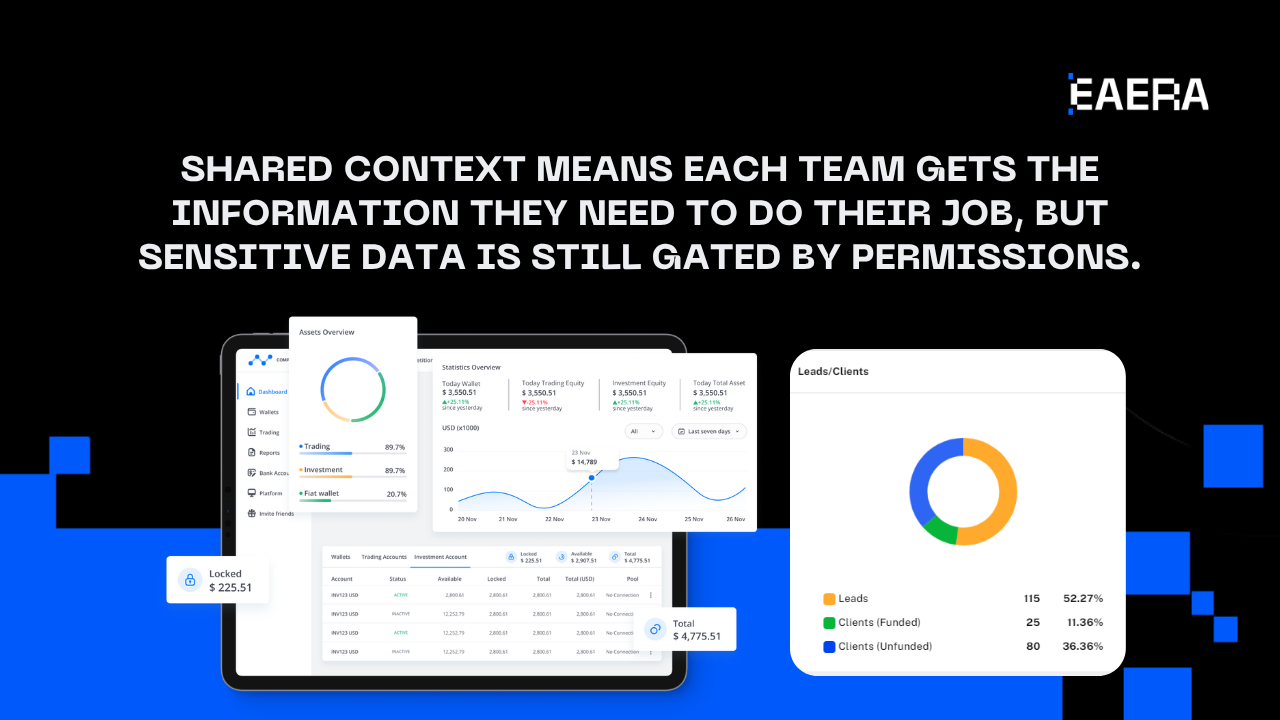
For example, sales need to know if a client has completed onboarding. Before responding, Support will need to know if an account is restricted. Finance should see status of payment & withdrawal. IB managers need to know referral attribution and client activity. Management needs to see operational performance across the funnel.
A scalable operating model means single client view with controlled access, not disconnected departmental records.
An FX broker requires connectivity across lead management, onboarding, KYC, payments, trading account activation, support, IB operations, reporting, and automation.