



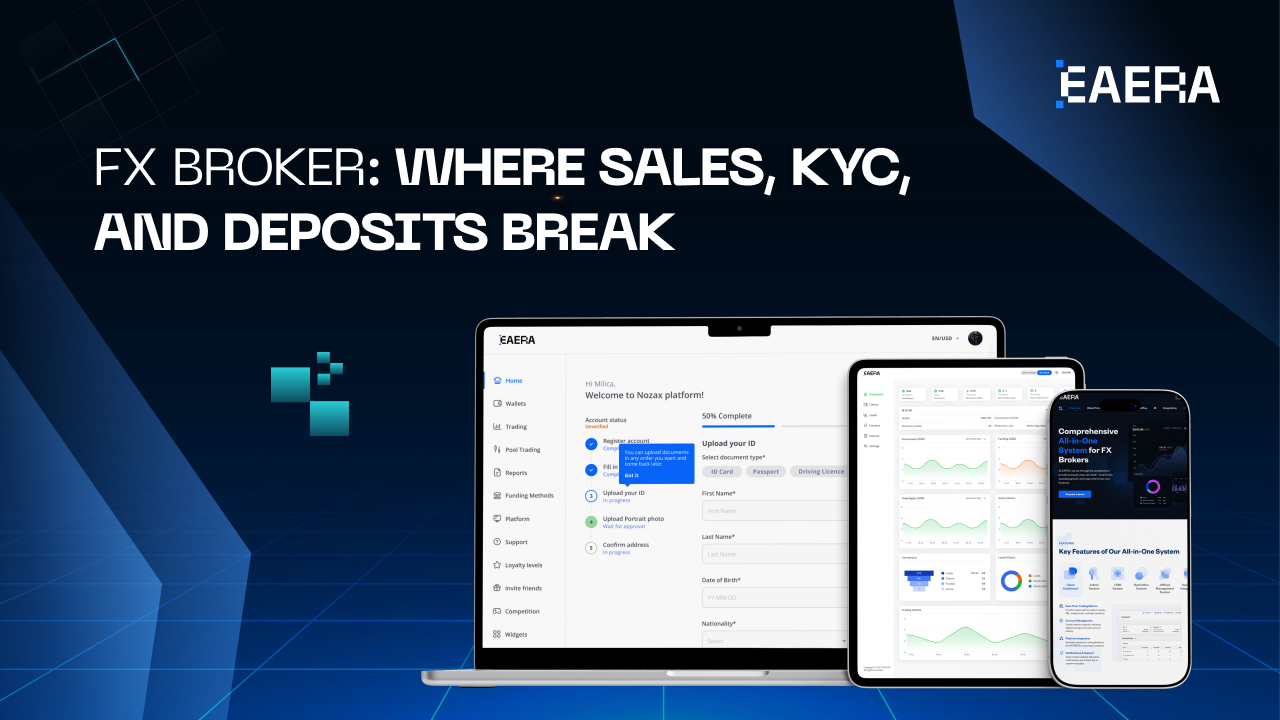
For an FX broker, growth is usually broken down into three vital phases: sales follow-up, KYC completion, and first deposit. While a broker can generate leads, assign sales teams, and onboard clients, they can still miss the mark on conversion if ownership is unclear, verification is delayed, payment friction is invisible, or teams operate from disconnected systems.
Related articles:
- 5 Best Practices FX Brokers Must Know for Back Office Software
- FX Brokers: Build CRM or Use EAERA Software? Best Choice Revealed
The Real Breakpoint Is the Handoff
Many brokers have separate departmental flows for sales, KYC, and deposits. Sales have got the lead. Verification is owned by KYC. Finance owns the deposits. Provide answers to client questions. But from the client’s perspective, this is one long ride.
The conversion breaks down for an FX broker when the handoff between these teams is fuzzy. Sales teams can get a client to sign up, but then lose the visibility when the KYC kicks in. Finance may see a failed deposit, but sales or support may not receive the context needed to recover the client.
Common handoff failures include:
- Sales does not know whether the client completed KYC
- KYC approves a client, but no deposit follow-up is triggered
- Finance sees a failed deposit, but sales does not receive context
- Support cannot explain why verification or payment is delayed
- Managers cannot identify which team owns the next action
- Clients wait because internal status is unclear
These gaps are often seen as problems of team performance, but they are usually problems with system design. The first step is to think of the journey as one connected workflow, not three separate functions.
Where Sales Workflows Break Before Registration
Sales breakdowns are often before the client has registration. A lead can be generated from a campaign, IB referral, landing page, webinar, social channel, or demo request. Without structured ownership, the opportunity might stall even before the first meaningful conversation.
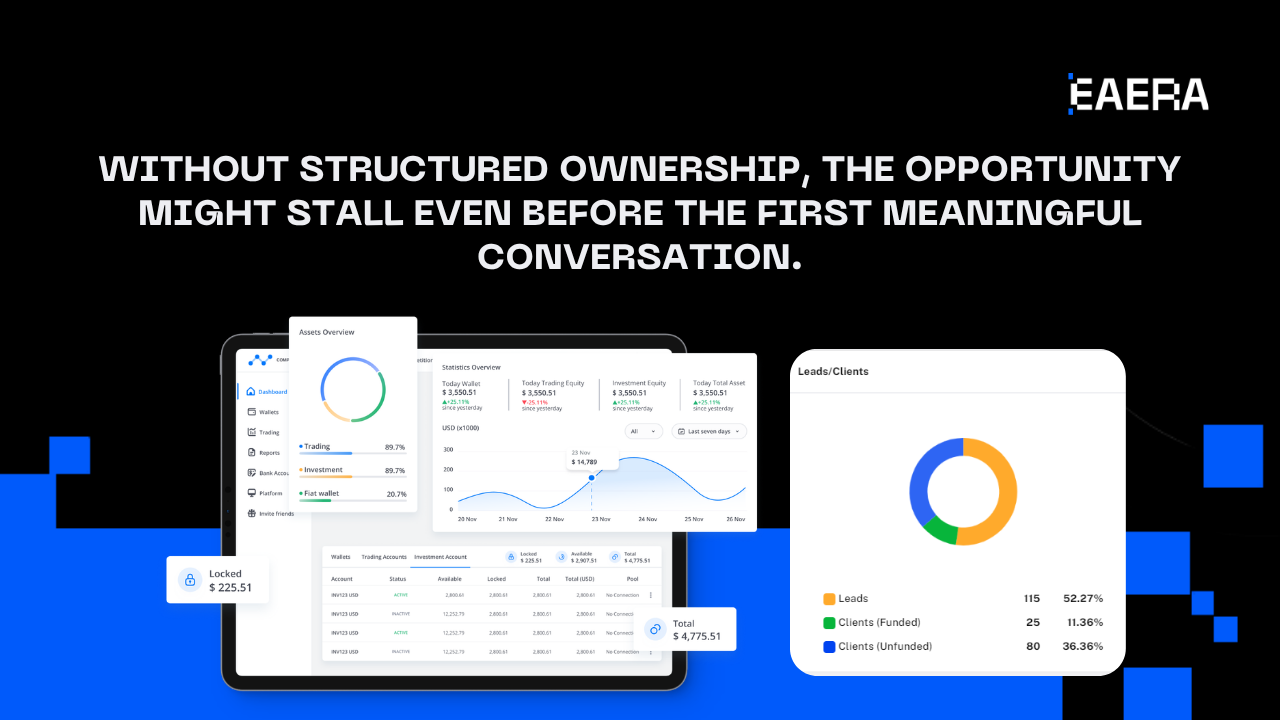
An FX broker should be able to track:
- Lead source
- Campaign or referral attribution
- Sales owner
- First response time
- Follow-up status
- Communication history
- Lead priority
- Registration status
- Overdue tasks
- Conversion by source
When leads are manually assigned, the response times are inconsistent. A high intent lead for a demo request may go untouched while a lower quality lead gets attention. If there is no central communication history, the client may get duplicate or irrelevant outreach. If source quality is not connected to conversion, management may keep investing in channels that generate leads but not funded traders.

Without visibility to ownership, priority, and follow-up discipline, sales workflows fall. A scalable broker operation should allow sales leaders to see which leads are assigned, which are overdue, which channels convert, and which prospects are moving toward registration.
Where KYC Workflows Break After Registration?
Registration does not guarantee completion of onboarding. Clients can start KYC, submit incomplete documents, wait in review queue, get rejected, or require manual review. Without these statuses visible to sales, support, and management, the client journey slows down.
For an FX broker, KYC workflows often break because of:
- Incomplete profile information
- Missing or low-quality documents
- Unclear rejection reasons
- Aging review queues
- No case owner
- No escalation rule
- Sales teams unaware of KYC status
- Support teams unable to explain delays
- No KYC-to-deposit reporting
KYC must be regulated, but not a black box. Status, owner, reason, and next action visibility helps teams steer clients better. Missing documents should have a clear workflow for resubmission. A manual review should be owned.
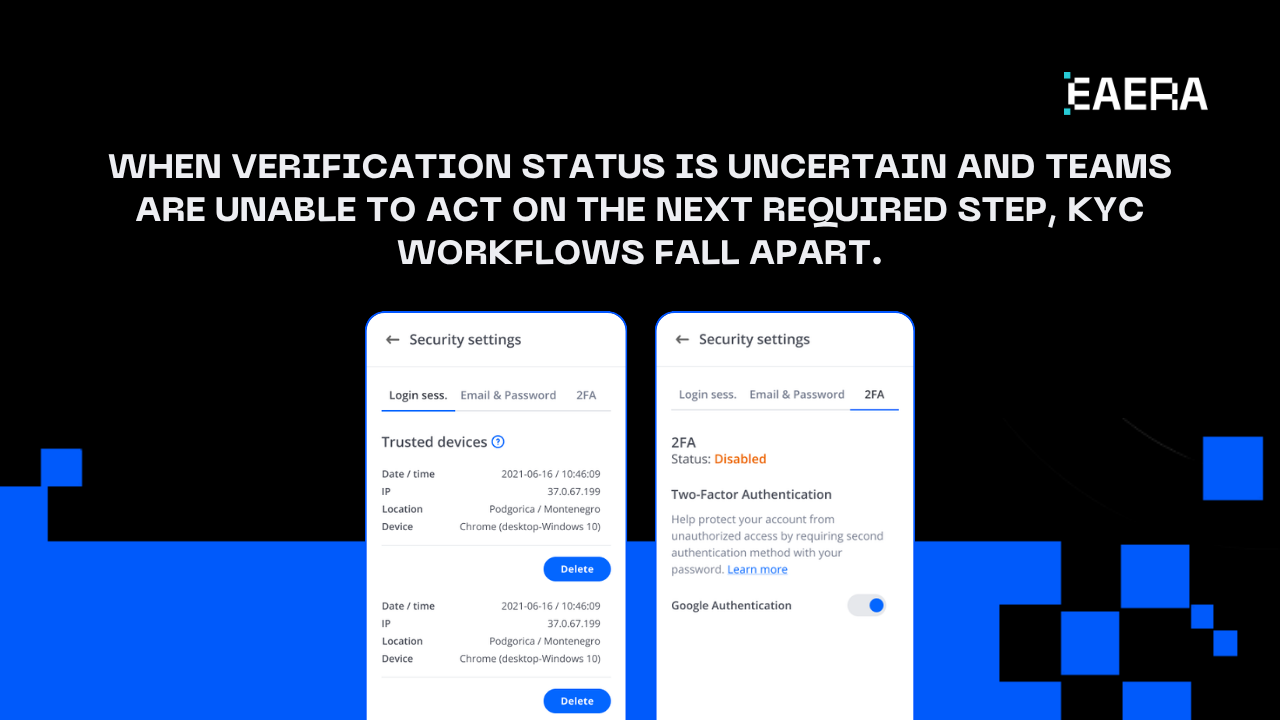
This is important as the verified clients have a stronger intent. If a client has already registered and submitted documents, delays can eat away at trust. When verification status is uncertain and teams are unable to act on the next required step, KYC workflows fall apart.
Where Deposit Workflows Break Before First Funding?
Deposit conversion is where intent from a client becomes potential revenue. But many brokers lose verified clients before first funding because payment workflows are disconnected from CRM, sales, support or back-office systems.
An FX broker needs visibility into:
- Deposit eligibility
- Available payment methods
- Deposit page visits
- Deposit attempt status
- Failed payment reason
- Wallet balance
- Payment method used
- Support ticket status
- Deposit recovery task
- Successful retry
- First deposit completed
A growth-ready FX broker should know whether a verified client is deposit-ready, payment-blocked, wallet-funded, or still inactive.
If a client tries to deposit and fails, support/sales should receive a recovery signal with a transaction context. When payment methods are not clear, teams should advise the client based on region, currency, and eligibility. If a deposit is successful but funds do not arrive in the correct wallet or account, operations should notice the discrepancy.
Payment friction is invisible; no team owns recovery, and deposit workflows break. A failed deposit shouldn’t just hang out on a payment dashboard. It should become a client recovery workflow with ownership, context, and follow up.
How Disconnected Data Weakens Conversion Control?
Sales, KYC, and deposit workflows often fail when data is fragmented. Sales could work on CRM. KYC can also act as a review tool. Finance can see deposits in payment dashboards. Support can work on tickets. Management may be manual reports.
For an FX broker, fragmented data creates several risks:
- No single client status
- Delayed internal updates
- Duplicate client communication
- Manual reconciliation
- Weak funnel reporting
- Missed deposit recovery opportunities
- Poor visibility into team performance
- Unclear conversion bottlenecks
It is hard to answer simple business questions when data is disconnected. Which leads were registered customers? Which clients were KYC-ed? Which clients tried deposits? Verified customers. Which of the failed deposits were retrieved? Which clients funded but never traded?
Without connected data, broker leaders cannot manage conversion as a measurable operating system. Teams may still be working hard, but management cannot clearly see where prospects stop moving, which workflow owns the issue, or which operational gap is affecting revenue.
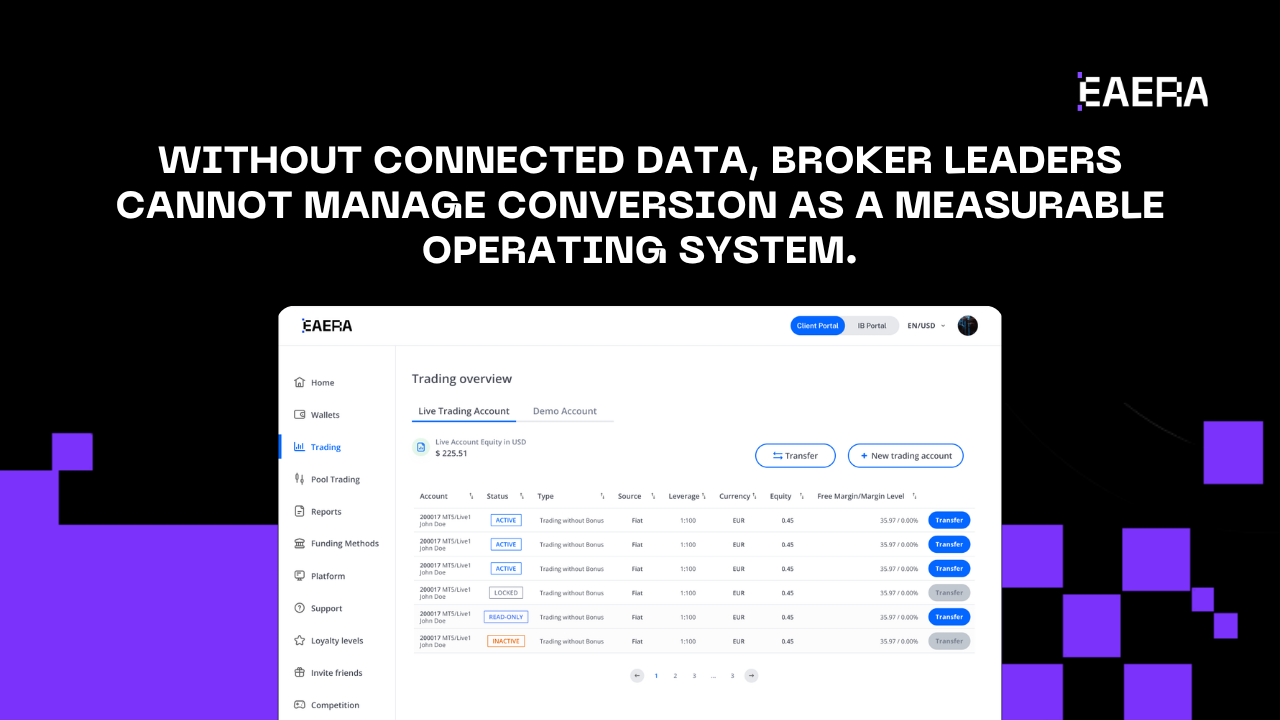
Sales, KYC, and deposits do not break in isolation. They break when client status, ownership, handoffs, and recovery signals are disconnected. For brokers, these gaps can reduce conversion even when lead volume is strong.
An FX broker needs connected workflows that show where each client is, who owns the next action, and which barrier is blocking progress.